
 Call us today at 1-888-758-7527

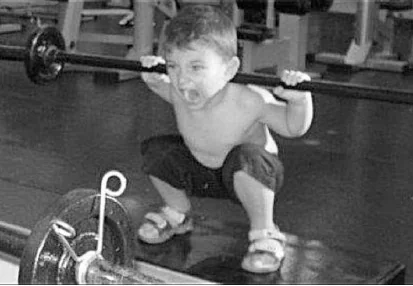
Berserker Squat Boy demonstrates barbell back squat perfection!
BEHOLD! A tiny squat technician displaying the kind of deep, upright, hi-bar barbell back squat position that grown men with $300 shoes, custom belts, and 900 Instagram coaching cues often fail to find.
Featured Equipment: barbell, weight plates, barbell collars, rubber gym flooring.
BEHOLD! A Tiny Hi-Bar Squat Technician
BEHOLD! Barbell squat technique exhibited by a 3-year-old: pure hi-bar back squat mechanics, as seen from this one glorious photo. The child appears to drop effortlessly into maximum depth while staying bolt upright. No overthinking. No online argument about femur length. No six-part video series. No paralysis by analysis. Just a tiny human folding into a beautiful squat position as if Odin himself whispered, “Sink lower, young berserker.”
This boy is not wasting his time playing Pokémon baby games on an iPad or holding a committee meeting about mobility restrictions. He is deep in the hole, torso tall, body balanced, and apparently unconcerned with the modern adult lifter’s endless excuses.
Note the upright torso, the bottomed-out position, and the lack of visible panic. From this angle, the shins look close to vertical, the hips are buried, and the spine is not folded like a lawn chair. This is the kind of squat photo that gives you faith in the future of America. I would pray to Odin for height, longevity, and a continued love of the iron.
What Adult Lifters Can Learn From the Photo
The practical lesson is not that every lifter must duplicate a toddler’s proportions or squat exactly this way. Children often have a natural ability to drop into deep positions that adults lose after decades of chairs, cars, tight hips, bad ankles, weak trunks, and too much sitting.
The useful adult lessons are simple:
- Stay tall: a high-bar squat rewards an upright torso and strong trunk position.
- Control the descent: depth is valuable only when position remains controlled.
- Use the whole foot: balance should not collapse onto the toes or roll off the heels.
- Let the knees and hips work together: a good squat is not a hinge masquerading as a squat.
- Keep the load appropriate: technique matters more than ego, especially when learning.
Adult lifters chasing serious squat strength can study this photo, smile, and then move on to structured practice. For a deeper historical and training perspective, read Barbell Squats - A Journey Of Size And Strength Gains, Marty Gallagher’s King Squat, and his broader guide on why we squat the way we do.
Equipment Notes for Barbell Back Squat Practice
A squat is simple, but a serious squat setup should not be sloppy. A dependable bar, secure plates, properly fitted collars, stable squat stands or rack supports, and appropriate flooring all matter once the weight becomes meaningful.
For loading options, Iron Grip Urethane-Coated Olympic Plates provide durable commercial weight-plate choices, while the CAP Barbell 7-Foot Black Olympic Weight Bar can serve general strength-training environments when used within its stated specifications. A pair of Legend Fitness Commercial Adjustable Squat Stands gives the lifter an adjustable start height for unracking and reracking the bar.
Barbell collars should be used so plates do not creep during the set. Flooring should be selected for the room, load, and use case. Rubber gym flooring will not squat the weight for you, but it can help protect the training area while a lifter earns the right to add poundage.
Youth Strength Training Safety Note
This article is a short, humorous RAW column built around a memorable squat photo. It is not a recommendation that very young children perform heavy barbell training, max attempts, powerlifting, bodybuilding, ballistic lifts, or unsupervised loaded exercise.
The American Academy of Pediatrics notes that children can benefit from resistance training when it is properly supervised, developmentally appropriate, technique driven, and matched to the child’s maturity and ability. AAP materials also caution against maximum lifts and ballistic maneuvers before skeletal maturity and emphasize supervision, proper technique, warm-ups, appropriate progression, and stopping when pain appears.
For children, the priority is movement quality, play, coordination, confidence, and safe supervision. For adults, the priority is learning from this tiny squat master without pretending that one photograph replaces coaching, programming, mobility work, and common sense.

RAW with Marty Gallagher, J.P. Brice, and Jim Steel Podcast.
About the Author: Marty Gallagher
As an athlete Marty Gallagher is a national and world champion in Olympic lifting and powerlifting. He was a world champion team coach in 1991 and coached Black's Gym to five national team titles. He's also coached some of the strongest men on the planet including Kirk Karwoski when he completed his world record 1,003 lb. squat. Today he teaches the US Secret Service and Tier 1 Spec Ops on how to maximize their strength in minimal time. As a writer since 1978 he’s written for Powerlifting USA, Milo, Flex Magazine, Muscle & Fitness, Prime Fitness, Washington Post, Dragon Door and now IRON COMPANY. He’s also the author of multiple books including Purposeful Primitive, Strong Medicine, Ed Coan’s book Coan, The Man, the Myth, The Method and numerous others. Read the Marty Gallagher biography here.
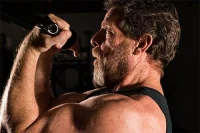
Marty Gallagher is a champion strength athlete, coach, author, and RAW Podcast host known for powerlifting, Olympic lifting, and serious strength training.
