Gym Flooring for Home, Commercial, School, and Facility Training Spaces
Gym flooring from IRON COMPANY includes rubber flooring rolls, interlocking rubber tiles, rubber gym mats, artificial turf, aerobic flooring tiles, foam exercise mats, foam gym and play tiles, PVC flooring solutions, carpet tiles, MMA mats, wrestling mats, gymnastics mats, cheer mats, flooring adhesives, cleaners, installation tools, and specialized safety flooring tiles for home gyms, garage gyms, commercial weight rooms, schools, studios, apartment fitness centers, tactical training spaces, government fitness facilities, and institutional training rooms.
The right gym floor does more than cover the subfloor. A properly matched surface can help protect the floor below your equipment, support usable footing based on surface texture and room conditions, help manage contact noise and vibration depending on the product and installation, define training zones, and make the space easier to clean and maintain over time.
Use this category to compare rubber gym flooring, rolled rubber flooring, interlocking rubber floor tiles, heavy-duty rubber gym mats, turf lanes, foam flooring, sport mats, PVC tiles and planks, carpet tiles, and specialty flooring systems by room type, impact level, installation method, maintenance needs, subfloor condition, equipment layout, and facility use. IRON COMPANY has supplied gym equipment and flooring solutions since 1997 and supports residential, commercial, vertical-market, military, government, institutional, and facility buyers with flooring guidance, quoting, product sourcing, and project planning support.
How to Choose Gym Flooring by Use, Impact, and Installation
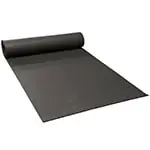
The best gym flooring choice starts with the training zone. If you need broad coverage across a larger room, rubber flooring rolls are usually the most efficient starting point because they create a more continuous surface with fewer seams. If you want a modular floor that is easier to carry, easier to replace, and easier to expand later, interlocking rubber tiles are often the better fit. When the main goal is concentrated floor protection under racks, benches, machines, deadlift stations, or lifting zones, rubber gym mats usually make more sense than covering the entire room with thicker material.
Forcing One Flooring Type Across Multiple Training Zones — A common mistake is treating gym flooring as a generic commodity and assuming a single material should solve every problem in the room. Forcing one product into every area rarely delivers a premium result because different movements require entirely different structural properties. Rubber Flooring Rolls: These are the usual choice for broader wall-to-wall coverage in large commercial fitness floors or rectangular weight rooms. Products like Regupol Aktiv Rolled Rubber Flooring create a sleek, continuous surface with a clean look and minimal seams. Interlocking Rubber Tiles: A fit for garage gyms, basements, or irregular room shapes where DIY installation, modular replacement, and future expansion matter most. They typically require no adhesive in standard loose-lay setups. Rubber Gym Mats: If you only need concentrated protection under power racks, lifting zones, or deadlift stations, a targeted high-impact option like the Black Heavy-Duty Rubber Deadlift Mat (4' x 8' x 3/4") or a vibration-damping SHOK-LOK Mat makes far more sense than covering an entire room with ultra-thick material. Specialty Surfaces: For dynamic movement, sprinting, and sled pushes, specialized options like Dollamur GymTurf Portable Indoor Sports Turf define performance lanes without forcing you to compromise your free-weight zones. Group fitness environments are better served by Aerobic Flooring Tiles or Dollamur FLEXI-Roll Mats, which prioritize floor contact and controlled falls over dropped-barbell protection.
Flooring thickness should match what happens on the floor, not just what looks good in a sample. Many mixed-use home gyms and general training areas do well with thinner rubber such as 8 mm or 3/8 inch. Heavier strength work, kettlebells, dumbbells, racks, and more aggressive training zones usually call for denser rubber, while repeated Olympic lifting or deadlift drop zones may justify 1/2 inch to 3/4 inch protection in those specific areas. Foam flooring has a place for stretching, mobility, bodyweight work, and children’s activity zones, but it is not the right answer for serious free-weight impact.
Miscalculating Material Thickness Requirements Based on Fitness Goals — Selecting thickness based entirely on a small sample rather than actual impact force frequently leads to subfloor failure. Thickness must match your specific equipment types and lifting habits: 1/4" to 8mm (3/8"): Suited to cardio equipment rows, selectorized weight-stack machine floors, and general fitness spaces. Denser 3/8" rubber options, like Color Fleck Rubber Flooring Rolls, help absorb light vibration and keep heavy treadmills or exercise bikes from slowly creeping across the floor during use. 1/2" to 3/4": Required for heavy resistance training and dedicated free-weight areas. If your training involves aggressive barbell drops from deadlifts, clean and jerks, or snatches, use a heavy-duty 3/4" layout—such as a SurfaceCo Vulcanized Weight Room Mat—to absorb the impact and limit what reaches the subfloor.
For larger facilities, the best gym flooring plan is often a zone-based layout. A commercial gym, school weight room, apartment fitness center, tactical training space, or government fitness facility may use rubber rolls for general strength areas, thicker mats or platforms for heavy lifting zones, turf for sled and agility lanes, and specialty surfaces for studios, combat sports, wet areas, or utility spaces. Matching each flooring type to the activity above it usually produces a better long-term result than forcing one product into every area.
Compare Gym Flooring Types
Gym flooring categories are not interchangeable. Use the stacked comparisons below to decide whether rubber rolls, interlocking tiles, rubber mats, turf, foam, PVC, carpet tiles, sport mats, or specialized safety flooring are the right fit for your room, equipment, users, and training style.
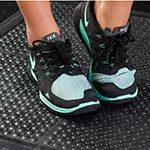
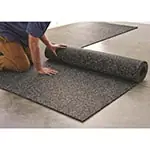
Best fit: Large home gyms, commercial gyms, school weight rooms, cardio zones, open training areas, and facilities that need broad rubber gym flooring coverage.
Buyer guidance: Choose rubber flooring rolls when you want broader wall-to-wall coverage with fewer seams and a cleaner continuous look. Rubber rolls are often the starting point for larger rooms where the goal is consistent coverage under strength equipment, cardio equipment, and general training zones.
IRON COMPANY also has an article on rubber flooring for dog kennels and daycare facilities.
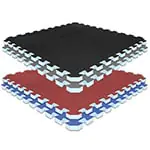
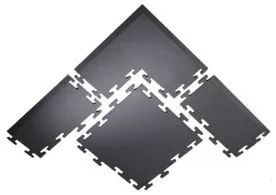
Best fit: Garage gyms, basements, phased installs, modular training rooms, small commercial spaces, and rooms with irregular layouts.
Buyer guidance: Choose interlocking rubber tiles when modular replacement, loose-lay installation, and future expansion matter more than one continuous sheet floor. Interlocking tiles can be easier to move, replace, and reconfigure than long rubber rolls, especially in spaces where access, storage, or future layout changes matter.
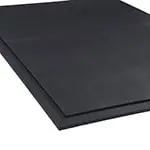
Best fit: Power racks, deadlift stations, equipment zones, free weight areas, garage gyms, and targeted high-impact training areas.
Buyer guidance: Choose rubber gym mats when you want concentrated floor protection in key heavy-use zones instead of covering the entire room with thicker material. Rubber gym mats are often used under racks, benches, machines, lifting stations, cardio equipment, and localized training areas.
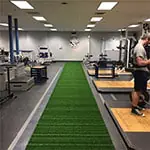
Best fit: Sled pushes, agility drills, functional training lanes, speed work, athletic training zones, and performance spaces.
Buyer guidance: Choose artificial turf when you want a training surface for movement-based conditioning rather than a full free-weight floor. Turf works best when it is used intentionally for sled lanes, agility work, speed drills, and functional training areas.
Best fit: Studios, group fitness rooms, mobility spaces, low-impact movement areas, and lighter training environments.
Buyer guidance: Choose aerobic flooring when comfort, surface feel, and movement support matter more than dropped-barbell protection. These tiles are a better fit for class-based environments than heavy free-weight zones.
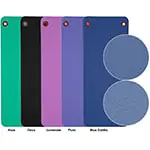
Best fit: Stretching, mobility, balance work, floor exercise, light training, and low-impact fitness rooms.
Buyer guidance: Choose foam exercise mats when comfort is the priority and heavy equipment is not part of the plan. Foam should not be used as a substitute for dense rubber flooring under racks, dumbbells, barbells, or heavy machines.
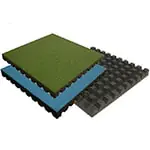
Best fit: Kids’ activity areas, play spaces, light-impact environments, and rooms where cushioning is more important than load-bearing performance.
Buyer guidance: Choose foam gym or play tiles when the space is built around low-impact movement, play, and comfort. These tiles are not intended for heavy free weights, power racks, or serious weight-room impact.
Relying on Foam Tiles in Heavy Free-Weight Zones — Many residential buyers choose lightweight foam gym or play tiles for structural strength training zones due to lower costs or easier handling. While foam is a good choice for stretching, mobility, yoga, and lightweight bodyweight work, it is not made for serious weight-room impact. Placing power racks, heavy dumbbells, or iron plates on foam can leave deep, permanent indentations, reduce your stability during lifts, and leave the subfloor exposed to cracks. Heavy free weights require high-density, vulcanized rubber or crumb rubber compiled from post-consumer tires. Denser rubber holds its shape under heavy loads and protects both your equipment and your foundation.
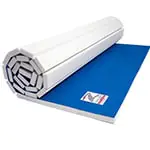
Best fit: Grappling, tumbling, wrestling rooms, cheerleading practice, martial arts areas, gymnastics spaces, and movement-based sports.
Buyer guidance: Choose MMA, wrestling, gymnastics, and cheer mats for padded sport-specific movement spaces where the activity involves floor contact, controlled falls, grappling, tumbling, or cheer practice. These mats solve a different problem than rubber weight-room flooring and should not be treated as a replacement for barbell zones or heavy machine rooms.
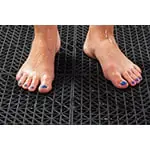
Best fit: Garages, utility areas, wet zones, shower-adjacent spaces, military and tactical utility areas, and modular easy-maintenance spaces.
Buyer guidance: Choose PVC flooring when drainage, modular maintenance, and durable easy-clean surfaces matter more than classic weight-room impact protection. PVC tiles and planks can work well in demanding utility spaces, but they should not be treated as a replacement for dense rubber in heavy free-weight zones.
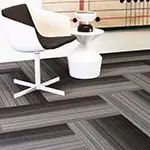
Best fit: Multi-use rooms, school and community spaces, warm-up zones, offices, acoustic-sensitive areas, and spaces where a softer finished feel is preferred.
Buyer guidance: Choose carpet tiles when you want replaceable sections, a softer feel, a more finished appearance, and improved sound control compared with hard surfaces. Carpet tiles are not a substitute for dense rubber under power racks, dumbbells, barbells, or heavy strength equipment.
Best fit: Tactical, outdoor, high-impact, or specialized protective areas where ordinary gym flooring may not provide the level of impact-control planning needed for the application.
Buyer guidance: Choose safety flooring tiles when the project requires a more specialized flooring system than general-purpose rubber rolls, mats, or tiles. Review product-specific specifications, installation requirements, and manufacturer documentation before specifying these products for demanding environments.
Best fit: Larger flooring projects, glued-down installations, seam planning, subfloor prep, flooring maintenance, and cleaning programs.
Buyer guidance: Choose adhesives, cleaners, tapes, tools, and maintenance products when the project requires installation support beyond simply placing mats on the floor. Full-room layouts, seams, cut-ins, reducers, transitions, and long-term cleaning routines should be planned before flooring arrives.
Best fit: Commercial projects, full-room flooring layouts, glued-down rubber rolls, larger tile installations, and projects with seams, transitions, or subfloor issues.
Buyer guidance: Review installation support when the project is bigger than a drop-in mat solution. Subfloor prep, moisture conditions, seams, adhesive selection, transition edges, and room layout can all affect the finished floor.
Overlooking Subfloor Compatibility and Seam Planning — Rushing a layout without auditing what is underneath the gym flooring can destroy both the new surface and the existing property. A prime example is attempting to install rubber flooring directly over standard residential carpet. Because rubber flooring is incredibly heavy, laying it straight over carpet can permanently stain and ruin the pile below. Furthermore, carpet and padding provide too much vertical "give." This softness can cause the seams of rubber rolls or interlocking tiles to lift and flex unevenly under foot traffic, which affects footing and can create a tripping hazard. For a flat installation, lay dense rubber over a clean, hard, and resilient subfloor, and use layout products like Regupol TR.BT437 Double-Sided Adhesive Tape or Ecore E-Grip III Urethane Adhesive to hold the seams in place.
Field Notes for Smarter Gym Flooring Decisions
- Speckled rubber flooring does more than change the look of the room. It can also help disguise dust and dirt better than a flat solid surface in many training spaces.
- Many rubber gym flooring products are made from post-consumer tires that are processed into crumb rubber, blended with urethane binders, and formed into rolls, mats, or tiles.
- Interlocking rubber tiles are often chosen because they do not usually require adhesive in a standard loose-lay installation, which can make them easier to move, expand, or replace later.
- One common heavy-duty mat format is 4 feet by 8 feet by 3/4 inch because that size can work well under power racks, lifting zones, and weightlifting platform builds when the product and facility conditions support the application.
- Rubber surfaces can sometimes look open or porous because of crumb-rubber construction. Regular dust removal and periodic use of the right cleaner or sealant can make long-term maintenance easier.
- Before ordering a full-room flooring package, think through where the racks, benches, bars, plates, cardio machines, or turf lanes will actually go. Matching the flooring to the training zone usually works better than forcing one surface across the entire room.
- For commercial, school, military, government, institutional, or upper-level installations, review subfloor condition, transitions, freight receiving, installation method, room access, and any required facility documentation before ordering.
Shop Gym Flooring by Use Case
Home Gyms, Garage Gyms, and Basement Training Rooms
Home gym flooring usually needs to balance floor protection, contact noise management, practical installation, and available budget. Rubber rolls work well in clean rectangular spaces, interlocking rubber tiles fit basements and phased installs, and rubber mats are a strong choice for racks, benches, cardio equipment, and targeted lifting zones. In smaller enclosed rooms, buyers should also consider ventilation, rubber odor expectations, humidity, and how the flooring will be moved into the space.
Commercial Gyms, Schools, and Weight Rooms
Commercial gym flooring works best when it is matched to the training zone instead of treated as one identical surface across the entire room. Rolls often make the most sense for broader coverage, mats support heavy-use stations, and turf can define conditioning lanes and performance zones. Schools, commercial fitness centers, and institutional weight rooms should also plan for seams, transitions, cleaning routines, replacement zones, and user traffic patterns.
Studios, Group Fitness Rooms, and Multi-Use Spaces
Aerobic flooring tiles, select foam products, and some carpet-tile systems are often a better fit for studios than dense weight-room rubber everywhere. These rooms usually prioritize movement flow, comfort, acoustics, visual presentation, and lighter-impact training. For mixed-use rooms, choose surfaces based on the heaviest and most frequent activity, not only the average activity.
Combat Sports, Tumbling, and Movement Training
MMA, wrestling, gymnastics, and cheer spaces need padded surfaces designed for sport-specific movement, controlled falls, grappling, tumbling, and floor contact. These rooms usually require a very different flooring approach than a free-weight room, cardio floor, or selectorized strength area.
Wet Areas, Utility Zones, and Demanding Modular Spaces
PVC tiles and planks are often the better answer in garages, utility areas, and certain wet or easy-clean environments where drainage, modular maintenance, and durable replaceable flooring matter more than classic barbell impact protection. Buyers should match the surface to the moisture exposure, cleaning routine, footwear, and room purpose.
Tactical, Outdoor, and Specialized Impact-Control Zones
Safety flooring tiles and ballistic-style surfaces are designed for more specialized environments where impact-control planning and long-term protective surface performance may go beyond what general-purpose gym flooring is expected to handle. These products should be reviewed by application, installation method, product documentation, and facility requirements before ordering.
Surface Functionality & Training Style Optimization — One material type cannot serve every training style. Forcing a single product line across an entire multi-use facility works against traction, safety, and performance. Linear Force & Conditioning: Sled pushes, sprint intervals, and agility drills require fibers built for lateral resistance rather than vertical weight compression. Lanes outfitted with Patriot Artificial Turf Grass (5mm) or portable Dollamur GymTurf systems give foot traction for sleds and agility work. Grappling, Combatives, & Falling Safety: Martial arts, wrestling, and gymnastics rooms demand padded impact-control surfaces designed for direct floor contact. Foam options like Zebra Mats Tatami Style Grappling Mats (1.5" Thick) or roll-out Dollamur FLEXI-Connect Systems are made to absorb the impact of controlled falls and takedowns. Drainage & Wet Areas: Shrouded utility rooms, locker rooms, and pool decks call for modular solutions that drain standing water. Interlocking Modular Plastic PVC Shower Tiles give footwear grip and let moisture drain, keeping utility spaces easier to maintain.
Best Fit and Not Ideal For
Best Fit
- Buyers who want to protect the floor below their equipment, organize training zones, support cleaner maintenance routines, and choose a surface that matches the activity above it.
- Home gyms, garage gyms, school weight rooms, commercial gyms, apartment fitness centers, personal training studios, tactical training rooms, government fitness facilities, and institutional training spaces.
- Facilities comparing rubber flooring rolls, interlocking rubber tiles, rubber gym mats, artificial turf, foam exercise mats, PVC flooring, carpet tiles, sport mats, safety flooring tiles, adhesives, cleaners, and installation tools.
- Buyers who need practical planning around flooring thickness, seams, transitions, freight, receiving, installation, cleaning, odor, subfloor condition, and equipment compatibility.
People that should purchase gym flooring:
- People wanting to protect their floors and equipment from impact from free weights or the vibration and impact from weight machines and cardio equipment should purchase gym flooring for their garage gym, home gym, basement gym, training studio, school weight room, commercial gym, physical therapy clinic, CrossFit box, multi-housing unit, and hotel and motel.
- Those who wish to create an aesthetically pleasing space with a non-slip floor.
- Those who are engaged in heavy barbell exercises for powerlifting, Olympic lifting, and CrossFit such as deadlifts, clean and jerks, and snatches.
- Home and Garage Gym Owners Prioritizing Subfloor Protection — Residential fitness enthusiasts converting a spare room, basement, or garage into a workout area face unique spatial and property-value constraints. Dropping heavy iron or steel dumbbells, kettlebells, and barbells onto bare concrete or residential plywood subfloors can crack them, and the repair is costly. Furthermore, standard cardio equipment like treadmills and indoor cycles generate continuous kinetic vibration that can vibrate through a home's framing and cause unsealed machines to inch across the floor. For clean rectangular spaces, home gym buyers should invest in continuous coverage like Black Rolled Rubber Gym Flooring 8mm to create a seamless aesthetic barrier. If a room has irregular walls or needs a simple, modular, tool-free setup, loose-lay options like 3/8" Interlocking Rubber Flooring Tiles protect the floor without liquid adhesives.
- High-Traffic Commercial Gyms and Strength Conditioning Facilities — For public fitness centers, corporate wellness rooms, and health clubs, flooring selection directly impacts member safety, liability management, and multi-year durability. Commercial weight rooms house massive static loads from plate-loaded equipment, heavy selectorized machine rows, and high-volume free-weight drop zones. For maximum structural impact resistance beneath power racks and benches, commercial operators should deploy specialized ultra-thick solutions like the Black Heavy-Duty Rubber Deadlift Mat (4' x 8' x 3/4") or a re-vulcanized SurfaceCo Interlocking Stall Mat. To maintain a clean, professional look that hides dry grit and shoe scuffs on the main cardio or selectorized floor, Color Fleck Rubber Flooring Rolls 3/8" are a common choice. This dense material protects the concrete slab from structural fatigue while maintaining an easy-to-sanitize surface for staff maintenance routines.
- Combat Sports, Gymnastics, and Group Fitness Training Studios — Facilities built around dynamic bodyweight movements, tumbling, cheer practice, martial arts, or tactical combatives require surfaces optimized for tactile floor contact and controlled falls rather than rigid iron loads. Forcing a hard, textured weight-room floor into a studio is a poor fit for athletes who land on the floor. Studio owners should instead invest in dedicated shock-absorbing sport surfaces. Thick closed-cell foam puzzle configurations, such as the Dollamur 40" x 40" x 0.75" Cross Hatch Puzzle Sport Mat Kit, balance comfort and support for martial arts. For full grappling, wrestling, or stunt layouts, roll-out systems like Zebra Mats Tatami Style Grappling Mats or Dollamur FLEXI-Connect Home Wrestling Mats absorb heavy impacts and close the gaps between sections during high-speed drills.
- Athletic Performance Centers and Functional Fitness Sled Lanes — Modern sports performance facilities, personal training studios, and CrossFit boxes require dedicated multi-surface layouts to accommodate acceleration training and metabolic conditioning styles. Pushing or pulling heavy steel weighted sleds directly across standard rubber flooring or textured tiles creates friction that wears the floor's finish and can open seams. Performance coaches must install a dedicated linear turf system built specifically to withstand lateral shearing forces. Utilizing a dense, high-traction surface like Artificial Turf Grass Indoor/Outdoor 5mm by Patriot Turf or a high-velocity lane out of portable Dollamur GymTurf preserves foot traction, allows sleds to glide smoothly, and visually organizes your functional training zones for improved member traffic flow.
- Military Bases, Tactical Training Areas, and Government Facilities — Procurement officers managing federal, municipal, or institutional training facilities must balance extreme structural durability with strict regulatory contract compliance, rigorous health and safety mandates, and fixed public budgets. Tactical conditioning centers handle relentless, high-impact drop-impact cycles from heavy military gear, tactical sled packs, and extreme powerlifting compound lifts. To satisfy institutional acoustic requirements and minimize intense sound transmission across multi-level structures, procurement agents should source high-performance sound abatement systems like the triple-durometer Performance Monster Triple Durometer System. Tactical buyers can source these commercial rolls, re-vulcanized mats, and urethane adhesives through IRON COMPANY's GSA Contract 47QSMA22D08NN; product-level eligibility is confirmed per item before a GSA order.
Not Ideal For
- Buyers who assume one flooring material should solve every problem in the room.
- Heavy deadlift or power rack zones that are being planned with foam tiles or thin equipment mats instead of dense rubber flooring, lifting platforms, or targeted lifting-zone protection.
- Facilities expecting turf to replace rubber in a full free-weight zone.
- Buyers using carpet tiles as a substitute for dense impact-control flooring under racks, dumbbells, barbells, or heavy equipment.
- Projects that require verified fire rating, slip-resistance, VOC, recycled-content, Made in USA, GSA, warranty, or compliance claims but have not confirmed those details for the exact product being ordered.
People that should do more research before buying gym flooring:
- Those that are sensitive to the smell of rubber.
- Those that have a limited budget. Things that will drive up the costs of gym flooring are the type of flooring, thickness, color selection, and shipping costs.
- Spaces Over Plush Residential Carpet and Soft Underlayment — Property owners planning to install heavy protective layers directly over existing residential carpet with foam padding should pause their procurement. While the intention is to safeguard the flooring beneath, this subfloor setup features a severe mechanical limitation. Because carpet and padding provide too much vertical deflection or "give," the weight of heavy fitness equipment or human steps causes the subfloor to sink under load. This shifting can cause the interlocking teeth of puzzle tiles to disengage or the seams of heavy rolls to ripple and lift unevenly. That movement makes an unstable lifting surface and a tripping hazard. Furthermore, trapping heavy rubber over carpet fibers can permanently stain or discolor the pile below over time. If a room cannot be stripped down to a flat concrete or wood subfloor, traditional gym surfacing is not a sound asset investment.
- Confined Residential Areas Lacking Fresh Cross-Ventilation — Homeowners looking to outfit small, completely enclosed spaces—such as a sealed basement room, a walk-in spare closet, or an apartment spare room lacking functional windows—should reconsider heavy recycled composite surfaces. Most facility-grade protective mats are manufactured out of post-consumer tires bound with tough urethanes. While this composition is durable, it off-gasses when first unboxed. In large, airy commercial health clubs with high-volume, multi-zone HVAC turnover, this aroma is rarely noticed. However, in restricted residential spaces without continuous cross-ventilation or fresh airflow, the initial off-gassing scent can become highly concentrated and overwhelming to scent-sensitive individuals. If your workout area lacks open windows, extraction fans, or dedicated air-handling, the smell of heavy rubber surfacing may be a problem.
- Open-Air Elements Subject to Unregulated UV Exposure and Standing Water — Facility managers or property owners trying to build an outdoor calisthenics area, a rooftop training deck, or an unshaded backyard fitness space are choosing the wrong investment by purchasing standard interior protective layers. Indoor vulcanized slabs and recycled crumb-rubber systems are structurally sensitive to chronic, unregulated weather cycles. Continuous exposure to solar UV radiation can break down the urethane binders holding the crumb structure together, leading to surface flaking, cracking, and color fading. Additionally, if the subfloor layout suffers from sub-surface drainage issues or collects standing puddles, moisture can get trapped under loose-lay materials. Trapped water can grow mold and mildew and weaken adhesive bonds. Outdoor spaces require specialized porous running tracks, modular drainage plastic court systems, or heavy-duty playground tiles engineered explicitly with advanced weather barriers and sub-surface water channels.
- Heavy Strength Areas Being Planned with Thinner Surface Protection — Gym operators or athletes attempting to construct an intense Olympic lifting, powerlifting, or tactical barbell drop zone on a tight budget should not invest in thin equipment protection. Attempting to save on upfront costs by laying thin quarter-inch rolls or slim cardio equipment sheets beneath heavy compound movements is a costly mistake. Thin layers are functionally engineered to handle light machine vibrations, absorb sweat, and prevent metal frames from scratching a subfloor; they possess negligible kinetic shock absorption. Dropping a hundred-pound loaded barbell from terminal velocity from a deadlift or clean-and-jerk station transmits a massive shock wave straight through thin protective layers. That force can crack the concrete slab below, and the repair is expensive. True high-impact zones require a rigid investment in dedicated lifting platforms or heavy-duty three-quarter-inch shock-damping mats featuring integrated anti-vibration bases.
- Fast Turnkey Projects Operating on Compressed Launch Deadlines — Project managers under immense scheduling pressure to launch a facility within a few days should avoid ordering custom fleck or customized architectural flooring systems. Fabrication and compounding parameters create strict lead-time thresholds that cannot be bypassed. If your facility turnkey deadline is immediate, you must limit your scope to off-the-shelf stock materials like plain black standard rolls or common center puzzle pieces that can ship rapidly via parcel or truckload carriers. Custom structural color configurations, customized marbled patterns, precise room cut-ins, or modular multi-bay functional storage complexes are built-to-order. Rushing a custom chemical curing and molding process risks compromised structural integrity or logistical bottlenecks. If your project calendar does not have several weeks of buffer for manufacturing and palletized freight transit, custom architectural layouts can delay your opening.
Common Gym Flooring Buying Mistakes
- Choosing flooring by color alone: Color and finish matter, but the surface still needs to match the training load, equipment type, user traffic, subfloor, and installation method.
- Using foam in heavy strength zones: Foam can work for stretching, mobility, light activity, and play areas, but dense rubber is the better fit for barbells, racks, dumbbells, kettlebells, and heavy equipment zones.
- Assuming rolls, tiles, and mats perform the same: Rubber rolls, interlocking tiles, and rubber mats may all be rubber, but they solve different layout, seam, replacement, and impact-planning problems.
- Ignoring seams, transitions, and subfloor prep: Poor subfloor preparation, uneven transitions, and rushed seam planning can make a finished floor harder to maintain and less professional in appearance.
- Forgetting maintenance needs: Some crumb-rubber surfaces require more thoughtful cleaning than buyers expect. Dry grit, harsh cleaners, standing moisture, and incompatible chemicals can all shorten the useful appearance of the floor.
- Underplanning freight and receiving: Heavy mats, rolls, and full flooring packages can require palletized freight, liftgate service, dock access, multiple people, or material-handling equipment.
- Mixing flooring products without checking compatibility: Interlocking patterns, actual thickness, surface texture, batch color, and product dimensions can vary. Do not assume a new tile, mat, or roll will blend perfectly with an older or different product line.
Rubber gym flooring, including gym mats, rolled rubber, and interlocking tiles, is a dense, heavy material that ships at a low freight class, usually between class 60-70. Orders weighing less than 200 lbs. usually ship via parcel, such as UPS Ground, while orders weighing more than 200 lbs. are packed on a wooden pallet up to as much as 1,800 lbs. and are shipped via less than truckload (LTL) via one of our shipping carriers.
B2B & Government Procurement, Lead Times, and Freight Logistics — Commercial, institutional, and government buyers navigate strict regulatory timelines, compliance mandates, and intense shipping variables that residential shoppers do not encounter. Freight Realities: Rubber gym flooring is incredibly heavy, typically shipping at a low freight class (Class 60-70). Orders exceeding 200 lbs. are packed on wooden pallets (up to 1,800 lbs. per pallet) and shipped via Less Than Truckload (LTL) carriers. Buyers must explicitly plan for delivery conditions, including loading dock access, liftgate requirements, and doorway clearance restrictions before dispatch. Lead Times vs. Quick-Ship: Standard stock products like Black Rubber Flooring Rolls 3/8" or loose-lay puzzle tiles offer rapid turnaround times for immediate facility turnkeys. Conversely, customized high-color architectural rolls, logo-embedded platforms, or specialized combat mat systems are made-to-order and require expanded project timelines. Regulatory Procurement: Federal, military, and institutional procurement officers require strict contractual alignment.
Gym Flooring Categories at a Glance
Choose rolls when you want broad rubber gym flooring coverage, fewer seams, and a cleaner continuous look across larger spaces. Rubber rolls are a dependable choice for weight rooms, cardio areas, and many commercial, school, and facility installations where a full-room floor plan is needed.
Interlocking tiles are a strong fit when DIY installation, modular replacement, or phased expansion matters more than creating one continuous sheet floor. They are especially useful in home gyms, garages, basements, small commercial spaces, and rooms with irregular edges.
Rubber mats are a practical choice for localized heavy-use floor protection under racks, platforms, benches, machines, and free weight stations. They work especially well when you want thicker coverage only where the load or contact risk is highest.
Artificial turf makes the most sense for sled pushes, agility drills, speed work, and conditioning lanes. It adds a different training surface than rubber and works best when it is used intentionally for performance zones.
Aerobic flooring tiles are built for studios and movement spaces that need more comfort and controlled surface feel than a heavy-duty weight-room floor. They are a better fit for class-based environments than for dropped barbells or heavy free weights.
Foam exercise mats support stretching, mobility, balance, and lighter-impact movement where comfort is the priority. They work well in fitness rooms where heavy equipment is not part of the plan.
Foam gym and play tiles are designed for children’s activity areas and other light-impact spaces where cushioning matters more than load-bearing performance or barbell protection.
This is the category to focus on when grappling, tumbling, cheer practice, controlled falls, and sport-specific padded movement are the priority. These mats solve a different problem than weight-room flooring.
PVC flooring solutions are useful in garages, utility spaces, wet zones, and other demanding modular environments where durability, easy cleanup, drainage, and replaceable sections matter more than classic rubber-floor feel.
Carpet tiles serve multi-use spaces that need a softer, quieter, more finished feel. They can be useful in school or community rooms, warm-up zones, office-adjacent fitness spaces, and acoustic-sensitive areas.
Installation materials and maintenance products are part of a complete flooring plan. Adhesives, seam solutions, cleaners, and install tools help reduce mistakes and keep the surface easier to maintain over time.
This section helps buyers think through subfloor prep, seams, transitions, adhesive decisions, and layout planning before the flooring arrives. It is especially useful when the project is bigger than a drop-in mat solution.
Safety flooring tiles are specialized flooring products for higher-impact or protective surface applications where standard gym flooring may not be enough for the intended use. Review product-specific documentation before specifying these products for demanding spaces.
Featured Gym Flooring Options
Support Categories for a Better Gym Floor Plan
- Free Weights, including Barbells, Dumbbells, Kettlebells, and Weight Plates, to match flooring to the actual training load above it.
- Strength Training Equipment and Power Cages and Racks with Platforms when the room includes heavier strength stations.
- Weight Benches when planning complete bench-and-rack zones instead of buying flooring in isolation.
- Cardio Equipment when the room includes treadmills, exercise bikes, ellipticals, rowers, stair climbers, or other machines that need stable equipment placement and cleaning access.
Helpful Gym Flooring Guides
Common Questions About Gym Flooring
What is the difference between rubber rolls, tiles, and mats?
Rubber rolls are best for larger continuous coverage, interlocking rubber tiles are easier to install and expand in modular spaces, and rubber gym mats are best for targeted floor protection under racks, benches, machines, and lifting zones.
What is the difference between rubber rolls, interlocking tiles, and gym mats?
This is the most common question buyers ask when trying to map out their room layout, budget, and installation timeline. While all three options provide protective properties, they are engineered to solve entirely distinct structural and spacing challenges:
- Rubber Flooring Rolls: Engineered for broad, seamless wall-to-wall coverage in large home gyms, commercial health clubs, and school weight rooms. Rolls create a unified look with minimal seams, which limits dirt accumulation, but they require precision cutting during installation and are usually adhered with high-performance tapes or moisture-curing liquid urethanes.
- Interlocking Rubber Tiles: A common choice for DIY setups, garage gyms, basement training rooms, or spaces with irregular layouts. These loose-lay modular units lock together without adhesive, making them easy to move, replace, or expand in phases over time.
- Rubber Gym Mats: Designed for concentrated, ultra-dense protection in heavy-use impact zones rather than full-room coverage. These solid slabs are commonly placed directly under power racks, lifting zones, or equipment footprints to shield the subfloor from high-velocity barbell drops.
What type of flooring is best for a home gym?
The best gym flooring for a home gym depends on your budget, equipment you will be putting on top of it, and what type of workouts you will be performing. Rolled rubber offers a cleaner appearance with less seams, but often needs to be adhered to the sub-floor with adhesive tape or liquid urethane adhesive that is applied with a trowel.
IRON COMPANY’s rubber flooring buying guide for home and commercial gyms helps you decide between rubber tiles, rubber rolls, or rubber mats for your gym space.
What thickness of gym flooring do I need for weights?
That depends on the training load, subfloor, and use environment. Mixed-use spaces may do well with 8 mm or 3/8 inch rubber, while heavier strength work and repeated bar contact often require denser 1/2 inch to 3/4 inch protection in those zones.
How thick should the flooring be?
For cardio equipment areas, ¼” to 3/8” thick is adequate to minimize light vibration and noise during your cardio workout and will also help grip your machine to keep it from inching across the floor while in use. The same thicknesses are also good for aerobics, Pilates, yoga, and general fitness. For resistance training with light weights such as dumbbells, barbells, and kettlebells, ¼” can be sufficient. But if budget allows, 5/16” and 3/8” are a better choice and will offer more protection. 5/16” and 3/8” thick gym flooring is also popular for exercise machines with weight stacks. For free weight areas that feature weight benches, squat racks, and plate loaded machines, ½” to ¾” is the thickness we recommend for impact protection.
For rolled rubber specifically, see IRON COMPANY’s article on rolled rubber flooring thickness.
How thick does gym flooring need to be for free weights and heavy lifting?
Selecting material thickness on cost or sample appearance alone is a common cause of cracked subfloors. Thickness must be directly dictated by your specific training style and weight capacities:
- Light-Duty Protection (1/4" to 8mm): Functional for cardio machine areas, selectorized strength equipment footprints, and general fitness spaces like yoga or Pilates studios. This thickness is engineered to minimize light machine vibration, prevent frames from scratching the subfloor, and absorb sweat.
- Medium-Duty Performance (5/16" to 3/8"): The baseline standard for commercial training areas, school fitness facilities, and everyday home gyms using fixed dumbbells, kettlebells, and squat cages. This provides robust surface traction and standard impact control under consistent daily foot traffic.
- Heavy-Duty High-Impact Zone (1/2" to 3/4"): The thickness for dedicated Olympic lifting, powerlifting, and cross-training drop zones involving heavy deadlifts, cleans, or snatches. Heavy barbell drops need thick rubber to absorb the energy before it reaches the concrete slab or subfloor framing.
Kinetic Impact Zoning & Material Thickness Selection — Material thickness must be dictated by your training style, weight capacity, and equipment footprint—not just your aesthetic preferences or a single, generic room setup. Cardio & Lightweight Zones (1/4" to 8mm): Adequate for minimizing light equipment vibration, protecting against sweat, and anchoring machines. A Color Fleck Rolled Rubber Flooring 1/4" layout gives a stable surface under selectorized weight-stack machines and keeps heavy treadmills or rowers from inching across the floor during use. Heavy Free-Weight Floors (3/8" to 1/2"): The baseline for standard garage gyms, commercial strength areas, and school weight rooms utilizing fixed benches and squat cages. Premium rolls like Regupol Aktiv (3/8" Thick) stand up to repeated daily dumbbell or kettlebell impact. Aggressive Drop Zones (3/4"): High-output powerlifting, Olympic lifting, and tactical cross-training require localized maximum protection. To preserve the concrete subfloor beneath heavy deadlifts and clean-and-jerks, facilities use heavy-duty solutions like a Black Heavy-Duty Rubber Deadlift Mat (4' x 8' x 3/4") or a re-vulcanized SurfaceCo Interlocking Stall Mat to absorb the impact.
Do interlocking rubber tiles need adhesive?
In many installations, no. Interlocking rubber tiles are often loose-laid, which is one reason they are popular in home gyms, garages, basements, and projects that may need to change over time. Larger commercial layouts or high-traffic spaces may require additional installation planning.
How do I reduce new rubber smell in a smaller room?
Ventilation helps most. Recycled-rubber flooring can have an initial rubber smell that usually fades with airflow and regular cleaning. Buyers with odor sensitivity should review product-specific material details, room ventilation, and installation location before ordering a large quantity.
After installing rubber gym flooring, you may notice a rubber smell in the immediate area, especially in spaces with little ventilation. This odor is common with new rubber flooring and usually fades with ventilation.
How do I get rid of the strong rubber smell in a home gym or basement?
Odor concerns are a significant health and environmental consideration for buyers setting up workout spaces in small spare rooms, apartments, or poorly ventilated garage spaces. Most facility-grade rubber flooring is manufactured from recycled post-consumer tires bound with tough urethanes, which naturally results in an initial off-gassing scent:
- The Ventilation Threshold: In open-air commercial training complexes or institutional facilities operating with high-volume, multi-zone HVAC air rotation, this aroma disperses quickly and is rarely noticed. In a confined home basement or a closed bedroom, however, the scent can become highly concentrated.
- Mitigation Strategy: To accelerate the fading of the aroma, ensure your training space has active cross-ventilation or fresh airflow. Washing the new tiles down with a dedicated neutral cleaner—rather than harsh household detergents that can degrade the urethane binders—helps clean the surface and shorten the initial off-gassing period.
How should I clean rubber gym flooring without damaging it?
Vacuum or dust-mop regularly and use a cleaner designed for rubber surfaces. Avoid oil-based cleaners, harsh solvents, abrasive tools, and excess standing water unless the manufacturer confirms the method is appropriate. Some crumb-rubber floors may also benefit from periodic sealing to make routine cleaning easier.
How should I clean and maintain rubber fitness flooring without damaging it?
Facility managers and residential buyers frequently ruin their flooring investments by using improper sanitation methods that compromise material durability and ruin traction:
- The Open-Pore Void Trap: Recycled rubber features a micro-porous or open-grain surface texture. Spilling or flooding the floor with excessive soapy water or generic industrial solvents allows the fluid to seep down into the pores rather than remaining on top. This moisture collection can destroy adhesive bonds and trap fine dry grit or skin oils deep within the floor.
- The Correct Maintenance Routine: Surfaces should be vacuumed or dust-mopped regularly to clear loose debris. For wet maintenance, always utilize a micro-damp mop paired with a specialized neutral-pH disinfectant formulated explicitly for commercial rubber. Applying a clear surface sealer after installation fills those micro-pores, creating a smoother, less porous surface that is faster to sanitize.
Can gym flooring be used outdoors or in wet areas?
Some flooring solutions can, depending on the product and application. PVC tiles, certain rubber products, turf, and specialized safety surfaces are often chosen for more demanding utility or wet-area environments, but buyers should verify product-specific suitability before ordering.
What flooring is commonly used under a power rack or deadlift area?
Dense rubber mats, lifting platforms, and thicker rubber flooring are commonly considered under racks and heavy lifting areas, especially when repeated barbell contact is part of the training plan. The right solution depends on the subfloor, lifting style, equipment, and facility conditions.
Can IRON COMPANY help with larger flooring projects or government purchasing?
Yes. IRON COMPANY supports package planning that combines flooring with equipment and storage, and it also supports government purchasing where applicable. Product-level eligibility, quote requirements, freight details, installation needs, and procurement details should be confirmed before ordering.
We have delivered and installed gym flooring of all kinds, including rolled rubber, rubber mats, interlocking tiles, artificial turf rolls and tiles, carpet tiles, sport surface tiles, and flooring adhesive as both standalone installations or as part of an entire gym buildout. Our customers include garage gyms, personal training studios, rehabilitation clinics, commercial gyms, university weight rooms, professional sports teams, performance centers, and the federal government, US embassies, and military bases.
Garage gyms, CrossFit boxes, sports performance facilities, high schools and universities, and military bases come to IRON COMPANY for gym flooring that works with their existing strength equipment, including power cages, bench presses, and storage, and that meets their budget, fitness goals, and aesthetic preferences.
Federal government and military customers worldwide purchase TAA compliant gym flooring that is available through our GSA contract as well as the IRON COMPANY website. TAA compliance means that products sold to the US federal government must be manufactured or substantially transformed either in the United States or within a designated TAA-compliant nation that maintains a fair trade agreement with the US. Examples include gym flooring by IRON COMPANY, BF Plastics, Dollamur, Ecore, Evertile, North West Rubber, Regupol, Rubberlogix, SnapSports, SurfaceCo, and Zebra; TAA status is confirmed per product before a GSA order.
Can I install gym flooring over carpet?
Installing gym flooring over carpet is not recommended. Most rubber gym flooring is made from crumb rubber which is derived from old car and truck tires. In our experience selling gym flooring since 1997, rubber gym flooring laid directly over carpet can permanently stain the carpet. Another reason gym flooring should not be installed over carpet is that carpet does not provide a hard, resilient surface. The carpet, especially if it has padding underneath, can provide too much give underneath the gym flooring causing the seams in rubber gym mats, interlocking gym tiles, and rolled rubber to raise unevenly which can stifle performance and even cause tripping hazards.
Can I install rubber gym flooring directly over a carpeted floor?
Residential renters and homeowners converting a bedroom or basement without removing the existing carpet ask this often. The direct answer is no; installing gym flooring over carpet is not recommended, for functional and property reasons:
- The Tripping & Seam Hazard: Carpet padding is designed to flex and give. When you place gym flooring over a soft surface, the lack of a rigid foundation creates immense vertical deflection under a lifter's weight. This flexing can pull modular interlocking seams apart and raise them unevenly, which hurts footing and creates a tripping hazard.
- Permanent Property Damage: Trapping dense rubber over carpet fibers compresses the pile, traps moisture, and can stain or discolor it from the post-consumer tire crumb. For stability, gym surfacing needs a clean, flat, unpadded wood or concrete foundation.
The Subfloor Integrity & Structural Compatibility Matrix — Before looking at a flooring sample, buyers must analyze their existing foundation and construction constraints to avoid building safety hazards or destroying their property. Installing heavy materials over improper surfaces is a common cause of premature seam separation, uneven footing, and flooring failure. The Carpet Trap: Laying heavy rubber over plush or padded carpet can permanently stain the material underneath. Furthermore, carpet padding allows too much vertical deflection, so modular seams can flex and lift unevenly and become a tripping hazard. Dense rubber always requires a clean, flat concrete or wood subfloor. Moisture & Adhesives: High-moisture concrete slabs can compromise standard adhesives over time. Ground-floor and basement installations should plan for vapor barriers or a moisture-tolerant adhesive like Ecore E-Grip 99 High Moisture Urethane Adhesive. Acoustic & Vibration Mitigation: Upper-level facilities, multi-family housing complexes, and commercial wellness spaces must plan for impact sound transmission. Underlayment rolls or triple-durometer shock-absorption tiles—such as the Performance Monster Triple Durometer System—help isolate heavy barbell drops and reduce the energy that travels through the building's framing.
Why Buy Gym Flooring from IRON COMPANY?
IRON COMPANY has supplied gym equipment and flooring solutions since 1997 and supports residential, commercial, vertical-market, institutional, military, and government buyers. Instead of treating flooring like a generic commodity, IRON COMPANY helps buyers compare surfaces by installation style, impact level, maintenance needs, equipment compatibility, and the actual demands of the room.
That matters whether you are covering a garage gym, a commercial free-weight room, a school training area, a turf lane, a studio, or a more specialized tactical or safety-focused space. For qualified buyers, IRON COMPANY also supports GSA purchasing and quote-based project planning where applicable when a facility needs flooring, equipment, and related categories sourced together.
Need Help Choosing the Right Gym Flooring?
If you are comparing rubber flooring rolls, rubber gym mats, interlocking rubber tiles, artificial turf, foam, PVC, carpet tiles, or safety flooring, contact IRON COMPANY for product guidance, package quotes, and help matching flooring to your equipment, room layout, and installation plan. For ordering, returns, and support information, visit Customer Care.
Read Less