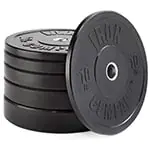
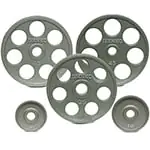
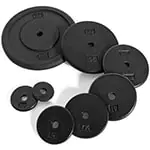
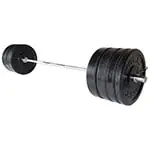
Weight Plates for Home, Commercial, School, and Facility Gyms
Weight plates from IRON COMPANY include Olympic barbell plates, bumper plates, cast iron Olympic plates, machined iron plates, rubber Olympic plates, urethane Olympic plates, technique plates, competition plates, fractional weight plates, change plates, and standard 1-inch plates for compatible barbells, dumbbell handles, pro-style dumbbell builds, home gyms, garage gyms, school weight rooms, commercial fitness centers, tactical training rooms, government fitness facilities, and institutional strength rooms.
Weight plates are the loading system behind barbell training, plate-loaded strength machines, adjustable dumbbell handles, pro-style dumbbell assemblies, landmine work, sled loading, and long-term progressive resistance training. The right plate depends on bar compatibility, center-hole diameter, plate material, sleeve space, weight accuracy expectations, coating type, noise expectations, flooring, storage, freight, and whether the plates will be used by one home user or many users in a shared facility.
Use this category to compare Olympic weight plates, commercial bumper plate options, cast iron weight plates, rubber-coated Olympic plates, urethane Olympic plates, fractional plates, technique plates, standard 1-inch plates, and bulk weight plate packages. IRON COMPANY has supplied gym equipment and flooring solutions since 1997 and supports residential, commercial, vertical-market, military, government, institutional, and facility buyers with product guidance, quoting, sourcing, and weight room planning support.
How to Choose the Right Weight Plates
The most important weight plate decision is compatibility. Olympic weight plates and bumper plates are designed for 2-inch Olympic bar sleeves, Olympic barbells, and many plate-loaded machines. Regular 1-inch plates are designed for compatible standard barbells, adjustable dumbbell handles, and some pro-style dumbbell assemblies. These systems are not interchangeable, so buyers should confirm bar sleeve diameter, plate center-hole size, collars, and storage before ordering.
Mixing Up Sleeve Diameters: Standard 1-Inch vs. Olympic 2-Inch Configurations — The single most frequent mistake made by buyers is assuming that all barbell and dumbbell plates share a universal center-hole diameter. The Structural Split: Standard weight plates feature a 1-inch center hole, engineered exclusively for legacy straight bars or specific adjustable handles, such as Regular Black Cast Iron Plates by CAP Barbell (RP). Conversely, commercial strength equipment, Olympic bars, and power bars utilize a much thicker 2-inch sleeve requirement. The Functional Bottleneck: Attempting to use a standard 1-inch iron plate on an Olympic sleeve is physically impossible, while loading an Olympic plate onto a 1-inch standard bar creates dangerous instability. Buyers must audit their existing bar inventory to ensure they match a 1-inch hole to a standard bar or a 2-inch hole to an Olympic bar.
Training style is the next decision. Bumper plates are commonly selected for Olympic lifting, functional training, and barbell movements where controlled drops may occur on an appropriate platform or flooring surface. Iron Olympic plates are typically thinner than bumper plates and can be a better fit when sleeve space, traditional strength training, and compact heavy loading are priorities. Rubber Olympic plates and urethane Olympic plates are often chosen for shared training rooms where handling, finish, appearance, and surface contact matter. Technique, competition, and fractional plates serve more specialized roles for skill development, competition-style loading, and smaller weight increases.
Buyers should also plan the room around the weight plates. Heavy plate packages and loaded plate trees can create concentrated floor loads. Bumper plate stacks, Olympic plate storage, weight plate trees, racks, platforms, and plate-loaded machines should be positioned with flooring, clearance, user traffic, and receiving logistics in mind. No plate, storage rack, or flooring setup should be described as eliminating all risk of floor damage, equipment damage, or user error.
Compare Weight Plate Types
Weight plates are not interchangeable. Use the stacked comparisons below to decide whether bumper plates, iron Olympic plates, regular 1-inch plates, rubber Olympic plates, technique plates, competition plates, fractional plates, or urethane Olympic plates are the right fit for your bars, equipment, training style, and facility plan.
Best fit: Olympic lifting, Cross-Training, functional fitness, platform lifting, school weight rooms, commercial training facilities, and home gyms where controlled barbell drops may be part of the program.
Buyer guidance: Choose bumper plates when the training plan includes snatches, clean and jerks, overhead lifts, technique work, or barbell movements where plates may contact the platform. Bumper plates are generally thicker than iron plates, so buyers should confirm bar sleeve length, total loading needs, storage, flooring, and whether the plate construction matches the expected traffic level.
Miscalculating Bar Sleeve Real Estate: Thick Bumpers vs. Thin Iron Profiles — When buyers transition from traditional iron plates to rubber bumper plates, they often forget to calculate how much physical space is actually available on their barbell's loadable sleeves. The Structural Split: Cast iron plates—such as Old School Gray Cast Iron Standard Barbell Olympic Plates by CAP Barbell (OPG#2) or Interlocking Machined Grip Plates by Troy Barbell (GO-I)—feature very slim profiles. This compact thickness allows powerlifters and heavy strength athletes to stack 500+ pounds tightly onto a standard bar sleeve. The Functional Bottleneck: Basic recycled rubber or crumb bumper plates are exceptionally thick to ensure structural durability and bounce suppression. Shifting entirely to thick bumpers means you might completely run out of sleeve real estate at just 245 or 315 pounds. For athletes training heavy compound movements, failing to balance a plate layout with slim change plates or compact steel profiles can prematurely cap your progressive lifting thresholds.
Best fit: Traditional strength training, powerlifting-style workouts, squats, bench press, deadlifts, rows, presses, plate-loaded machines, home gyms, and facilities that need compact loading on Olympic bars.
Buyer guidance: Choose iron Olympic plates when sleeve space, loading density, traditional feel, and cost-effective barbell loading are priorities. Iron plates should not be treated like bumper plates for repeated drops. Use appropriate flooring, platforms, and training rules when heavy iron plates are used in shared facilities.
Best fit: Standard 1-inch barbells, compatible adjustable dumbbell handles, pro-style dumbbell assemblies, compact home gyms, light commercial settings where appropriate, and specialty non-Olympic loading applications.
Buyer guidance: Choose regular 1-inch plates only when the bar, handle, or equipment uses a 1-inch sleeve. These plates are not designed for 2-inch Olympic bars. They can be useful for standard dumbbell handles and pro-style dumbbell builds, but buyers should verify handle length, collars, plate diameter, and intended use before ordering.
Best fit: Commercial gyms, school weight rooms, apartment fitness rooms, garage gyms, plate-loaded machines, and shared spaces where handling and surface contact are important buying considerations.
Buyer guidance: Choose rubber Olympic plates when you want Olympic plate compatibility with rubber coating, grip-handling options, and a different surface-contact profile than bare iron. Rubber-coated Olympic plates are not the same as bumper plates unless the product is specifically designed for that use, so buyers should confirm whether controlled drops are appropriate for the exact product.
Confusing Rubber-Coated Grip Plates with Bumper Plates in Drop Zones — Many facility managers and home gym builders assume that any plate encased in rubber or polyurethane is automatically safe to drop from shoulder or overhead height. This misunderstanding damages equipment. The Structural Split: Premium options like Iron Grip American Made Urethane Olympic Barbell Plates (UPT12) or Ivanko Rubber Encased Olympic Weight Plates (RUBO) are engineered with integrated multi-grip handles. These handles are designed for structural durability, silent machine loading, and easy hand transport. However, they feature rigid iron or steel cores underneath the protective layer. The Functional Bottleneck: If dropped repeatedly from a deadlift lockout or an overhead clean, the iron core can fracture, the coating can split, and the concrete subfloor can crack. True dropping zones call for dedicated rubber or polyurethane bumper plates, whose solid impact-absorbing compounds are made to take the fall.
Best fit: Olympic lifting skill development, competition-style training, powerlifting clubs, coaching environments, youth or beginner technique work where appropriate, and micro-loading programs.
Buyer guidance: Choose technique plates when bar height and skill practice matter at lighter loads. Choose fractional plates and change plates when small weight increases are important for progression. Choose competition or calibrated-style plates when product documentation supports tighter tolerance or competition-focused loading needs. Verify exact tolerances, plate diameter, hub design, and intended use on the product page before purchasing for a regulated competition setting.
Overlooking Weight Precision and Calibrated Tolerances for Progressive Strength — Beginners and budget-conscious procurement officers rarely inspect the weight tolerance standards of a plate before checkout, assuming a 45-pound plate weighs exactly 45 pounds. The Structural Split: Standard economy cast iron plates are cast to looser tolerances than calibrated plates, so one side of your barbell can be a few pounds heavier than the other during heavy squats or bench presses. The Functional Bottleneck: If you are managing competitive powerlifters or elite athletes where exact tracking matters, uniform accuracy counts. Serious training environments call for calibrated plates, such as Olympic Calibrated Powerlifting Plates by Ivanko (CBPP), so the load on the bar matches the training log.
Best fit: Premium commercial gyms, high-visibility training spaces, hospitality fitness rooms, corporate wellness rooms, institutional weight rooms, and home gyms where appearance, finish quality, and long-term presentation matter.
Buyer guidance: Choose urethane Olympic plates when buyers want a premium coating profile, clean appearance, and Olympic compatibility. Urethane grip plates are commonly used for general strength training and plate-loaded machines, while urethane bumper plates should be evaluated separately by product design. Confirm whether the exact urethane plate is intended for barbell drops, machine loading, or general strength training before ordering.
Neglecting Coating Durability in Prone or Uninsulated Environments — Selecting a plate material based purely on initial aesthetics rather than matching the compound to your facility's local humidity level is a recipe for premature asset degradation. The Structural Split: Raw cast iron or painted enamel plates offer a classic, nostalgic feel but little protection against moisture. In an uninsulated garage gym, a damp basement, or an outdoor military training room, bare iron pits and rusts quickly from humidity and salt from sweat. The Functional Bottleneck: To cut ongoing maintenance, high-traffic commercial environments and high-humidity spaces should look at polyurethane finishes, such as Urethane Olympic Plates with Grips by IRON COMPANY (IC-UOPG) or Colored Urethane Bumper Plates by American Barbell (BPU2). Polyurethane is low-odor, resists tearing better than standard rubber, does not rust, and stands up to frequent facility sanitizing.
Match Weight Plates to Bars, Machines, and Training Goals
Olympic Barbells and Power Bars
Olympic bars, power bars, and most commercial barbell systems use 2-inch sleeves. These bars require Olympic plates, bumper plates, or compatible Olympic change plates. Pair Olympic bars with matching collars, plate storage, and flooring that fits the training style. Buyers should confirm sleeve length when using thick bumper plates or large plate stacks.
Standard Bars and Dumbbell Handles
Regular weightlifting bars and many adjustable dumbbell handles use 1-inch plates. Standard 1-inch plates should be used only with compatible 1-inch bars, dumbbell handles, or assemblies. Do not buy 1-inch plates for Olympic bars, and do not assume Olympic plates will work correctly on standard bars.
Plate-Loaded Strength Equipment
Plate-loaded and leverage gym equipment often uses Olympic-sized weight horns, but buyers should confirm the exact machine requirements before ordering plates. Sleeve length, starting resistance, plate diameter, grip design, coating, and storage placement all affect how easy the machine is to use in a busy strength room.
Powerlifting and Heavy Strength Training
Powerlifting-focused spaces often prioritize compact plate profiles so more weight can fit on the bar sleeve. Iron Olympic plates, machined plates, and steel powerlifting plates may be better fits than thick bumper plates when maximum sleeve loading and traditional barbell training are priorities. Buyers should verify product-specific weight tolerance and dimensions when accuracy matters.
Olympic Lifting and Cross-Training Areas
Olympic lifting and functional training areas usually require bumper plates, appropriate barbells, platforms, collars, and flooring. Bumper plates can support controlled drops when the plate, bar, platform, and facility conditions are appropriate. Avoid using non-bumper iron, steel, or basic grip plates in repeated drop zones unless the product documentation clearly supports that use.
Balancing Sleeve Space Boundaries: Ultra-Thick Crumb vs. Slim Solid Virgin Rubber and Steel-Core Bumper Plates — Buyers transitioning to rubber bumper plates often forget to calculate how much physical space is actually available on their barbell's loadable sleeves, accidentally capping their progressive lifting limits. The Spatial Bottleneck: Basic recycled rubber or crumb bumper plates are exceptionally thick due to the large crumb rubber granules and polyurethane binding agents required to hold them together. Loading a barbell entirely with thick crumb bumpers means a heavy lifter may completely run out of loadable sleeve space at just 245 or 315 pounds, running out of room before hitting their true strength max. The Solution: For heavy functional training, Olympic lifting progression, or explosive compound movements where loading density matters, buyers should source slim-profile bumper plates. Rubber Bumper Plates by IRON COMPANY (IC-PBBPS) are thinner than recycled crumb variants because of their denser virgin rubber formulation. For the slimmest profile, competition-style options with iron or steel cores, such as American Barbell Colored Urethane Bumper Plates (BPU2), let you load more total weight on the sleeve while keeping a dead-bounce impact zone that protects the barbell and the flooring.
Micro-Loading and Technique Training
Fractional plates, change plates, and technique plates help buyers make smaller jumps in load or practice barbell movements at lighter weights. These plates are useful for Olympic lifting technique, strength progression, powerlifting accessories, coaching environments, and users who need more gradual loading than standard 5, 10, 25, and 45 lb. plates allow.
Demanding Weight Precision and Calibrated Tolerances for Elite Tracking — Budget-focused procurement officers rarely inspect weight tolerance standards, assuming every plate labeled "45 lbs" weighs exactly 45 pounds. The Performance Flaw: Standard economy iron plates are cast to looser tolerances than calibrated plates. In a heavy compound lift that variance can leave one side of your barbell heavier than the other. The Calibrated Fix: For tactical readiness testing centers, university athletic weight rooms, or competitive powerlifting clubs where precise tracking matters, calibrated plates are the answer. Precision-milled systems, such as the Olympic Calibrated Powerlifting Plates by Ivanko (CBPP), are made to a tight stated tolerance so the load on the bar matches the training log.
Best Fit and Not Ideal For
Best Fit
- Buyers who need loadable resistance for Olympic bars, power bars, plate-loaded machines, standard bars, dumbbell handles, landmines, sleds, and strength training systems.
- Home gyms, garage gyms, school weight rooms, commercial gyms, tactical training rooms, government fitness facilities, performance centers, and institutional strength rooms.
- Facilities comparing Olympic weight plates, bumper plates, iron Olympic plates, rubber Olympic plates, urethane Olympic plates, fractional plates, technique plates, and standard 1-inch plates.
- Buyers who need to coordinate plates with bars, collars, plate trees, storage, rubber gym flooring, lifting platforms, freight, receiving, and facility purchasing requirements.
People and facilities that should purchase weight plates:
- Commercial Clubs and High-Volume Group Training Centers: Multi-user facilities need pairs and full sets that handle smoothly and stand up to constant machine loading. Commercial-grade runs, such as Urethane Olympic Plates with Grips by IRON COMPANY (IC-UOPG) or Rubber Encased Olympic Weight Plates by Ivanko (RUBO), give members handles to carry plates across a busy floor, and their encased exteriors cut impact noise and keep metal off the steel of plate-loaded equipment.
- Olympic Lifting Platforms and Functional Fitness Boxes: Zones built for cleans, snatches, and heavy deadlifts need plates made to be dropped. Bumper lines such as Rubber Bumper Plates by IRON COMPANY (IC-PBBPS) or Chicago Extreme Solid Rubber Bumper Plates by Body-Solid (OBPX-OBPXC) give a dead bounce and absorb the drop; their dense formulations are thinner than recycled crumb bumpers, so heavy lifters can load more on the sleeve.
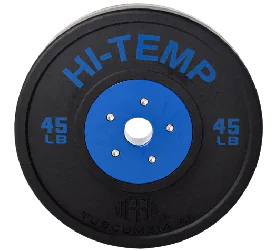
- Tactical Readiness Facilities and Government Training Sites: Military base gyms, police departments, and fire stations buying under federal procurement rules need plates that stand up to physical readiness testing. Heavy cast iron or dedicated drop plates — such as Old School Gray Cast Iron Standard Barbell Olympic Plates by CAP Barbell (OPG#2) or Hi-Temp Bumper Plates (HT-0) — are built for hard use; eligibility and origin are confirmed per product before a government order.
- Garage Gym Builders and Space-Constrained Residential Lifters: Home lifters working in a compact footprint should match plate purchases to their bar sleeve diameter. Standard 1-inch plates, such as Regular Black Cast Iron Plates by CAP Barbell (RP), are the right choice for traditional adjustable dumbbell handles and 1-inch straight bars. For gradual strength gains, a Fractional Olympic Weight Plate Set by IRON COMPANY (WFP) allows micro-loading down to a quarter of a pound.
- Athletic Performance Centers and Competitive Powerlifting Clubs: Collegiate weight rooms and lifting facilities built around maximal strength want even loading side to side. Calibrated plates, such as Olympic Calibrated Powerlifting Plates by Ivanko (CBPP), are made to a tight stated weight tolerance so the weight on the bar matches the lifter's log.
Not Ideal For
- Buyers who have not confirmed whether their bars or equipment use 2-inch Olympic sleeves or 1-inch standard sleeves.
- Repeated barbell drop zones that are being planned with non-bumper iron plates, steel plates, or basic rubber-coated grip plates instead of plates designed for that application.
- Facilities that need exact tolerance, competition approval, GSA eligibility, Made in USA status, warranty terms, or commercial-use ratings but have not verified those details on the exact product page or quote.
- Rooms that have not planned for plate storage, weight plate trees, sleeve capacity, training clearance, subfloor conditions, freight receiving, and safe movement of heavy pallets.
- Buyers expecting any plate coating, bumper construction, storage rack, or flooring setup to guarantee complete protection from floor damage, equipment damage, noise, vibration, or misuse.
People and facilities that should not purchase weight plates:
- Unmonitored Amenities and Unstaffed Fitness Rooms: Apartment gyms, self-service hotel fitness spaces, and corporate wellness areas without staff supervision are poor places for loose plates and separate barbells, which end up on the floor when no one re-racks them; guided selectorized machines or cable stations suit these rooms better.
- High-Volume Drop Zones Lacking Dedicated Bumper Plates and Platforms: Cross-training boxes, functional fitness zones, and athletic platforms where loaded bars are dropped from shoulder height or overhead should not buy iron, steel, or rubber-coated grip plates for that use. Dropping grip plates like American Made Urethane Olympic Barbell Plates by Iron Grip (UPT12), Interlocking Urethane Grip Plates by Troy Barbell (GO-U), or Rubber Encased Olympic Weight Plates by Ivanko (RUBO) can crack the subfloor, split the coating, and fracture the metal core. Drop zones call for solid bumper plates such as Rubber Bumper Plates by IRON COMPANY (IC-PBBPS) on a lifting platform.
- Acoustically Sensitive Studios and Upper-Level Multi-Tenant Facilities: Fitness zones above offices, retail, or housing should think twice before buying heavy cast iron packages like Old School Gray Cast Iron Standard Barbell Olympic Plates by CAP Barbell (OPG#2) or Black Iron Wide Flanged Weight Plates by Troy Barbell (PO-PLATE); metal-on-metal loading and plate contact concentrate impact on a small area, and without an acoustic plan and isolation flooring that noise and vibration carry through the building.
- Rehabilitation Clinics and Special Populations with Advanced Balance Impairments: Physical therapy practices, senior exercise areas, and neurological recovery centers should leave the choice of free-weight plates for balance-compromised patients to the treating clinician; loading a bar demands two-sided symmetry, core control, and grip strength, and track-guided machines or cable functional trainers may be the better fit.
- Buyers Using Existing Barbells with Mismatched Sleeve Ecosystems: Home gym builders or procurement officers who already own a stock of legacy strength bars must avoid buying plates without executing a precise tool audit. If your existing setup consists of standard 1-inch fixed sleeves, purchasing high-end 2-inch center-hole choices will leave you with a loose, spinning, and incredibly dangerous load. Conversely, if you own commercial Olympic bars, standard 1-inch center-hole iron like Regular Black Cast Iron Plates by CAP Barbell (RP) will physically not slide onto the thicker 2-inch bar sleeves, rendering the entire purchase completely unusable.
Common Weight Plate Buying Mistakes to Avoid
- Buying the wrong center-hole size: Olympic plates and bumper plates use 2-inch center holes for Olympic sleeves. Regular plates use 1-inch center holes for standard bars and dumbbell handles. Mixing these systems creates fit and stability problems.
- Using non-bumper plates in drop zones: Cast iron, machined steel, and many rubber-coated grip plates are not substitutes for bumper plates. If controlled drops are part of the program, use plates, bars, platforms, and flooring intended for that environment.
- Ignoring sleeve space: Bumper plates are wider than many iron plates. A lifter who needs very heavy barbell loads may run out of sleeve space sooner with thick bumper plates than with compact iron or steel plates.
- Assuming all rubber plates are bumper plates: Rubber Olympic grip plates may be rubber-coated for handling and surface contact, but that does not automatically mean they are designed for repeated barbell drops.
- Forgetting collars and storage: Barbell collars, plate trees, bumper plate storage, and rack-side plate pegs should be part of the purchase plan. Plates left on the floor can create clutter and make the room harder to manage.
- Underestimating freight and receiving: Weight plate orders can be extremely dense and may require palletized freight. Buyers should plan loading dock access, liftgate needs, delivery appointments, and how plates will be moved from the delivery point to the final training area.
- Using harsh cleaners on coated plates: Bleach-heavy, solvent-based, abrasive, or corrosive cleaners may damage rubber, urethane, paint, enamel, chrome hubs, or steel inserts. Use cleaning methods compatible with the product finish and follow manufacturer care instructions when available.
Weight Plate Storage, Flooring, Freight, and Facility Planning
Storage and Room Organization
Weight plates should be stored where users can load and unload bars or machines without blocking walkways. Weight plate trees, bumper plate racks, wall storage, rack-mounted plate pegs, and machine-side storage should be selected based on plate type, total load, sleeve diameter, user traffic, and room layout. Keep heavier plates lower when the storage system and facility layout support that approach.
Flooring and Lifting Zones
Weight plate areas should be paired with appropriate gym flooring when heavy lifting, plate-loaded machines, barbell drops, or repeated loading and unloading are expected. Rubber gym flooring, rubber gym mats, lifting platforms, or dedicated impact zones may be appropriate depending on the subfloor, plate type, barbell use, and facility conditions. No flooring setup should be treated as a guarantee against all damage.
Floor Load and Concentrated Weight
Large plate packages, loaded plate trees, bumper plate stacks, and heavy plate-loaded machine areas can concentrate substantial static weight into a small footprint. Ground-level concrete spaces are often easier to plan than upper-level rooms, wood-joist floors, or older buildings. For elevated floors or questionable subfloors, consult qualified building or facility professionals before placing heavy storage systems.
Freight, Receiving, and On-Site Movement
Bulk weight plates, full plate sets, bumper plate packages, and commercial gym plate orders may require palletized freight depending on order size and carrier rules. Commercial, school, government, and institutional buyers should confirm dock access, liftgate requirements, delivery appointments, inside-delivery limitations, elevator access, pallet jack needs, and the path from receiving to the final weight room. Residential buyers should plan driveway access and how plates will be moved safely after delivery.
Weight plate sets having a combined weight of 200 lbs. or less typically ship via parcel ground (UPS or FedEx) and are delivered right to your door like typical ground shipments.
Weight plate sets having a total combined weight of 200 lbs. or more are stacked and strapped on a standard wooden pallet of 40” x 48” or 48” x 48”. Plate sets will arrive via less than truckload (LTL) through one of our designated shipping carriers. Customers will receive a 24-hour notification and lift gate service to lower the plates to the ground when delivered curbside.
Care and Maintenance
Wipe plates dry after use, avoid leaving sweat or moisture on plates or collars, and avoid cleaning products that may damage finishes. Rubber, urethane, painted iron, enamel, bare iron, stainless inserts, and chrome hubs may require different care. Remove plates from service if they show severe cracking, loose inserts, sharp edges, coating failure, or another condition that could affect use.
Selecting Coating Engineering Based on Local Climate and Maintenance Limits — A weight plate's exterior finish dictates its lifespan based on the humidity, temperature controls, and sanitization volume of your training space. The Iron Risk: Classic raw iron or basic painted enamel options—such as the Old School Gray Cast Iron Standard Barbell Olympic Plates by CAP Barbell (OPG#2)—offer a budget-friendly price and a nostalgic lifting feel, but bare cast iron has little protection against oxidation. In an uninsulated garage gym, a damp basement facility, or an outdoor tactical locker room, raw iron rusts quickly from ambient moisture and sweat and needs regular wire-brushing and oiling. The Polyurethane Standard: To cut ongoing maintenance, commercial clubs, multi-housing amenities, and coastal military bases should invest upfront in polyurethane. Options like the Urethane Olympic Plates with Grips by IRON COMPANY (IC-UOPG) or Colored Urethane Bumper Plates by American Barbell (BPU2) are low-odor, resist tearing, do not rust, and stand up to commercial disinfectant routines.
Weight Plate Categories at a Glance
Bumper plates are Olympic plates commonly used for Olympic lifting, functional fitness, Cross-Training, and lifting platforms where controlled barbell drops may occur. Choose this category when barbell drop compatibility, plate diameter, platform use, and impact planning matter more than maximum sleeve space.
Iron Olympic plates are traditional 2-inch Olympic plates for strength training, powerlifting-style workouts, plate-loaded machines, and compact barbell loading. Choose this category when buyers want a classic plate feel, thinner profiles than many bumper plates, and straightforward Olympic bar compatibility.
Regular 1-inch plates are standard plates for compatible regular barbells, adjustable dumbbell handles, and some pro-style dumbbell builds. Choose this category only when the bar, dumbbell handle, or equipment uses a 1-inch sleeve.
Rubber Olympic plates include rubber-coated or rubber-encased 2-inch Olympic plates used for strength training, plate-loaded machines, and shared training environments. Choose this category when handling, grip design, coating, and surface-contact profile are important, while confirming the exact product’s intended use before using it in drop zones.
Technique plates, competition plates, fractional plates, and change plates help buyers plan skill development, competition-style loading, and smaller weight jumps. Choose this category when plate accuracy, bar height, micro-loading, and specialized progression matter more than basic plate quantity.
Urethane Olympic plates are premium 2-inch plates for buyers comparing long-term presentation, coating quality, appearance, handling, and high-visibility training rooms. Choose this category for premium weight rooms, commercial facilities, hospitality fitness rooms, corporate wellness spaces, and serious home gyms when the exact product design matches the intended use.
Featured Weight Plate Options
Related Free Weight, Bar, Storage, and Flooring Categories
Weight plates work best when the full barbell and storage system is planned together. Browse Free Weights for the full free weight category, or compare Olympic Bars, Regular Weightlifting Bars, Barbell Collars, Olympic Barbell Sets, and Pro-Style and Adjustable Dumbbell Handles before finalizing a plate purchase.
For complete strength rooms, review Strength Training Equipment, Plate Loaded and Leverage Strength Equipment, and Weight Plate Trees. For training area planning, review Gym Flooring, rubber gym mats, lifting platforms, and other surfaces that may be appropriate for the way plates will be loaded, stored, and used.
Weight Plate Guides and Buyer Resources
For more help comparing weight plates and strength room planning, review IRON COMPANY guides including The Ultimate Guide to Rubber Bumper Plates, Olympic Plate Buying Guide, and Gym Equipment Purchasing Guide. For broader facility planning, review IRON COMPANY Capabilities: Fitness Equipment and Flooring for Residential, Commercial, and Government Markets.
Three more IRON COMPANY articles compare plate types: Olympic weight plates and barbell plate packages compared, Chuck Miller’s weight plate comparison, and why buy Iron Grip free weight equipment.
Government and institutional buyers can review GSA Bid Information for purchasing support where applicable. Product-level eligibility, quote requirements, freight details, receiving needs, and procurement requirements should be confirmed before ordering.
We have delivered and installed weight plates of all kinds by themselves and as a component of total gym packages all over the United States to residential customers building out garage gyms, commercial gyms, university weight rooms, professional sports teams, performance centers, and to the federal government and military bases all over the world.
Garage gyms, CrossFit boxes, sports performance facilities, high schools and universities, and military bases across the United States come to IRON COMPANY for weight plates that are compatible with their existing Olympic weightlifting bars, power bars, and accessory bars such as EZ-curl bars. It is also important to buy weight plates that match your lifting style, fitness goals, and budget.
Federal government and military customers worldwide purchase TAA compliant weight plates that are available through our GSA contract as well as the IRON COMPANY website. TAA compliance means that products sold to the US federal government must be manufactured or substantially transformed either in the United States or within a designated TAA-compliant nation that maintains a fair trade agreement with the US. Examples include plates by IRON COMPANY, Iron Grip, Hi-Temp, Body-Solid, and American Barbell; TAA status is confirmed per product before a GSA order.
Common Questions About Weight Plates
What is the difference between Olympic plates and standard plates?
Olympic plates have 2-inch center holes for Olympic bar sleeves and many commercial plate-loaded machines. Standard plates have 1-inch center holes for compatible regular bars, adjustable dumbbell handles, and some pro-style dumbbell assemblies. Always match the plate to the bar or handle before ordering.
Matching Center-Hole Dimensions to Active Bar Sleeve Diameters — The most costly mistake buyers make is purchasing plates without verifying the physical sleeve diameter of their existing bars. Weight plates are strictly engineered into two non-interchangeable sizing ecosystems. Standard Sizing: Standard plates feature a 1-inch center hole designed exclusively for traditional 1-inch bars and specialized dumbbell handles, such as the Regular Black Cast Iron Plates by CAP Barbell (RP). These will not slide onto a professional bar. Olympic Sizing: Commercial gym equipment, plate-loaded strength machines, and structural power bars require a 2-inch center hole. Sourcing an Olympic-sized option for a 1-inch handle creates a highly unstable, dangerous shifting load. Buyers must audit their current bar stock to ensure they match a 1-inch hub to a standard bar or a 2-inch hub to an Olympic bar before checking out.
What is the difference between bumper plates and iron plates?
Bumper plates are usually thicker rubber or urethane plates used for Olympic lifting, technique work, and controlled barbell drops on appropriate platforms or flooring. Iron plates are more compact and are often selected for traditional strength training, powerlifting-style workouts, and heavy barbell loading where repeated drops are not part of the plan.
Choosing between these two categories comes down to your primary training style, facility flooring, and safety requirements. Buying the wrong type can cause immediate equipment failure or permanent floor damage.
Bumper Plates: These are solid rubber or high-density polyurethane molded around a central steel hub, made to be dropped from overhead or shoulder height, which makes them the right choice for functional fitness boxes, school weight rooms, and Olympic lifting zones. Options like Rubber Bumper Plates by IRON COMPANY (IC-PBBPS) or Chicago Extreme Solid Rubber Bumper Plates by Body-Solid (OBPX-OBPXC) give a dead bounce that absorbs the drop and protects the barbell, the plates, and the subfloor.
Iron Plates: Traditional cast iron or machined steel options—such as Old School Gray Cast Iron Standard Barbell Olympic Plates by CAP Barbell (OPG#2) or Interlocking Machined Grip Plates by Troy Barbell (GO-I)—are much thinner than bumper plates, so powerlifters and heavy strength athletes can stack more weight on a barbell sleeve for the bench press, squat, or deadlift. Iron plates are not made to be dropped; a drop can fracture the metal and crack a concrete floor.
Are rubber Olympic plates the same as bumper plates?
No. Rubber Olympic plates may be rubber-coated or rubber-encased for handling and surface-contact reasons, but that does not automatically mean they are intended for repeated drops. Buyers should check the exact product’s intended use before using any rubber-coated plate in a drop zone.
Differentiating Shock-Absorbing Bumper Plates from Rigid Grip Plates — Many buyers assume any plate encased in a rubberized exterior can be repeatedly dropped from shoulder or overhead height. This error can lead to equipment failure and floor damage. The Grip Plate Reality: Premium encased lines—such as the American Made Urethane Olympic Barbell Plates by Iron Grip (UPT12), Interlocking Urethane Grip Plates by Troy Barbell (GO-U), or Rubber Encased Olympic Weight Plates by Ivanko (RUBO)—feature integrated handle cutouts designed for comfortable manual transport and quiet machine loading. However, underneath that protective coating lies a solid, rigid iron or steel core. Dropping these plates can crack the inner iron, split the outer casing, and over time damage the concrete subfloor. The Bumper Plate Solution: True drop zones (such as Olympic lifting platforms, functional fitness boxes, or tactical training fields) demand specialized, solid Bumper Plates designed with a resilient compound that safely deflects downward kinetic energy.
When should I choose urethane Olympic plates?
Choose urethane Olympic plates when premium appearance, coating quality, handling, and long-term presentation are important. They are commonly considered for commercial gyms, corporate wellness rooms, hospitality fitness centers, and serious home gyms, but buyers should confirm the exact product’s intended use before using urethane plates for drops or machine loading.
What are fractional plates and change plates used for?
Fractional plates and change plates are used for smaller loading increases than standard plates allow. They can be useful for strength progression, Olympic lifting technique work, powerlifting accessories, and training programs where smaller jumps in weight matter.
Do weight plates need special storage?
Weight plates should be stored on compatible plate trees, bumper plate racks, plate storage pegs, or machine storage horns. Good storage keeps walkways clearer, makes plate loading faster, and helps organize the weight room by plate size and type.
What flooring should be used under weight plate areas?
The right flooring depends on the plate type, lifting style, subfloor, equipment, and whether drops or heavy loading are expected. Rubber gym flooring, rubber mats, weightlifting platforms, or dedicated impact zones may be appropriate. No flooring setup should be treated as a guarantee against all damage.
Can IRON COMPANY help with bulk weight plate quotes?
Yes. IRON COMPANY can help buyers compare weight plates, bumper plates, Olympic plates, standard 1-inch plates, urethane plates, fractional plates, collars, bars, storage, gym flooring, freight, receiving, and facility purchasing options. For government or institutional purchasing, product-level eligibility and quote requirements should be confirmed before ordering.
Are rubber-coated or urethane grip plates safe to drop?
The single most costly mistake facility buyers and home gym builders make is assuming that any weight plate with a rubber or polyurethane exterior is automatically safe to drop. This misunderstanding can void product warranties and damage equipment.
- The Grip Plate Reality: Premium encased lines—such as American Made Urethane Olympic Barbell Plates by Iron Grip (UPT12), Interlocking Urethane Grip Plates by Troy Barbell (GO-U), or Rubber Encased Olympic Weight Plates by Ivanko (RUBO)—are masterfully engineered with integrated multi-grip handle cutouts. These openings make manual transport across the room comfortable and simplify loading onto plate-loaded machines or selectorized strength benches. However, underneath that protective coating sits a rigid, solid iron or steel core.
- The Limitation: Dropped repeatedly from a deadlift lockout or shoulder height, the iron core can fracture, the urethane layer can split, and the concrete underneath can crack. Grip plates are meant for controlled machine or barbell loading where the weight is lowered smoothly. True drop zones call for solid bumper plates on thick rubber matting or a lifting platform.
What size center hole do I need to fit my barbell?
Weight plate center holes and barbell sleeve diameters are built around two strictly non-interchangeable sizing systems. Failing to perform a tool audit before checking out results in an entirely unusable configuration.
- Standard Sizing (1-Inch): Legacy home gym equipment, basic straight bars, and traditional adjustable dumbbell handles utilize a thin 1-inch diameter system. Sourcing options like Regular Black Cast Iron Plates by CAP Barbell (RP) is correct only if you are loading a 1-inch bar. These plates will physically not fit onto commercial equipment.
- Olympic Sizing (2-Inch): Modern commercial strength lines, professional power bars, plate-loaded leverage machines, and standard Olympic barbells utilize a much thicker 2-inch sleeve. Loading a 2-inch center-hole plate onto a thin 1-inch bar creates a loose, sliding, and highly dangerous shifting load. Always verify your existing bar stock dimensions to ensure you match a 1-inch hub to a standard bar or a 2-inch hub to an Olympic bar before placing a bulk order.
Why Buy Weight Plates from IRON COMPANY?
IRON COMPANY is an established e-commerce supplier of gym equipment, free weights, strength equipment, cardio equipment, gym flooring, and facility products for residential, commercial, vertical-market, military, government, institutional, and facility buyers. For weight plates, IRON COMPANY can help customers compare Olympic plates, bumper plates, iron plates, rubber Olympic plates, urethane plates, fractional plates, regular 1-inch plates, collars, bars, storage, flooring, freight, and room planning before ordering.
For product questions, quote requests, or facility purchasing support, visit IRON COMPANY Customer Care, Contact IRON COMPANY, or review GSA Bid Information for government purchasing support where applicable.
Shop Weight Plates
Shop weight plates above, or contact IRON COMPANY for help comparing Olympic barbell plates, bumper plates, heavy-duty rubber bumper plate options, cast iron weight plates, machined iron barbell plates, urethane Olympic plates, fractional weight plates, standard 1-inch plates, bars, collars, storage, flooring, freight, receiving, and facility purchasing options. For government or institutional purchasing, confirm product-level eligibility and quote requirements before ordering.
Read Less