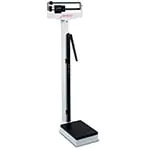
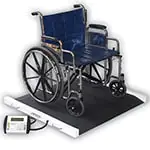
Weight Scales for Gyms, Clinics, Schools, Food Service, and Professional Facilities
Weight scales from IRON COMPANY include digital floor scales, mechanical dial scales, digital physician scales, weigh beam physician scales, wheelchair and bariatric scales, athletic weigh-in scales, dietary scales, and portion-control scales. Buyers can compare models for gyms, locker rooms, schools, athletic departments, clinics, wellness facilities, visiting-nurse programs, food-service operations, government facilities, and institutional environments.
The right weight scale depends on what or who will be weighed, the required capacity and measurement increment, platform size, user access, display location, power source, portability, connectivity, calibration needs, and whether the scale requires product-specific certification or local approval. A compact dietary scale, general-purpose gym scale, physician scale, athletic weigh-in scale, and wheelchair platform scale solve very different problems and should not be selected by price or capacity alone.
IRON COMPANY has supplied gym equipment and flooring solutions since 1997 and supports residential, commercial, vertical-market, military, government, institutional, and facility buyers with product comparison, custom quotes, equipment sourcing, freight planning, receiving guidance, and purchasing support.
How to Choose the Right Weight Scale
Start with the Weighing Application
Begin by defining the actual task. General gym or locker-room weighing may call for a digital floor scale or mechanical dial scale. Professional wellness or clinical-support environments may need a physician scale with a column display, height rod, remote indicator, or additional data functions. Wheelchair and bariatric applications require a platform and ramps sized for the intended mobility equipment. Food service and nutrition programs need smaller dietary or portion-control scales designed for item weighing rather than people.
Confirm Capacity and Measurement Increment
Capacity is the maximum load listed for the scale, while readability or graduation describes the smallest displayed increment. Select a capacity that accommodates the intended user or item without exceeding the manufacturer’s rating. Do not assume that a higher-capacity scale automatically provides a finer measurement increment. Compare both values on the exact product page.
Measure the Platform and Approach Area
Platform dimensions affect stance, wheelchair fit, container placement, and facility workflow. For wheelchair and bariatric scales, verify platform width and depth, ramp orientation, turning and approach space, display-cable reach, handrail options, transport wheels, and where the scale will be stored. There is no universal clearance figure that fits every facility; use the manufacturer’s dimensions and evaluate the actual room, doorway, circulation path, and user population.
Choose Digital or Mechanical Operation
Digital scales can provide backlit displays, remote indicators, automatic functions, data connectivity, additional weighing modes, or smaller measurement increments depending on the model. Mechanical dial and weigh beam scales require no batteries or electrical outlet and can be practical where straightforward operation is preferred. Mechanical operation does not eliminate the need for correct setup, inspection, calibration, or maintenance.
Review Power and Connectivity
Digital scales may use disposable batteries, rechargeable power, an AC adapter, or more than one power option. Some professional models also offer USB, RS-232, Bluetooth, Wi-Fi, Ethernet, printer, or electronic-record connectivity. Verify which functions are standard, optional, or unavailable on the exact model. Do not assume every digital physician or wheelchair scale can connect to the same software or facility network.
Determine Whether Certification or Approval Is Required
NTEP certification and legal-for-trade requirements apply to certain regulated commercial weighing applications, not automatically to every gym, home, school, clinic, or athletic use. Buyers should confirm whether the intended transaction, event, organization, agency, or local authority requires a certified scale, a particular measurement increment, or official inspection before use. A product marketed for athletic or professional weighing should not automatically be treated as approved for every competition or regulated application.
Compare Weight Scale Types
Best fit: Food service, commercial kitchens, nutrition programs, meal preparation, shipping departments, portion control, and small-item weighing.
Buyer guidance: Compare maximum capacity, measurement increment, dial or digital display, platform or bowl configuration, units of measure, tare functions, cleanability, power source, and any product-specific food-service or legal-for-trade documentation. Dietary scales are not intended to weigh people.
Best fit: Gyms, locker rooms, schools, athletic departments, wellness rooms, visiting-nurse programs, and general facility weighing.
Buyer guidance: Compare capacity, increment, platform size, display digit height, automatic on/off functions, battery type, portability, carpet or hard-floor compatibility, voice functions, carrying handles, and available connectivity. Confirm whether the exact scale is intended for personal, fitness, professional, or regulated use.
Best fit: Physician offices, clinics, wellness programs, schools, institutional facilities, and professional environments that need a digital column or remote display.
Buyer guidance: Compare platform height, capacity, measurement increment, height-rod availability, BMI or other included functions, display placement, handrail options, power source, data output, printer compatibility, mobility, and product-specific certifications. Do not assume every physician scale provides the same clinical, connectivity, or legal-for-trade functions.
Best fit: Home gyms, locker rooms, fitness facilities, schools, and general weighing areas where analog operation and no external power are preferred.
Buyer guidance: Compare dial size, graduation, capacity, platform dimensions, zero adjustment, surface requirements, visibility, and intended environment. A mechanical scale can simplify power planning, but it still needs correct positioning and periodic inspection.
Best fit: Professional, school, wellness, gym, and institutional environments that prefer manual beam-style measurement.
Buyer guidance: Compare pound, kilogram, or dual-unit configurations; total capacity; beam graduation; platform size; display visibility; height-rod range; wheels; handposts; and overall dimensions. Beam scales require proper balancing and operation and should be selected according to the intended workflow and user population.
Best fit: Facilities that need to weigh users while seated in wheelchairs or other compatible mobility equipment.
Buyer guidance: Compare platform dimensions, capacity, ramps, platform height, tare storage, remote-display location, cable length, handrails, transport wheels, fold-up storage, power, connectivity, and the dimensions of the wheelchairs used by the facility. Product design alone does not establish compliance with every accessibility requirement; review the complete room and applicable facility standards.
Legal-for-Trade, NTEP, Athletic, and Professional Weighing Considerations
A legal-for-trade scale is used in a regulated commercial application where weight affects price, payment, service, or another transaction. NTEP certification evaluates particular device models against applicable requirements, but a certified model may still require inspection and approval by the authorized state or local weights-and-measures agency before commercial use.
Athletic programs should verify the rules of the governing organization, event, conference, school, or sanctioning body. NTEP certification may be useful or required in some weigh-in settings, but no single certification statement should be applied to every sport or event without checking its current rules.
Professional or healthcare-oriented product names also do not establish diagnostic suitability for every clinical workflow. Buyers should review manufacturer documentation, facility policy, calibration procedures, data-security requirements, and qualified professional guidance before integrating scale measurements into medical records, treatment decisions, medication calculations, or other regulated processes.
Weight Scales by Facility Type
Gyms, Health Clubs, and Locker Rooms
Fitness facilities commonly compare digital floor scales and mechanical dial scales for general member weigh-ins. Useful features may include a low platform, readable display, sufficient capacity, easy cleaning, portability, and a design rated for the expected traffic. Place the scale away from congested equipment areas and provide enough room for users to step on and off without obstructing walkways.
Schools, Universities, and Athletic Programs
School and athletic buyers may need portable digital scales, mechanical physician scales, or NTEP-certified athletic scales depending on the sport, supervision, event requirements, and facility workflow. Consider transport, carrying cases, remote displays, storage, power, measurement increment, and who is responsible for inspection or calibration.
Clinics, Wellness Facilities, and Visiting-Nurse Programs
Professional environments may compare digital physician scales, mechanical weigh beam scales, portable floor scales, wheelchair scales, or bariatric platforms. Select features according to the user population, required platform access, measurement workflow, data connectivity, cleaning protocol, room size, and current manufacturer documentation.
Food Service, Nutrition, and Portion Control
Dietary and portion-control scales are designed for smaller loads and item measurement. Food-service buyers should compare measurement units, tare, platform construction, bowl or tray options, cleanability, capacity, increment, and any certification required for transactions determined by weight.
Government, Military, and Institutional Facilities
Government and institutional buyers should confirm product-level GSA eligibility, country of origin, contract status, exact model, included accessories, warranty, freight, calibration requirements, and documentation before ordering. Commercial website availability does not automatically mean that every scale is awarded under the same government contract terms.
Best Fit and Not Ideal For
Best Fit
- Gyms, locker rooms, schools, clinics, wellness programs, athletic departments, kitchens, government facilities, and institutional buyers comparing multiple scale formats.
- Buyers who need to compare capacity, increment, platform size, access, power, display, connectivity, portability, and certification before purchasing.
- Facilities selecting digital floor, mechanical dial, physician, weigh beam, wheelchair, bariatric, dietary, portion-control, or athletic scales.
- Procurement teams that need product-specific quotes, freight planning, and documentation support.
Not Ideal For
- Buyers assuming one general floor scale is suitable for food service, official athletic weigh-ins, wheelchair access, regulated commercial transactions, and professional clinical workflows.
- Facilities selecting a scale without confirming maximum capacity, measurement increment, platform dimensions, room access, or power requirements.
- Commercial weighing applications where the required certification, inspection, or local approval has not been confirmed.
- Buyers expecting every digital scale to include networking, body-composition functions, rechargeable power, or electronic-record integration.
- Facilities assuming that a product name such as physician, healthcare, athletic, or bariatric establishes universal approval for every use.
Common Weight Scale Buying Mistakes to Avoid
- Choosing insufficient capacity: Confirm the maximum intended user or item weight and select a product with an appropriate manufacturer-listed capacity. Do not routinely operate a scale beyond its rating.
- Confusing capacity with measurement resolution: A 1,000 lb. capacity does not necessarily mean the scale displays the same small increments as a lower-capacity model.
- Using the wrong scale type: A dietary scale, general floor scale, physician scale, athletic scale, and wheelchair scale are designed around different platforms, capacities, displays, and workflows.
- Assuming NTEP means ready for immediate commercial use: State or local inspection and approval may still be required before a scale is used in a regulated transaction.
- Ignoring platform and access dimensions: Wheelchair width, ramp direction, approach space, turning space, cable location, and storage configuration should be checked before purchasing a wheelchair or bariatric scale.
- Placing the scale on an unsuitable surface: Follow the exact manufacturer’s placement instructions. Many scales need a stable, level surface, while certain products include features intended for use on additional floor types.
- Assuming every connectivity option is included: Wi-Fi, Ethernet, Bluetooth, USB, RS-232, printers, software interfaces, and electronic-record integration may be optional or model-specific.
- Overlooking battery maintenance: Follow the product manual for battery type, replacement intervals, storage, and AC-operation procedures. Remove depleted batteries promptly and inspect battery compartments periodically.
- Spraying cleaners directly into electronic components: Apply only manufacturer-approved cleaning methods and prevent excess moisture from entering displays, keypads, load-cell areas, connectors, or battery compartments.
- Forgetting freight and receiving: Column scales, wheelchair platforms, and bariatric scales may require palletized delivery, liftgate service, dock access, delivery appointments, or additional handling.
Placement, Calibration, Power, Maintenance, and Freight Planning
Placement and Surface Conditions
Place the scale according to the manufacturer’s instructions on a surface that supports stable operation. Avoid positioning a general floor scale beside deadlift platforms, moving cardio equipment, doors, or crowded traffic paths when vibration or interference could affect workflow. Because product designs differ, do not apply one flooring rule to the entire category; confirm whether the exact scale is intended for hard floors, carpet, portable use, or a permanent platform location.
Calibration, Inspection, and Service
Review the manual for zeroing, calibration checks, service intervals, test weights, and authorized service procedures. Scales used for regulated commercial transactions may require inspection by the appropriate state or local authority. Athletic, institutional, or professional programs may also establish their own verification procedures.
Power and Data Planning
Confirm batteries, AC adapter requirements, outlet location, cord routing, charging procedures, and whether backup power is needed. For connected scales, verify interface type, software compatibility, network security, device support, and whether optional modules must be ordered separately.
Cleaning and Routine Inspection
Use manufacturer-approved cleaning products and methods. Wipe platforms, handrails, columns, displays, and controls without saturating electronics. Inspect ramps, platform mats, wheels, cables, handrails, displays, and power cords for damage or looseness. Follow the warranty and service documentation before attempting repairs or opening electronic components.
Freight and Receiving
Compact floor and dietary scales may ship by parcel, while large physician, wheelchair, and bariatric scales may ship by freight. Confirm packaged dimensions, shipment weight, curbside limitations, liftgate requirements, dock access, doorway width, elevator capacity, stairs, storage location, and who will move the scale from receiving to the final room.
Featured Weight Scale Options
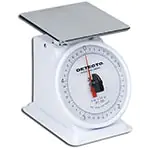
- Detecto PT-2 Mechanical Dial Portion Scale is a compact 32 oz. portion-control scale with a 6-inch dial and a 5.75-inch-square stainless steel platform on most configurations. Its small footprint is useful for food service, portioning, shipping, and other small-item weighing tasks.
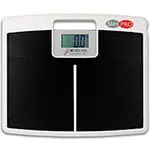
- Detecto SlimPRO Low-Profile Digital Healthcare Scale has a listed capacity of 600 lb. x 0.1 lb. or 272 kg x 0.1 kg, a 17-inch by 14.5-inch platform, Bluetooth Low Energy connectivity, voice settings, Mother/Baby mode, a backlit display, and battery power.
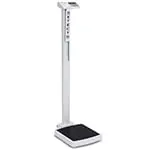
- Detecto 439 Eye-Level Mechanical Beam Physician Scale uses no electrical power and includes a height rod. The product page lists a 450 lb. x 4 oz. capacity, a height-measurement range of 24 to 84 inches, and a 14.75-inch by 10.75-inch platform.
- Detecto APEX-AT-AC NTEP-Certified Athletic Scale has a listed capacity of 600 lb. x 0.1 lb. or 300 kg x 0.05 kg, a low-profile 17-inch-square platform, remote indicator, carrying handle, and AC adapter configuration. Buyers should still verify the rules and inspection requirements of the intended event or jurisdiction.
- Detecto 6550 Portable Wheelchair Scale has a listed capacity of 1,000 lb. x 0.2 lb. or 450 kg x 0.1 kg, a 32-inch by 36-inch platform, two-way ramps, remote display, fold-up transport and storage configuration, and battery or optional AC operation.
- Detecto BRW1000-AC Portable Bariatric Wheelchair Scale has a listed capacity of 1,000 lb. x 0.2 lb. or 450 kg x 0.1 kg, a 32-inch by 40-inch platform, two-way ramps, remote display, AC adapter, transport wheels, and optional network-connectivity features.
Related Fitness Equipment, Flooring, and Facility Categories
Facilities building a complete fitness or wellness room can compare Strength Training Equipment, Cardio Equipment, and Free Weights alongside the scale location and intended user workflow.
Review Gym Flooring when planning the surrounding training space, but follow the scale manufacturer’s surface instructions rather than assuming every rubber mat, tile, carpet, or resilient floor is appropriate beneath the weighing device. Athletic programs can also review Cross Training, Boxing, and MMA Equipment when outfitting complete sport and weigh-in facilities.
Common Questions About Weight Scales
What type of weight scale is best for a gym or locker room?
Digital floor scales and mechanical dial floor scales are common choices for general member weighing. Compare capacity, platform size, display readability, power requirements, traffic level, portability, cleaning, and the manufacturer’s intended use.
What is the difference between a floor scale and a physician scale?
A general floor scale usually has a low platform and self-contained display. A physician scale may include a column, eye-level display, remote indicator, height rod, handrail, wheels, higher capacity, professional data functions, or additional connectivity depending on the model.
What does NTEP-certified mean?
NTEP certification means the specific device model has been evaluated against applicable requirements for commercial weighing equipment. It does not replace every state or local inspection, approval, registration, or installation requirement.
Do athletic weigh-ins require an NTEP scale?
Requirements vary by sport, event, school, governing organization, and jurisdiction. Verify the current rules before purchasing or using a scale for official weight-class determination.
How much capacity should a facility scale have?
Select a capacity that accommodates the intended user population or items without exceeding the manufacturer’s rating. Also compare the displayed increment, because capacity and measurement resolution are separate specifications.
What should I look for in a wheelchair scale?
Compare platform width and depth, ramp direction, platform height, capacity, tare storage, remote-display position, cable length, handrails, transport wheels, fold-up storage, power, connectivity, wheelchair dimensions, and room approach space.
Can a digital scale be placed on carpet or rubber gym flooring?
That depends on the exact model. Many scales require a stable, level surface, while some include feet or design features intended for additional floor types. Follow the manufacturer’s instructions instead of applying one placement rule to every scale.
How are large physician and wheelchair scales delivered?
Some large models ship by palletized freight rather than parcel service. Confirm packaged dimensions, liftgate requirements, curbside limitations, delivery appointment, dock access, doorways, elevators, stairs, and on-site handling before shipment.
Can IRON COMPANY quote scales for government or institutional buyers?
Yes. IRON COMPANY can assist with product comparison, custom quotes, freight, receiving, and purchasing support. GSA eligibility and other procurement requirements must be verified for each exact scale and configuration.
Why Buy Weight Scales from IRON COMPANY?
IRON COMPANY has supplied gym equipment and flooring solutions since 1997 and supports home, commercial, school, athletic, clinical-support, military, government, institutional, food-service, wellness, and facility buyers.
For help comparing dietary scales, digital floor scales, physician scales, mechanical dial scales, weigh beam scales, wheelchair scales, bariatric scales, athletic scales, freight, or government purchasing options, visit IRON COMPANY Customer Care or Contact IRON COMPANY.
Shop Weight Scales
Shop weight scales above, or contact IRON COMPANY for help matching the scale type, capacity, platform, display, power source, accessibility features, certification, connectivity, freight, and purchasing requirements to your facility.
Read Less