Bumper Plates
Bumper Plates for Olympic Lifting, Cross-Training, Home Gyms, and Commercial Facilities
Bumper plates are Olympic weight plates made primarily from rubber or urethane for barbell training where controlled drops may occur. IRON COMPANY... Read More
Bumper Plates for Olympic Lifting, Cross-Training, Home Gyms, and Commercial Facilities
Bumper plates are Olympic weight plates made primarily from rubber or urethane for barbell training where controlled drops may occur. IRON COMPANY offers recycled crumb rubber bumper plates, solid virgin rubber plates, urethane bumper plates, interlocking designs, black and color-coded plates, competition-style options, individual pairs, and complete bumper plate sets for home gyms, garage gyms, commercial fitness centers, school weight rooms, athletic facilities, tactical training rooms, and government fitness facilities.
The right bumper plate depends on more than the weight printed on its face. Buyers should compare plate material, outside diameter, plate thickness, weight tolerance, hub construction, rebound characteristics, Olympic-bar compatibility, available sleeve space, flooring, platform use, storage, warranty, and whether the plates will be used occasionally at home or repeatedly in a shared training facility.
IRON COMPANY has supplied gym equipment and flooring solutions since 1997 and supports residential, commercial, vertical-market, military, government, institutional, and facility buyers with product selection, bulk quoting, equipment sourcing, flooring, freight, and weight-room planning.
How to Choose the Right Bumper Plates
Begin with the training application. Olympic weightlifting and functional strength programs that include cleans, snatches, pulls, and other barbell movements may require plates designed for controlled drops when paired with an appropriate Olympic bar, collars, platform, and flooring. General strength training, deadlifts, presses, and rack work can also be performed with bumper plates, but buyers who need maximum weight on limited sleeve space may prefer thinner plate profiles.
Next, compare materials. Recycled crumb rubber bumper plates are commonly wider and can have a softer or more active rebound than denser virgin-rubber or urethane plates. Solid virgin rubber plates often provide a thinner profile than crumb rubber at the same weight. Urethane bumper plates can provide another premium option with molded color, a dense profile, and different wear characteristics. Actual bounce, odor, hardness, plate width, and service life vary by formulation and product.
Plate thickness matters when heavier training loads are planned. Wide 35, 45, 55, or 65 lb. crumb rubber plates can fill an Olympic bar sleeve sooner than thinner virgin-rubber, urethane, or calibrated competition-style plates. Calculate the total plate width on each side of the bar and leave enough usable sleeve space for compatible collars.
Buyers should also verify dimensions instead of assuming every bumper plate follows the same specification. Many full-size plates are approximately 450 mm in diameter, but products in this category range from 445 mm to 452 mm. Weight tolerance, center-hole diameter, plate thickness, hub construction, and warranty terms also vary by model.
Compare Bumper Plate Types
Recycled Crumb Rubber Bumper Plates
Best fit: Garage gyms, functional training areas, outdoor-capable installations where the exact product permits outdoor use, schools, training facilities, and buyers who want recycled-rubber options.
Buyer guidance: Crumb rubber plates are made from rubber granules bonded into a full-size plate. They are usually wider than dense virgin-rubber or urethane plates and may rebound more after a drop. Compare the exact plate width, outside diameter, durometer, stated weight tolerance, center insert, indoor or outdoor use guidance, and warranty before ordering.
Solid Virgin Rubber Bumper Plates
Best fit: Home gyms, commercial gyms, Olympic lifting areas, school weight rooms, and facilities that want a denser rubber plate with a more compact profile than many crumb-rubber designs.
Buyer guidance: Virgin-rubber bumper plates can offer thinner profiles and more controlled rebound than wider crumb-rubber plates, depending on the formulation. Compare hardness, weight tolerance, plate width, hub construction, warranty, and special use instructions for lightweight 10 and 15 lb. plates.
Urethane Bumper Plates
Best fit: Premium commercial fitness centers, corporate wellness rooms, hospitality gyms, athletic facilities, and buyers who prioritize molded color, compact plate dimensions, and a finished appearance.
Buyer guidance: Urethane bumper plates generally cost more than basic rubber plates. Compare actual plate thickness, hub design, warranty, color options, cleaning instructions, and replacement availability. Do not assume every urethane plate is approved for competition or appropriate for every drop environment.
Competition-Style Bumper Plates
Best fit: Olympic weightlifting clubs, performance facilities, coached lifting programs, and buyers who need thinner profiles, prominent steel hubs, and tighter stated weight tolerances.
Buyer guidance: Competition-style does not automatically mean approved for sanctioned competition. Verify outside diameter, weight tolerance, hub dimensions, color coding, governing-body approval, and the current product documentation when official competition use is required.
Interlocking Bumper Plates
Best fit: Buyers who want a plate face designed to nest with adjacent plates from the same compatible product line.
Buyer guidance: An interlocking profile can help adjacent matching plates sit together, but it does not replace barbell collars. Confirm that the plate design, bar sleeves, collars, total plate width, and weight increments fit the complete setup.
Black and Color-Coded Bumper Plates
Best fit: Black plates for a uniform weight-room appearance and color-coded plates for faster visual identification in shared lifting areas.
Buyer guidance: Color systems vary between pound and kilogram products. Some product lines use full colored plates, while others use colored flecks, lettering, or molded markings. Confirm the actual weight and do not rely only on color when multiple brands are used in one facility.
Bumper Plate Sets and Packages
Best fit: New home gyms, school weight rooms, commercial lifting stations, and facility projects that need planned weight increments rather than individual pairs.
Buyer guidance: Compare the included pairs, total package weight, number of bars or lifting stations, user strength levels, sleeve capacity, storage, freight, and replacement strategy. A complete set should match the way the facility will actually load its barbells.
Bumper Plates Compared with Other Weight Plates
Bumper plates are one part of the broader Weight Plates category. Their rubber or urethane construction and generally full-size profile make them useful where controlled barbell drops may occur. Iron Olympic plates are typically thinner and can be a better choice when compact heavy loading and maximum sleeve space are more important than drop use.
Rubber-coated and urethane-coated grip plates are different from bumper plates. A plate can have a protective coating without being designed for repeated drops. Buyers who need small weight increases, lightweight technique options, or specialized competition loading should also compare Technique, Competition, and Fraction Plates.
Match Bumper Plates to the Training Environment
Olympic Weightlifting
Olympic lifting areas should coordinate bumper plates with the correct Olympic bar, secure collars, a lifting platform, and flooring suited to the building and training volume. Buyers should compare plate diameter, thickness, rebound, weight tolerance, lightweight-plate restrictions, and the manufacturer’s drop-use guidance.
Functional and Cross-Training Facilities
High-repetition training areas often need multiple plate pairs, clear weight identification, organized storage, and enough open space around each barbell station. Recycled crumb rubber, solid rubber, color-coded, and interlocking designs can all be considered, but the correct choice depends on traffic, sleeve capacity, rebound expectations, and whether training occurs indoors or outdoors.
Deadlifts and General Strength Training
Bumper plates can be used for deadlifts, rows, presses, and other barbell exercises, but wide plates can limit maximum barbell loading. Buyers focused primarily on powerlifting-style loads should compare total plate width with available sleeve length before choosing bumper plates over thinner iron or calibrated steel options.
Home and Garage Gyms
Home buyers should account for room size, ventilation, floor construction, moisture, storage, barbell length, and noise transfer to adjacent rooms. A rubber plate may change the character of an impact compared with bare iron, but it does not eliminate structural vibration, floor damage, bar wear, or noise. Appropriate flooring and controlled lifting practices still matter.
Commercial Gyms, Schools, and Athletic Facilities
Shared facilities should plan bumper plates by the number of lifting stations, peak traffic, user experience, plate increments, warranty classification, replacement availability, and maintenance responsibilities. Color coding and organized storage can help users identify and return plates, while clearly separated lifting zones can improve room flow.
Outdoor Training Areas
Only use bumper plates outdoors when the exact manufacturer permits it. Weather, temperature, sunlight, moisture, surface abrasiveness, and storage conditions can affect plates and hubs. Outdoor-capable product guidance should never be applied to the entire category.
Military, Government, and Institutional Facilities
Government buyers should confirm product-level contract eligibility, country of origin, warranty, freight, delivery requirements, and any BAA or TAA documentation before ordering. A product appearing on the IRON COMPANY website is not automatically awarded under the same government contract terms as every other item.
Best Fit and Not Ideal For
Best Fit
- Olympic weightlifting and functional strength programs where controlled barbell drops may occur.
- Home gyms, commercial gyms, schools, athletic facilities, tactical rooms, and institutional weight rooms using compatible Olympic bars.
- Buyers comparing crumb rubber, virgin rubber, urethane, interlocking, color-coded, competition-style, and package options.
- Facilities that can coordinate plates with collars, storage, platforms, flooring, freight, and maintenance.
Not Ideal For
- Standard 1-inch barbells or dumbbell handles that do not accept Olympic plates.
- Buyers who need maximum heavy loading but have short bar sleeves and choose unusually wide bumper plates.
- Repeated drops on bare concrete, wood, thin carpet, foam tiles, or an underspecified subfloor.
- Facilities assuming every bumper plate is competition approved, outdoor rated, low bounce, USA made, or eligible for government purchasing.
- Buyers who have not checked lightweight-plate use restrictions, warranty exclusions, or collar compatibility.
Common Bumper Plate Buying Mistakes
- Buying for the wrong bar system: Bumper plates are intended for compatible Olympic-style sleeves, not standard 1-inch bars. Verify the plate opening, sleeve diameter, usable sleeve length, and collars.
- Ignoring plate width: Wide crumb-rubber plates can fill a bar sleeve before the desired training weight is reached. Calculate the full stack before ordering.
- Assuming every plate is exactly 450 mm: Current products in this category include outside diameters of 445 mm, approximately 450 mm, and 452 mm. Confirm the exact specification when mixed-brand alignment matters.
- Treating competition-style as certified: Product shape, color, diameter, or a large steel hub does not prove current governing-body approval.
- Dropping lightweight plates without checking instructions: Full-diameter 10 and 15 lb. plates are thinner than heavier plates and may have special warranty or use requirements. Some manufacturers require them to be used with additional plates on each side.
- Skipping collars: Interlocking faces or close-fitting hubs do not replace compatible barbell collars.
- Expecting the plates to protect the building by themselves: Bumper plates should be coordinated with appropriate platforms, flooring, subfloor conditions, room construction, and lifting practices.
- Assuming all products have the same warranty: Coverage varies significantly by brand, plate weight, facility type, and use.
- Forgetting storage and freight: Complete bumper plate packages can create substantial pallet weight and concentrated storage loads.
Barbell, Collar, Flooring, Platform, and Storage Planning
Olympic Bars and Sleeve Fit
Use bumper plates with compatible Olympic Barbells or other verified Olympic bars. Compare sleeve diameter, usable sleeve length, bar use rating, sleeve rotation, finish, and drop-use instructions. Plate fit can vary slightly between brands, especially when close-tolerance hubs are paired with economy bars.
Barbell Collars
Use compatible Barbell Collars to help keep plates positioned on the sleeves. Collar fit depends on sleeve diameter, surface, grooves, and bar design. Spring collars, clamp collars, competition collars, and specialty-bar collars are not universally interchangeable.
Power Racks and Lifting Stations
Facilities building complete stations can compare Power Cages with Weightlifting Platform Inserts and Half Racks and Quarter Cages. Plan J-cup position, safety arms, bar clearance, plate loading space, platform dimensions, and storage before equipment arrives.
Weightlifting Platforms and Gym Flooring
Weightlifting Platforms, appropriate Gym Flooring, and targeted protection such as a Black Heavy-Duty Rubber Deadlift Mat can be part of a complete lifting-zone plan. Product selection should account for the subfloor, building level, drop frequency, plate type, bar weight, and surrounding equipment. No flooring configuration should be represented as eliminating all noise, vibration, or structural risk.
Plate Storage
Store bumper plates on compatible plate trees, horizontal storage, vertical toast racks, integrated rack pegs, or other systems rated for the planned load. Keep walkways, emergency routes, loading zones, and active lifting areas clear. Calculate the total stored weight and distribute heavy plates according to the storage manufacturer’s instructions.
Freight and Receiving
Large bumper plate sets commonly ship by palletized freight. Confirm dock access, liftgate needs, delivery appointments, curbside limitations, elevator access, stair restrictions, hallway clearance, and who will move the plates from receiving to the final training area.
Cleaning and Maintenance
Wipe plates and hubs dry after use and avoid unapproved cleaners that may affect rubber, urethane, color markings, or metal inserts. Inspect plates for cracking, severe warping, loose hubs, exposed metal, or other damage. Follow each manufacturer’s cleaning, storage, and removal-from-service guidance.
Featured Bumper Plate Options
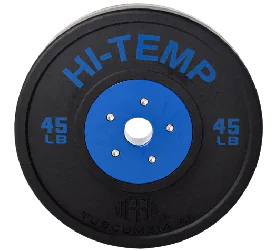
- Hi-Temp Bumper Plates are USA-made recycled crumb rubber plates offered in 10 through 65 lb. pairs. The product page lists a 445 mm diameter, 2-inch stainless steel insert, durometer of 75, and stated weight tolerance of ±1%.
- Troy Color-Coded Crumb Rubber Bumper Plates use recycled rubber with colored flecks and recessed stainless steel inserts. The product page lists 10 through 45 lb. sizes, a 17.72-inch diameter, 1.99-inch center hole, and stated weight tolerance of ±2%.
- IRON COMPANY Premium Rubber Bumper Plates use solid virgin rubber and are offered from 10 through 55 lb. The product page lists a 17.72-inch outside diameter, 1.99-inch hub opening, ±1% stated weight tolerance, and weight-specific commercial warranty terms.
- American Barbell Sport Colored Rubber Bumper Plates use a rubber compound with a 450 mm outside diameter. The current product offers black 10 and 15 lb. pairs, colored 25 through 55 lb. pairs, and a 260 lb. set.
- Troy Interlocking Rubber Bumper Plates use an interlocking plate-face design. The product page lists 10, 25, 35, and 45 lb. sizes, a 17.64-inch diameter, and stated weight tolerance of ±1%.
- USA Elite Competition Bumper Plates are USA-made recycled-rubber plates with a steel insert. The product page lists 25, 35, and 45 lb. pairs, a 210 lb. set, a 452 mm outside diameter, 50 mm insert, and stated weight tolerance of ±2%.
- IRON COMPANY USA-Made Bumper Plate Sets are offered in black or color-coded recycled-rubber configurations totaling 160, 260, 350, or 460 lb.
- American Barbell Colored Urethane Bumper Plates are 450 mm urethane plates offered in 25 through 55 lb. pairs and set configurations. The product page lists plate widths from 1.5 to 2.27 inches and a five-year limited breakage warranty with exclusions.
Helpful Bumper Plate and Weight-Room Resources
- The Ultimate Guide to Rubber Bumper Plates for training context and bumper-plate benefits.
- Weight Plate Comparison for comparing plate materials and formats.
- Buyer’s Guide to Olympic Barbell Collars for collar types and bar compatibility.
- IRON COMPANY Capabilities for residential, commercial, and government equipment and flooring support.
- GSA and CMAS Bid Information for government purchasing support where the exact product is eligible.
Common Questions About Bumper Plates
What are bumper plates?
Bumper plates are Olympic-style weight plates made primarily from rubber or urethane. They are commonly selected for Olympic lifting and other barbell training where controlled drops may occur on a suitable platform or flooring system.
What is the difference between crumb rubber, virgin rubber, and urethane bumper plates?
Crumb rubber plates use bonded recycled-rubber granules and are often wider with a more active rebound. Virgin-rubber plates use denser solid rubber and may offer a thinner profile. Urethane plates provide another dense premium format with molded color and different wear characteristics. Exact performance varies by product.
Are all bumper plates the same diameter?
No. Many full-size plates are close to 450 mm, but current products in this category include outside diameters of 445 mm, approximately 450 mm, and 452 mm. Verify dimensions when mixing brands or planning a technical lifting setup.
Do bumper plates fit every barbell?
No. They are intended for compatible Olympic-style sleeves, generally around 2 inches in diameter. They do not fit standard 1-inch bars, and close-tolerance hubs may fit some Olympic sleeves differently than others. Verify the exact bar, plate, and collar dimensions.
Can bumper plates be used for powerlifting and heavy deadlifts?
Yes, but plate width can limit maximum sleeve loading. Powerlifting-focused buyers should compare the total stack width of bumper plates with thinner iron or calibrated steel plates.
Do bumper plates prevent floor damage?
No plate can guarantee complete floor or subfloor protection. Bumper plates change impact characteristics compared with bare iron, but the lifting platform, flooring thickness, subfloor, building construction, loaded weight, drop height, and training frequency all matter.
Can 10 or 15 lb. bumper plates be dropped by themselves?
That depends on the product. Lightweight full-diameter plates are thinner than heavier plates and can have special use or warranty restrictions. Review the manufacturer’s instructions; some require additional plates on each side of the bar.
Are color-coded bumper plates more accurate than black plates?
Not necessarily. Color helps identify weight, but accuracy depends on the stated manufacturing tolerance and product design. Black, color-flecked, and fully colored plates can all have different tolerances.
Can IRON COMPANY quote bumper plates for commercial or government facilities?
Yes. IRON COMPANY can assist with plate selection, complete sets, bars, collars, racks, platforms, flooring, storage, freight, and facility quotes. Government-contract eligibility and country-of-origin documentation must be confirmed for each exact product.
Why Buy Bumper Plates from IRON COMPANY?
IRON COMPANY has supplied gym equipment, free weights, strength equipment, cardio equipment, storage, and gym flooring solutions since 1997. Buyers can compare recycled rubber, virgin rubber, urethane, interlocking, color-coded, USA-made, and competition-style bumper plates from multiple established manufacturers in one category.
For product questions, bulk quotes, freight planning, or facility purchasing support, visit IRON COMPANY Customer Care or Contact IRON COMPANY.
Shop Bumper Plates
Shop bumper plates above, or contact IRON COMPANY for help comparing crumb rubber, virgin rubber, urethane, interlocking, color-coded, competition-style, USA-made, and complete bumper plate packages for your Olympic bars, training space, flooring, storage, and purchasing requirements.