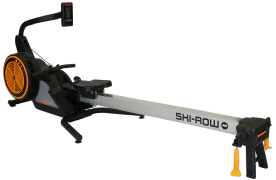
rowing machines
Rowing Machines for Home, Commercial, and Facility Cardio
Rowing machines provide seated cardio through a coordinated leg drive, controlled trunk position, and upper-body pull. Compare air, water, magnetic, and air-plus-magnetic indoor... Read More
Rowing Machines for Home, Commercial, and Facility Cardio
Rowing machines provide seated cardio through a coordinated leg drive, controlled trunk position, and upper-body pull. Compare air, water, magnetic, and air-plus-magnetic indoor rowers for home gyms, studios, schools, commercial facilities, performance rooms, and government fitness spaces. Choose by intended use rating, resistance feel and sound, operating footprint, storage method, console data, user fit, and maintenance requirements.
IRON COMPANY has supplied fitness equipment and flooring solutions since 1997. Buyers can compare individual product pages, request a quote, and contact the customer care team for help evaluating room constraints, delivery access, and application-specific requirements.
How to Choose a Rowing Machine
Start with the environment and expected use rather than resistance type alone. A rower selected for occasional home training may have different construction, warranty coverage, service needs, and storage features than a machine intended for repeated use in a shared facility. Confirm the manufacturer-published residential, light-commercial, or commercial use designation for the exact model before ordering.
- Resistance behavior: Compare how resistance changes during the stroke, whether levels are user-selected, and whether the mechanism produces fan noise, water sound, or minimal resistance-system noise.
- Operating and stored footprint: Measure the full machine length and width, then add the manufacturer-recommended user and traffic clearance. Check folded, separated, or upright dimensions only when that storage method is approved for the model.
- User fit: Review seat height, rail length, footplate adjustment, handle design, step-over requirements, and published user limits for the people expected to use the machine.
- Console and connectivity: Decide whether the facility needs basic time and distance, stroke rate, pace or split data, watts, heart-rate pairing, workout programs, app support, or fleet-wide consistency.
- Power requirements: Some rowers operate without an outlet, while electronically controlled consoles or resistance systems may use batteries, an internal generator, or facility power. Verify the exact specification.
- Serviceability: Consider access to replacement parts, rail and roller care, chain or belt maintenance, water-tank care where applicable, and the warranty terms for the intended setting.
- Delivery and assembly: Compare packaged dimensions, shipment method, doorway and stair access, assembly requirements, and the final route to the cardio area.
Essential Selection Factors for Choosing the Correct Indoor Rowing Machine — Selecting the right indoor rower requires balancing your training space layout, metabolic conditioning goals, and target user demands. To protect your investment and optimize safety, review this essential pre-purchase framework before finalizing a model for your home or shared fitness facility.
Environmental Sound Profiles and Effort Responsiveness — Indoor rowers diverge substantially in how they generate resistance and how much noise they emit into a facility or residential layout. Air / Fan Flywheels: Systems featuring an open fan blueprint—such as the Body-Solid Endurance R300 or Xebex Air Rower 2.0 (AR-2)—deliver an effort-responsive stroke. The harder you pull, the more wind resistance you create, accompanied by an audible rush of moving air. This reactive behavior is highly favored for competitive athletic conditioning, tactical military tuning, and metabolic interval programming. Water Fluid Flywheels: Utilizing internal paddles submerged within a fluid tank, options like the WaterRower Club Hardwood (150-S4) or the WaterRower Cherry Hardwood (200-S4) deliver a smooth, natural pull that mimics true on-water rowing, paired with a pleasant, meditative liquid "swoosh" sound. Pure Magnetic & Hybrid Networks: Pure magnetic mechanisms run quietly by using variable magnetic proximity over an enclosed flywheel, creating a steady pull that does not fluctuate with your stroke speed. For broader facility adaptability, choose an air-and-magnetic hybrid like the Spirit Fitness CRW800-BLK Commercial Rower or the Xebex AirPlus Rower 4.0 Smart Connect. These dual systems pair immediate fan velocity feedback with selectable magnetic resistance levels—16 on the Spirit CRW800—to target strength endurance directly.
Spatial Envelopes vs. Upright Vertical Storage Logistics — A common procurement mistake is ordering rowers based purely on static frame dimensions without accounting for the active physics of a rolling user. The Operating Clearance Boundary: While a standard frame tracks linearly across 8 to 9 feet, the user's sliding body mass, rear lean angle, and handle pull trajectory extend the functional training envelope significantly past the steel rails. The Storage Solution: You must explicitly draft a minimum 1-to-2-foot safety buffer zone around the entire operating perimeter to support smooth entry, exit, and coaching flow. For tight floor layouts or home gym basements, prioritize models featuring space-saving storage configurations. The Concept2 RowErg Indoor Rowing Machine with PM5 Console separates quickly into two self-contained frame components without tools, while the WaterRower Walnut Hardwood S4 (300-S4) and WaterRower A1 Home models are designed to stand upright against a structural wall when your training session ends; confirm the approved storage position on each product page.
Metabolic Efficiency and the Total-Body Muscle Recruitment Matrix — Buyers frequently miscategorize the biomechanics of an indoor rower, treating it as an upper-body accessory pull or back machine rather than an intensive metabolic engine. The Multi-Joint Reality: Indoor rowing is a seated "four-limb cardio" movement. Because a correct stroke requires continuous force transfer from the footplates, it activates the legs, core, back, and arms together. The correct sequence requires a strict kinetic cascade: a powerful lower-body leg drive, core bracing through the hips, and a final upper-body pull of the lats and arms. The Caloric Outcome: Because it splits the physiological workload across the entire posterior chain, rowing generates a high caloric burn and cardiovascular oxygen demand with lower joint impact compared to motorized treadmills. By removing the repeated foot-strike impact associated with running, it supports high-intensity intervals with less impact on the ankles, knees, and hips.
Institutional Duty Cycles and Warranty Thresholds — Forcing lighter-grade residential equipment into high-occupancy public environments can lead to rapid component fatigue, frame damage, and a voided manufacturer warranty. Lighter Grade Engineering: Home platforms are built for light weekly workouts. They typically employ lighter-duty seat roller bearings and lower-tensile drive straps meant for individual user weight capacity tolerances. Rugged Public Requirements: Shared commercial health clubs, varsity athletic centers, and military fitness environments require high-tier architectural materials. Institutional conditioning zones should prioritize commercial-rated rowers like the Assault Fitness Assault Rower Pro, the Assault AirRower Elite, or the TKO AirRaid Indoor Rower (8AR); confirm the published use designation on each product page. These models feature heavy-gauge steel structures, multi-grip handles, and chain-and-belt drive systems built for continuous commercial use; confirm rail construction and duty rating on each product page.
Preventive Maintenance and Subfloor Anchoring Requirements — No high-velocity cardio machine should be operated without proper floor protection or regular structural auditing. Subfloor Displacement Forces: The intense leg drive and fast body travel of a rigorous HIIT interval routine create continuous lateral shifting forces. Operating a rower over bare concrete or smooth tile without a base layer can damage your underlying subfloor and cause the machine to dangerously drift out of position. Rail and Roller Upkeep: Precision monorails are sensitive to ambient grit, debris, and human sweat. To keep seat tracking silky-smooth and prevent pitting or scraping along the metal, you must implement a simple preventive maintenance routine: wipe the monorail down with an approved non-abrasive cloth after each workout, check belt or chain lubrication where instructed, and treat water tanks periodically to maintain fluid clarity.
Cardio Asset Overview: Seated Rowers vs. Alternative Platforms
- Ground Joint Impact — Rowers: Low Impact; avoids foot-strike weight compression forces. Treadmills: High Impact; repeated running creates continuous shock along joints. Fan bikes: Low Impact; seated pedaling avoids foot-strike compression.
- Primary Muscle Focus — Rowers: Total Body; simultaneous leg drive and upper-body pull recruits the legs, core, back, and arms. Treadmills: Lower Body; isolates output to the lower extremities and core stability. Fan bikes: Lower Body; focuses muscular tension strictly on the legs and glutes.
- HIIT Responsiveness — Rowers: Instantaneous; flywheels react immediately to user stroke velocity. Treadmills: Delayed; requires manual speed adjustments and motor acceleration ramp times. Fan bikes: Instantaneous; open fan blades respond directly to user pedaling RPM.
- Footprint Portability — Rowers: High; continuous frame strips or folds vertically to clear valuable floor paths. Treadmills: Static; heavy vertical decks occupy permanent room space that cannot be stacked. Fan bikes: Fixed; small vertical layout remains anchored in position with zero folding.
Compare Indoor Rower Resistance Types
Air Resistance Rowers
Best fit: Interval training, performance rooms, and buyers who want resistance to respond directly to rowing effort.
Buyer guidance: An open flywheel produces an audible rush of air that becomes more noticeable as effort increases. Compare damper controls, drive system, console metrics, storage method, and cleaning access rather than assuming every air rower feels or sounds the same.
Water Resistance Rowers
Best fit: Home gyms, studios, and rooms where buyers prefer an effort-responsive stroke with the sound and visual presence of a water tank.
Buyer guidance: Compare tank placement, rail length, frame material, stored orientation, tank-water care, and the manufacturer’s cleaning instructions. Water resistance does not eliminate normal seat, rail, strap, or tank maintenance.
Magnetic Resistance Rowers
Best fit: Buyers who value selectable resistance levels and want to avoid the open-fan sound associated with air-only rowers.
Buyer guidance: Actual operating noise still depends on the strap or chain, seat rollers, frame, and floor. Verify whether resistance is manual or electronic, whether power is required, and how the selected level changes the stroke feel.
Air and Magnetic Hybrid Rowers
Best fit: Facilities seeking the effort response of a fan with additional selectable resistance control.
Buyer guidance: Compare the number of levels, handle or console controls, power source, folding design, program options, and maintenance access. A hybrid mechanism can add control, but it may also add electronics and product-specific service considerations.
Know the Difference Between Rowers, Ski Trainers, and Combination Machines
An indoor rower normally uses a sliding seat, footplates, and a horizontal pull. A ski trainer uses a standing double-pole movement, while a bike-and-rower combination changes between two exercise modes. These products may appear near one another in a cardio catalog, but their movement patterns, room layouts, storage methods, and adjustment requirements are not interchangeable.
Buyers comparing a rower with a ski trainer or upper-body cardio option should decide which movement the facility actually needs before comparing price or console features. Combination machines can conserve equipment count, but the buyer should verify how each mode adjusts and whether the published use designation covers the intended setting.
Match a Rowing Machine to the Training Environment
Home and Garage Gyms
Prioritize the complete operating footprint, household noise tolerance, floor surface, storage routine, ceiling clearance, and the path used to move the rower. A model that separates or folds may be more practical than one that must remain fully assembled, but storage claims should be confirmed in the manual.
Commercial Gyms, Studios, and Shared Cardio Rooms
Confirm that the manufacturer’s use designation and warranty apply to the expected traffic. Compare adjustment simplicity, console readability, replacement-part support, cleaning access, transport features, and the time staff will need for inspections and routine maintenance.
Performance and Interval Training Areas
Look for a resistance response, console format, and drive system that support the facility’s programming. When several rowers will be used together, consistent monitor settings, units of measure, heart-rate compatibility, and machine placement can simplify coaching and workout setup.
Schools, Institutions, and Government Fitness Facilities
Evaluate the full user population, supervision plan, published use rating, room circulation, receiving access, assembly responsibility, replacement-part availability, and procurement requirements. Do not assume a model is eligible for a particular contract or purchasing method solely because it appears in a general rowing-machine category.
Best Fit and Not Ideal For
Rowing Machines Are a Strong Fit For
- Buyers who want one seated cardio movement that coordinates the legs, trunk, and upper body.
- Home and facility users who want intensity to range from controlled pacing to harder intervals.
- Training programs that use measurable data such as time, distance, stroke rate, pace, or watts when the selected console provides those metrics.
- Rooms with enough linear floor space and a practical plan for access, storage, cleaning, and maintenance.
People that should purchase rowing machines:
Who Benefits Most? Top Facility Types and Buyers for Indoor Rowing Machines — Investing in an indoor rowing machine provides distinct structural, financial, and metabolic advantages depending on your venue profile and programming requirements. To determine if an indoor rower is the correct asset class for your budget, footprint, and daily training intensity, see which specific buyer profile matches your project goals.
- Tactical, Military, and Government Fitness Facilities — From active-duty military bases to federal law enforcement academies, government buyers require high mechanical durability to withstand demanding daily training regimens. The Strategic Fit: Tactical athletes require equipment that responds instantly to explosive, maximum-effort anaerobic intervals. Because many rowers offer a non-motorized, user-powered design, they provide low operational risk and reduce the electrical utility requirements common to large treadmill banks. Product Alignment: These high-demand government spaces prioritize heavy-duty commercial armor like the Assault Fitness Assault Rower Pro, Assault AirRower Elite, or the TKO AirRaid Indoor Rower (8AR). Government procurement officers can source these institutional workhorses through our federal GSA contract schedule (47QSMA22D08NN); product-level eligibility is confirmed at quote time.
- Cross-Training Box Links and HIIT Performance Rooms — For high-intensity functional fitness facilities, athletic performance rooms, and interval-based boutique studios, the rapid velocity scaling of an open flywheel is a common requirement. The Strategic Fit: Group training programming demands immediate data tracking that changes on a dime. Athletes need to transition from floor exercises to full-throttle cardio sprints instantly without waiting for a motorized belt to slowly ramp up to speed. Product Alignment: Air-driven flywheels excel in these fast-paced environments because the wind resistance rises sharply with the user's pulling speed. Deploying a line of Xebex Air Rower 2.0 (AR-2) or Xebex Air Rower 2.0 Smart Connect units lets coaches track output metrics like stroke rate, 500-meter split times, and wattage. These units are built with solid steel chains and reinforced framework to handle continuous maximum-effort intervals.
- Boutique Studios, Corporate Offices, and Multi-Tenant Amenity Spaces — Commercial properties, corporate wellness lofts, and hospitality facilities often operate with strict ambient noise boundaries and strict floor space limitations. The Strategic Fit: In shared commercial buildings or multi-housing amenity rooms, the loud wind roar of an open air flywheel can disrupt nearby office workers or sleeping tenants. Furthermore, property managers need the flexibility to clear the floor path when hosting alternative fitness classes. Product Alignment: For sound-sensitive locations, a water-tank fluid flywheel or a hybrid drive is recommended. The WaterRower Club Hardwood (150-S4) or WaterRower Cherry Hardwood (200-S4) deliver a smooth, natural stroke accompanied by a relaxing liquid "swoosh" sound. For added mechanical versatility, the Spirit Fitness CRW800-BLK Commercial Rower combines quiet air-fan feedback with 16 selectable magnetic resistance levels, allowing users to fine-tune their workout volume regardless of pull speed.
- Solo Home Lifters, Renters, and Custom Garage Gyms — Residential homeowners and garage gym enthusiasts frequently prioritize total-body exercise capability, cost efficiency, and compact storage logistics. The Strategic Fit: Budgeting for separate leg, back, and arm training assets is often space-prohibitive in a home environment. Rowing serves as a "four-limb cardio" movement because a correct stroke uses the legs, core, back, and arms together. It splits the metabolic workload across your quads, glutes, core, back, and arms, burning calories efficiently in less training time. Product Alignment: If your floor space is limited, standard treadmills are hard to store out of the way. Conversely, our featured residential and light-commercial rowers are engineered for rapid portability. The Concept2 RowErg Indoor Rowing Machine with PM5 Console separates cleanly into two compact frame pieces without tools, while the WaterRower A1 Home is designed to stand upright against a closet or wall; confirm the approved storage position on the product page.
- Physical Therapy Clinics and Post-Injury Rehabilitation Centers — Clinical spaces, medical-rehabilitation centers, and senior wellness environments often need to minimize joint-pounding compression forces. The Strategic Fit: Patients recovering from lower-extremity orthopedic issues or spinal joint strain may not tolerate the repeated impact associated with motorized running. Seated rowing provides a low-impact environment that keeps conditioning to a fluid, user-controlled plane of motion. Product Alignment: Rebuilding motor patterns benefits from a stable, guided movement path. By pushing off the footplates and keeping the core braced, patients can perform cardiovascular conditioning without foot-strike compression, as directed by their clinician. Incorporating a protective mat or dedicated rubber flooring beneath your stabilizers further dampens frame vibrations, providing a stable foundation for progressive clinical tracking.
Direct Procurement Overview: When to Deploy Indoor Rowers
- Choose Commercial Air Rowers If: Your core programming centers entirely on high-velocity HIIT training, tactical military conditioning, and metric-driven anaerobic pacing.
- Choose Hardwood Fluid Water Rowers If: Your space is a luxury residential loft, upscale hotel amenity, or private personal training studio where premium wood aesthetics and quiet fluid acoustics are a priority.
- Choose Air-and-Magnetic Hybrid Rowers If: Your venue caters to a highly diverse clientele, and you require the ability to select strict, unvarying resistance levels for light rehab regardless of how fast a user pulls the handle.
A Rowing Machine May Not Be the Right Choice For
- Rooms that cannot provide the model-specific operating clearance or an approved storage location.
- Buyers who need walking, running, cycling, stair-climbing, or upper-body-only movement specificity.
- Users who cannot comfortably reach and control the catch and finish positions without individualized instruction or professional guidance.
- Facilities that cannot support the inspection, cleaning, and maintenance schedule required by the selected machine.
People that should do more research before buying rowing machines:
Who Should Avoid a Rowing Machine? Facility Types and Profiles Better Suited for Alternative Cardio — While indoor rowing machines provide a demanding, total-body metabolic workout, they are not the right asset for every user or setting. Specific physical limitations, room dimensions, unstaffed facility environments, and distinct conditioning goals mean that alternative categories—such as stationary exercise bikes, treadmills, or specialized standing ski trainers—may better protect your budget. Review these specific buyer profiles and functional boundaries to ensure your cardio equipment procurement is correctly directed.
- Unstaffed Commercial Suites or Facilities Lacking Technique Supervision — Hospitality fitness centers, corporate wellness hubs, and unstaffed multi-housing amenity rooms often serve a revolving door of general users with zero formal exercise coaching. The Constraint: Unlike a stationary bike or an upright treadmill where a user can simply step on and press "start," a seated rowing machine requires a technical sequence of body movement. Executing a stroke incorrectly—such as pulling prematurely with the arms or bowing the lower back—severely compromises performance, limits your true calorie burn, and can lead to immediate joint strain. The Better Investment: If your training center will be entirely unstaffed, general members may find a traditional upright or recumbent stationary bike more approachable and intuitive, which can lower setup instruction needs and liability exposure.
- Users with Specific Lumbar or Hip Mobility Limitations — Individuals returning from severe lower back injuries, or facility members with strict physical limitations regarding ground-height boarding, may find the sliding mechanics of a rower counterproductive. The Constraint: Although indoor rowing is a low-impact exercise that removes the joint compression of a treadmill strike, it demands deep, repetitive trunk flexion and hip hinging at the "catch" phase of the stroke. Trainees suffering from compromised lumbar stability, chronic lower back issues, or severe hip restrictions can struggle to hold a tall, braced posture under load. The Better Investment: Furthermore, the low seat height profile of standard commercial frames can make boarding and dismounting physically difficult for rehabilitation patients or older adults. If joint-friendly cardiovascular conditioning is required but lumbar trunk flexion is prohibited, a low-impact stationary exercise bike or a standing vertical option like the Concept2 SkiErg with PM5 Performance Monitor may be the better anatomical fit.
- Micro-Footprint Facility Zones and Low-Ceiling Layouts — Cardio decks operating within tight square footage restrictions, small spare bedrooms, or basement rooms with low vertical clearances face immediate spatial layout challenges. The Constraint: A dedicated rowing machine requires a long horizontal floor lane during operation. While standard exercise bikes occupy a compact footprint, a commercial rower spans a linear lane of 8 to 9 feet. Attempting to fit a row of these units without a strict 2-foot safety buffer zone on all sides results in cramped walkways. The Better Investment: Additionally, if you intend to store the equipment upright to save floor space when not in use, a vertical model like the WaterRower Club Hardwood S4 needs ceiling clearance for its full stored height; confirm the stored dimensions on the product page. If your absolute spatial dimensions are constrained and vertical storage is blocked by hanging light fixtures or air ducts, a compact stationary exercise bike is a far more efficient layout option.
- High-End Boutique Spaces Prohibiting Ambient Fan Acoustics — Luxury hotel wellness rooms, quiet office gyms, or high-density luxury residential spaces where several cardio units operate simultaneously must strictly manage background decibel levels. The Constraint: Institutional air flywheels—found on the Xebex Air Rower 2.0 (AR-2) or Assault Fitness Assault Rower Pro—rely on open fan blades to generate effort-responsive wind resistance. The harder and faster an athlete pulls, the more wind resistance is created, which is accompanied by an audible, high-velocity rush of air. The Better Investment: If a row of trainees is executing a high-intensity HIIT interval block together, the cumulative fan noise can completely overwhelm ambient music or disrupt nearby guests. For sound-sensitive spaces where open-fan wind noise is prohibited, air rowers should be bypassed in favor of quieter magnetic or hybrid platforms like the Spirit Fitness CRW800-BLK Commercial Rower, or facilities should divert directly to quiet magnetic exercise bikes.
- Athletes Focused Exclusively on Maximum Absolute Strength Hypertrophy — Bodybuilders, heavy powerlifters, and pure strength purists looking to build raw muscular mass or absolute force production often allocate cardio budgets inefficiently when over-specifying rowing fleets. The Constraint: Seated indoor rowing is a metabolic engine that builds full-body aerobic and anaerobic strength endurance. Because it divides its tension across the legs, core, back, and arms over long, continuous durations, it is not engineered to trigger the localized mechanical overload required for pure muscular hypertrophy. The Better Investment: If your primary fitness goal is absolute strength building or heavy raw lifting, your capital and room space are better directed away from cardiovascular monorails. Investing in heavy-duty welded free-weight power racks, plate-loaded leverage machinery, or multi-station selectorized weight stacks will better drive your specific muscle hypertrophy goals.
Direct Operational Trade-Offs: When to Divert From an Indoor Rower
- Divert to an Upright or Recumbent Exercise Bike Instead If: Your facility is completely unstaffed, or your target clientele consists of users with acute mobility limitations who require an intuitive, low-liability cardio tool that demands zero setup instruction.
- Divert to a Standing Ski Trainer Instead If: You need high-intensity, low-impact upper-body and core metabolic conditioning but have strict horizontal floor space boundaries that cannot support a long 9-foot linear frame rail.
- Divert to a Plate-Loaded Strength Station Instead If: Your immediate programming goals are centered on absolute force velocity, powerlifting development, or localized muscle building rather than total-body cardiorespiratory endurance.
Common Rowing Machine Buying Mistakes to Avoid
- Measuring only the frame: The user’s body and handle travel extend the functional training envelope. Measure the complete operating area, not just the machine dimensions.
- Assuming every rower stores vertically: Some models fold, some separate, some allow an upright position, and others have model-specific storage restrictions. Verify the approved method and ceiling clearance.
- Using a residential model in a shared facility: A product that works in a home may fall outside its published use designation or warranty when placed in a commercial, school, studio, or institutional setting.
- Buying by resistance label alone: Two air, water, or magnetic rowers can differ substantially in drive system, rail construction, console, seat height, service access, and storage design.
- Overlooking user fit: Tall users, users seeking a higher entry point, and mixed populations may require different rail lengths, seat heights, footplate adjustments, or access characteristics.
- Assuming all wireless features work together: Verify the exact heart-rate protocol, app compatibility, device requirements, and whether accessories are included or sold separately.
- Using unapproved cleaners: Harsh or abrasive products can damage rails, rollers, straps, tanks, coatings, or electronics. Follow the product manual rather than applying one cleaning method to every rower.
- Ignoring freight and assembly: Confirm packaged size, delivery service, receiving equipment, doorway access, stairs, elevator limits, and who will assemble and place the machine.
- Treating every catalog item as the same exercise type: A ski trainer or bike-and-rower combination is not a direct substitute for a dedicated indoor rowing machine.
When expanding a commercial fitness center, outfitting a tactical training room, or upgrading a custom residential space, investing in an indoor rowing machine is a common choice for low-impact, multi-joint cardiovascular conditioning. However, because rowers operate uniquely compared to traditional upright cardio platforms, buyers frequently make critical calculation errors regarding operating footprints, resistance variations, and technique mechanics.
To ensure you deploy the correct asset class for your budget, clientele, and facility limits, we have compiled the top five things buyers get wrong about indoor rowing machines, backed by decades of procurement experience at IRON COMPANY.
Measuring Only the Physical Frame for Space Layouts — The single most frequent structural mistake facility operators and homeowners make is drafting room blueprints based solely on the machine's static length and width. The Misconception: Believing that an 8-foot rower will fit perfectly into a strict 8-foot floor slot. The Functional Reality: While a standard frame typically spans 8 to 9 feet, the user’s body extends significantly past the rear rail at the finish position, and handle travel requires extra functional room. Maneuvering around the station for boarding, dismounting, or team transitions expands the true spatial threshold. The Structural Fix: You must calculate the comprehensive training envelope, adding at least 1 to 2 feet of clear traffic space around the entire perimeter. For tight footprints where space consolidation is essential, verify that your model supports an approved storage method. Units like the Concept2 RowErg separate cleanly into two independent pieces without tools, while options such as the WaterRower Club Hardwood S4 or WaterRower A1 Home are designed to stand upright on a compact vertical footprint; confirm the approved storage position on each product page.
Assuming Resistance Types Feel and Function Similarly — Purchasing an indoor rower based on price tag alone without auditing how the internal mechanical delivery system responds to user effort can cause major procurement issues. The Misconception: Assuming air, water, magnetic, and hybrid rowers create identical physiological feedback and noise levels. The Functional Reality: Air rowers (like the Body-Solid Endurance R300 or Xebex Air Rower 2.0 (AR-2)) use an open flywheel fan; resistance responds instantly to effort, meaning the harder you pull, the more resistance you create, accompanied by an audible rush of air. Water rowers use internal paddles moving through a fluid tank to deliver a smooth stroke with a natural sound. Conversely, magnetic systems provide steady resistance levels regardless of stroke speed, making them much quieter but less reactive to explosive athletic output. The Structural Fix: Balance your performance goals with your room's environmental noise tolerance. For mixed-use studios or apartments, pure magnetic or fluid water tanks provide the quietest sound parameters. If your program demands data-tracked anaerobic conditioning, air flywheels are the standard. For a wider range of training resistance, consider an air-and-magnetic hybrid like the Xebex AirPlus Rower 4.0 Smart Connect or the Spirit Fitness CRW800-BLK Commercial Rower, which blend effort-responsive fan feedback with manual magnetic level controls.
Believing Rowing is Primarily an Upper-Body and Arm Exercise — Trainees and buying agents frequently misinterpret the physical physics of the rowing stroke, viewing the machine purely as a specialized pull-down or back station. The Misconception: Believing that the arms and upper back do 100% of the functional work to burn calories and build capacity. The Functional Reality: Indoor rowing is a "four-limb cardio" movement, but the legs are the primary power engine. A correct stroke follows a strict "legs-body-arms" kinetic sequence: quads and glutes launch the initial drive, the core stays braced to stabilize the torso, the hamstrings extend, and the mid-back and lats transfer force to the handle while the arms finish the path. Bypassing the leg drive reduces calorie-burning efficiency and can place added strain on the lower back. The Structural Fix: Educate your facility staff or personal training clients on proper stroke sequencing (Catch → Drive → Finish → Recovery). Because rowing requires continuous force transference through the heels, it engages the legs, core, back, and arms together in one movement, unlike upper-body-only cardio tools.
Deploying Residential Equipment in Public or Shared Spaces — Procurement officers attempting to stretch a budget by placing entry-tier residential rowers into multi-user institutional settings risk rapid equipment failure. The Misconception: Believing a home gym rower can survive the daily workloads of a dues-paying health club, collegiate athletic room, or corporate wellness center. The Functional Reality: Residential models are engineered with lighter frame gauges, entry-level seat roller bearings, and internal drive straps meant for individual weekly use. Forcing these configurations into high-occupancy commercial environments can fall outside the manufacturer's use designation and warranty and exposes the drive chains or slide rails to premature mechanical fatigue. The Structural Fix: Public commercial hubs and government tactical centers require heavy-duty architectural armor. Ensure your specified models carry a manufacturer-published full commercial use designation—such as the Assault Fitness Assault Rower Pro or the TKO AirRaid Indoor Rower (8AR); confirm the designation on each product page. These high-tier assets feature rugged steel framework and chain-and-belt drives built for continuous public use; confirm rail construction and warranty terms on each product page.
Overlooking Subfloor Protection and Maintenance Realities — Many buyers treat the floor surface beneath cardio machinery as an afterthought, assuming heavy seated frames remain perfectly motionless without maintenance. The Misconception: Believing rowers can be placed directly onto bare hardwood or unreinforced commercial carpet without slipping or requiring upkeep. The Functional Reality: The aggressive leg drive and powerful body acceleration of high-velocity rowing generate continuous lateral and vertical shifting forces. Over time, this mechanical torque can warp wood subfloors, tear carpets, or scratch foundation concrete. Furthermore, ambient sweat and debris settle on the monorail, causing seat rollers to jump, catch, or pit the aluminum. The Structural Fix: Budgeting for specialized floor protection is strongly recommended. You must deploy a dense, dedicated cardio equipment mat or professional rubber gym flooring directly beneath the rower stabilizers to anchor the machine, absorb vibration, and contain sweat. Additionally, implement a strict preventative maintenance routine: wipe down slide rails with an approved non-abrasive cloth after each session, check chain or belt alignment, and treat water tanks periodically to protect the internal paddle assemblies.
Cardio Comparison Matrix: Rowing Machines vs. Traditional Platforms
- Biomechanical Kinetic Impact — Rowers: Low Impact; seated configuration avoids foot-strike joint compression. Treadmills: High Impact; repeated foot-strike creates high loading force on knees and ankles. Fan bikes: Low Impact; continuous seated pedaling eliminates ground strike compression forces.
- Muscular Recruitment Scope — Rowers: Total Body; simultaneous leg drive, core bracing, and upper-body pull work the legs, core, back, and arms together. Treadmills: Lower Body Isolated; primarily demands lower extremity propulsion with core support. Fan bikes: Lower Body Isolated; limits prime mover action to quads, glutes, hamstrings, and calves.
- Anaerobic HIIT Responsiveness — Rowers: Instantaneous; fluid and air flywheels react immediately to user stroke velocity. Treadmills: Delayed; requires manual speed adjustments and motor acceleration ramp times. Fan bikes: Instantaneous; open fan blades respond directly to user pedaling RPM speed.
- Floor Footprint Utilization — Rowers: Horizontal Mass; requires a long linear lane but stores vertically to save space. Treadmills: Fixed Footprint; most commercial decks occupy a large permanent footprint and are not designed to fold or stack. Fan bikes: Compact Vertical; small, concentrated floor footprint with no folding structural mobility.
Rowing Machine Space, Flooring, Power, and Receiving Planning
Operating Space and Storage
Use the exact model’s assembled dimensions and recommended clearance. Mark the proposed footprint on the floor and confirm that the user can mount, row, dismount, and move around the machine without entering doors, walkways, racks, or neighboring cardio stations. For stored equipment, check the approved orientation, stored dimensions, ceiling fixtures, and transport route.
Floor Surface and Equipment Mats
Place the rower on a flat, stable surface that allows its levelers or stabilizers to contact the floor as designed. A compatible machine mat or gym flooring system can help define the station and manage sweat and debris, but it does not correct an uneven substrate or replace model-specific placement instructions.
Power and Connectivity
Confirm outlet needs, battery type, internal power generation, wireless protocols, heart-rate accessories, network restrictions, and application requirements before equipment arrives. This is especially important when a facility wants several consoles to share one training or asset-management workflow.
Freight, Receiving, and Assembly
Review the shipping method shown on the individual product page. Larger machines may arrive by freight with curbside service, an appointment, or optional delivery services. Verify truck access, dock or liftgate needs, receiving hours, packaged dimensions, and the route to the final room. Inspect the shipment before signing and document visible damage according to the carrier and seller instructions. See IRON COMPANY Customer Care for current ordering and receiving information.
Indoor rowing machines that do not exceed the dimensional threshold and/or maximum gross weight of 150 lbs. can ship via ground parcel (UPS or FedEx).
Rowers that are oversized and too heavy to ship via ground parcel will ship strapped and secured to an oversized custom made wooden pallet via LTL freight through one of our preferred shipping carriers. Some rowers are packed securely enough at the factory to allow multiple units to be stacked and shipped on a single pallet. Customers will receive a 24-hour notification and lift gate service to lower their rowing machine(s) to the ground when delivered curbside.
Most rowing machines arrive with some assembly required. Tools and instructions are included with most rowers but make sure you have access to basic tools such as a hammer, pliers, and a screwdriver just in case.
Maintenance That Protects Rowing Feel and Service Life
Follow the exact manufacturer schedule. Keep the seat rail or monorail free of sweat and debris with an approved non-abrasive cloth and cleaner, and inspect rollers for buildup or uneven travel. Maintain chains, straps, belts, fasteners, foot restraints, and moving connections only as directed in the manual.
Water rowers may also require tank-water treatment or other tank care specified by the manufacturer. Do not assume a disinfectant that is suitable for one surface is suitable for rails, rollers, tanks, plastics, coatings, or console screens. Keep manuals, warranty documents, and service records available to facility staff.
Featured Rowing Machine Options
Concept2 RowErg Indoor Rowing Machine with PM5 Console
The RowErg includes the PM5 performance monitor, is offered in standard and elevated seat-height configurations, and separates into two pieces without tools for storage. Compare the selected leg-height configuration, available training data, device compatibility, and required operating clearance.
Assault Fitness Assault Rower Pro
This air rower uses a dual-stage chain-and-belt drive and includes a multi-grip handle, adjustable footplates, a built-in transport handle, and transport wheels. It does not require an external electrical connection for operation.
TKO AirRaid Indoor Rower
The AirRaid provides nine air-damper settings and console feedback for time, stroke rate, distance, calories, and watts, with heart-rate tracking when paired with a compatible monitor. Transport wheels support repositioning within the room.
Spirit Fitness Commercial Rower with Air and Magnetic Resistance
The Spirit CRW800 combines air and magnetic resistance with 16 selectable levels, remote handle controls, a folding frame, and a 5.5-inch display.
Product availability, specifications, included accessories, warranties, shipping terms, and use ratings can change. Review the current product page and manufacturer documentation before placing an order or specifying equipment for a facility.
Related Cardio Equipment, Flooring, and Buyer Resources
Compare the complete cardio equipment selection or review popular indoor rowers. Buyers evaluating different movement patterns can also compare treadmills, elliptical trainers, exercise bikes, stair climbers, and upper body ergometers.
For additional planning context, read Indoor Rowing Machines: Full-Body, Low-Impact Cardio and The Ultimate Guide to Cardio Equipment. Facility buyers can also review IRON COMPANY equipment, flooring, delivery, and installation capabilities.
Government Rowing Machine Purchasing
IRON COMPANY holds GSA contract 47QSMA22D08NN. Current product eligibility, contract pricing, ordering method, shipping, and documentation should be verified for the exact rowing machine at quote time. Government and institutional buyers can review GSA bid information and contact IRON COMPANY before placing a contract order.
Common Questions About Rowing Machines
Which rowing machine resistance type should I choose?
Choose air resistance for effort-responsive fan resistance, water resistance for an effort-responsive tank system and water sound, magnetic resistance for selectable levels without an open flywheel, or an air-and-magnetic hybrid when you want both fan response and added level control. Then compare use rating, footprint, console, user fit, maintenance, and warranty.
Which resistance type is best: air, water, or magnetic?
This is a frequent question because the internal flywheel mechanics largely dictate the sound level, stroke response, and overall feel of the exercise.
- The Expert Answer: Neither mechanism is universally superior; your choice must align with your training style and noise tolerances. Air rowers—such as the Body-Solid Endurance R300 or the Xebex Air Rower 2.0 (AR-2)—utilize open fan blades to deliver an effort-responsive stroke where the resistance increases naturally the harder you pull, accompanied by a noticeable rush of moving air. Water rowers—like the WaterRower Club Hardwood S4 or WaterRower A1 Home—offer an equally responsive pull but substitute a liquid tank for a smooth, fluid feel and a peaceful, meditative aquatic "swoosh."
- The Static & Hybrid Alternatives: Pure magnetic systems provide quiet operation and fixed, unvarying resistance levels regardless of your pull velocity. For broader facility programming flexibility, choose an air-and-magnetic hybrid like the Spirit Fitness CRW800-BLK Commercial Rower or the Xebex AirPlus Rower 4.0 Smart Connect, which combine the reactive acceleration of a fan flywheel with manual magnetic adjustments to target strength endurance directly.
How much room does an indoor rower need?
There is no safe universal footprint for every rowing machine. Use the exact assembled dimensions plus the manufacturer’s recommended user and traffic clearance. Measure the stored configuration separately and account for doors, walls, overhead fixtures, adjacent machines, and the route used to move the rower.
How much linear floor space does an indoor rowing machine actually need?
Many buyers make critical layout mistakes by drafting blueprints based solely on the physical length of the steel frame.
- The Expert Answer: A standard frame rail typically spans 8 to 9 feet, but you cannot safely slot it into a matching 9-foot gap. Because rowing is a dynamic horizontal movement, the user's sliding leg drive, rearward trunk lean, and handle path extend the functional training envelope significantly past the static machine dimensions.
- The Spatial Clearance Fix: To ensure safe boarding, dismounting, and free traffic flow, you must add a minimum 1-to-2-foot perimeter buffer zone around the machine. For micro-footprint residential basements or tight multi-housing amenity rooms, choose models designed for rapid portability. The Concept2 RowErg splits cleanly into two self-contained sections without tools, while the WaterRower Cherry Hardwood (200-S4) or WaterRower Walnut Hardwood (300-S4) models are designed to stand upright against a structural wall; confirm the approved storage position on each product page.
Can a rowing machine be stored upright?
Only when the manufacturer approves that position for the exact model. Other rowers fold or separate into sections, and tank-equipped machines may have specific storage instructions. Check stored dimensions, ceiling clearance, stability requirements, and the manual before relying on vertical storage.
What makes a rower appropriate for a commercial gym?
The product’s published use designation and warranty should cover the facility and expected traffic. Also compare frame and rail design, drive system, adjustment points, console durability, service access, replacement parts, cleaning procedures, and staff maintenance capacity.
What is the difference between a home rower and a commercial rowing machine?
Procurement agents trying to stretch a budget frequently confuse residential equipment with institutional-grade assets, resulting in rapid mechanical wear.
- The Expert Answer: The primary differentiators are frame rail composition, roller bearing durability, drive system tensile ratings, and the manufacturer’s warranty terms. Economy home gym models are optimized for light weekly use by individual owners and are shipped in small boxes with high part counts.
- The Commercial Benchmark: Institutional facilities—such as dues-paying health clubs, school team weight rooms, and tactical military spaces—require the heavy-duty structural armor of an Assault Fitness Assault Rower Pro, Assault AirRower Elite, or TKO AirRaid Indoor Rower (8AR). These high-tier workhorses feature thick-walled steel frames and chain-and-belt drive systems built for continuous public use under heavy weight capacities; confirm rail construction and capacity on each product page.
Are rowing machines lower impact than running?
Rowing avoids the repeated foot strike of running, but it still requires repeated motion at the hips, knees, ankles, shoulders, and trunk. Comfort and suitability depend on technique, setup, mobility, and individual health. Buyers with pain, mobility limitations, or medical concerns should seek individualized guidance from a qualified professional.
Is an indoor rower safe for individuals with lower back pain or knee issues?
Medical suitability and physical limitations are primary health concerns for rehabilitation clinics, senior wellness spaces, and post-injury lifters.
- The Expert Answer: Seated rowing is a low-impact alternative because it removes the repeated foot-strike compression associated with running. This reduces impact loading on the ankles, knees, and hips.
- The Lumbar Posture Caveat: However, because the "catch" phase of the stroke demands repetitive trunk flexion and hip hinging under load, rowing requires an active, braced core posture. Trainees with acute lumbar instability or severe spinal issues should approach the machine with care. Rebuilding motor patterns safely requires a stable frame, so install a dense, protective cardio equipment mat or professional rubber gym flooring directly beneath your stabilizers to deaden frame vibrations and keep the machine anchored.
Does rowing burn more calories than a treadmill or exercise bike?
Prospective buyers frequently compare metabolic burn metrics across cardio equipment classes to maximize their conditioning efficiency per training minute.
- The Expert Answer: With proper technique, rowing can match the caloric output of upright running and typically exceeds stationary cycling at a similar effort, because it recruits more muscle mass. Traditional bikes isolate work strictly to the legs, and treadmills rely heavily on a motorized belt to maintain user speed. Seated indoor rowing, conversely, is a "four-limb cardio" movement.
- The Muscle Recruitment Matrix: Because a correct stroke requires continuous force transfer from the footplates, it activates the legs, core, back, and arms across a strict kinetic sequence (legs, body, arms). Launching with a powerful leg drive, bracing through the core, and finishing with the lats and arms splits the physiological stress across your entire body, generating demanding intervals and a high heart-rate response.
What console data should a facility compare?
Common fields include time, distance, stroke rate, pace or split, watts, calories, programs, and heart-rate data. Verify which fields the exact model reports, how consistently they can be compared across a fleet, and whether required sensors, apps, or wireless accessories are included.
Do rowing machines require electricity?
Requirements vary. Some air rowers operate without an outlet, while other consoles or resistance systems use batteries, an internal generator, or external power. Confirm power, battery, charging, and network requirements before planning the equipment location.
How should an indoor rower be maintained?
Keep the rail and rollers clean, inspect straps or chains and fastening points, follow the specified lubrication schedule, and use only approved cleaners. Water rowers may require tank-water care. The product manual and warranty document should control the maintenance plan.
Can government agencies purchase rowing machines through GSA?
IRON COMPANY holds a GSA contract, but product-level eligibility and ordering requirements must be confirmed for the exact model. Request a current quote and supporting contract information before treating a rower as available through a federal purchasing channel.
Why Buy Rowing Machines from IRON COMPANY?
Established in 1997, IRON COMPANY supplies gym equipment and flooring solutions for residential, commercial, institutional, vertical-market, military, and government buyers. The team can help compare product types, request quotes, coordinate available delivery options, and identify documentation that should be reviewed before a facility purchase.
Why Procurement Officers Trust IRON COMPANY — Since 1997, IRON COMPANY has supplied institutional gym equipment, heavy-duty commercial cardio, and rubber flooring. Whether you are outfitting a government training facility via our federal GSA contract schedule (47QSMA22D08NN), outfitting a public health center with TAA-compliant cardio equipment, or designing a high-end custom home training loft, our team of fitness specialists provides procurement, delivery routing, and specification support.
IRON COMPANY supplies indoor rowing machines to residential customers, personal training studios, high schools and universities, multi-unit housing complexes, hotel fitness spaces, commercial gyms, VA hospitals, and federal procurement customers.
Federal government and military customers worldwide purchase TAA compliant indoor rowing machines that are available through our GSA contract as well as the IRON COMPANY website. TAA compliance means that products sold to the US federal government must be manufactured or substantially transformed either in the United States or within a designated TAA-compliant nation that maintains a fair trade agreement with the US. Examples include rowing machines by Assault Fitness, Concept 2, Throwdown, Spirit Fitness, SportsArt America, Body Solid, Xebex, and BodyCraft; TAA status is confirmed per product before a GSA order.
Learn more about IRON COMPANY, review Customer Care, view the company’s Better Business Bureau profile, or contact IRON COMPANY at 888-758-7527 for category guidance and quote support.
Shop Rowing Machines
Compare resistance type, intended use, room fit, storage, console features, service requirements, and delivery details across the rowing machines above. For multi-unit orders or help narrowing the selection, request a quote or call 888-758-7527.