Olympic Bars for Weightlifting, Powerlifting, and Specialty Strength Training
Olympic weightlifting bars, power bars, and specialty bars include unloaded 2-inch-sleeve bars for home gyms, garage gyms, commercial fitness centers, school weight rooms, athletic training facilities, tactical training rooms and institutional strength areas. Compare Olympic weightlifting bars, power bars, multipurpose training bars, short Olympic bars, lightweight technique bars, curl and tricep bars, trap and hex bars, safety squat bars, and other verified specialty bars by dimensions, sleeve construction, plate fit, rack compatibility, use rating, and warranty.
This leaf category focuses on unloaded Olympic-size bars. Buyers comparing Olympic bars with standard 1-inch bars or direct barbell setup tools can return to Weightlifting Bars and Barbell Training Equipment, browse Standard 1-Inch Barbells, EZ Curl Bars and Tricep Bars, or review Barbell Accessories, Landmine Attachments and Weightlifting Tools. Complete barbell sets and weight sets belong in the separate Barbells and Sets category.
Suggested Olympic Weightlifting Bars, Power Bars, and Specialty Bars
Compare these Olympic bars by intended training style, unloaded weight, shaft diameter, knurl pattern, center knurl, sleeve construction, rotation system, finish, rack compatibility, and warranty. Review each product page for current specifications, price, availability, shipping, and approved use before ordering.
IRON COMPANY 47-Inch Chrome Olympic Curl Bar
IRON COMPANY 47-Inch Chrome Curl Bar is a compact Olympic specialty bar for curls, extensions, and related arm-training movements. It uses angled narrow and wide grip positions, a 28 mm gripping area, bronze-bushing sleeves, and 50 mm Olympic loading ends.
Consider this bar when a shorter Olympic curl-bar format fits the training plan. Confirm its 22 lb. unloaded weight, 700 lb. stated capacity, separately sold collars, storage requirements, and limited warranty before purchase.
IRON COMPANY 5150 Olympic Weightlifting Bar
IRON COMPANY 5150 Olympic Weightlifting Bar is a 20 kg Olympic bar intended for weightlifting and mixed strength training. Compare its shaft diameter, tensile-strength specification, sleeve rotation, knurl pattern, center-knurl configuration, finish, and current handling guidance on the live product page.
This bar may suit buyers seeking a full-length Olympic weightlifting format rather than a shorter specialty or dedicated stiff power bar. Verify current bumper-plate guidance, rack fit, warranty, and collar requirements.
IRON COMPANY Olympic Power Squat Bar
IRON COMPANY Olympic Power Squat Bar is an American-made, black-oxide Olympic training bar offered with or without center knurling. Its current product documentation identifies a 150,000 PSI alloy-steel shaft, bronze-bushing sleeve rotation, and one-piece sleeve assemblies.
Consider this bar for general strength, squats, and mixed Olympic-bar training when medium knurling and a choice of center-knurl configuration fit the program. Confirm the exact selected model, shaft dimensions, warranty, and current use documentation.
Legend Fitness American-Made Olympic Weightlifting Bar
Legend Fitness American-Made Olympic Weightlifting Bar combines a bright-zinc shaft with black-zinc sleeves and dual Oilite bushings. The current page identifies 16.5-inch loadable sleeve areas, low-rise knurling, and medium whip.
Consider this bar when domestic manufacturing, comparatively mild knurling, long sleeves, and a rackable full-length design fit the facility. Review the exact unloaded weight, capacity, dimensions, warranty, and intended-use rating before ordering.
IRON COMPANY Iron Cowboy Powerlifting Bar
IRON COMPANY Iron Cowboy Powerlifting Bar is an American-made power bar designed around squats, bench presses, and deadlifts. It uses a 28.5 mm shaft, aggressive diamond knurling with center knurl, hard-chrome sleeves, and bronze bushings.
This bar may suit buyers who want a comparatively stiff, powerlifting-focused format with IPF-style dimensions. Confirm the current 200,000 PSI shaft specification, rack fit, sleeve length, warranty, and competition-status wording on the live product page.
CAP Barbell Rebel Olympic Power Bar
CAP Barbell Rebel Olympic Power Bar is a 7-foot black-oxide power bar with a 30 mm shaft and center knurling. Its thicker shaft is intended to provide a stiffer feel with less whip for heavy squats, bench presses, and deadlifts.
Consider this bar when a black-oxide grip surface and stiff power-bar profile match the training plan. Review the current tensile-strength specification, sleeve construction, stated capacity, warranty, and product warning before purchase.
American Barbell Stainless Steel Olympic Precision Training Bar
American Barbell Stainless Steel Olympic Precision Training Bar is a 20 kg, 28 mm stainless-steel bar with no center knurl. The live page identifies polished stainless-steel sleeves, lubrication-free bushings and IWF-style weightlifting dimensions.
Consider this bar when stainless-steel construction, no center knurl, and a weightlifting-oriented grip pattern fit the facility. Confirm the current 190,000 PSI tensile specification, commercial-use documentation, warranty, sleeve dimensions, and governing-body claims before purchase.
These suggested products serve different training purposes. The curl bar is a compact accessory bar; the 5150, Legend Fitness, and American Barbell products emphasize Olympic-style training characteristics; and the Power Squat, Iron Cowboy, and Rebel bars emphasize general strength or powerlifting characteristics. They should not be treated as interchangeable or assumed to have the same drop guidance, knurling, sleeve rotation, capacity, warranty, or competition approval.
How to Choose the Right Olympic Bar
The first decision is training style. Olympic weightlifting bars are commonly selected for the snatch, clean and jerk, and related dynamic lifts, where sleeve rotation and shaft behavior are important product-level considerations. Power bars generally emphasize a comparatively stiff shaft and grip characteristics for squats, bench presses, and deadlifts. Multipurpose bars balance characteristics for mixed strength and faster barbell movements. Specialty bars address narrower needs such as curls, triceps work, neutral-grip pulling, alternative squat setups, technique practice, or compact rooms.
The second decision is bar size and unloaded weight. Competition-style men’s weightlifting bars commonly weigh 20 kg, while women’s bars commonly weigh 15 kg and use a different shaft profile. Many general training bars are listed in kilograms or pounds, and technique, youth, short, curl, trap, safety-squat, and other specialty bars may differ substantially. Calculate total training weight using the exact unloaded weight stated for the product.
The third decision is sleeve and plate compatibility. Olympic bars use sleeves intended for matching Olympic weight plates, but exact sleeve diameter, machining, usable sleeve length, and collar compatibility can vary—especially on welded trap, hex, and specialty bars. Verify the exact sleeve measurement, plate opening, and approved collar before ordering.
The fourth decision is the intended environment. A bar intended for occasional residential use may have different warranty terms, maintenance requirements or use restrictions than a bar documented for a commercial, school, or institutional facility. Review current manufacturer documentation rather than relying only on tensile strength, appearance, or price.
Compare Olympic Bar Types
Olympic Weightlifting Bars
Best fit: Snatches, clean and jerks, cleans, high pulls, front squats, overhead work, and training programs that emphasize quick bar turnover.
Buyer guidance: Compare unloaded weight, shaft diameter, sleeve rotation, bearing, bushing or hybrid construction, knurl marks, center-knurl configuration, finish, manufacturer drop-use guidance, and bumper-plate compatibility. Competition-style dimensions do not establish current approval by a governing body.
Power Bars and Powerlifting Bars
Best fit: Squats, bench presses, deadlifts, rack work, and powerlifting-oriented strength training.
Buyer guidance: Compare shaft diameter, stiffness, knurl depth, center knurl, sleeve length, inside-collar distance, bar weight, rack fit, intended use, and warranty. Not every power bar uses the same dimensions or knurl pattern.
Multipurpose and Cross-Training Bars
Best fit: Home gyms, studios and mixed-use strength rooms that want one bar for several training styles.
Buyer guidance: Multipurpose bars may balance moderate knurling, sleeve rotation and shaft behavior for general use. Verify whether the exact model is documented for repeated drops, high-volume use, or maximum-strength loading.
Technique, Youth, and Lightweight Olympic Bars
Best fit: Technique instruction, movement practice, youth programs, warmups, and users who need a lower unloaded starting weight.
Buyer guidance: Lightweight bars may have lower capacities, different rackability, and more restrictive drop guidance than full-size steel bars. Verify unloaded weight, sleeve format, capacity, rack fit, and manufacturer instructions.
Short Olympic Bars
Best fit: Compact home gyms, garage gyms, studios, and training areas where a full-length bar creates room constraints.
Buyer guidance: Overall length does not determine rack fit. Compare the bar’s inside-collar distance with the rack’s outside width and J-cup placement. Some short bars remain rackable; others are intended mainly for open-floor movements.
Curl Bars and Tricep Bars
Best fit: Curls, extensions, and accessory movements that use angled or parallel grip positions.
Buyer guidance: Compare overall length, unloaded weight, grip positions, shaft diameter, sleeve length, sleeve rotation, collar requirements, and storage fit. Curl and tricep bars should not be treated as substitutes for full-length rackable bars.
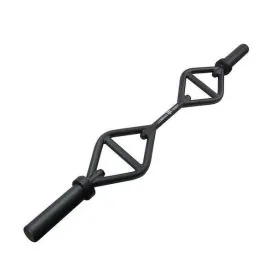
Trap Bars, Hex Bars, and Open-End Hex Bars
Best fit: Deadlifts, shrugs, carries, rows, and programs that use neutral-grip lifting from inside the frame.
Buyer guidance: Compare enclosed or open construction, high and low handles, handle spacing, inside-frame clearance, unloaded weight, sleeve dimensions, rackability, stated capacity, and collar compatibility. Some welded sleeves differ from conventional Olympic sleeves.
Safety Squat, Cambered, Multi-Grip, and Specialty Bars
Best fit: Alternative squat loading, multiple pressing grips, specialized movements, and planned variation within a strength program.
Buyer guidance: Compare unloaded weight, balance point, camber, handle position, padding or harness design, sleeve diameter, collar fit, rack compatibility, storage footprint, and current manufacturer instructions.
Olympic Bar Specifications That Matter
Bar Weight and Shaft Diameter
A men’s competition-style Olympic weightlifting bar commonly weighs 20 kg, while a women’s competition-style bar commonly weighs 15 kg. General training and power bars may be listed in kilograms or pounds, and specialty bars vary. Shaft diameter influences grip feel and shaft behavior, but it should be evaluated with the complete product design.
Overall Length and Inside-Collar Distance
A full-length Olympic bar is commonly around seven feet long, but rack fit depends more directly on the usable shaft distance between the inside collars. Compare that measurement with the outside width and J-cup placement of the intended rack, stand, or bench.
Sleeve Diameter and Loadable Sleeve Length
Olympic plates are designed for Olympic-size sleeves, but exact dimensions vary. Loadable sleeve length determines how many plates and collars can fit. Thick bumper or deep-dish plates consume sleeve space faster than thinner plates, so compare the bar with the facility’s actual plate inventory.
Bearings, Bushings, and Sleeve Rotation
Olympic bars may use bearings, bushings, or hybrid sleeve assemblies. The appropriate system depends on the bar’s intended training use and manufacturer design. Faster rotation is commonly associated with quick weightlifting turnovers, while more controlled rotation is common in general strength and power-oriented bars.
Knurling, Center Knurl, and Grip Marks
Knurling ranges from mild to aggressive. Center knurling appears on many squat and power bars but may be absent or reduced on bars designed for repeated cleans. Grip marks help with hand placement but do not establish current competition approval.
Tensile Strength, Yield Behavior, and Listed Capacity
Tensile strength describes one property of the shaft steel. It does not by itself establish usable capacity, resistance to permanent bending, drop suitability, warranty coverage, or service life. Review the full product specification, construction, intended use, and warranty.
Finishes and Corrosion Care
Common finishes include bare steel, black oxide, zinc, chrome, stainless steel, and Cerakote. Each creates a different balance of grip feel, corrosion resistance, appearance, price, and maintenance. Follow the care instructions for the exact bar, particularly in humid or non-climate-controlled rooms.
Plate, Collar, Rack, and Room Compatibility
Match Olympic bars with compatible Olympic weight plates and barbell collars. Confirm sleeve diameter, sleeve finish, usable loading length, plate-opening size, collar width, and whether the collar is recommended for the exact sleeve.
Measure rack width, J-cup position, inside-collar distance, bench position, and loading space on both ends of the bar. A full-length bar also requires room beyond the rack for plates, collars and user access. Short and specialty bars should be checked individually for rackability.
Plan the complete operating area rather than the static bar length alone. Include room for loading and unloading plates, spotter access where relevant, overhead movement, nearby equipment, and traffic. For storage, compare barbell racks by orientation, capacity, mounting method, contact surfaces, and specialty-bar fit.
Flooring, Freight, and Maintenance Planning
Select gym flooring according to the bar, plates, subfloor, intended lifts, and manufacturer guidance. No flooring system should be represented as permitting every bar to be dropped or as preventing all equipment wear, vibration, noise, or structural effects.
Confirm whether bars ship individually, in long cartons, or as part of a freight shipment. Bulk and specialty-bar orders may require loading-dock access, liftgate service, delivery appointments, hallway clearance, or an on-site receiving plan.
Wipe moisture, sweat, chalk and residue from the bar after use. Follow product-specific instructions for brushing, oiling and sleeve maintenance. Inspect shafts, sleeves, end caps, welds, fasteners and specialty frames regularly, and store bars in a dry indoor location using an appropriate storage system.
Common Olympic Bar Buying Mistakes
- Choosing by tensile strength alone: Compare the complete construction, intended use, and warranty.
- Confusing Olympic and standard plate systems: Use matching Olympic plates and collars.
- Buying the wrong bar type: Match shaft behavior, knurling, sleeve design, and manufacturer guidance to the primary training style.
- Assuming every short bar is rackable: Compare inside-collar distance with rack width and J-cup placement.
- Assuming every collar fits every specialty bar: Verify the exact sleeve diameter.
- Ignoring plate thickness: Wide bumper and deep-dish plates may fill the sleeve earlier.
- Assuming every Olympic bar can be dropped: Verify the exact bar, plates, platform, flooring, and warranty.
- Ignoring the use rating: Confirm whether the bar is documented for the intended residential or shared facility.
- Overlooking storage: Specialty bars may require dedicated hooks, wall racks, or floor stands.
Get Help Comparing Olympic Bars
For help comparing weightlifting bars, power bars, multipurpose bars, technique bars, short bars, trap bars, and specialty bars, visit IRON COMPANY Customer Care or contact IRON COMPANY. Provide the intended exercises, current plates, rack dimensions, room clearance, user volume, flooring, storage, and procurement requirements.
Government buyers can review GSA and CMAS purchasing information. Product-level contract eligibility, origin documentation, pricing, freight and warranty must be confirmed for each item.
Read Less