Choose the Right Weightlifting Bar and Training System
Weightlifting bars and barbell training equipment fall into three main groups: Olympic weightlifting, power, and specialty bars; standard 1-inch barbells, EZ curl bars, and tricep bars; and barbell accessories, landmine attachments, and loading tools. Choose by sleeve format, compatible plates and collars, bar length, rack fit, exercise type, room clearance, storage, and the manufacturer’s stated use limits.
This page serves as the comparison hub for Olympic and regular bars rather than a second Olympic-bar product page. Buyers seeking complete preloaded barbell sets, fixed barbells, rubber or urethane barbells, or group-fitness systems should browse the broader Free Weights categories.
Suggested Olympic, Regular, and Specialty Weightlifting Bars
Compare these representative bars by plate system, intended training style, total length, unloaded weight, shaft diameter, sleeve design, knurling, rack compatibility, stated capacity, and manufacturer use rating. Review each product page for current specifications, warranty, price, shipping, and availability before ordering.
CAP Barbell Regular 1-Inch Weightlifting Bar
CAP Barbell Regular 1-Inch Weightlifting Bar represents the standard-bar side of this comparison hub. It is available in 5-, 6- and 7-foot lengths with smooth 1-inch loading ends for matching standard plates and compatible 1-inch collars.
Consider this family when the buyer already owns standard plates or needs a lighter home-use bar system. Verify the selected length, inside-collar distance, rack fit, stated capacity, and separately sold collars.
CAP Barbell 7-Foot Chrome Olympic Weight Bar
CAP Barbell 7-Foot Chrome Olympic Weight Bar is a conventional full-length bar for matching Olympic plates and collars. It provides a straightforward Olympic-format option for general strength exercises where its current capacity, rack dimensions, and intended-use documentation fit the training plan.
Confirm shaft diameter, sleeve length, unloaded weight, finish, collar requirements, and warranty on the live product page.
Body-Solid Black Oxide Olympic Weightlifting Bar
Body-Solid Black Oxide Olympic Weightlifting Bar offers another full-length Olympic bar choice with a black-oxide finish. Compare its exact shaft dimensions, sleeve construction, knurl pattern, stated capacity, rack fit, and manufacturer use rating with the chrome-finished alternatives.
IRON COMPANY Youth Hex Bar
IRON COMPANY Youth Hex Bar is a compact specialty bar with a frame that positions the user inside the bar during supported deadlift, squat, carry, and shrug variations. Its dimensions and starting weight differ from a full-size straight Olympic bar.
Consider this product for youth, technique, or smaller-user applications only when the exact handle spacing, unloaded weight, sleeve dimensions, capacity, and use instructions fit the program.
American Barbell 7-Foot Axel Bar
American Barbell 7-Foot Axel Bar is a thick-shaft specialty bar intended for programs that deliberately incorporate a larger gripping diameter. It should be compared with conventional Olympic bars by shaft thickness, sleeve format, rack fit, loading space, and the exercises planned.
A thick axle shaft changes hand contact and bar feel but should not be presented as universally better or safer than a standard-diameter bar.
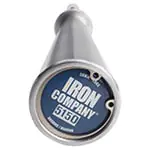
IRON COMPANY 5150 Olympic Weightlifting Bar
IRON COMPANY 5150 Olympic Weightlifting Bar is a 20 kg Olympic bar for buyers comparing weightlifting and mixed strength-training characteristics. Review its shaft diameter, sleeve rotation, knurling, center-knurl configuration, tensile specification, finish, and product-specific drop guidance.
IRON COMPANY Iron Cowboy Powerlifting Bar
IRON COMPANY Iron Cowboy Powerlifting Bar is a powerlifting-focused bar designed around squats, bench presses, and deadlifts. It uses a comparatively stiff shaft, aggressive knurling, center knurl, and full-length rackable construction.
Consider this bar when power-oriented grip and shaft characteristics match the training plan. Confirm current dimensions, sleeve length, warranty, and competition-specification wording before purchase.
Legend Fitness American-Made Olympic Weightlifting Bar
Legend Fitness American-Made Olympic Weightlifting Bar provides a domestically manufactured full-length Olympic option with zinc-finished components, bushing-supported sleeves and product-documented weightlifting characteristics.
Compare its unloaded weight, knurling, shaft diameter, sleeve length, whip, capacity, rack fit, and warranty with the other Olympic bars represented here.
Iron Grip OB-7 Industrial Chrome Olympic Bar
Iron Grip OB-7 Industrial Chrome Olympic Bar is a hard-chrome, commercial-oriented power bar for buyers comparing full-length Olympic bars for squats, presses, deadlifts, and general strength training.
Review the current shaft diameter, knurl pattern, center knurl, sleeve construction, stated capacity, commercial warranty, and rack requirements on the product page.
These suggested products represent different bar systems and training roles. The CAP regular bar requires standard 1-inch plates and collars, while the other loading bars use Olympic-size equipment. The youth hex bar and axle bar are specialty designs, the 5150 and Legend bars emphasize Olympic-style training characteristics, and the Iron Cowboy and Iron Grip bars emphasize power and general strength characteristics.
Compare the Three Barbell Categories
Choose this category for unloaded bars designed around Olympic-size plate systems. The assortment may include multipurpose bars, power bars, technique bars, shorter Olympic bars, curl and tricep bars, trap or hex bars, safety-squat bars, and other specialty shapes represented in the current product grid.
Compare: Bar length, unloaded weight, shaft diameter, inside-collar distance, sleeve diameter and length, sleeve rotation, knurling, center knurling, finish, rackability, intended exercise, manufacturer capacity, and permitted use.
Buyer caution: “Olympic” identifies a plate-and-sleeve format, but it does not guarantee one standard length, weight, shaft diameter, rack fit, capacity, finish, or drop rating. Verify the exact model before ordering.
Choose this category for straight, threaded, spin-lock, EZ curl, and tricep bars designed for matching standard 1-inch plates and compatible collars. These bars are distinct from Olympic bars and should be evaluated as a separate equipment system.
Compare: Overall length, usable loading area, smooth or threaded sleeves, included collars, inside-collar distance, bar shape, grip position, rack fit, manufacturer capacity, and intended use.
Buyer caution: Olympic plates have larger center openings and are not a correct matched plate-and-collar system for a 1-inch bar, even if they can physically slide onto the smaller shaft. Use plates and collars designed for the exact bar.
Choose this category for equipment used directly with a barbell to support loading, unloading, landmine exercise configurations, bar positioning, grip variation, or exercise setup. Examples may include landmine pivots, T-bar row attachments, landmine handles, barbell jacks, deadlift wedges, plate wedges, and grip tools.
Compare: Bar or sleeve diameter, mounting method, plate fit, rack connection, floor or platform requirements, handle compatibility, load limits, and the manufacturer’s approved installation method.
Buyer caution: Landmine attachments and loading tools are not universally compatible. Confirm the exact bar, sleeve, rack, plate, floor-mount, and attachment requirements before purchase.
Olympic Bars Compared with Regular 1-Inch Bars
The most important difference is the loading system. Olympic-size bars use larger sleeves intended for matching Olympic plates and compatible Olympic collars. Regular bars use narrower 1-inch loading areas intended for matching standard plates and collars.
Sleeve size is only the beginning of the comparison. Buyers should also verify bar length, usable loading length, inside-collar distance, shaft diameter, unloaded weight, sleeve rotation, collar style, rack fit, capacity, and intended use. Specialty bars may depart substantially from conventional straight-bar dimensions.
- Choose an Olympic-size system when: The facility already owns matching Olympic plates and collars, needs access to a broad range of straight and specialty bars, and has adequate rack, platform, and storage space.
- Choose a standard 1-inch system when: The buyer already owns matching 1-inch plates, wants a compact or specific home-use bar format, or needs a threaded, curl, or tricep bar represented in that category.
- Do not mix systems casually: Plate openings, sleeve diameters, collar designs, and loading instructions must match the exact bar.
Match the Bar to the Intended Training
Olympic Weightlifting and Multipurpose Training
Buyers comparing straight Olympic bars should review sleeve rotation, shaft diameter, knurling, unloaded weight, bar length, and manufacturer guidance for the intended lifts. Do not assume every Olympic-format bar is designed for repeated drops, competition use, or high-volume commercial training.
Powerlifting and General Strength Training
Power-oriented bars may differ in stiffness, knurling, center-knurl placement, shaft diameter, and sleeve construction. Verify that the selected bar matches the planned squat, bench-press, deadlift, or general-strength use and the applicable rack dimensions.
Curl, Tricep, and Multi-Grip Training
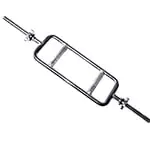
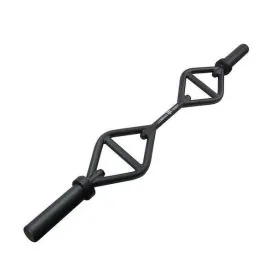
EZ curl, tricep, and multi-grip bars use shaped shafts or handles to provide different grip positions. Compare handle spacing, bar shape, loading format, unloaded weight, overall length, rackability, and compatible plates and collars. Do not make medical or joint-protection assumptions from bar shape alone.
Trap, Hex, Safety-Squat, and Other Specialty Bars
Specialty bars can differ substantially in frame width, handle height, balance, loading position, sleeve length, rackability, and storage needs. Confirm the exact exercise setup and room clearance rather than treating all specialty bars as interchangeable.
Landmine and T-Bar Row Configurations
A landmine setup requires a compatible pivot, bar, mounting method, plates, and any desired handle or row attachment. Verify whether the attachment mounts to a rack, floor, platform, weight plate, or another structure, and follow the manufacturer’s installation instructions.
Plate and Collar Compatibility
A bar, plates, and collars should be selected as one compatible system. Start with the exact loading-end diameter and sleeve design, then confirm the approved plate opening and collar type.
- Olympic bars: Use matching Olympic plates or bumper plates and collars designed for the specific sleeve diameter and finish.
- Regular 1-inch bars: Use matching standard 1-inch plates and collars designed for smooth or threaded sleeves, as applicable.
- Threaded bars: Confirm whether matching spin-lock collars are included or must be purchased separately.
- Smooth sleeves: Confirm the correct spring, clamp, or locking collar dimensions and manufacturer guidance.
Browse weight plates and barbell and dumbbell collars, then verify compatibility with the exact bar before ordering.
Bar Length, Rack Fit, and Usable Loading Space
Overall bar length does not determine rack compatibility by itself. The critical rack-fit measurement is the usable shaft distance between the sleeves or collars compared with the rack’s outside width and J-cup placement.
Before buying a bar for a bench, squat stand, half rack, or power rack, record:
- The bar’s total length
- The inside-collar or usable shaft distance
- The rack’s outside width
- The J-cup spacing and placement
- The sleeve length available for plates and collars
- Nearby wall, rack, platform, and traffic clearances
Short Olympic bars, technique bars, standard 1-inch bars, curl bars, tricep bars, and specialty bars may not span conventional rack J-cups. Verify rackability on the exact product page or manufacturer documentation.
Plan the Lifting Area Before Ordering
The usable training area must accommodate more than the bar’s static length. Buyers need space to load and unload plates, approach the bar, move through the intended exercise, use spotters where appropriate, and avoid walls, columns, adjacent racks, and traffic paths.
For home and garage gyms, measure doorways, stair turns, hallways, ceiling obstructions, stored vehicles, shelving, and the path used to carry a long rigid bar into the room. For shared facilities, consider whether neighboring stations can be used at the same time without bars, plates, users, or spotters entering another station’s operating area.
Facilities with uncertain floor conditions or concentrated free-weight use should evaluate the subfloor, lifting area, and equipment layout with appropriate qualified professionals.
Flooring and Barbell Storage
Choose gym flooring according to the subfloor, bar-and-plate system, intended lifts, equipment layout, and manufacturer requirements. Flooring should not be described as making every bar safe to drop or as preventing all damage, noise, vibration, or structural impact.
Store bars in a system designed for their dimensions and shape. Review barbell storage racks and compare:
- Vertical or horizontal orientation
- Bar capacity
- Maximum bar dimensions
- Wall, floor, or rack mounting
- Contact surfaces and finish protection
- Access and traffic clearance
- Compatibility with specialty-bar shapes
Follow the bar and storage manufacturer’s care instructions. Do not assume that every storage tube, wall rack, or rack attachment fits both Olympic and regular bars.
Common Weightlifting Bar Buying Mistakes
- Buying the wrong sleeve format: Match Olympic-size bars with Olympic plates and collars, and regular bars with matching 1-inch equipment.
- Assuming every bar fits a rack: Compare inside-collar distance with the rack’s outside width and J-cup spacing.
- Choosing by total length alone: Check shaft length, sleeve length, plate capacity, room clearance, and storage.
- Assuming all Olympic bars have identical specifications: Unloaded weight, shaft diameter, knurling, sleeve rotation, finish, capacity, and intended use vary.
- Using the wrong collars: Confirm whether the bar has Olympic, standard smooth, or threaded loading ends.
- Assuming every bar can be dropped: Verify drop suitability, permitted plates, flooring requirements, and warranty terms for the exact model.
- Overlooking specialty-bar storage: Trap, safety-squat, multi-grip, and other shaped bars may not fit ordinary storage racks.
- Buying an attachment without checking fit: Landmine tools, handles, jacks, wedges, and grips may require a specific shaft, sleeve, plate, rack, or mounting system.
- Treating capacity as the only quality measure: Capacity does not establish rack fit, sleeve compatibility, finish, use rating, warranty, or suitability for a particular lift.
- Relying on broad origin or commercial claims: Verify Made in USA, BAA, TAA, commercial-use, and government-contract status for the exact product.
Questions About Olympic and Regular Bars
What is the main difference between an Olympic bar and a regular bar?
The main category-level difference is the loading system. Olympic bars use larger sleeves intended for matching Olympic plates and collars, while regular bars use narrower 1-inch loading areas intended for matching standard plates and collars. Exact dimensions still vary by product.
Can Olympic plates be used on a regular 1-inch bar?
Olympic plates are not a correct matched system for a 1-inch bar. Their larger center openings create an improper fit, and compatible collars may not secure them as intended. Use plates and collars designed for the exact bar.
Will every Olympic bar fit a power rack?
No. Rack fit depends on the usable shaft distance between the sleeves, the rack’s outside width, and J-cup placement. Short, technique, curl, trap, and specialty bars may not fit conventional racks.
What is the difference between smooth and threaded regular bars?
Smooth bars use compatible clamp, spring, or locking collars. Threaded bars use matching spin-lock collars that screw onto the loading ends. Confirm whether collars are included.
Should I choose a straight bar or specialty bar?
Choose according to the intended exercise, grip position, rack setup, loading system, available room, storage, and product specifications. Specialty-bar shapes should not be treated as universally easier, safer, or appropriate for every user.
How much room does a barbell station need?
Plan for the bar’s total width, plate loading, user movement, rack or bench footprint, spotter access where relevant, and clear circulation around adjacent stations.
Are barbell accessories universally compatible?
No. Landmine attachments, handles, jacks, wedges, grips, and loading tools may depend on bar diameter, sleeve diameter, plate size, mounting method, and rack or floor configuration.
Can every bar be purchased through a government contract?
No. Supplier-level contract information does not establish item-level eligibility. Confirm contract status, price, origin documentation, shipping, and purchasing terms for each product.
Get Help Selecting Bars and Barbell Tools
IRON COMPANY can help buyers compare Olympic bars, standard 1-inch bars, specialty bars, compatible plates and collars, barbell tools, storage, flooring, and facility requirements. Visit Customer Care or contact IRON COMPANY with the intended exercises, existing plates, rack dimensions, room measurements, storage needs, user volume, and purchasing requirements.
Government buyers can review GSA and CMAS purchasing information. Product-level contract eligibility, country of origin, pricing, freight, and procurement terms must be confirmed separately.
Read Less