
 Call us today at 1-888-758-7527

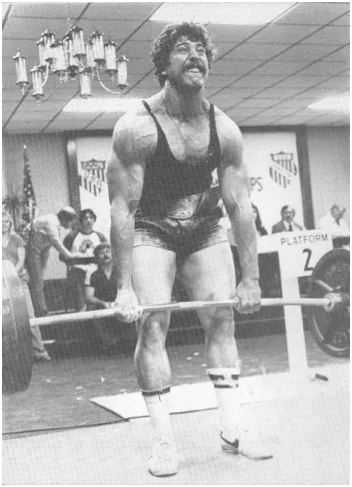
The House of Pain, Part I: Mark Chaillet's Powerlifting Gym
This essay from Marty Gallagher is a hardcore powerlifting memoir: a story about elite lifters outgrowing Hugh Cassidy's cramped basement gym and finding their way to Mark Chaillet's House of Pain, where squats, bench press work, deadlifts and uncompromising weightlifting culture ruled. For serious lifters and strength facilities, the lesson still holds: the right training environment, real Olympic barbells, dependable weight plates and purpose-built strength training equipment can raise expectations fast.
The House of Pain: Part I
Mark Chaillet's gym: the hardest of the hardcore.
Featured equipment themes in this raw powerlifting story include the Olympic barbell, weight bars, weight plates, weight benches, squat racks, home gyms, dumbbells and the squat bar. Those tools matter because this is a story about the difference between makeshift resistance training and real iron, real equipment and real intent.
Outgrowing Hugh Cassidy's Basement Gym
Eventually we got too strong and outgrew Hugh's cramped basement gym. It made it easier to leave when we had someplace to go. We'd had a long and fruitful run at Hugh's Yoda-like cottage in the woods and now Mark Chaillet's House of Pain beckoned. I say "we" because there were four or five elite lifters training together at Hugh's: myself, Marshall Peck and Joe Ferry (always,) Dan Pinkston was with us off and on for years, plus a revolving cast of strength characters; they came to Cassidy's to train and glean some wisdom from the grand maestro.
Hugh built an outdoor metal shop. No longer was his metal sculpture area adjacent to the gym in the basement, so we saw less of him. We were competitive powerlifters and as crazy as it sounds, the national and world champion did not have a regular Olympic barbell. It was crazy; we used 6-foot solid weight bars. No revolving sleeves or rotating bar, frozen weights on a flimsy bar. Rather than purchase 100-pound weight plates, Cassidy broke out his blowtorch and cut plates out of steel. One plate had 98 ½ written on it and the other had 101 ¾ (in magic marker) on the other. The plates were jagged and uneven.
Fred Munster's Idea of a Home Gym
Hugh constructed all his own weight benches, squat racks, even the sturdy stools we sat on for seated overhead pressing. This was Fred Munster's idea of a home gym. The ancient house had thick oak beams in the basement and the ceiling height was seven foot, the lone room was dark and quiet. Marshall, Joe and I had trained together for years at this point. I was breaking into the 700s in the squat and deadlift. Marshall was hitting 500 raw in the bench and crushing a 650-squat. Ferry was squatting and deadlifting 650 weighing 195.
Modern lifters building a garage gym, basement gym, school weight room or first responder training space have better options: a sturdy commercial weight bench, dedicated squat racks, and a heavy-duty power rack can make hard training more consistent, more organized and more repeatable.
Disadvantaged Squats and Real Olympic Barbells
We'd taken to hanging dumbbells on coat hangers off the ends of the squat bar. We'd squat with two dumbbells dangling and swaying on the ends of a 600-pound barbell. Talk about disadvantaged, the squatter not only had to fight the poundage, but had to fight to maintain fore-and-aft balance on both the descent and ascent. I only regret we didn't take photos. I think this craziness actually made us better: when we went to Mark's and started using real Olympic barbells, sans swaying dumbbells on dangling coat hangers, our squats soared. It was so much easier that we felt as if we were cheating.
For lifters chasing big squats, that equipment difference is not small. A dedicated Olympic power squat bar or a serious powerlifting bar changes the feel of the lift compared to frozen sleeves, odd plates and improvised loading. The right bar does not replace courage or technique, but it lets the lifter express both.
Mark Chaillet Returns to Temple Hills
In 1982 Mark Chaillet, a nationally ranked powerlifter and local legend, moved back to Temple Hills, Maryland, a suburb of Washington DC. Mark had spent several years mentoring under and working for power immortal Larry Pacifico in Dayton, Ohio. Well, sort of mentoring. Larry Pacifico was the nine-time world champion, a 220-pound man with a 600-pound raw bench, an 800-pound squat and a 750 deadlift. For a decade Larry was unbeatable, the greatest lifter in the world. Larry lived in Dayton, Ohio and became a successful fitness businessman.
Larry would "recruit" the most promising powerlifters from around the country, bring them to Dayton, give them day jobs working at one of his gyms or working in his warehouse. Simultaneously he would train with and mentor the young lifters. Larry's "draftees" included the then greatest powerlifter in the world, Mike Bridges, along with John Topsalgu, Joe Ladiner and Mark Chaillet. All worked for Larry at one time or another.
The Larry Pacifico Connection
Mark Chaillet was an elite athlete that could have played D1 football. He was recruited by the CIA out of the U of Maryland and was on his way to a highly fulfilling (and suitable) career as a CIA interrogator at a covert black ops site when Larry's offer caused Mark to resign and relocate to Dayton.
Larry offered Mark a "power scholarship" after watching Chaillet in action at the 1979 Junior National powerlifting championships. Chaillet weighed a ripped and shredded 219-pounds; he stood 5-9. He was 70 pounds behind the leader heading into the deadlift. Mark asked what was needed to win and was told he would have to pull 800. This was 50 pounds more than Mark had ever attempted. Larry and the rest of the packed auditorium watched spellbound as Mark broke the 800 off the floor and ratcheted the bar upward, one excruciating inch at a time until he eventually locked out the ponderous poundage. The auditorium erupted in thunderous boos when the lift was then turned down 2-1 by two judges that felt the barbell had "stalled" on its slow grind path to lockout. Larry was gobsmacked and recruited Mark on the spot.
Mark Chaillet's Own Way of Training
Mark Chaillet was un-coachable. Larry was a sophisticated trainer: Larry trained hard, heavy and often, using a diverse menu of exercises. Larry loved to train. Mark Chaillet never really liked to train. He was incredibly good at lifting weights, but he wasn't crazy for "the sport" or "the process." Unlike the rest of us, Mark didn't daydream about powerlifting or gossip about it or wax philosophic about it or get mental about it. He just did it. He did it like a master carpenter or an artisan tradesman – he devised one way of training and that was all he used or cared to use. Period.
Thick-headed and obstinate, Chaillet arrived in Pacifico world and promptly informed Larry and the rest of the Pacifico sycophants that, thanks but no thanks, he, Mark Chaillet, has his own way of training, thank you very much, and he really didn't care to train with Larry, the world champ, because "I got my own thing going on." Mark really didn't feel the urge or need to consult with Larry on training, much less modify his training to mirror Larry's methods. And they went for it. He would work the job, lift for Larry's powerlifting team and hang out – but when it came to training, powerlifting, Mark would go his own way.
Why This Powerlifting Story Still Matters
The House of Pain story is not a polished commercial gym story. It is a tale about serious weightlifting, brutal squats, raw bench press power, heavy deadlifts and the strange alchemy that happens when elite athletes find the right room. Hugh Cassidy's basement made the lifters harder. Mark Chaillet's gym gave them a bigger arena.
For today's home gyms, commercial gyms, high school weight rooms, military fitness centers and first responder training spaces, the lesson is simple: build the room to support the work. Durable rubber gym flooring, quality Olympic grip plates, dependable bumper plates and serious dumbbell sets give lifters the tools to train hard without turning the room into a circus of improvised equipment.
FAQ
What is The House of Pain: Part I about?
The House of Pain: Part I is Marty Gallagher's account of outgrowing Hugh Cassidy's cramped basement gym and moving toward Mark Chaillet's hardcore powerlifting gym in Temple Hills, Maryland.
Why did the lifters outgrow Hugh Cassidy's basement gym?
Gallagher explains that the lifters had become too strong for the cramped basement setup. The equipment was homemade, improvised and brutally demanding, but the group eventually needed more room and more suitable Olympic barbell equipment.
What made Hugh Cassidy's home gym so unusual?
Hugh Cassidy built much of his own equipment, including benches, squat racks and stools. The lifters used 6-foot solid weight bars, homemade steel plates and even dangling dumbbells on the ends of the squat bar to create brutally disadvantaged training conditions.
Who is Mark Chaillet?
Mark Chaillet is a nationally ranked powerlifter and local legend who trained under Larry Pacifico in Dayton, Ohio before returning to Temple Hills, Maryland. Gallagher describes him as an elite lifter with his own uncompromising way of training.
What equipment supports the kind of training described in the article?
The article centers on heavy powerlifting basics: squats, bench press work and deadlifts. A serious setup calls for a reliable Olympic or powerlifting bar, weight plates, squat rack or power rack, stable weight bench, dumbbells and durable gym flooring.
About the Author
As an athlete Marty Gallagher is a national and world champion in Olympic lifting and powerlifting. He was a world champion team coach in 1991 and coached Black's Gym to five national team titles. He's also coached some of the strongest men on the planet including Kirk Karwoski when he completed his world record 1,003 lb. squat. Today he teaches the US Secret Service and Tier 1 Spec Ops on how to maximize their strength in minimal time. As a writer since 1978 he’s written for Powerlifting USA, Milo, Flex Magazine, Muscle & Fitness, Prime Fitness, Washington Post, Dragon Door and now IRON COMPANY. He’s also the author of numerous books including Purposeful Primitive, Strong Medicine, Ed Coan’s book “Coan, The Man, the Myth, the Method" and numerous others. Read the Marty Gallagher biography here.
Marty Gallagher is a champion strength athlete, coach, author, and RAW Podcast host known for powerlifting, Olympic lifting, and serious strength training.
