
 Call us today at 1-888-758-7527

Primal Strength Training: Lessons from the Past and Prison Muscle Gains
Primal strength training is not sleek, cute, or comfortable. It is the old hard way: whole-body weightlifting, basic exercises, high volume, high frequency, and high effort, done with barbells, dumbbells, food, and enough toughness to come back for more. Marty Gallagher’s essay connects his 1960s iron roots with the stripped-down methods behind prison muscle gains and reminds lifters that a simple Olympic weightlifting bar, used hard and consistently, can still be a transformational tool.
Unlock Strength with High-Volume, High-Intensity, and High-Frequency Training
In 1961 I commenced formal weight training with barbells and dumbbells at age 11. The accepted practice of the day was to weight train the entire body three times a week. Three times a week my training partners and I gathered to perform the clean and press, snatch, clean and jerk, bench press, squat, curls and weighted dips – all in a single session. In every session we’d augment the “core” menu of exercises with one of the following: row, power clean, power snatch or deadlift. Sessions took forever, two hours minimum, often more. But we didn’t care; we had nowhere better to go and nothing better to do. In between sessions we purposefully took in lots of calories.
The thrice weekly training frequency was based on the flawed premise that “unless a muscle is trained every 36-hours, that muscle will degrade; lose muscle size and lose muscle strength.” This completely moronic contention was considered Gospel up until the 1980s. Arnold, Franco, Robbie and Zane, all the super star bodybuilders of the Pumping Iron era would weight train six days a week, hitting each muscle three times a week. Using the infamous “double-split” routine, Arnold was performing 700 (!) sets per week and spending upwards of 25 hours per week lifting weights.
I was introduced to serious weight training during this era and dutifully trained my entire body thrice weekly. I was a baby Alpha male lifting in front of older Alpha males. Ergo, I continually sought to exceed my previous best efforts, either in sheer poundage handled or by adding additional reps; my standing in the Alpha wolf pack was largely determined by the outcome of my gym efforts. In training I learned to effortlessly give 100%. I trained in this combative way from age 11 until age 19, at which point I cut back on the frequency. I never looked back – until recently.
Prison Muscle and the Return of Barebones Training
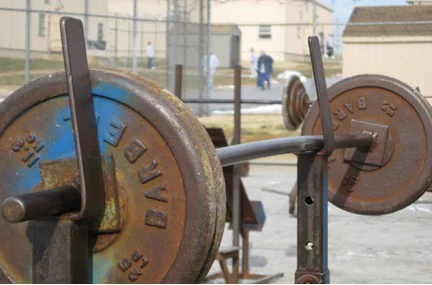
Imagine my delighted amazement when I discovered that convicts nationwide were using methodologies I had used in my youth to construct “prison muscle.” Deep training memories were stirred as I saw TV shows documenting prison weight training. The Monster Convicts were using my earliest methods and making spectacular gains. The commonalities between my ancient strategies and modern prison strategies was striking: the modern prisoner is forced to use the same primal, barebones equipment and engage in the same ultra-basic exercises we used; training was and is done often and done with all out, ball-busting intensity.
We trained the way we did because that was all we knew. Modern Prisoners train the way they do because that is all they have. Prisoners training under the worst of conditions are making the most amazing gains in muscle and pure power. Men restricted to the most primitive of tools and training in the worst of conditions, compounded by awful nutrition, are making gains seemingly unobtainable by elite personal trainers coaxing modest gains out of high paying clients, this in the free world training under the most ideal of conditions. How pathetically ironic is that? The prisoners perceived disadvantages turn out to be factual advantages.
When to Use Primal Strength Training
Perhaps a smart trainee could expropriate this same crude system that served the ancients and now serves the incarcerated so well; why not use this brutal approach for your own physiological purposes? If you’re mired in stagnation, plateaued out – perhaps a dose of high volume/high frequency/high intensity primal weight training might provide the dynamite needed to blow apart your physiological logjam. A short 4-6 week period of thrice-weekly whole-body training surely deserves a place in the rotational arsenal of uber-elite trainees.
Sessions are long, hard and often and need be “under-pinned” with copious amounts of nutrient-dense, restorative, regenerative food. If you try and diet hard or lean out while using this high volume/high frequency approach, you will crash and burn. So eat the good stuff and don’t mince. What would a modern-day, high-volume, three-times weekly whole-body training template look like today?
A modern athlete does not need a prison yard to understand the lesson. A simple room, a reliable power rack, and enough discipline to keep the sessions honest can recreate the core advantage: fewer distractions, more effort, and full-body work done often.
Three-Day Primal Strength Training Template
| Day | Training Menu |
|---|---|
| Sunday | Low-bar back squat, bench press, chin, power clean, clean & barbell press, cheat curl, nose-breakers |
| Wednesday | Front squat, wide-grip pause bench, pull-ups, seated dumbbell press, deadlift, drag curls, overhead French press |
| Friday | High-bar back squat, incline press, weighted chins, row, seated lateral raises, dumbbell curls, weighted dips |
The strategy is simple: in each exercise work up to all the weight you can handle for a single, all out set in the 3 to 12 rep range. The Lion’s share of the “top sets” should be in the 5 to 8 rep range. You do not have to fail on the final rep of every top set, just know you are incapable of another. Work up to a 100% set, then move on to the next exercise as you have a lot of exercises to work through.
Over time you toughen up and adapt to the brutal nature of going all out in long sessions three times weekly. Generally speaking, it either breaks you – or you break through.
The high volume/high-intensity/high-frequency/primal exercise template deserves to be in the training quiver of every hardcore trainee. Bust it out periodically to blow the crud out of your clogged innards. A short dose of this approach will electro-shock you out of the muck. It worked for us in the 60s and it works for muscled-up modern inmates. It can work for you: simplify things; don’t fancy this up or update it or make it more “user-friendly” as that dilutes results. This approach is hellacious and you need to deal with that fact. Lift often and lift like you were lifting in front of your best friends and your worst enemies.
Represent!
Use This Template Intelligently
This is not a casual beginner routine and it is not a fat-loss plan. It is a short, hard shock cycle for seasoned trainees who already know how to squat, bench press, deadlift, row, press, clean, chin, and recover from demanding sessions. The point is not to collect fancy exercises. The point is to use simple tools, brutal effort, and a finite training block to break stagnation.
For athletes, powerlifters, bodybuilders, weightlifters, first responders, and military personnel, the value of this old system is its clarity. The trainee knows exactly what must be done: show up, work through the big movements, push one top set hard, eat enough to recover, and come back again. There is nowhere to hide.
Equipment Pairings for Primal Strength Training
The original point is not that equipment variety creates results. It does not. The prison-yard lesson is that restricted tools can force clarity. For modern home gyms, school weight rooms, firehouses, tactical spaces, or commercial facilities, the best setup is blunt and durable: rack, bar, plates, chinning station, and dumbbells.
Once the squats, presses, pulls, rows, and chins are handled, urethane hex dumbbells can support seated dumbbell presses, rows, curls, laterals, weighted carries, and the kind of assistance work that keeps the whole-body template practical.
Frequently Asked Questions
What is primal strength training?
Primal strength training is a stripped-down, hard-effort approach built around basic barbell and dumbbell exercises. In Marty Gallagher’s article, it means whole-body weight training performed three times per week with high volume, high frequency, and high intensity.
How does prison muscle training relate to old-school strength training?
The connection is simplicity. Gallagher saw that prison lifters often used barebones tools, basic exercises, frequent sessions, and fierce effort — the same kind of crude but effective training he used as a young lifter in the 1960s.
Is this strength training template good for beginners?
This template is better suited for experienced trainees. Beginners should first learn proper technique on squats, presses, rows, deadlifts, chins, and related movements before attempting long, hard, three-times-weekly whole-body sessions.
How long should a lifter use this primal training approach?
The article recommends a short 4-6 week period of thrice-weekly whole-body training. This makes it a shock cycle or plateau-breaking phase, not necessarily a year-round routine for every lifter.
What exercises are central to this approach?
The core exercises include squats, bench presses, chins, power cleans, clean and presses, front squats, pull-ups, seated dumbbell presses, deadlifts, rows, incline presses, curls, and weighted dips. The exercises are basic, hard, and productive.
What equipment is needed for primal strength training?
A practical setup can be simple: a sturdy rack, an Olympic barbell, weight plates, a chinning option, and dumbbells. The equipment does not need to be complicated; the effort and consistency matter most.
About the Author
As an athlete Marty Gallagher is a national and world champion in Olympic lifting and powerlifting. He was a world champion team coach in 1991 and coached Black's Gym to five national team titles. He's also coached some of the strongest men on the planet including Kirk Karwoski when he completed his world record 1,003 lb. squat. Today he teaches the US Secret Service and Tier 1 Spec Ops on how to maximize their strength in minimal time. As a writer since 1978 he’s written for Powerlifting USA, Milo, Flex Magazine, Muscle & Fitness, Prime Fitness, Washington Post, Dragon Door and now IRON COMPANY. He’s also the author of numerous books including Purposeful Primitive, Strong Medicine, Ed Coan’s book “Coan, The Man, the Myth, the Method" and numerous others. Read the Marty Gallagher biography here.
Marty Gallagher is a champion strength athlete, coach, author, and RAW Podcast host known for powerlifting, Olympic lifting, and serious strength training.
