
 Call us today at 1-888-758-7527

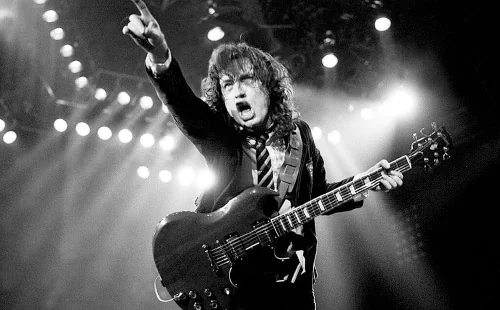
Music and Weight Training: Why Workout Music Matters
This essay from Marty Gallagher argues that music can be a psyche tool without peer in weightlifting and resistance training, but only for trainees who are genuinely moved by it. For powerlifters, bodybuilders, weightlifters, athletes, first responders, military personnel, and serious fitness enthusiasts, the lesson still holds: the right workout music can help shift the mind from ordinary life into a more focused training state, whether the work happens with strength training equipment, in a crowded commercial gym, or during a hard cardio session outdoors.
Music and Weight Training: Why Workout Music Matters
For some, music is a psyche tool without peer; for others, nothing.
Some people are moved by music, others are indifferent. For some, music is an integral part of life, while for others music is annoying. In progressive resistance training there is a long history of athletes using music to get fired up before and during a training session. Some lifters are affected by music to such a depth and degree that results from the session are greatly improved with music and results are dramatically reduced if that same trainee is deprived of music. I am one. Music has been integral to my training since the 1960s.
Some people find music superfluous, a distraction, every bit as annoying as I find mechanical sounds or mindless talk. The majority split the difference, enjoying music but certainly not morphing into a demented psycho state anytime Enter Sandman comes on, like some of my training partners. In elite athletic circles a lot of attention is paid to psyche, recalibrating the mindset to improve workout performance. For many athletes, music plays a big part in recalibrating the civilian mindset into the warrior mindset. The warrior mindset lifts session performance to the next level.
Call it gym music, workout music, exercise music, fitness music, or weightlifting music; the point is the same. For trainees who respond to it, the right soundtrack becomes part of the training method and part of the mindset that makes hard effort possible.
From Basement Radio to a Private Training Soundtrack
I have had a steady stream of hardcore training partners since 1965. The majority preferred to train with music. In my earliest training sessions, we had fabulous music and fabulous reception from an old single-speaker radio we kept in our basement gym, this in the mid-sixties. Early Beatles and Rolling Stones, then brand new, would ricochet off the bare concrete floors, turning the whole basement into a massive echo chamber.
What incredible training sessions we had, pushed mercilessly by each other and fueled by the incredible music of the era: The Animals, Zombies, The Who, Manfred Mann, plus all the incredible Motown and Stax-Volt Memphis soul stuff. I was moved by the music. I would transport from my normal left-brain, right-handed rational mindset into a right-brained, left-handed intuitive mindset, using music to put me into an appropriate trance state. Mind and body had to come together if I were to succeed with the back-breaking training poundage I had assigned myself.
The invention of the personal listening device in the 1980s revolutionized the melding of music with training. Suddenly athletes were able to orchestrate their own private listening selections. This all happened with the invention of the cassette tape. The Sony Walkman became an integral part of the workout. The athlete had a collection of tapes, or a customized cassette of their own making, containing one psyche song after another, all designed to amplify the gym effort.
How Music Changes Training Performance
As someone moved by music, always and forever, I can say without hesitation that music elevates my performance by a consistent and measurable 2-5% over an identical no-music, non-psyched session. Consistent psyching, using music, is not as easy as it sounds. After a while, songs that once got you fired up lose their appeal. Finding replacements is a difficult task. The reasons certain songs move us, those of us that are moved by such things, is a truly mysterious thing. Like falling in love, there are a myriad of subconscious urges and intangible factors involved.
For those that are moved by music, the modern phone is a magical tool with which you can conjure up any song you desire. What an incredible thing: I can bring up Cajun zydeco music, Indian sitar ragas, Norwegian death metal or Coltrane’s Atlantic recordings. You name it, inside 30 seconds you can be listening to it. Just the other day, something caused me to recall a tune I had not thought about in 30 years, Freddie C. Scott’s “Are You Lonely for Me Baby.” Bang. Thirty seconds later I am hearing it again. Incredible. We are, musically, only limited by our imagination.
Why I Refuse to Train Without My Music
If I am driving to train at a commercial gym and discover I have forgotten my music-listening device, I turn around and drive home to get it. I cannot and will not train in a commercial facility without my music. I want no interaction, zero, with the civilians. I do not want to hear the piped-in music, the cacophony of voices or the clang of metal from the free weight room. I want to trance out and get lost in my own private Idaho. Mentally, using music and concentrated effort, I consistently lift my performance to the next level.
I also use an iPod. I have compiled a catalog of over 1,000 songs. When it is time to train, I turn on the iPod and put it on shuffle. I will toggle through songs until one grabs me. There is no accounting for, or predicting, what song will electrify me on that day and at that time. I have done the hard work by creating a large library of preapproved songs in widely disparate genres. There is no telling what song might be up to bat when I have it set on shuffle. I find that for the ultimate psyche, the song should not come out of a conscious preconception on my part.
Better if, within my vast 1,000-song catalog, I come across something spontaneously. That jacks me up far more than if I go into the training session thinking, “Heavy barbell squat day, I am going to listen to Back in Black.” I have found in my fifty years of iron immersion that the high is higher if unpredictability and spontaneity pick the song.
I keep scrolling through until I hit on something that resonates in me on that day. Could be George Jones, Keith Jarrett, Nine Inch Nails, Glenn Gould, AC/DC, The Spinners, The Ohio Players, Yo-Yo Ma, Clannad, U2, Al Green, Otis, Smokey. On and on it goes. I can just keep scrolling until something lifts me to Defcon V. When something grabs me, I latch onto it and surf that emotion. I want to be taken higher, I want to turn myself into primal man and storm the barricades, in my own 2017 way.
Music, Cardio, and the Trance State
My favorite training is done in private, when I can marinate in the Zen of combining gut-wrenching effort with the most beautiful, empowering, exciting, electrifying music you have ever heard in your life. I have that experience damned near every time I train. It is what keeps me coming back for more.
Naturally I also use music when I run in the woods. With woods running I control my audio environment with music. Trail running requires you fix your gaze on the path directly in front of you to avoid roots, loose rocks, depressions and trip hazards, ergo your visual field is fixed. Now add to the controlled visual and audio the intense exercise and the hormonal rush of lung-bursting cardio and you have a recipe for a transcendental meditational experience. Music amplifies training efforts, if you are moved by the muse. For athletes who want indoor conditioning when the weather or schedule gets in the way, tools such as cardio equipment, a commercial slat belt sled treadmill, or an Assault AirRunner Classic can offer the same chance to control the effort and the soundtrack.
Building a Training Space You Control
If you are the kind of trainee who is deeply affected by workout music, the environment matters. A private setup makes it easier to control the soundtrack, the interruptions, and the mental state that surrounds the session. That might mean a serious home gym, a compact strength space built around power racks, a set of rubber hex dumbbells, and durable rubber gym flooring that lets you train hard without fighting the room.
Others may prefer a mixed setup with selectorized gym equipment, plate-loaded leverage equipment, or all-in-one options such as the Series 7 Smith Machine package or Body-Solid G9S two-stack gym. The equipment itself does not create the warrior mindset, but a room you can control often makes it easier to get there.
FAQ
Does music help with weightlifting and resistance training?
For lifters who are genuinely moved by music, yes. Gallagher’s position is that music can measurably improve training performance by helping the athlete shift into a more focused, aggressive, and useful mental state.
Why do some athletes train better with music while others do not?
Gallagher makes the distinction clearly: some people are deeply affected by music while others find it superfluous or distracting. The benefit depends on how strongly the individual responds to music as a psyche tool.
What kind of workout music works best?
According to Gallagher, there is no single best genre. The right training song can come from rock, soul, classical, country, jazz, metal, or any other style that resonates hard enough in the moment to elevate the session.
Can music improve running and cardio sessions too?
Yes. Gallagher says music can amplify woods running and other hard cardio work by controlling the audio environment and intensifying the trance-like focus that comes from sustained effort.
Why do some lifters prefer private training spaces for music-based workouts?
A private training space makes it easier to control the soundtrack, limit distractions, and create the mental environment needed for deep concentration. For athletes who rely on music to enter a stronger training state, that control matters.
About the Author
As an athlete Marty Gallagher is a national and world champion in Olympic lifting and powerlifting. He was a world champion team coach in 1991 and coached Black's Gym to five national team titles. He's also coached some of the strongest men on the planet including Kirk Karwoski when he completed his world record 1,003 lb. squat. Today he teaches the US Secret Service and Tier 1 Spec Ops on how to maximize their strength in minimal time. As a writer since 1978 he’s written for Powerlifting USA, Milo, Flex Magazine, Muscle & Fitness, Prime Fitness, Washington Post, Dragon Door and now IRON COMPANY. He’s also the author of numerous books including Purposeful Primitive, Strong Medicine, Ed Coan’s book “Coan, The Man, the Myth, the Method" and numerous others. Read the Marty Gallagher biography here.
Marty Gallagher is a champion strength athlete, coach, author, and RAW Podcast host known for powerlifting, Olympic lifting, and serious strength training.
