
 Call us today at 1-888-758-7527

The Varieties of Human Strength: Absolute, Explosive, Sustained
This essay from Marty Gallagher explains why strength still rules athletic competition and why the three main varieties of human strength—absolute strength, explosive strength, and sustained strength—each deserve individual attention. For powerlifters, Olympic lifters, athletes, and serious trainees, the lesson still holds: complete strength training equipment plans should not overdevelop one strength quality while neglecting the others.
The Varieties of Human Strength
There are three distinctive types of human strength, and each needs individual time and attention.
Why Strength Matters in Athletics
Why is muscular strength so important in athletes? Strength disparities too great cannot be overcome. The reason for weight classes in athletics is size and strength disparities. There is no need to create weight divisions because of cardio or flexibility disparities. The reason for weight divisions is that past a certain point all the technique in the world, all the cardio in the world, all the flexibility or speed in the world cannot overcome being overpowered.
Strength trumps all other athletic attributes. Athletic experience has shown that a good big man beats a good little man, and that cliché exists for a reason. Strength is the undisputed king of bio-motor attributes. Strength bleeds over into the other bio-motor attributes; there is no speed without strength, and strength positively influences interval aerobics and burst-style cardio.
Absolute Strength
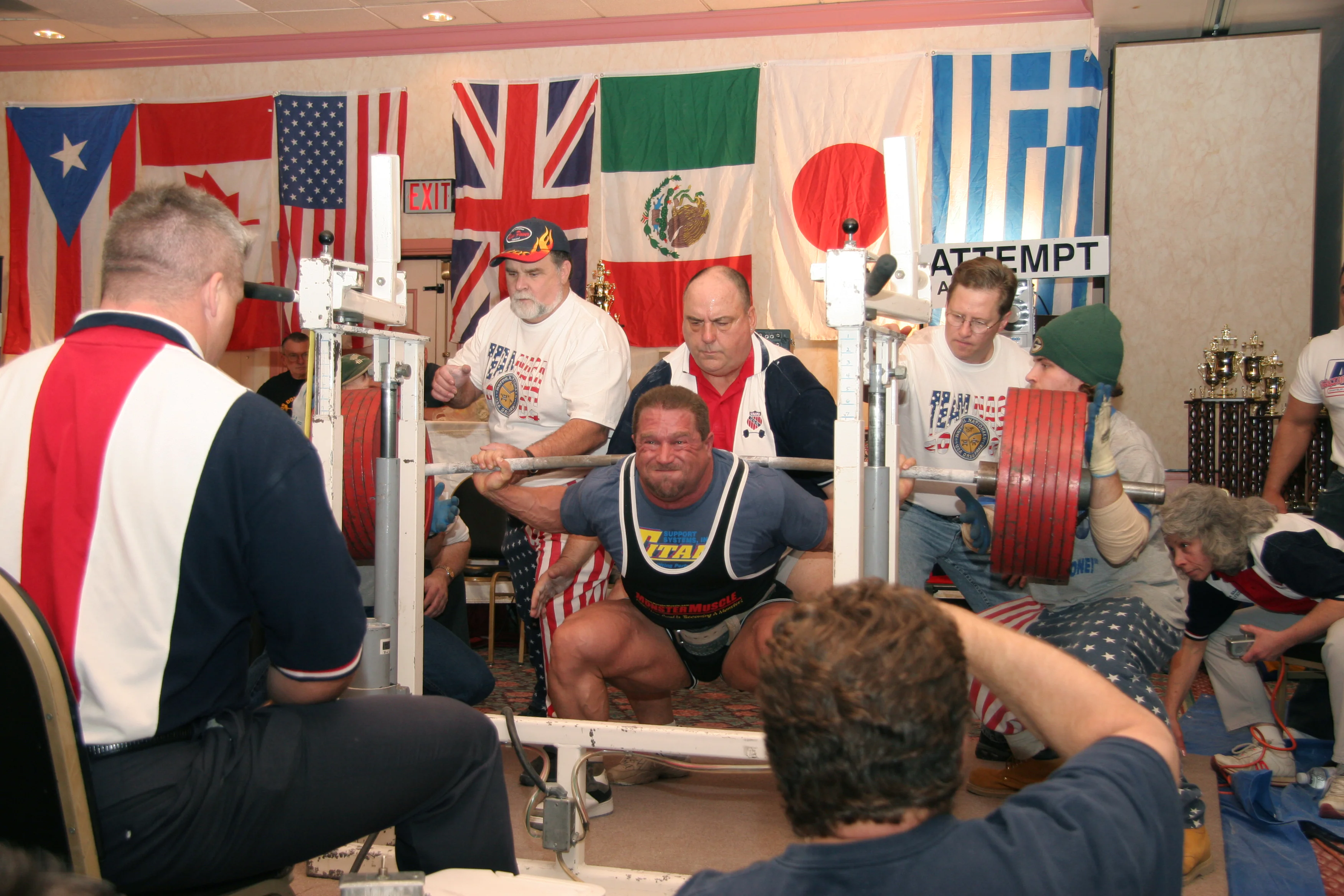
On the extreme left of the strength bar graph is absolute strength. It is best epitomized by a limit single-rep effort in a powerlift: the squat, bench press, and deadlift. Absolute strength is the moving of a maximum payload with slow, relatively speaking, velocity for a short distance. The power exercises are short-stroke prime movers that generate tremendous torque, maximal force exerted for a short time and distance and without concern for velocity. This is grind power used to elevate the heaviest possible payload.
For athletes chasing this end of the spectrum, a serious powerlifting bar, a stable flat Olympic bench press, and enough weight plates to progress intelligently matter because the objective is brutally simple: move more load with better technique.
Beyond Absolute Strength: Negatives and Isometrics
There are two forms of strength to the left of absolute strength. The negative rep eliminates the concentric and performs only the eccentric portion of the rep. A controlled negative enables any trainee to handle more poundage than a standard concentric-eccentric repetition. The second form of “past” absolute strength is isometric strength, the ability to hold a payload in a static position.
Explosive Strength
In the middle of the strength bar graph sits explosive strength. It is best exemplified by a single-rep maximum in the snatch or clean and jerk, where the payload is relatively moderate while velocity is maximal. Explosive strength is horsepower, the ability to generate maximum velocity using a moderate poundage.
If a deadlift is dropped mid-rep, the barbell falls to the floor like a guillotine. If a snatch is released during the upward pull, the barbell continues to move upward. Explosive strength creates velocity, and velocity creates momentum. This is a critical difference. Velocity allows Olympic lifters the millisecond needed to fling themselves under the rising barbell. Explosive strength is the exact midpoint, the intersection, between short-duration grind strength and long-duration sustained strength.
That is why athletes developing explosive strength benefit from dependable Olympic weightlifting bars and durable premium rubber bumper plates that support repeated fast barbell work without compromising the training rhythm.
Sustained Strength
At the extreme right of the strength bar graph is sustained strength, or strength-endurance. Sustained strength is best exemplified by a lung-bursting kettlebell workout or perhaps an intense sprint workout. Sustained strength requires intense and repeated muscular contractions be performed over an extended period.
This side of the graph is where work capacity and force production have to coexist. It is not enough to be strong once. You have to keep producing useful force over time. That is why sustained strength work fits naturally with kettlebells, sprint training, rowing intervals, and strongman-style conditioning. Athletes who want a serious kettlebell option can build around premium powder coated kettlebells when this style of training becomes a regular part of the weekly split.
A Strength Template That Pays Homage to All Three
Absolute strength, explosive strength, sustained strength—optimally all three types are recognized and practiced. What would a strength template look like that paid homage to all three strength types?
| Day | Absolute Strength | Explosive Strength | Sustained Strength |
|---|---|---|---|
| Monday | Squat | Power snatch | Hill sprints |
| Tuesday | Bench press | Jerk off racks | Kettlebell session |
| Wednesday | Deadlift | Power clean | Rowing machine interval training |
| Thursday | Overhead press | High pull with straps | 20-30-40 yard dash |
| Friday | Arm work | Snatch-grip high pull | Sprint swim, emphasize back strokes |
| Saturday | Front squat | Squat clean | Intense racquetball |
| Sunday | Off | Off | Moderate jog for distance (recovery) |
This training regimen is for an advanced athlete. There is a lot of training happening each day. Any athlete tying into a routine like this better have nutrition squared up and a rest-and-recuperation strategy up and running.
On Monday our hypothetical athlete starts the day with an intense burst or interval-style cardio session. Repeated hill sprints, roughly 60 yards, are strung together for the duration of the session. Run up the hill, jog down, repeat. That evening he works up to a 5-rep max set of squats and then does crisp doubles in the power snatch.
On Tuesday, the morning sustained-strength workout is a sweaty 40-minute kettlebell session. That evening he works up to a maximum in the jerk off the rack and finishes the session with bench pressing. In this way the athlete can work all three strength types without compromising results.
There is a logical way in which to structure any progressive resistance training program to address and accommodate all three strength types. If the balance can be successfully struck, the simultaneous pursuit of all three strength types accelerates results across the board. There is a strength synergy that takes root, particularly if the comprehensive program is synchronized with a nutrient-dense diet and intelligent recovery.
Equipment Pairings for the Three Strength Types
The smart athlete takes into consideration the three types of muscular strength and allocates an appropriate amount of training time for each. Variety keeps strength training vibrant, exciting, and exhilarating. The right room and the right tools make it easier to organize that variety. Foundational free weights, durable dumbbells, and resilient surfaces such as rubber gym flooring rolls or interlocking rubber gym tiles can support everything from heavy squats to kettlebell conditioning.
Facilities that need more exercise variety can also pair free weights with plate-loaded leverage equipment and selectorized gym equipment. The point is not to let machines replace strength development. The point is to make sure the training environment can support absolute, explosive, and sustained strength without forcing the athlete into one narrow style of work.
FAQ
What are the three varieties of human strength?
The three main varieties of human strength in this article are absolute strength, explosive strength, and sustained strength. Each one represents a different way the body applies force and each should be trained on purpose.
What is absolute strength?
Absolute strength is maximal force production, best shown through limit single-rep efforts in the squat, bench press, and deadlift. It is the grind-power end of the strength spectrum.
How is explosive strength different from absolute strength?
Explosive strength emphasizes speed and velocity with a moderate payload, as seen in the snatch and clean and jerk. Absolute strength is slower and heavier, while explosive strength depends on force generated fast.
What is sustained strength?
Sustained strength, or strength-endurance, is the ability to produce repeated force over time. Hard kettlebell sessions, sprint intervals, and similar efforts sit on this end of the graph.
Should athletes train all three strength types?
Yes. Gallagher’s position is that athletes who ignore one type of strength leave gains on the table and create a weakness in their overall athletic armor.
About the Author
As an athlete Marty Gallagher is a national and world champion in Olympic lifting and powerlifting. He was a world champion team coach in 1991 and coached Black's Gym to five national team titles. He's also coached some of the strongest men on the planet including Kirk Karwoski when he completed his world record 1,003 lb. squat. Today he teaches the US Secret Service and Tier 1 Spec Ops on how to maximize their strength in minimal time. As a writer since 1978 he’s written for Powerlifting USA, Milo, Flex Magazine, Muscle & Fitness, Prime Fitness, Washington Post, Dragon Door and now IRON COMPANY. He’s also the author of numerous books including Purposeful Primitive, Strong Medicine, Ed Coan’s book “Coan, The Man, the Myth, the Method" and numerous others. Read the Marty Gallagher biography here.

Marty Gallagher is a champion strength athlete, coach, author, and RAW Podcast host known for powerlifting, Olympic lifting, and serious strength training.
