
 Call us today at 1-888-758-7527

GOT WHOLE MILK? Part 2
Whole milk for muscle growth was once standard practice in old-school bodybuilding and powerlifting. Marty Gallagher’s argument is not that milk is magical. It is that whole milk offered hard-training lifters a cheap, portable, calorie-dense combination of protein, carbohydrate and fat that could support mass-building nutrition and post-workout recovery.
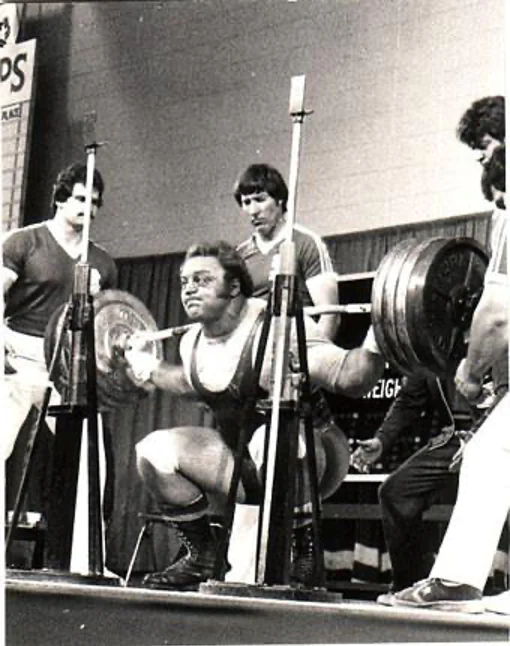
Powerlifter Bill Kazmaier (above) deep in the hole with 900 pounds: whole milk and squats—the eternal growth combination.
Series note: Make sure to read GOT WHOLE MILK? Part 1 first.
Whole Milk for Muscle Growth: The Old-School Anabolic Argument
Whole milk was one of the first widely used nutritional supplements in strength culture and became a cornerstone of early mass-building nutrition. The purposeful combining of heavy, consistent progressive resistance training with supplemental whole milk consumption was revolutionary for its time.
Lifters were discovering that training results depended on more than the workout itself. The body also needed sufficient calories, protein and rest. Milk was portable, instantly consumable and available almost everywhere. For lifters who tolerated dairy, it offered an easy way to increase energy and protein intake without preparing another full meal.
In the 1930s, men such as John Grimek, Steve Stanko and John Davis used milk as part of their strength and muscle-building diets. Lifters believed that milk not only supported muscle gain but also helped them recover from demanding sessions. The quicker a man recovered from a result-producing workout, the sooner he could perform another productive session.
The more those excess calories were biased toward useful protein and nutrient-dense food, the better the chances of gaining muscle without an unacceptable increase in body fat.
In the 1950s, milk drinking became even more visible as Marvin Eder, Reg Park and other major strength figures built extraordinary size and power. These men were routinely photographed carrying glass pint bottles of milk.
Milk Was the Original Convenient Strength Food
In the 1930s, 1940s and 1950s, many families obtained milk, eggs, cheese and cream from neighborhood dairies. Fresh milk was often delivered to the home in reusable glass bottles. Compared with today, more food was purchased locally and seasonally from dairies, butchers and produce stands.
Supplementing with milk became widespread in the serious weightlifting and bodybuilding communities because the practice was simple and lifters believed they were obtaining results. During the 1940s, bodybuilders such as Clancy Ross and Jack Dellinger and strength athletes such as Doug Hepburn and Norbert Schemansky championed milk as part of their quest to grow larger and stronger.
In the 1950s, Reg Park, Bill Pearl and Marvin Eder took physique development, strength and milk drinking to another level. Eder was reportedly seldom seen without a pint in hand.
Among strength athletes, perhaps the most enthusiastic milk advocate was Paul Anderson. The strength titan used whole milk as one tool for pushing his bodyweight upward to roughly 365 pounds at a height of 5 feet 10 inches. Bob Hoffman later recalled watching Anderson consume fourteen pints during a fourteen-hour lifting trip to Moscow.
By the 1960s, whole milk remained common throughout bodybuilding and weightlifting. No one was studying the nutrition label because modern nutrition labels did not yet exist. Most importantly, milk was inexpensive, widely available and easy to consume.
How Whole Milk Lost Its Place in Strength Nutrition
Milk lost much of its luster during the 1980s. Dietary fat was increasingly portrayed as an artery-clogging substance to be avoided, while the rapidly growing supplement industry offered colorful tubs, pills and powders backed by outrageous promises.
Milk was out in the go-go 80s. In were parachute pants, big hair and aggressively marketed supplements made with cheap ingredients. One famous mass-building product was loaded with sugar. No wonder it tasted good and sold well.
Early supplement makers often used sugar, high-fructose corn syrup and artificial sweeteners to disguise poor raw ingredients. Meanwhile, drinking ordinary milk began to look old-fashioned. Only Luddites and hillbillies would choose milk over Ram Charger Turbo Double X—now with creatine nitrous oxide! Visa and Mastercard accepted…
Back in the Miami Vice days, it seemed far sexier to spend $39 at the mall health-food store on soy protein, yohimbe bark, Mega Mass 4000 and Horny Goat Weed pills. Incredible promises were made, and we desperately—or naïvely—wanted to believe them.
The anti-fat campaign accelerated the decline of whole milk. Low-fat and fat-free dairy became the mainstream recommendation. For a mass-seeking lifter, however, removing milk fat also removed much of the food’s calorie density.
That does not make fat-free or reduced-fat milk useless. Different versions can fit different goals. A trainee trying to limit calories may prefer lower-fat milk. A hard-gaining athlete deliberately seeking a calorie surplus may find whole milk more practical.
Raw Milk Nutrition: A Necessary Modern Safety Correction
I originally described raw, unpasteurized milk as the ultimate milk. I liked its taste, calorie density and place in old-school farm culture. Raw milk composition varies by producer, breed, season and serving size, so anyone evaluating it should use the actual product label rather than a generic internet chart.
A modern safety correction is necessary. Raw milk can carry disease-causing bacteria even when the farm appears clean and the milk looks or smells normal. Pasteurization greatly reduces that risk without meaningfully lowering milk’s overall nutritional value. For most lifters, pasteurized whole milk is the safer default.
Readers considering unpasteurized dairy should review current FDA raw milk safety guidance, understand local regulations and seek qualified guidance when health risks or medical conditions are present.
Raw milk does not become safe simply because it is fresh, organic or purchased directly from a farm. Children, pregnant people, older adults and anyone with a weakened immune system face particular risk from foodborne illness.
My Post-Workout Whole Milk and Protein Ritual

I mixed one serving and a half of Parrillo chocolate H-Protein powder or Parrillo orange-crème 50-50 Plus with a cup of milk. For me, this created a thick, power-packed drink that was convenient after a hardcore training session.
Based on the product labels I was using at the time, the combination supplied roughly:
- 390 calories
- 58 grams of protein
- 20 grams of carbohydrate
- 8 grams of fat
- 12 grams of sugar
Formulas and labels change, so those numbers should be checked against the products actually used.
I drank this thick, luscious concoction after a body-shattering weightlifting session. It tasted incredible. I mixed mine just shy of pudding. I used a spoon to scrape out the final super-thick powder pockets, which I savored like barbecue burnt ends.
After crushing myself in training and finishing the shake, I crawled under heavy blankets on my futon and sank into a catatonic stupor. My power nap lasted about 45 minutes. After training and feeding, I effortlessly fell into a deep, dreamless state bordering on hibernation. In my unconsciousness there was no thinking or dreaming, only the feeling of glowing like a nuclear isotope.
The power nap completed my classical growth equation:
- Train the muscle.
- Feed the muscle.
- Rest the muscle.
- Repeat consistently.
Protein-containing food after resistance exercise can support muscle protein synthesis and recovery. There is no magical five-minute window, however. Total daily protein, total calories, training quality and consistent sleep remain more important than racing to finish a shake the instant the final rep ends.
The Training Still Has to Earn the Calories
Whole milk will not create muscle in the absence of serious training. A calorie surplus without a progressive resistance stimulus can simply increase body fat. The lifter must give the body a reason to use additional nutrients for recovery and growth.
A basic training environment does not need to be complicated. A stable PowerBlock Commercial PowerBench can support pressing and dumbbell work, while IRON COMPANY interlocking rubber weight-room tiles can help protect a dedicated lifting area.
Some mass-seeking lifters also include controlled conditioning to preserve work capacity and manage body composition. When outdoor cardio is impractical, a commercial treadmill such as the Spirit Fitness CT800 can support walking or structured aerobic work.
The equipment does not build the muscle, and neither does the milk by itself. The complete system—training, food, recovery and progression—produces the result.
Who May Benefit from Whole Milk?
Whole milk may fit a nutrition plan for:
- Hard-training lifters who struggle to consume enough calories
- Athletes who tolerate dairy well
- Bodybuilders or powerlifters pursuing a controlled mass-building phase
- Trainees seeking a convenient combination of protein, carbohydrate, fat and fluid
- People who prefer food-based recovery options over heavily marketed mass-gain powders
It may be a poor fit for people with milk allergy, lactose intolerance, digestive distress, medical restrictions or goals requiring strict calorie control. Lactose-free whole milk and other protein-rich foods may be better options for some trainees.
Frequently Asked Questions
Can whole milk help support muscle growth?
Whole milk can help some lifters reach the calorie and protein intake needed for muscle growth. It works as part of a complete plan that includes progressive resistance training, adequate total protein, recovery and consistent sleep.
Is whole milk better than skim milk for mass building?
Whole milk is more calorie dense, which may make it more practical for a hard-gaining lifter seeking a surplus. Skim or reduced-fat milk may better suit trainees who want dairy protein while limiting total calories.
Does raw milk offer greater bodybuilding benefits?
There is no established muscle-building advantage that makes raw milk necessary. Raw milk can contain harmful pathogens, while pasteurized milk provides protein and other nutrients with substantially lower food-safety risk.
When should a lifter drink milk after training?
Milk can be consumed after training when it fits the athlete’s normal meal schedule. Having protein within the next few hours is practical, but total daily protein and calorie intake matter more than consuming milk immediately after the final set.
How much whole milk should a strength athlete drink?
There is no universal amount. Intake should match the athlete’s calorie needs, dairy tolerance, body-composition goal and overall diet. Starting with a normal serving and monitoring digestion and bodyweight is more sensible than immediately adopting a gallon-a-day plan.
Who should avoid or limit whole milk?
People with milk allergy, significant lactose intolerance, digestive problems, medical restrictions or a tightly controlled calorie target may need to avoid or limit it. Qualified nutrition or medical guidance may be appropriate when health concerns are present.
About the Author: Marty Gallagher
As an athlete Marty Gallagher is a national and world champion in Olympic lifting and powerlifting. He was a world champion team coach in 1991 and coached Black's Gym to five national team titles. He's also coached some of the strongest men on the planet including Kirk Karwoski when he completed his world record 1,003 lb. squat. Today he teaches the US Secret Service and Tier 1 Spec Ops on how to maximize their strength in minimal time. As a writer since 1978 he’s written for Powerlifting USA, Milo, Flex Magazine, Muscle & Fitness, Prime Fitness, Washington Post, Dragon Door and now IRON COMPANY. He’s also the author of numerous books including Purposeful Primitive, Strong Medicine, Ed Coan’s book “Coan, The Man, the Myth, the Method" and numerous others. Read the Marty Gallagher biography here.

Marty Gallagher is a champion strength athlete, coach, author, and RAW Podcast host known for powerlifting, Olympic lifting, and serious strength training.
