
 Call us today at 1-888-758-7527


Mind Games - Electronic Meditation: tools or toys?
Turbocharging Mindfulness
Sitting “like a mountain” takes years of practice. Are there technological meditation shortcuts?
I have always been intrigued with meditation. I wanted to learn and apply meditational techniques to boost my athletic performance and complement the intense physical work I performed with free weights. I have also always been intrigued with hi-tech meditational devices.
I began my technological explorations back in the 1970s when I became an enthused user of the first generation of biofeedback devices. Back then, getting “hooked up” could mean having electrodes attached to your head or body, with wires running to a control box. The machine converted a measured physiological signal into a tone, light, meter reading, or other form of feedback.
The user then attempted to influence that signal through breathing, relaxation, concentration, or some other mental strategy.
Biofeedback, Neurofeedback and What the Device Actually Measures
Biofeedback is a broad category. Different systems can monitor muscle activity, heart rate, breathing, skin conductance, temperature or other measurable functions. EEG neurofeedback is one specific form of biofeedback: sensors measure electrical activity at the scalp and the system returns information to the user in real time.
This distinction matters. A device that measures EEG and provides live feedback is not the same thing as a device that simply plays programmed sounds or flashes lights. One reads a physiological signal. The other delivers stimulation without independently verifying what the brain is doing in response.
EEG activity is commonly discussed using several named frequency bands. The boundaries are approximate, can vary somewhat by source and should not be treated as fixed psychological destinations.
| EEG Band | Approximate Frequency | Commonly Observed Context |
|---|---|---|
| Delta | 0.5–4 Hz | Deep sleep; delta activity during wakefulness can have other meanings |
| Theta | 4–7 Hz | Drowsiness, early sleep and some forms of cognitive processing |
| Alpha | 8–12 Hz | Relaxed wakefulness, often strongest with the eyes closed |
| Beta | 13–30 Hz | Common waking activity, attention and motor processing |
| Gamma | Approximately 30–80 Hz | High-frequency activity studied in perception, attention and cognition |
Multiple frequencies can occur at the same time in different parts of the brain. A person does not simply “live in theta” or “switch on gamma” in the way a radio is tuned to one station. Frequency bands are useful descriptions, but they do not provide a one-to-one map of enlightenment, insight, relaxation or athletic readiness.
Still, the possibilities fascinated me. Why not hook up Zen priests, Taoist cave monks, Hindu yogis and Sufi mystics to EEG equipment and find out which patterns appeared during deep practice? Were there measurable commonalities between a fifty-year Zen practitioner and an equally mature Tibetan monk? Would one “reside lightly” in theta while the other would “bliss out” in gamma? I wanted to know.
My favorite book on the subject was Zen Meditation and Psychotherapy by Tomio Hirai, M.D. Hirai described EEG observations involving experienced Zen practitioners during intensive practice. The work was fascinating, but it did not produce a simple frequency formula for enlightenment—and that was probably the most useful conclusion.
I loved biofeedback—for a while. Over time and with practice, the device devolved into another video game. I became skilled at influencing the feedback signal. I could slow my breathing, reduce visible tension and move the meter or tone in the desired direction. I always felt good after a session.
What I could not establish was a lasting transformation. My post-session afterglow usually lasted thirty to sixty minutes before ordinary consciousness reappeared.
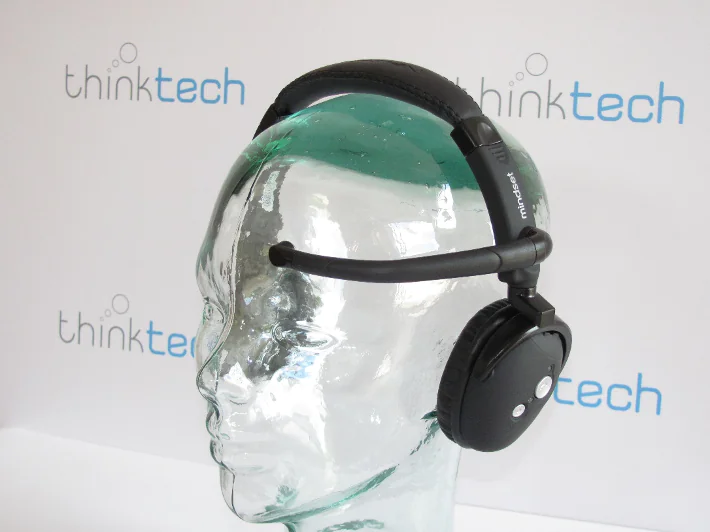
From Greasy Electrodes to Slick Consumer Devices
Early biofeedback devices were cumbersome. Electrodes could require conductive paste or gel, and multiple wires ran from the user to the control unit. Compared with that tangle, modern consumer devices can be clean, compact and easy to use.
Some modern headsets genuinely contain sensors. Others are relaxation or stimulation devices presented in biofeedback-like packaging. The buyer needs to ask a basic question: does this unit measure a physiological signal and return live feedback, or does it simply play a programmed session?
I also questioned accuracy. How closely could an inexpensive consumer sensor approximate a carefully administered clinical EEG? I had no independent validation data, so I could not answer that honestly. A polished display and precise-looking number do not prove laboratory accuracy.
In my younger days, I expected device mastery to produce some fabulous enlightenment experience—a permanent spiritual transformation that would alter my personality and life. That did not happen. No one I knew achieved enlightenment because a tone changed or a meter moved.
We did become better at controlling respiration. We became more aware of tension. We learned how to slow down and relax. I could move between feedback targets like a mental snowboarder. I cannot remember a session after which I did not feel mentally cleaner.
But! Back then, in my ignorant youth, that was not enough.
The Mind Gym and the Restorative Arts
I continued exploring Mind tools. Through my professional relationships with Tier 1 Special Operations personnel, I was exposed to a wide assortment of technologies intended to support attention, assessment, stress management and recovery.
The performance-and-recovery facility I visited was an arcade of hi-tech devices: reaction-training systems, sensory-reduction environments, quiet recovery pods, cold-exposure equipment, physical-assessment tools and access to professional psychological support. It was a dizzying assortment of major and minor tools, all aimed at helping heavily taxed operators decompress, assess readiness and return to useful function.
Just as serious strength training equipment must serve a defined physical purpose, a brain-training device should have a clear job. The tool should measure something useful, deliver a repeatable intervention or create a practical recovery ritual. It should not be credited with powers it cannot demonstrate.
I do not present those Mind Gym devices as cures, and I cannot independently validate every claim made for them. What impressed me was the underlying premise: psychological recovery deserves deliberate attention just as surely as muscular recovery does.
The Nova Pro 100: Mental Snowboarding Without EEG Feedback
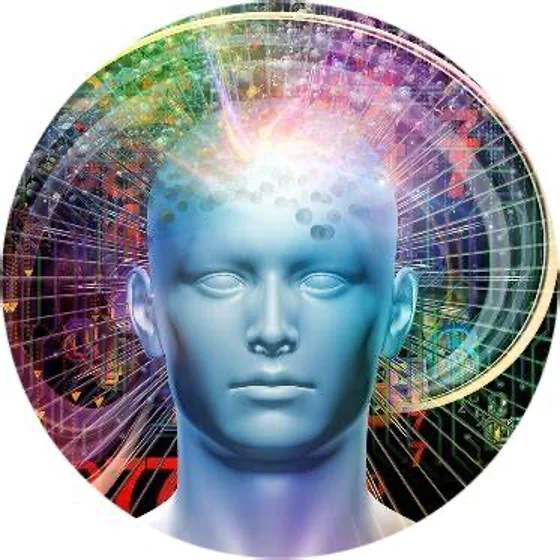
One “mental recalibration” device that I came to use often—and enjoy every time I used it—was the PhotoSonix Nova Pro 100.
The Nova Pro is not EEG neurofeedback. It does not measure my brainwaves or confirm that I have entered alpha, theta, delta or gamma. It is an open-loop light-and-sound stimulation device: I select a programmed session, and the machine delivers rhythmic audio and flickering light through headphones and glasses.
The owner’s manual describes one hundred sessions grouped into eight broad categories: relaxation, meditation, sleep, learning, energizing, visualization, entertainment and special programs. The names describe the intended character of a session, but the manufacturer also notes that actual effects can differ from person to person and from day to day.
That is a far more defensible description than saying the machine deposits every user into a verified brainwave state.
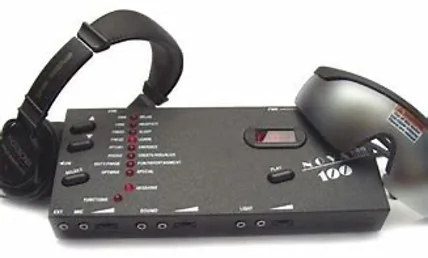
The soundtrack is synchronized with an intense light show viewed through closed eyelids. You sit or lie down, relax mentally and physically and surrender to the sensory bombardment. It is not virtual reality in the technical sense, but experientially it can feel like an audio-visual psychedelic trip designed to yank you out of your existing headspace.
Like a Ferrari mechanic tuning a turbocharged 700-horsepower V-12, the session attempts to tune the atmosphere inside your skull. Whether the programmed frequency reliably forces the brain into the advertised state is another question.
I could call up a short session before training or use a longer session when I wanted to relax. I could adjust the session, light intensity, sound and color settings. I could use the supplied electronic soundtrack or feed in my own music.
The standard sounds were not necessarily musical or comforting. They could be jarring, odd and alien, yet perfectly synchronized with the kaleidoscopic light patterns passing through my closed eyelids. Visual stimulation and electronic buzz-saw soundtrack worked together.
I could perform a session sitting in an easy chair, on my zafu in formal Zazen posture, in my hard-backed rocking chair or lying down. Push the buttons, put on the headphones and glasses, and down the psychological rabbit hole you go.
A Nova Pro session changed my subjective headspace every time I used it. I generally felt better afterward, as if my brain had been dry-cleaned or run through a car wash. I get a similar feeling after a body-searing steam bath alternated with cold water.
The Nova Pro is, for me, a mental steam bath.
What the Evidence Can and Cannot Establish
My afterglow is real as personal experience. It is not proof that the device reliably entrains every user’s EEG, treats a psychological condition or reproduces formal meditation.
Research into rhythmic sound, binaural beats and sensory entrainment remains mixed. A systematic review of binaural-beat studies found inconsistent EEG outcomes and substantial differences in experimental methods. Some experiments supported an entrainment effect; others produced contradictory or mixed findings.
That does not mean no one can relax while using a light-and-sound machine. It means the subjective experience should not be inflated into an established medical or neurological claim.
The same restraint applies to meditation. Meditation and mindfulness may help some people manage stress, anxiety, sleep difficulties and other concerns, but outcomes vary and portions of the research remain preliminary. Meditation should not replace conventional care or delay consultation with a qualified professional.
Electronic Meditation and the Serious Athlete
The strength athlete already understands useful feedback. A barbell reports its weight without emotion. A stopwatch reports time. Modern cardio equipment can report speed, distance, heart rate, power output and duration. Those numbers help the athlete compare one session with another.
A meditation device should be judged with the same clear eye. What does it measure? What does it deliver? Can the effect be repeated? Does the user feel more focused or relaxed afterward? Is the result temporary or lasting? Is the device entertainment, training, therapy or some combination?
For me, the Nova Pro was useful as a short-term interruption of ordinary mental chatter. It did not replace seated meditation, physical training, sleep, professional care or the hard psychological work of dealing with life.
Electronic meditation can be another tool in the recovery toolbox. It should not be mistaken for the entire toolbox.
Important Flickering-Light Safety Warning
Flickering-light devices are not appropriate for everyone. The Nova Pro 100 owner’s manual warns that its flashing lights can provoke seizures in photosensitive people, including some who may not know they are photosensitive.
The manufacturer directs users to remain seated or lying down, stop immediately if the lights cause discomfort and seek professional guidance when epilepsy, visual photosensitivity, a pacemaker, a heart condition, relevant medication, alcohol or drug use may be involved. The manual also identifies the product as an entertainment or avocational device—not a medical device or replacement for psychological or medical treatment.
Meditation itself is generally considered low risk, but it is not risk-free. Some people report anxiety, depression or other negative experiences. The National Center for Complementary and Integrative Health recommends discussing complementary practices with a health care provider and not using them to replace needed care.
Tools or Toys?
Detractors could rightfully call the Nova Pro an expensive toy. They could ask, “How is a Nova Pro session different from a carnival ride?”
To which I would say: if I could have the Whip or bumper cars in my living room, I would.
For me, the Nova Pro was both tool and toy. It was a tool because the ritual reliably helped me interrupt my normal mental chatter and enjoy a short-lived period of centeredness. It was a toy because it was entertaining, sensory and incapable of granting permanent enlightenment.
I no longer long for technological enlightenment. The temporary afterglow—that state of blissful centeredness that follows a good session—is more than enough to keep me coming back.
About the Author: Marty Gallagher
As an athlete Marty Gallagher is a national and world champion in Olympic lifting and powerlifting. He was a world champion team coach in 1991 and coached Black's Gym to five national team titles. He's also coached some of the strongest men on the planet including Kirk Karwoski when he completed his world record 1,003 lb. squat. Today he teaches the US Secret Service and Tier 1 Spec Ops on how to maximize their strength in minimal time. As a writer since 1978 he’s written for Powerlifting USA, Milo, Flex Magazine, Muscle & Fitness, Prime Fitness, Washington Post, Dragon Door and now IRON COMPANY. He’s also the author of numerous books including Purposeful Primitive, Strong Medicine, Ed Coan’s book “Coan, The Man, the Myth, the Method" and numerous others. Read the Marty Gallagher biography here.
Marty Gallagher is a champion strength athlete, coach, author, and RAW Podcast host known for powerlifting, Olympic lifting, and serious strength training.
