
 Call us today at 1-888-758-7527

Would You Do Cardio Without a Heart Rate Monitor?
This essay from Marty Gallagher asks a simple question for lifters, coaches and athletes: if you would never lift weights without knowing the poundage on the bar, why would you perform cardio without knowing your heart rate? The lesson still holds for powerlifters, bodybuilders, weightlifters, first responders, and military trainees: cardio training is more useful when intensity is measured, planned and matched to the goal, whether the tool is a heart rate monitor, an exercise bike, dumbbells, barbells, or another mode of hard physical work.
Would You Do Cardio Without a Heart Rate Monitor?
Featured Cardio Training Equipment: heart rate monitors, cardio equipment, exercise bikes, dumbbells, and barbells.
The Trainer Blind Spot: Measuring Cardio Intensity
Most personal trainers have a collective blind spot. They do not see the intrinsic value of strapping clients into heart rate monitors. Our question is: how do you assess cardio intensity during exercise without a monitor? Personal trainers tend to be detail-oriented types that will split infinitesimal hairs discussing the value of certain resistance exercises; they will go into maddening nuance relating set and rep strategies; they will insist you understand nutrient micro-content and delve into subtle manipulations of fat, carbs and protein — yet mysteriously they dismiss the need to know how hard the human heart is working, in real time, in relation to the exercise prescription they have prescribed for the client or student. Only by using a heart rate monitor can we assess the impact of cardio exercise in real time.
The analogy is obvious to anyone who trains with iron. A lifter would not load a barbell without knowing the poundage, and a serious coach would not program progressive resistance training without tracking load, reps, sets and effort. Cardio training deserves the same respect. Heart rate is the cardio equivalent of barbell poundage: it tells the athlete how hard the system is working right now.
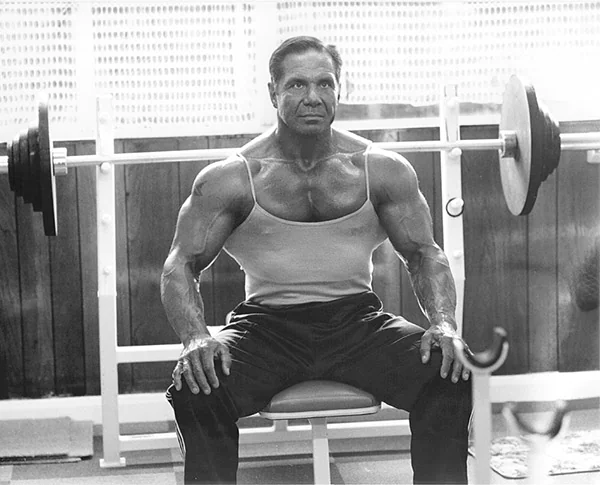
Bill Pearl at Age 63: Cardio Without Sitting on an Exercise Bike
Bill Pearl at age 63: Bill doesn't practice cardio in the classic sense of sitting on an exercise bike and riding it for cardio effect — though a decade earlier he had been a competitive bicyclist who rode hundreds of miles weekly. Bill uses non-stop weight training with dumbbells and barbells to create a cardio effect. "Does the heart really care how it gets elevated?" Pearl works at a rapid pace for two solid hours, using his moderate-intensity, high volume weight training system to jack up his heart rate. From set number one until the conclusion of the final rep of the final set, Pearl's heart rate never drops below 120 beats per minute, 75% of his age-related heart rate maximum. Often, during his maximum exertions, his heart rate would exceed 170, a whopping 108% of his heart rate max.
That is the point. Cardio training does not have to look one way. Some athletes will use indoor cycling bikes, upright bikes, recumbent exercise bikes, or air bikes. Others will use non-stop resistance training with dumbbells, barbells and free weights. The heart does not care whether the work comes from pedals, plates or relentless movement; it responds to workload, intensity and duration.
What Cardio Training Is Really Trying to Do
"Aerobics," as a concept, is infected with myths and preconceptions. Our cardio training strategy is simple: elevate the human heart to a preplanned level for a preplanned duration. As Iron Icon Bill Pearl once famously said, "The human heart does not care how it gets elevated, just as long it gets elevated — who cares the tool or mode used?" This terse sentence points out a number of cardiovascular truths: the primary goal of cardio exercise is to elevate the human heart rate and keep it elevated.
For a powerlifter, bodybuilder, or weightlifter, this is a liberating idea. Cardiovascular training does not have to be divorced from strength training culture. A heart rate monitor can show whether a circuit of rubber hex dumbbells, barbell complexes, sled work, an Assault Air Bike Classic session, or steady work on a Spirit Fitness light commercial upright bike is actually producing the intended cardio effect.
The Calorie-Burning Myth
One cherished cardio myth holds that the primary goal of cardio exercise is to burn calories. The actual number of calories oxidized during an aerobic session is quite disappointing. An average-sized man tooling along at a rapid, sweaty, 12-calorie-per-minute burn rate will oxidize a puny 360 calories, the caloric equal of an order of fast food fries. Many people labor under a mythical illusion that mild cardio magically burns off thousands of calories. That is hardly the case.
This does not mean cardio exercise lacks value. It means the value of cardio training should not be reduced to a simplistic calorie-counting exercise. The better goal is to elevate heart rate intentionally, sustain the correct level of effort, improve work capacity, support health, spike the metabolism, and create a repeatable training effect that can be monitored over time.
Freedom of Mode: Exercise Bike, Dumbbells, Barbells or Any Tool That Elevates Heart Rate
Pearl's Zen clarity implies freedom of mode: cardio exercise can be done in a thousand different ways; as long as the heart rate is successfully elevated to a predetermined range for a predetermined duration, what difference the mode or tool? There exists a universe of exercise modes and methods by which we can build and strengthen our guts, improve internal organ function, improve health and spike the metabolism.
This is where the right equipment selection matters. A commercial gym, tactical fitness room, first responder training area, or home gym can build cardiovascular training around traditional upright exercise bikes, recumbent exercise bikes, air bikes such as the Xebex Air Bike 1000, or cycling options such as the Schwinn Fitness IC Classic Indoor Cycling Bike. The same facility can also create high-output cardio effects with free weights, dumbbells, barbells, and fast-paced resistance training.
Equipment Pairings for Heart Rate-Based Cardio
Heart rate-based cardio is not about one magic machine. It is about choosing the right tool for the athlete, then measuring whether the tool is producing the intended cardiovascular response. Exercise bikes can be excellent for controlled, repeatable heart rate work because the athlete can manage speed, resistance and duration while monitoring the pulse response. Air bikes add a total-body element for athletes who want a more aggressive conditioning tool.
For strength athletes who prefer to create a cardio effect with iron, the equipment menu changes. A set of urethane hex dumbbells, adjustable options such as the PowerBlock Elite USA 90 adjustable dumbbell set, urethane barbell sets, or TKO solid steel head urethane encased barbells can support high-density resistance training sessions where heart rate is tracked just as carefully as sets, reps and poundage.
FAQ
Why use a heart rate monitor during cardio training?
A heart rate monitor shows cardio intensity in real time. Gallagher's argument is that lifters would never train without knowing the poundage on the bar, so athletes should be equally interested in knowing how hard the heart is working during cardio exercise.
Can weight training create a cardio effect?
Yes. The article uses Bill Pearl as the example: non-stop weight training with dumbbells and barbells can elevate heart rate and create a cardio effect when the pace, effort and duration are high enough.
Is the main purpose of cardio exercise to burn calories?
Gallagher pushes back against that idea. He argues that calorie burn from mild cardio is often overestimated and that the more useful goal is to elevate heart rate to a planned level for a planned duration.
Are exercise bikes useful for heart rate-based cardio?
Exercise bikes can be useful because they make it easier to control duration, resistance and pace while monitoring heart rate. Upright bikes, recumbent bikes, indoor cycling bikes and air bikes can all be used when they fit the athlete and training goal.
What equipment can support cardio training for strength athletes?
Strength athletes can use traditional cardio equipment such as exercise bikes and air bikes, or they can create a cardio effect through fast-paced resistance training with dumbbells, barbells and free weights while tracking heart rate.
About the Author
As an athlete Marty Gallagher is a national and world champion in Olympic lifting and powerlifting. He was a world champion team coach in 1991 and coached Black's Gym to five national team titles. He's also coached some of the strongest men on the planet including Kirk Karwoski when he completed his world record 1,003 lb. squat. Today he teaches the US Secret Service and Tier 1 Spec Ops on how to maximize their strength in minimal time. As a writer since 1978 he’s written for Powerlifting USA, Milo, Flex Magazine, Muscle & Fitness, Prime Fitness, Washington Post, Dragon Door and now IRON COMPANY. He’s also the author of numerous books including Purposeful Primitive, Strong Medicine, Ed Coan’s book “Coan, The Man, the Myth, the Method" and numerous others. Read the Marty Gallagher biography here.
Marty Gallagher is a champion strength athlete, coach, author, and RAW Podcast host known for powerlifting, Olympic lifting, and serious strength training.
