
 Call us today at 1-888-758-7527

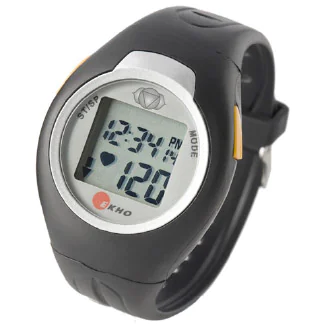
Heart Rate Monitor Cardio: Define Training Intensity
This essay from Marty Gallagher is a practical cardio training argument: if lifters measure poundage, reps, sets, and progression with obsessive precision, then cardiovascular training deserves the same treatment through heart rate monitoring. For powerlifters, bodybuilders, weightlifters, athletes, first responders, and military trainees, the lesson still holds: cardio becomes more useful when heart rate, calories, session length, training mode, and intensity are measured instead of guessed.
The Heart Rate Monitor Allows Us to Define Training Intensity
Featured Cardio Training Equipment: heart rate monitor, kettlebell, exercise bike, weighted vest
Our approach emphasizes cardio variety — the spice of life — and is aimed at fulfilling the old adage that “time flies when you are having cardio fun.” We tightly adhere to Occam’s razor: when results are equal, sparse and plain, and time efficient, trumps complex, gaudy and excessive every single time. When all things are equal, less gets the nod over more as long as less is more intense. Don’t become dazzled by complexity of tools or modes. Here is how you might log a cardio session, assuming you were sophisticated enough to wear a heart rate monitor and log results.
| Date | 4-14-17 |
|---|---|
| Mode | Racquetball |
| Session length | 44 minutes |
| Average heart rate per min | 145 beats per min |
| Max heart rate | 176 beats per min |
| Number of calories burned | 676 calories |
| Calorie per min burn rate | 15.3 calories per min |
The heart rate monitor allows us to periodize our cardio efforts. This degree of precision allows us to cross-compare various cardio modes: how does 30 minutes of kettlebell swings using 54 pounds compare to 30 minutes of jumping rope? How does three sets of tennis compare to twenty laps swum at the pool? How does forty minutes on an exercise bike compare to forty minutes of racquetball? How does forty minutes of power-walking while wearing a weighted vest compare to jogging? The heart rate monitor enables us to assess cardio intensity to a far greater degree. We can now measure cardio intensity instead of merely talking about it.
That is where simple equipment choices become useful. A lifter can compare heart rate response across cardio equipment, indoor cycling bikes, kettlebell circuits, weighted vest walking, and other modes of work. The tool or mode can vary; the heart rate data gives the athlete a common language for comparing effort.
The Heart Rate Monitor: Our Lone Technological Concession
Our lone cardio concession to modern technology is the heart rate monitor. I consider the heart rate monitor an indispensable piece of exercise gear and believe there should be a heart rate monitor in every gym bag. The heart rate monitor apparatus is a watch or console and a chest strap that contains a microprocessor. Each time the heart beats, the transponder records and accumulates data.
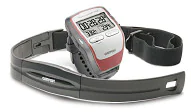
Press a button on the wristwatch at the beginning of a cardio session and push it again at the conclusion of the session. A summation of data is at your fingertips: a veritable goldmine of data. Buy a unit with a calorie counter and the ability to provide a “blended session heart rate average.” Avoid overly complex road-racer heart rate monitors with split times and computer hookups. A little bit of technology goes a long way.
For facilities and athletes who prefer traditional cardio equipment, the same logic applies. A session on the Assault Air Bike Classic, the Xebex Air Bike 1000, a Spirit Fitness light commercial upright bike, or a Schwinn Fitness IC Classic Indoor Cycling Bike becomes more informative when the athlete knows the average heart rate, maximum heart rate, time under effort and calorie-per-minute burn rate.
Metabolic Rocket Ride

We found these old Cockeyed photos of Sergio “The Myth” Oliva circa 1966. They show him in photos 45 days apart. These two shots provide a perfect visual example of what happens when an elite athlete hits the mythical “synergy zone.” Gains occur at an astoundingly accelerated rate. These “metabolic bursts” are well known to elite iron men. If a man does enough things right for a protracted period, amazing physical changes occur. Preconditions are critical and must be met.
New strength begets additional muscle size, additional muscle size begets new strength — round and round it goes in a metabolic hurricane. Monastery-like monk discipline and iron will for a protracted period are required to elicit this type of dramatic result.
Cardio Variety Without Losing Precision
Cardio training does not need to be narrow, boring or machine-bound. The point is not to worship one tool; the point is to elevate the heart to a planned level for a planned duration and then record what happened. That means the same athlete can rotate between exercise bike intervals, racquetball, swimming, kettlebell swings, weighted vest walking, running, jumping rope or fast-paced free weight work and still compare the sessions intelligently.
For kettlebell-based cardio, lifters can build sessions around premium powder coated kettlebells or urethane kettlebell sets. For weighted walking or power-walking sessions, a practical option such as the Body-Solid adjustable weighted vest can help raise workload without changing the basic movement. For athletes who prefer strength-based cardio, foundational free weights can also create a serious cardiovascular effect when the pace, load, and rest periods are managed intelligently.
Why Heart Rate Data Matters
The heart rate monitor is not there to make training complicated. It is there to strip away illusion. Without heart rate data, “hard” is a vague feeling. With heart rate data, the athlete can compare modes, repeat successful sessions, identify weak efforts and understand which tools produce the desired cardiovascular response.
In strength training, no serious lifter would say, “I don’t know how much weight was on the bar, but it felt pretty heavy.” Yet this is exactly how many athletes treat cardio. The heart rate monitor turns cardio exercise into a measurable training session. It lets the athlete compare session length, average heart rate, maximum heart rate, calorie burn and calorie-per-minute burn rate, then use that information to plan the next workout.
FAQ
Why use a heart rate monitor for cardio training?
A heart rate monitor allows the athlete to measure cardio intensity in real time. Instead of guessing whether a session was hard, the athlete can record average heart rate, maximum heart rate, session length, calories burned and calorie-per-minute burn rate.
Can a heart rate monitor compare different cardio modes?
Yes. Gallagher’s point is that heart rate data allows athletes to compare very different training modes, such as kettlebell swings, jumping rope, racquetball, swimming, exercise bike workouts and weighted vest walking.
Is cardio only about burning calories?
No. Calories are useful to log, but the deeper value is knowing how hard the heart is working and how long the athlete sustains the desired level of effort. Heart rate data gives cardio training structure and repeatability.
What equipment can be used for heart rate-based cardio?
Heart rate-based cardio can be performed with exercise bikes, indoor cycling bikes, air bikes, kettlebells, weighted vests, free weights or sport-based activity. The tool can change as long as the heart rate response is measured and compared honestly.
Who benefits from measuring cardio intensity?
Powerlifters, bodybuilders, weightlifters, athletes, first responders, military personnel and fitness enthusiasts can all benefit from measuring cardio intensity because it turns conditioning work into a planned, trackable training session.
About the Author
As an athlete Marty Gallagher is a national and world champion in Olympic lifting and powerlifting. He was a world champion team coach in 1991 and coached Black's Gym to five national team titles. He's also coached some of the strongest men on the planet including Kirk Karwoski when he completed his world record 1,003 lb. squat. Today he teaches the US Secret Service and Tier 1 Spec Ops on how to maximize their strength in minimal time. As a writer since 1978 he’s written for Powerlifting USA, Milo, Flex Magazine, Muscle & Fitness, Prime Fitness, Washington Post, Dragon Door and now IRON COMPANY. He’s also the author of numerous books including Purposeful Primitive, Strong Medicine, Ed Coan’s book “Coan, The Man, the Myth, The Method" and numerous others. Read the Marty Gallagher biography here.
Marty Gallagher is a champion strength athlete, coach, author, and RAW Podcast host known for powerlifting, Olympic lifting, and serious strength training.
