
 Call us today at 1-888-758-7527

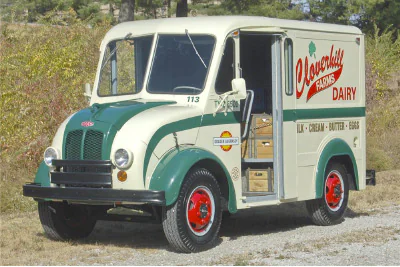
Whole Milk and Strength Gains: The Classic Muscle-Building Secret
Whole milk and strength gains have a long, politically incorrect history in old-school muscle-building nutrition. Marty Gallagher’s point is not that milk is magic. His point is that hard training, surplus calories, recovery, and old-fashioned free weight work once made whole milk a practical, calorie-dense tool for lifters trying to add size, strength, and power.
Whole Milk: A Timeless Strategy for Muscle Growth and Strength
For decades the consumption of milk, whole milk, was an integral part of athletics. Amongst athletes there is a never-ending need for muscle and the power and strength that inevitably accompany real increases in pure muscle size. When an athlete finally concludes that they need more size, strength and power, the question then becomes “Okay — but how?” There are ancient size-adding protocols that pre-steroid strength athletes discovered that can and do work.
To build muscle and add size requires that a continual surplus of calories be combined with continual hardcore resistance training.
There is no sense “slamming calories” if the progressive resistance training is moderate, sensible or normal. Unless the training is sufficient to trigger the adaptive response, i.e. incredibly intense with a body shattering after effect, excess calories are one hell of a bad idea. On the other hand, if an alpha male is tearing it up in the weight room, excess calories make a man anabolic and when anabolism and hardcore free weight training are synchronized, muscle growth is possible.
Hardcore strength trainers and elite athletes long ago discovered that if they were training hard, heavy and often, calories, and lots of them, were required just to survive the continual and ongoing pounding that the body was being subjected to. That which does not kill me makes me stronger. Only by equaling or exceeding current limits and capacities do we establish new benchmarks and provide the body with the physiological incentive needed to grow muscle.

The human body is not going to miraculously make itself stronger and more muscular by doing comfortable workouts with submaximal poundage. Only by storming the barricades of our current limits do we establish new limits and only when athletes train up to or past their limit is hypertrophy triggered. To complete the growth cycle, after each body-crushing weightlifting or cardio session, the body needs to be fed and rested. Fuel is needed to keep the soft machine from buckling under the stress.
The closer to, or past, the redline, the better the gains.
The Old-School Whole Milk Protocol
The ancients, guys like Reg Park, Marvin Eder, Bill Pearl, Pat Casey and my mentor, Hugh Cassidy, discovered that the easiest way to slam extra calories was to drink them. The primal doctrine for “muscling up” was to eat like a starving person at breakfast, lunch and dinner. With meals and in between meals, the athlete drank pints of whole milk.
It was recommended that a lifter intent on building muscle mass would “jump in” drinking six pints of whole milk per day. One pint with breakfast, then another mid-morning, a pint with lunch, another mid-afternoon, one with dinner and a final pint before bed. Over time, the mass-building athlete was expected to work six pints up to eight pints a day, a full gallon, and maintain that for 2-3 months. The super serious were drinking six quarts a day.
Their leaders were drinking two gallons of supplemental whole milk each day.
George Hechter, Bill Kazmaier, and Milk-Fueled Mass
George Hechter drank two gallons of whole milk per day as he pushed his bodyweight upward from 250 to 360. He stood 5-10 and won the IPF world superheavyweight powerlifting world title squatting 975-pounds, bench pressing 600 and deadlifting 825. He later reduced his bodyweight down to a ripped 240 where he won the world title in the 242-pound class, squatting 875, bench pressing 550 and deadlifting 835. Milk — and insanely hard training — fueled his growth.
Bill Kazmaier was a 260-pound, University of Wisconsin football player that decided to become a world champion powerlifter. He stood 6-3 and reasoned he would need to push his bodyweight up to 325 pounds if he were to successfully compete on the international level. Over a five-year stretch Kaz grew ever larger as he drank gallon after gallon of milk. He took his time and along the way won the national title in the 275-pound class.
Kaz kept on going and when he hit 315 in bodyweight he started shattering world records. At 325 he dominated not only the powerlifting world, but the strongman world. His “milk is everything” quote was in response to being asked if supplementing with milk was important to his progress.

Nutritional value of whole milk consumed by bodybuilders and powerlifters for gaining weight and increasing muscular strength.
Why Whole Milk Fell Out of Favor
Milk fell on hard times with the onset of the fatwa, the jihad against dietary fat. Starting in the 1980s, saturated fat was demonized and labeled an artery-hardening killer. Only now is this fallacious bullshit being deservedly discredited. In our current era, a delicate time full of litigious snowflakes, recommending a young athlete go on a supplemental milk program could get you locked up for child abuse.
Telling a voracious teen to drink a gallon of whole milk every day, seven days a week for months on end — all in pursuit of that most toxic of masculine characteristics, muscle and power — would get you in trouble with his parents. Are you trying to kill our boy? No, I am trying to help him overcome his ego-shattering 14-inch arms and 38-inch chest.
I can say without hesitation that supplemental whole milk and power training has been building mass since Jesus was a carpenter. The strategy, one would think, would remain as valid now as it was in 1957. The way of the psycho is still there for those crazed enough. Those that would adhere to this medieval practice might “jump in” with four pints daily spread out over equidistant intervals.
Do Not Separate the Milk from the Training
Don’t get cute and switch out whole milk for 2% or skim, or god forbid, soy. Milk stripped of fat is not the same old-school tool. The quality fat in whole fat milk contributes to the caloric density sought. All this talk of milk supplementation is meaningless if you do not take your training to the next level.
The idea is knock the dog-shit out of yourself in training and then, to accelerate healing, recovery and growth, eat food, drink milk, sleep, rest, grow gargantuan.
The quicker you recover the more often you can train. Each successive week you become slightly bigger, each successive week you become slightly stronger. Round and round it goes. Are there are any underweight alpha males left? If so, check out this timeless strategy. Used right, milk is everything. Allegedly.
Safety Note for Whole Milk and Strength Nutrition
A large whole-milk protocol is not appropriate for everyone. Lifters with lactose intolerance, dairy sensitivity, medical restrictions, cardiovascular concerns, digestive issues, or specific body-composition goals should be cautious and seek qualified guidance when appropriate. The old-school lesson is not “drink milk no matter what.” The lesson is that serious muscle gain requires hard training, recovery, and a deliberate calorie surplus from foods the athlete can tolerate and use consistently.
Frequently Asked Questions
Why did old-school lifters drink whole milk?
Old-school lifters drank whole milk because it was an easy way to add calories, protein, fat, and carbohydrates while training hard. For lifters trying to gain bodyweight and muscle mass, drinking calories was often simpler than eating yet another full meal.
Does whole milk build muscle by itself?
No. Marty Gallagher’s central point is that whole milk only makes sense when paired with serious progressive resistance training. Extra calories without hard training can simply lead to unwanted fat gain. The training stress must create the need for growth.
What was the classic whole milk muscle-building protocol?
The old protocol often started with several pints of whole milk spread across the day, commonly with meals and between meals. Some hard-gaining lifters eventually worked up to a gallon per day for a limited mass-building phase.
Why does the article focus on whole milk instead of skim milk?
The article focuses on whole milk because the old-school goal was caloric density. Whole milk provided more calories per serving than skim or reduced-fat milk, which made it useful for lifters trying to create a surplus during intense training cycles.
Is a gallon of whole milk per day safe for everyone?
No. A gallon-a-day approach is not suitable for everyone. Individual tolerance, health status, digestive response, training load, body-composition goals, and professional guidance all matter. The strategy should not be treated as universal advice.
What can modern strength athletes learn from this article?
Modern strength athletes can learn that mass gain requires coordination: hard training, enough calories, recovery, sleep, and consistency. Whole milk was one old-school tool, but the larger lesson is deliberate fueling matched to serious power training.
About the Author: Marty Gallagher
As an athlete Marty Gallagher is a national and world champion in Olympic lifting and powerlifting. He was a world champion team coach in 1991 and coached Black's Gym to five national team titles. He's also coached some of the strongest men on the planet including Kirk Karwoski when he completed his world record 1,003 lb. squat. Today he teaches the US Secret Service and Tier 1 Spec Ops on how to maximize their strength in minimal time. As a writer since 1978 he’s written for Powerlifting USA, Milo, Flex Magazine, Muscle & Fitness, Prime Fitness, Washington Post, Dragon Door and now IRON COMPANY. He’s also the author of numerous books including Purposeful Primitive, Strong Medicine, Ed Coan’s book “Coan, The Man, the Myth, the Method" and numerous others. Read the Marty Gallagher biography here.

Marty Gallagher is a champion strength athlete, coach, author, and RAW Podcast host known for powerlifting, Olympic lifting, and serious strength training.
