
 Call us today at 1-888-758-7527

Minimalistic Weight Training for Strength Gains
Minimalistic weight training: identify and master the irreducible core, then expand or contract as life dictates.
Minimalistic weight training is not easy training. It is time-compressed, brutally focused strength training built around the few lifts that produce the most return: the squat, bench press and deadlift. Marty Gallagher’s argument is simple and hard-earned: for time-pressed lifters, tactical athletes, powerlifters, first responders, and military personnel, a minimal training menu can still build serious strength when technique, intensity, planning, recovery, and progressive loading are all treated as non-negotiable.
Minimalistic Weight Training for Time-Pressed Athletes
Never in history had athletes in any sport trained less and experienced greater progress. The only thing less than once-a-week training is no training. The implications were profound: here was a time-compressed minimalistic weight training system that delivered incredible results – assuming the brutal tenets and protocols, the exacting techniques and tactics, were adhered to fully and completely.
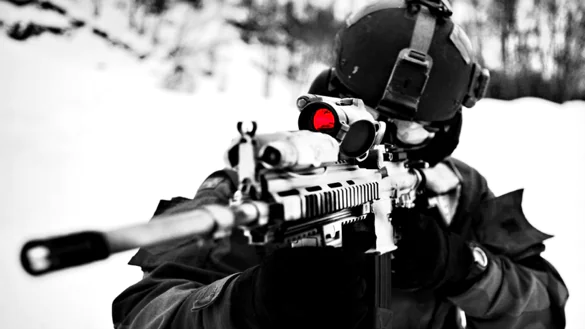
Above: One of my boys plying his trade: they understood the value of and need for strength – time was the problem.
I started working with elite military types 15 years ago: my training partner for five years was Sergeant Harry Henry, a sniper with the 10th Mountain Division. Harry was killed in a tragic and totally avoidable industrial accident. He died the same week in August that a Taliban RPG shot down the helicopter carrying my friend, Navy SEAL John Faas. While deployed for his four-month tour, John liked to call me on Sunday afternoons. His team worked at night and in the deadtime right before going into the field he’d call from Afghanistan and we’d bullshit for the best part of an hour. I could always get him laughing.
John was vibrant, alert and a real intellectual. We’d talk about anything and everything from Thomas Merton’s visit with the Dalai Lama to what was the best Tolstoy short story, he said Hadji Murid, I said The Cossacks. I asked his choice of handguns and he asked about the best way to roast a duck: prick the skin, let it hang and dry, slow roast, and baste. Above all else, we talked training. John had suffered a horrific back injury in a mountaineering accident where a team member was killed and John severely injured. He was in continual pain – yet determined to stay an active duty team member.
On the Sunday before he died, he called and was apologetic that he hadn’t gotten much training in the previous week on account of he had been bitten by a giant furry Afghan spider. His arm had swollen - but not enough for him to pull himself out of the lineup. That same weekend Harry Henry was accidentally electrocuted doing a gratis job for a friend. That was one bad week.
The Spec Ops Problem: How Do You Train When There Is No Time?
Over the past decade, I morphed into an official and ongoing relationship with several Tier 1 outfits. These relationships continue to this day. The spec ops boys read my book, The Purposeful Primitive, and sought me out. Delta Frank told me when I first started working with the top guys on an official basis, “You’ll get along great with those guys - they are like you: weirdly smart.” To a man, Tier 1 soldiers are elite athletes. As athletes whose life depends on their fitness and capabilities, elite fighters recognized the need for strength. They valued it above all the other bio-motor attributes: speed, endurance, agility, and flexibility.
The life of the active duty spec ops fighter is a series of pendulum swings: they either have extremely limited time for training or near unlimited time, when deployed, to train. The problem was, how best to strength train when there is no time to train? Is there such a thing as a miniaturized system of strength that actually produces results?
I told them of a minimalistic weight training system that could make them 25% stronger in 12-weeks training once a week – and for no more than one hour. They said, “Well sure big talker, come on down and show us this magical mystery strength system that promises so much (results) for so little (time.)” With these guys, many experts are auditioned; few are called back. Fewer still are used on a regular basis for a protracted period. At the time of this original account, we were headed into our eighth year. Our longevity was a testament to the effectiveness of the method.
Powerlifting Protocols as the Irreducible Core
I introduced the time-pressed fighters to a minimalistic weight training system based on powerlifting protocols. This time-compressed strength system was invented by elite powerlifters, men that had become maximally powerful and extremely muscular in a very short amount of time using a very limited menu of exercises. The magic happens because between the three powerlifts, squat, bench press and deadlift, activate every muscle on the human body. And, because of the extremely heavy poundage used, muscle inroad is maximal. When it comes to building power and strength, elite powerlifting is the undisputed champion.
The practical training tools are simple but not optional: dependable free weights, a serious Olympic barbell or power bar, accurate weight plates, and stable benching support. The method is minimal, but the setup must still support heavy, repeatable work.
Bodybuilding, and other conventional progressive resistance protocols, seek to isolate muscles, to train muscles individually. The conventional approach is to perform a wide menu of exercises using multiple sets and high reps while exerting moderate intensity. Muscles are flogged to death, beaten down, performing three to four exercises per body part, performing 15-20 sets for biceps, pecs, shoulders, or lats individually.
The powerlifter concentrates all his efforts at getting better at the three competitive lifts – that the optimal power protocol happened to be short, that the ideal power menu was confined to three exercises was superfluous to the lifter. If optimal results occurred training ten times a week for three hours per – so be it – lifters followed were results led – and results led to handling bigger barbells less often and in smaller doses.
The powerlifter confines 90% of his training to three broad, sweeping, expansive exercises. Exacting techniques are combined with a low-volume/high-intensity approach. Power training protocols carpet-bomb muscles: while the bodybuilder attacks the body with a never-ending series of isolative exercise pinpricks, the power lifter drops three exercise hydrogen bombs, squat, bench, deadlift, and is done.
Why Heavy Low-Rep Training Works
Done right, low repetition, 1-5 reps, powerlifting builds unrivaled amounts of raw strength, brute power and maximum muscle size. It is no accident that elite bodybuilders like Dorian Yates and Ronnie Coleman, 14 Olympia wins between the two, expropriated power tactics to build their mind-blowing muscle mass. The three powerlifts are the polar opposite of isolation exercises, compound multi-joint exercises that require groups of muscle work together, balletic synchronization used to accomplish the assigned muscular task.
The three lifts are done for low reps using gut-busting poundage. This has a traumatizing effect on the body; and the traumatization is to be embraced as that is where the gains reside. Civilians don’t grasp how hard a person must work in order to strengthen and grow muscle. You do not get hideously strong or grow massive muscles performing sub-maximally – where is the physiological incentive?
A body-shocking jolt is needed to trip the adaptive response. The stresses needed to force the body to grow and strengthen need be severe and dramatic. Sub-maximal exertions using isolation exercises are insufficient to trigger the adaptive response in anyone other than a complete virgin-body beginner.
You can spend the rest of your life doing lat pulldowns with 110-pounds for five sets of 10-reps and never make any gains, past the first three weeks you used the exercise. Conversely, it is impossible to increase from a 300-pound limit deadlift to a 400-pound deadlift and not grow muscle. Powerlifters discovered that result producing progressive resistance progress only when we seek to extend and expand our current limits and capacities. Elite lifters systematically stairstep training intensities upward on a weekly basis using periodization tactics. Every workout is preplanned months in advance.
Lat pulldowns and machines are not useless, but in this system they are not the nucleus. For facilities that need supplemental machine work, selectorized gym equipment and plate-loaded leverage gym equipment belong after the main free weight work, not ahead of the squat, bench press, and deadlift.
Train the Muscle, Feed the Muscle, Rest the Muscle
Heavy weights, the kind handled for reps in the squat/bench/deadlift, has a devastating effect on the body. More recuperation time is required for those that handle heavy weights for low reps. Training represents 1/3rd of the growth cycle. The growth cycle has three parts: train the muscle, feed the muscle, rest the muscle. Powerlifters avoid training an unrecovered group of muscles. Those that insist on training maximally heavy on fatigued muscles, at best, experience substandard training results; or, at worst, an injury.
Elite powerlifters will rest a full week, seven days, before repeating a lift. Each week in the 12-16 weeks leading up to a competition, the lifter will have a set, rep and poundage target for each lift in each workout. Powerlifting training splits are designed to enable training partners to gather together, to lift together using the same template, they spot each other, urge each other on and take advantage of the psychological lift that comes from the group dynamic. Men up their game when lifting in front of other men whose opinions they value.
Minimalistic Weight Training Split Options
Two-Day Minimalistic Weight Training Split
| Training day | Main work |
|---|---|
| Day 1 | Squat and bench press |
| Day 2, two to three days later | Deadlift and overhead press |
Three-Day Minimalistic Weight Training Split
| Training day | Main work |
|---|---|
| Day 1 | Squat and leg assistance, if any |
| Day 2, mid-week | Bench press and arm work |
| Day 3, end of week | Deadlift and some sort of overhead pressing |
Powerlifters tend to be men that make their livings with their hands or by handling machines. Often, when working construction or warehouse jobs, or as longshoremen or long-haul truckers, midweek training is impossible. Necessity is the mother of invention and thus was born the once-a-week powerlift session. Power pioneers won national and world championships and set world records training once a week. Not out of choice, out of necessity.
Never in history had athletes in any sport trained less and experienced greater gains. The only thing less than once-a-week training is no training. The implications were profound – here was an uber-minimalistic weight training system that delivered incredible results – assuming the brutal tenets and precise protocols, the techniques and tactics, were adhered to fully and completely. We introduced our uber-minimalistic weight training system to Spec Ops fighters. It was a godsend for those pressed for time. We had reduced effective strength training to an irreducible core.
Rules for Once-a-Week Minimalistic Weight Training
- Limit the once-a-week power session to the three power lifts.
- Use full range-of-motion: ass-on-heels squats, strict no-bounce benches, proper deadlifts.
- Work up to one top set in each of the three lifts.
- Do not do multiple top sets.
- Have a plan: elite lifters preplan; periodized cycles last 8, 12 or 16 weeks.
- Have a weekly mini-goal to attain for each lift.
- Start cycles off 10% below capacity; end 12-weeks later 2-5% above capacity.
- Synchronize nutrition and rest, feed the muscle and rest the muscle, with training.
This is uber-minimalism: one-day-a-week training lies at the extreme left of the training frequency bar graph. Here is how the expansion of one-day-a-week would look.
| Frequency | Minimalistic training layout |
|---|---|
| Once weekly | Squat, bench press, deadlift |
| Twice weekly | Squat, bench press, triceps; deadlift, overhead press, biceps |
| Thrice weekly | Squat and leg assistance; bench press and arms; deadlift and overhead press |
| Four times weekly | Squat and leg assistance; bench press with differing widths; deadlift and back assistance; arms and abs |
| Five times weekly | Squat and leg assistance; bench press and triceps; deadlift assistance; overhead pressing; arms and abs |
Consider the three lifts and once-a-week minimalistic weight training as the fundamental protocol, the irreducible core of strength training. You can adjust your training frequency based on the realities of your life situation. Be aware that you can be fluid with the frequency with no degradation of results. Master the core lifts and once weekly training then expand or contract the frequency and training menu in whatever way you see fit.
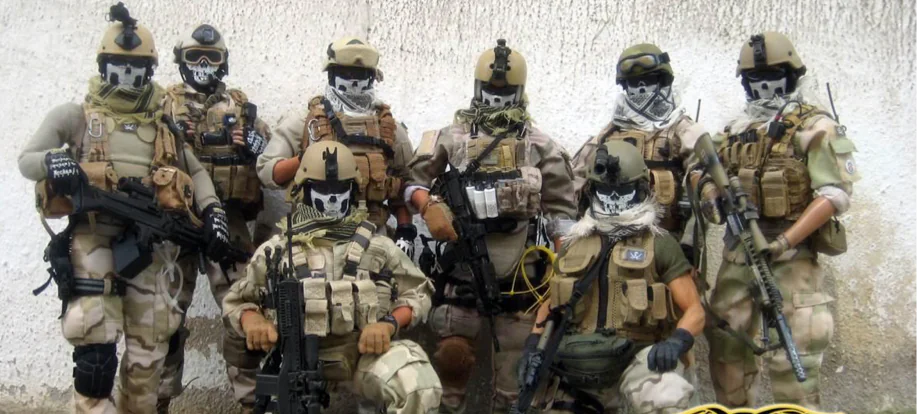
Trick or Treat! The boys wearing their masks: note prosthetic left arm of sniper on the right
Equipment Pairings for Minimalistic Weight Training
A minimalistic weight training program does not need a crowded equipment room, but it does need durable basics that support the squat, bench press and deadlift. A serious home gym, commercial weight room, school facility, first responder gym or military training area can start with Olympic weightlifting bars, a dedicated power bar such as the Iron Cowboy Powerlifting Bar, and repeatable loading from iron plates, IRON COMPANY premium rubber bumper plates or IRON COMPANY urethane bumper plates.
For bench pressing, a stable setup matters. Facilities can compare weight benches, the Body-Solid Pro Clubline flat utility bench, and the Body-Solid Flat Olympic Bench Press when building a reliable bench station. For assistance work, arm training or supplemental pressing, dumbbells and IRON COMPANY urethane dumbbells can support a small expansion of the core without turning a minimalist program into bodybuilding volume training.
Minimalistic Weight Training FAQ
What is minimalistic weight training?
Minimalistic weight training is a low-volume, high-intensity strength training system built around a small number of core lifts. In Marty Gallagher’s version, the irreducible core is the squat, bench press and deadlift, performed with precise technique, heavy loading, planned progression, and serious recovery.
Can once-a-week weight training build strength?
Marty’s position is yes, when the once-a-week session is brutally focused and properly planned. The lifter works up to one top set in each of the three power lifts, follows a periodized plan, and synchronizes hard training with food and rest.
Why are the squat, bench press, and deadlift central to this system?
The three powerlifts are compound, multi-joint exercises that involve large amounts of muscle mass. Marty argues that because these lifts attack the body broadly and allow heavy progressive loading, they create more useful strength return than a wide menu of small isolation exercises.
How is minimalistic weight training different from bodybuilding training?
Traditional bodybuilding often uses many exercises, higher reps, more sets and more isolation work. Minimalistic weight training uses fewer movements, lower reps, heavier loads, and greater emphasis on one hard top set, with recovery treated as part of the growth cycle.
When should a lifter expand beyond once-a-week training?
A lifter can expand when life, recovery and training goals allow it. Marty presents once-a-week training as the foundational protocol, then shows how to stretch it into two, three, four, or five weekly sessions without abandoning the core lifts.
What equipment is needed for minimalistic weight training?
A practical setup includes a dependable Olympic barbell or power bar, weight plates, a stable bench press station or bench setup, and enough space to squat, bench, and deadlift safely. Dumbbells and machines can be used as assistance tools, but they should not replace the core lifts.
Training Note
This article is strength training commentary, not medical advice or a universal prescription. Heavy squats, bench presses, deadlifts, overhead presses, low-rep top sets, and once-a-week powerlifting-style training require technical control, appropriate loading, recovery, proper equipment setup, and competent coaching when needed. The practical lesson is not to train recklessly; the practical lesson is to identify the core work, do it with precision, and respect recovery as part of the program.
About the Author
As an athlete Marty Gallagher is a national and world champion in Olympic lifting and powerlifting. He was a world champion team coach in 1991 and coached Black's Gym to five national team titles. He's also coached some of the strongest men on the planet including Kirk Karwoski when he completed his world record 1,003 lb. squat. Today he teaches the US Secret Service and Tier 1 Spec Ops on how to maximize their strength in minimal time. As a writer since 1978 he’s written for Powerlifting USA, Milo, Flex Magazine, Muscle & Fitness, Prime Fitness, Washington Post, Dragon Door and now IRON COMPANY. He’s also the author of numerous books including Purposeful Primitive, Strong Medicine, Ed Coan’s book “Coan, The Man, the Myth, the Method" and numerous others. Read the Marty Gallagher biography here.
Marty Gallagher is a champion strength athlete, coach, author, and RAW Podcast host known for powerlifting, Olympic lifting, and serious strength training.
