
 Call us today at 1-888-758-7527
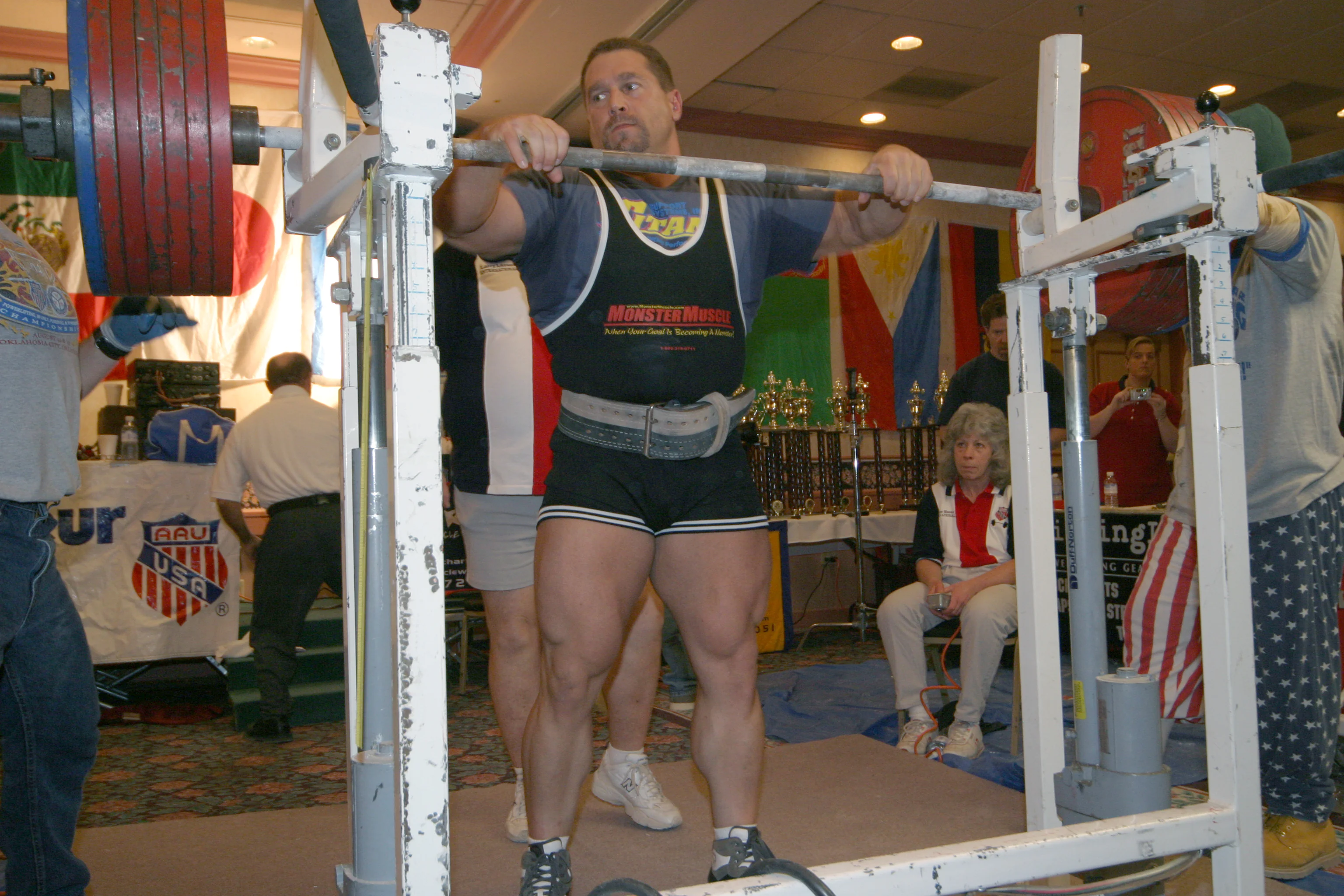
Forged Passion: Kirk Karwoski's World Champion Powerlifting Mindset
This essay from Marty Gallagher explains what made Kirk Karwoski such a dominant powerlifter: not just good genetics or natural leverage, but a life arranged around the barbell squat, one all-important top set, and a single-minded commitment to becoming a world champion. For athletes serious about resistance training, the lesson still holds: extraordinary results are often forged by focus, consistency, and ruthless dedication to the basics.
Forged Passion: Kirk Karwoski
President of IRON COMPANY, J.P. Brice, asked me what made Kirk Karwoski such a great powerlifter. Kirk captured seven national championships in three different weight classes: the 242-pound class, 275-pound class and as a superheavyweight. Kirk won six straight IPF world championships in two weight classes. He was unbeatable. Kirk didn’t just win world championships, he decimated opponents to such a degree that he created “class flight”; top lifters fled whatever weight class he was in, moving up or down a weight class rather than lift against the Karwoski.
He set world records that became legendary. His 904-pound barbell squat shattered the 242-pound class record by 35 pounds, a record that had stood for twelve years. His 1,003-pound squat in the 275-pound class became one of the defining numbers in powerlifting history. He doubled a 1,000-pound squat in training and made an incredible 800-pound-for-5-rep squat set, wearing only a weightlifting belt, every rep taken below parallel, while weighing 261. He is widely considered one of the greatest squatters in the history of powerlifting and is a hall of fame strength athlete.
Single-Mindedness of Purpose
I was his coach for ten years and shepherded his career. He began as a strong but technically erratic lifter whose goal was to break out of the minor leagues of powerlifting and into the major leagues. Kirk wanted to lift in the United States Powerlifting Federation. It took years of campaigning and he paid his dues. On the way up, Kirk took a lot of beatings. His early career was filled with a lot of down periods before he finally got traction and started taking off. I observed him up close and personal for years, and if pressed to name one reason for his greatness, I would say it was his single-mindedness of purpose.
True, he had good genetics but for every genetic plus — thick bones, great natural leverages — he had an offsetting genetic flaw, short arms and small hands. For ten years he led a life totally and completely centered around powerlifting. Keep in mind that he was no high-paid professional athlete. Kirk was a regular guy that had to work for a living while he trained and competed. Kirk purchased a condo, worked a union job and avoided any human entanglements that would cause him to stray one iota from his path of power. Parents, friends, girlfriends and business associates all were secondary to his quest to A.) become a national champion and B.) become a world champion.
The Job, the Routine, and the Squat
The job made everything possible. His union gig as an offset printer paid him well for hard physical work. This was back in the 1980s. In those ancient days of yore, a good dude without a college education could get a good-paying job doing blue-collar work. This was no desk job; world champion or not, he was on his feet busting ass from the time he punched in until the time he punched out. God only knows what a freak he could have become had he not had to work a tough day job.
Life revolved around training. Monday was squat day. Bench and deadlift had their own training days later in the week. Everything in Kirk’s world was structured around the almighty workout. The periods leading up to the sessions were filled with mental rehearsal and psyching. By the time the actual session rolled around, Karwoski would attack the barbell, just short of foaming at the mouth, a true Viking Berserker mindset. The nature of our workouts contributed to our emphasis on psyche. A man lifts better when enraged. The trick is to generate real, not faux, internal rage and then successfully redirect that rage toward lifting a gargantuan barbell.
The Hugh Cassidy Top-Set System
I mentored under world champion Hugh Cassidy. In Hugh’s system of strength, the competitive cycle lasted 12 weeks and each week, after plenty of warm-up sets, we performed one top set in the squat, bench press and deadlift. Each successive week for twelve straight weeks the top set in each lift was ratcheted upward. Myself and world champions Mark Dimiduk and Mark Chaillet mentored under Hugh. We learned his strict techniques and his Banzai training tactics. I passed along the Cassidy techniques and tactics to Kirk.
In this distilled, minimalistic system of strength, Kirk would work up to one top set in the squat, bench press and deadlift. Each lift was trained one time a week. A single top set was performed, after multiple warm-up sets, with a poundage and rep combination dictated by the periodized schedule. One shot. We didn’t do five sets of five reps, or eight sets of three reps, or three sets of five reps — we did one top set. The week’s work and the week’s report card depended on that lone top set. So it was only natural to get a little insane for that all-important top set.
Kirk grew up on the idea that one top set per week in each lift was all that mattered in lifting — and in life. Kirk was a smart trainee and was quite conservative in his self-assessments. This contrasted with his naturally boisterous alpha male personality. If he had a good training week and hit all his top set numbers in all three lifts, life was good and he was on cloud nine. Success in training left him fired up and eager for more. If he missed a rep on the top set of a lift, he beat himself up all week long and burned to get back in the gym and redeem himself.
Why Forged Passion Still Matters
Nothing other than lifting really mattered. He was centered and consistent. He maintained his ferocious training approach and kept up his complete dedication to the quest. He maintained a burning desire to become a world champion and as a result, Karwoski transformed himself. He forged himself into the champion he had envisioned. Kirk was the very definition of impassioned. He forged a legendary physique using the most primal and elemental of barebones methods. Ergo, Kirk Karwoski is the poster child for forged passion. He is the very definition of iron-willed determination.
For modern athletes building a serious squat-focused powerlifting setup, the lesson is not that equipment replaces purpose. It is that the right basics support the work. A dependable powerlifting bar, enough weight plates to progress the top set, a stable commercial squat stand or power rack, and practical loading options such as urethane Olympic plates with grips or premium rubber bumper plates can help make serious barbell squat training more repeatable. Lifters dialing in depth and consistency may also appreciate a durable squat box and a belt such as the all-leather lever powerlifting belt.
FAQ
What does “forged passion” mean in this article?
Gallagher uses “forged passion” to describe the way Kirk Karwoski built himself into a world champion through disciplined resistance training, focused squat work, and a life centered on powerlifting. It is passion hardened by repetition, sacrifice and purpose.
What made Kirk Karwoski such a great powerlifter?
According to Gallagher, the biggest factor was his single-mindedness of purpose. Karwoski had talent and leverage advantages, but his greatness came from organizing his life around training, competition and the pursuit of world-champion status.
How did the one top set system work?
In the Hugh Cassidy system described here, each lift was trained once per week and built toward one all-important top set after multiple warm-up sets. That single top set served as the week’s main training target and report card.
Did genetics alone make Kirk Karwoski dominant?
No. Gallagher is clear that Karwoski had good genetics, but also had structural drawbacks. The bigger point is that he maximized what he had through consistency, technique, intensity and an obsessive commitment to the process.
What equipment supports this style of squat-focused powerlifting?
A useful setup starts with a serious powerlifting bar, plenty of weight plates, a stable squat stand or power rack, and a dependable weightlifting belt. The equipment supports the work, but the forged passion behind the training is what drives the result.
About the Author
As an athlete Marty Gallagher is a national and world champion in Olympic lifting and powerlifting. He was a world champion team coach in 1991 and coached Black's Gym to five national team titles. He's also coached some of the strongest men on the planet including Kirk Karwoski when he completed his world record 1,003 lb. squat. Today he teaches the US Secret Service and Tier 1 Spec Ops on how to maximize their strength in minimal time. As a writer since 1978 he’s written for Powerlifting USA, Milo, Flex Magazine, Muscle & Fitness, Prime Fitness, Washington Post, Dragon Door and now IRON COMPANY. He’s also the author of numerous books including Purposeful Primitive, Strong Medicine, Ed Coan’s book “Coan, The Man, the Myth, the Method" and numerous others. Read the Marty Gallagher biography here.
Marty Gallagher is a champion strength athlete, coach, author, and RAW Podcast host known for powerlifting, Olympic lifting, and serious strength training.
