
 Call us today at 1-888-758-7527


The Secret to Buying the right Smith Machine
Smith Machine Review
The Smith Machine is a “crowd favorite.” Therefore, when the time is right, let IRON COMPANY® assist you in selecting the right linear bearing Smith Machine for your facility. We’ll help remove the guess work and provide the knowledge you’ll need to make an informed decision.
So what’s in a name?
History of the Smith Machine
The Smith machine is relatively new to the fitness landscape. During the 1950’s Jack LaLanne created an early sliding bar apparatus. Rudy Smith, a gym manager, later helped develop the concept into the Smith Machine design that became commercially available. The basic concept of guiding a bar along fixed rails remains central to Smith Machine design today.
While it’s true that the original design concept is the same, the Smith Machine has improved constantly. And this is where it gets interesting. In the commercial setting the Smith machine has been refined through a design in pursuit of perfection. And now there are many features and considerations that complicate the purchase decision.
Basic Smith Machine Designs
There are two basic versions of design with the Smith machine. The traditional version has the straight vertical path of movement. The other version is the angled version, which is usually set at a 7-10 degree incline. Depending on the machine, the guide rails may be positioned at an incline rather than traveling straight vertically. Some users prefer one movement path over the other depending on the exercise and their own preference. Choosing between the two versions is a matter of personal preference and the needs of the facility.

Basic Vertical Smith Machine with Plate Storage
Commercial Smith Machine Features to Consider
When comparing commercial quality Smith machines, these are important design features to consider:
- Linear bearings: A linear bearing system can provide the smooth bar travel that many buyers look for in a commercial Smith Machine.
- Counterbalanced: A counterbalanced Olympic Bar can reduce the effective starting resistance of the bar, which can allow a broader range of clientele to use the machine. The actual starting resistance depends on the specific model.
- Safety stops: These are an important safety feature. Correctly positioned stops can limit downward bar travel, but they should be set appropriately for the exercise and user.
- Range of Travel: Don’t let a short Smith Machine cramp your training style. Compare usable bar travel with the exercises and users the machine needs to accommodate.
- Plate storage: Keep your Olympic Plates close by for convenience and off the floor when integrated plate storage is included.
- Construction: A commercial Smith Machine should be constructed for the demands of its intended training environment. Consider frame construction, guide components, load ratings, stability, serviceability and manufacturer specifications rather than relying on machine weight alone.
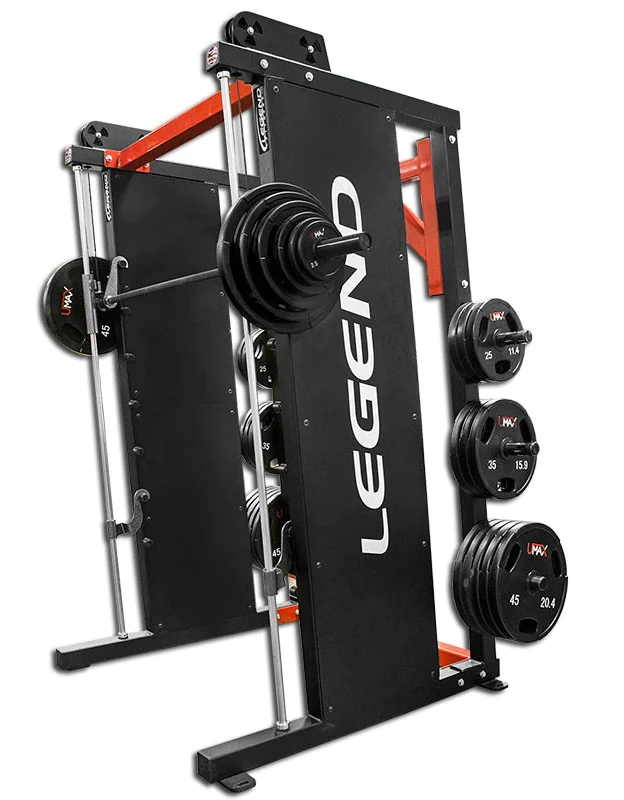
Legend Fitness 3124 Angled Linear Bearing Smith Machine
Additional Features
These subtle additions can take a good Smith machine to the next level. The first is a shielded counterbalanced system, which provides a sleeker and cleaner look while separating the counterbalance components from the main training area. Next, a “walk-through” design allows entering the Smith from either the front or back. This comes into play when the machine is positioned in a high-traffic area. From a convenience standpoint, numbered weight storage and safety stop positions take the guess work out of the equation.
How to Make a Purchasing Decision on a Commercial Smith Machine
The least effective method to purchase is using price and emotion. Needless to say, you should have a “realistic” budget that you will feel good about once you’ve gone through the process. The purchasing process is: information, evaluation and purchase.
Gathering information is the beginning of the process. When purchasing a linear bearing and counterbalanced Smith Machine, start with the basic features that are important for the intended commercial application. Next add the additional features that you’ll need in your facility into this equation. This will put the finishing touch on tailoring a Smith Machine that is a good fit for your club. Function, aesthetics and durability should factor into the formula.
Now it’s time for evaluation. Too often price tips the scales and heavily influences the purchase, which results in either dissatisfaction or a second purchase much sooner than anticipated. It’s wise to wait until the budget will allow for the right model.
So when the time is right, recruit IRON COMPANY to assist in putting the correct Smith Machine into your facility. We are dedicated fitness professionals.
About the Author: John Sisk
John Sisk is a former US Marine and is passionate about helping others achieve success in the arena of fitness. As a fitness industry veteran of over 40-years, John has the experience, product knowledge, and perspective that are second to none. John was founder and president of Legend Fitness for 29 years before teaming up with IRON COMPANY in 2006. With over 147 manufacturing partners, John has the right tools, experience, and expertise to ensure you get the best products for your fitness application, whether it is for military, commercial, or personal use. This is more than a job; it is a lifetime commitment to helping people. When not at IRON COMPANY, John can be found leading a Bible Study in the inner city or hiking the Appalachian Trail. Contact John here.



The IRON COMPANY Editorial Team creates and maintains buyer-focused content for gym equipment, gym flooring, cardio equipment, strength training equipment, free weights, and related fitness facility solutions. Our content is developed to help residential, commercial, government, military, school, institutional, and facility buyers compare products, understand key specifications, avoid common buying mistakes, and make more informed purchasing decisions. When appropriate, content is reviewed against manufacturer information, product specifications, IRON COMPANY category knowledge, and current purchasing considerations before publication.
