
 Call us today at 1-888-758-7527

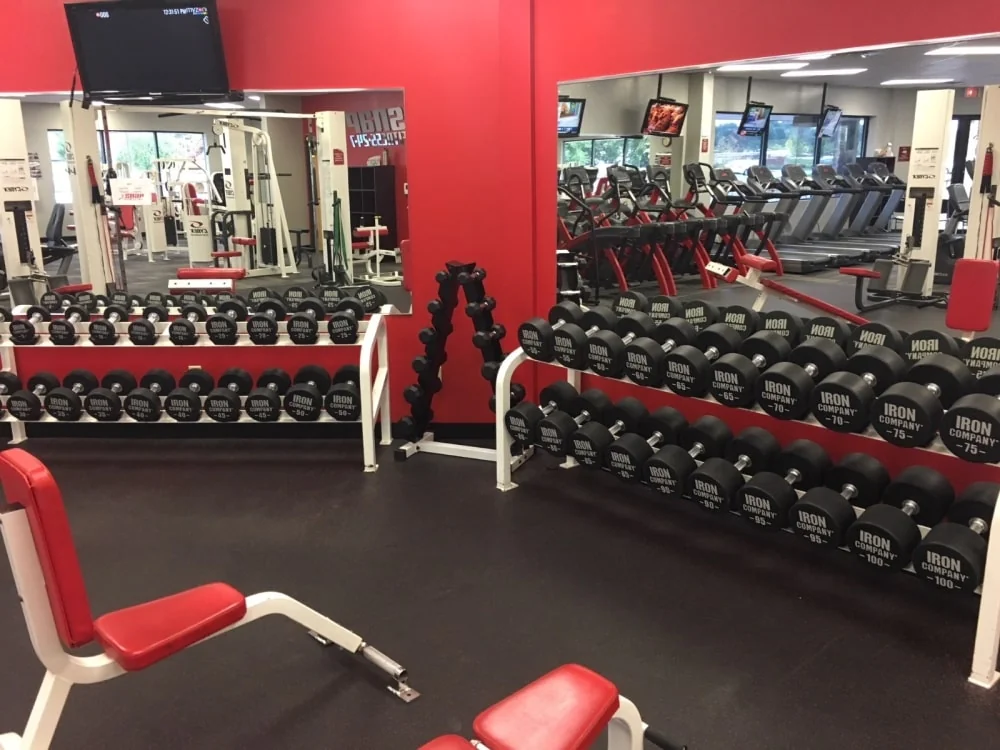
Free Weights: King of Progressive Resistance Training
When it comes to building muscle and strength, why do crude and primitive free weight tools trump hi-tech?
When it comes to building muscle and infusing the body with strength and power, free weight equipment such as barbells, dumbbells, and kettlebells blow hi-tech resistance training machines into the weeds. How can this be? How can it be that science and technology have not yet invented a tool to trump the results obtained with the primal barbell? If the resistance training goal is tangible, measurable results, i.e., significant improvements in physique and performance, barbells and dumbbells are the undisputed champions.
Crude tools produce radical increases in raw power and dramatic increases in brute strength and muscle size. Low-rep, high-intensity power training maximizes absolute strength while optimizing muscle hypertrophy. Power movements are free weight exercises, overwhelmingly compound multi-joint prime movers: squats, bench presses, incline presses, deadlifts, overhead presses, rows, and arm work.
Why Free Weights Still Beat Machines
Progressive resistance machines are decidedly inferior to the movements they mimic for many reasons: first and foremost, a resistance training machine eliminates the 3rd dimension of tension, the need to exert side-to-side control. With a machine, the user can concentrate 100% of their focus and effort on pushing or pulling. No need to apportion any available strength towards controlling side-to-side movement: with machines the groove is frozen so no need for muscle stabilizers to fire.
Free weight equipment like barbells and most particularly dumbbells cause muscle stabilizers to go crazy, thereby creating far deeper muscle inroad. This is the old-school free weight difference. The barbell, dumbbell, and kettlebell do not smooth the path, balance the payload or remove the awkwardness. The lifter must control the tool in space.
In addition to taking muscle stabilizer stimulation off the table, exercise machines make any exercise easier, and in resistance training making things easier is not beneficial, it is detrimental. Resistance training is eviscerated by taking the struggle out of resistance training. It is gruesome struggle, fighting with all one’s might through a sticking point, that sparks hypertrophy. The exercise machine maker would lead you to believe results are equal and they are not. Hi-tech exercise machines with their ball-bearing precision and smooth-as-glass resistance are the lite beer of progressive resistance training.
Absolute Strength: Barbells and Heavy Compound Lifts
As the hardcore elite know, there are three distinctly different types of strength: absolute strength, explosive strength, and sustained strength. Full range-of-motion Old School power exercises done with heavy free weight poundage and low reps are best for maximizing absolute strength, which begets muscle and power. Heavy barbell squats, deadlifts, bench presses, and overhead presses are the foundational lifts because they force the entire body to strain, stabilize and exert.
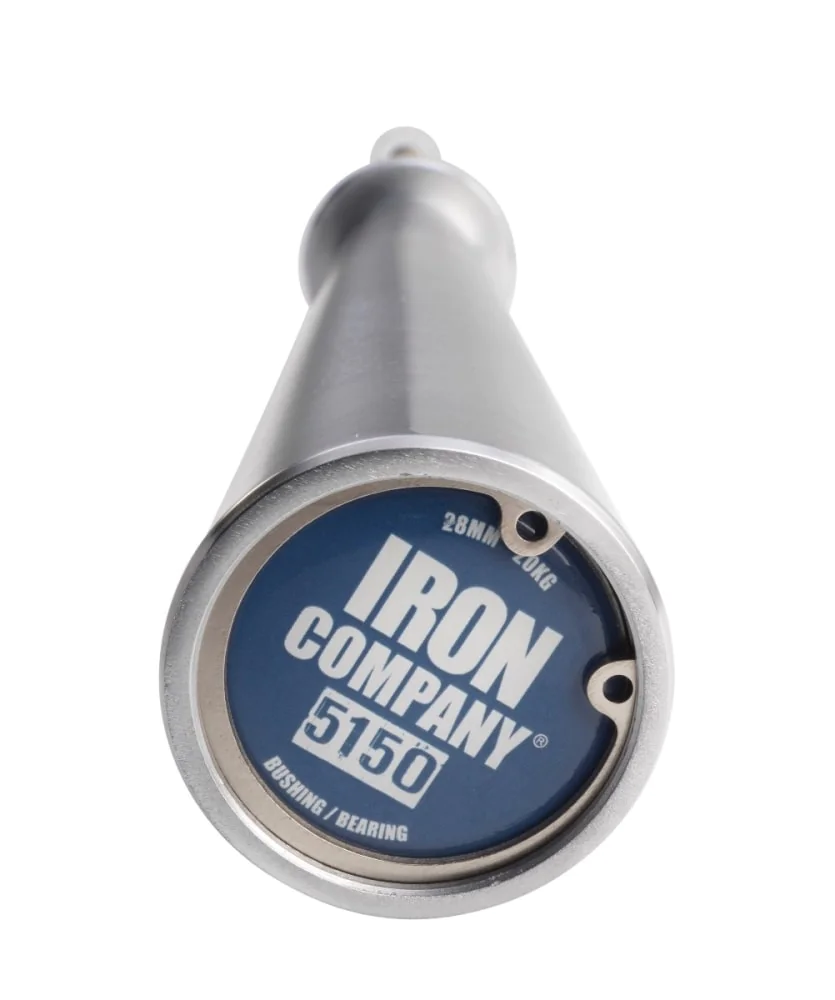
For barbell-based strength training, the tool matters. A lifter can build a serious free weight station around Olympic weightlifting bars, a general-purpose bar such as the CAP Barbell 7' Black Olympic Weight Bar, or a dedicated powerlifting bar such as the Iron Cowboy Powerlifting Bar. The bar is not magic; the lifter’s effort is magic. But a dependable barbell gives serious effort a worthy tool.
Explosive Strength: The Olympic Barbell and Quick Lifts
Olympic lifting, the quick lifts, are optimal for maximizing explosive strength. Explosive strength is optimized by handling moderate payloads for low reps using maximum velocity. These are push and pull lifts: snatches, cleans, and push jerks are done with explosiveness. The goal is to pull or push on a barbell with velocity sufficient enough to generate momentum.
The Olympic barbell is the classic explosive-strength tool because it allows speed, acceleration and coordinated violence. The lifter does not grind the weight upward in slow motion. The lifter attacks the bar, creates speed and then moves under it. That combination of barbell, timing, technique, and velocity is a completely different strength expression than a slow machine press performed in a frozen groove.
Sustained Strength: Kettlebells and Strength Endurance

Sustained strength, strength endurance, is obtained using the kettlebell. The iron orb is the ideal tool for building sustained strength. Kettlebell experts are registering off-the-chart calorie-per-minute burn rates. European kettlebell experts are breaking new ground in elevating VO2 maxes using innovative protocols. Light kettlebells can be hoisted for extended periods using steady-state pacing. Heavier kettlebells can be hoisted in short, intense bursts, invoking a completely different physiological response.
For kettlebell training, the useful lesson is the same as with the barbell and dumbbell: crude does not mean ineffective. A simple iron orb can be used for swings, cleans, presses, snatches, carries and high-output conditioning. Lifters and facilities can compare IRON COMPANY premium powder coated kettlebells and IRON COMPANY urethane kettlebell sets when building sustained strength, strength endurance or conditioning circuits into a home gym, commercial facility, school weight room, first responder gym, or military fitness area.
Dumbbells: The Equalizer of Free Weight Training
Dumbbells are the great equalizer in progressive resistance training. A barbell allows the stronger side to subtly assist the weaker side; dumbbells force each limb to carry its own share. A dumbbell press, dumbbell row, dumbbell curl, or dumbbell overhead press makes the lifter stabilize two independent payloads. This is why dumbbells are so valuable for bodybuilders chasing hypertrophy, powerlifters building assistance strength, athletes building usable muscle, and tactical personnel needing functional strength.
For dumbbell-based free weight training, equipment choices can range from compact urethane hex designs to commercial solid steel dumbbells and full fixed dumbbell runs. Depending on the facility, user volume and training style, options include IRON COMPANY urethane hex dumbbells, TKO rubber encased solid steel dumbbells, and IRON COMPANY urethane dumbbells.
Why Machines Are Seductive but Limited
In order to make their device more user-friendly, more palatable and more sellable, resistance machine makers remove the rawness, the crudeness, the awkwardness, the unwieldy-ness of free weight equipment, i.e., barbells, dumbbells and kettlebells. If results were equal, sit, or better yet, lie down while you are strength training. Unfortunately, results are decidedly not equal.
The seductive siren song of resistance machines and devices is incredibly strong. Emasculating progressive resistance training makes it more palatable to the masses, and therefore, more profitable. The eviscerating of the free-weight experience produced a more user-friendly form of resistance. The problem is that user-friendly is not always result-friendly.
Equipment Pairings for Free Weight Training
A complete free weight training environment does not need to be complicated, but it does need to be honest. The essentials are barbells, dumbbells, kettlebells and the loading or storage systems that match the lifter and the room. A facility focused on fixed barbell work can compare an IRON COMPANY urethane barbell set and pro-style fixed barbell sets for curls, presses, rows and accessory work.
The message? If you are serious about your strength training then you have to come to grips with using free weight equipment, otherwise you are just fooling yourself. If you are serious about your progressive resistance training, familiarize yourself with the crude tools: barbells, dumbbells, and kettlebells. Avoid the seductive trap of machine training; ease and fun are wonderful, yet cannot and do not stack up to free weights. The inconvenient truth is that barbells, dumbbells and kettlebells are the once and future Kings of resistance tools.
Shop for free weights at IRON COMPANY.
Training Note
This is strength training commentary, not medical advice. Heavy free weight training, kettlebell conditioning, barbell squats, bench press work, deadlifts, and overhead presses require technical control, appropriate loading, proper setup, and competent coaching when needed. The goal is not to make training reckless; the goal is to keep the productive struggle that makes progressive resistance training work.
Free Weights FAQ
Why are free weights better than machines for resistance training?
Marty Gallagher’s position is that free weights require the lifter to control the load in three dimensions. Barbells, dumbbells, and kettlebells force stabilizing muscles to fire, while many machines lock the user into a fixed path and remove much of the side-to-side control requirement.
What free weight equipment builds absolute strength?
Heavy barbells are the classic tool for absolute strength. Barbell squats, bench presses, deadlifts, and overhead presses allow the lifter to handle large payloads through compound multi-joint movement patterns.
Are dumbbells useful for hypertrophy?
Yes. Dumbbells are excellent for muscle hypertrophy because each limb must control its own payload. They also add instability and range-of-motion options that can make pressing, rowing, curling, and assistance work more demanding.
What do kettlebells build best?
Kettlebells are especially useful for sustained strength and strength endurance. Depending on the load and protocol, they can be used for longer steady efforts or shorter, harder bursts that combine muscular exertion with cardiovascular demand.
Should lifters avoid machines completely?
No. Machines can have a place in a training program, especially for supplemental work, controlled assistance exercises or specific facility needs. The point of the article is that machines should not replace the foundational free weight work if the goal is maximum strength, power and muscle.
What free weights should a serious gym include?
A practical free weight area can include Olympic barbells, fixed barbells, dumbbells, kettlebells, and appropriate loading options. The exact setup depends on the facility, training goals, user population, and available space.
About the Author
As an athlete Marty Gallagher is a national and world champion in Olympic lifting and powerlifting. He was a world champion team coach in 1991 and coached Black's Gym to five national team titles. He's also coached some of the strongest men on the planet including Kirk Karwoski when he completed his world record 1,003 lb. squat. Today he teaches the US Secret Service and Tier 1 Spec Ops on how to maximize their strength in minimal time. As a writer since 1978 he’s written for Powerlifting USA, Milo, Flex Magazine, Muscle & Fitness, Prime Fitness, Washington Post, Dragon Door and now IRON COMPANY. He’s also the author of numerous books including Purposeful Primitive, Strong Medicine, Ed Coan’s book “Coan, The Man, the Myth, the Method" and numerous others. Read the Marty Gallagher biography here.
Marty Gallagher is a champion strength athlete, coach, author, and RAW Podcast host known for powerlifting, Olympic lifting, and serious strength training.
