
 Call us today at 1-888-758-7527


Narrow the Resistance Training Menu
Fewer things done better for better results
I like to refer trainees back to the resistance training ultra-basics they likely never learned to begin with: why exactly are we lifting weights? Why are we making time to lift weights? What is it that we seek when we resistance train with weights? I’ll make this a rhetorical question: we lift barbells and dumbbells for two reasons and two reasons only: to grow muscle and to become stronger. Period. We don’t lift weights to build better cardio, we don’t lift to become more flexible or to melt off body fat. The irreducible goal of sustained and protracted progressive resistance training is twofold: increased lean muscle mass and a concurrent increase in power and strength.
To obtain the sought-after size, strength and power, the proven pathway of progress is to get really, really good at performing a select few lifts, exercises done with barbells and dumbbells; crude exercises using crude tools. By “getting good” we mean becoming technically proficient. You don’t have to bench press 500 pounds, barbell back squat 700 or power clean 300, but you need to know how to perform the lifts and perform them expertly. You need technical benchmarks in each of the important resistance training lifts against which to compare your own gym efforts.
Do Fewer Resistance Training Exercises Better
To obtain optimal results, concentrate on five key exercises. Every repetition of every set of every workout should be viewed as an opportunity to adhere to a predetermined technical ideal.
Technical precision is combined with workout intensity. As the old iron cliché goes, “it’s not so much what you do, it’s how hard you do it.” Without Herculean effort there is no hypertrophy, no massive muscular strength increases and no radical physical transformations. Moderate or sub-maximal training efforts are insufficient stimuli to cause the body to reconfigure itself. The body does not transform in response to anything other than limit-exceeding physical efforts. Only by exceeding our current capacity is the body forced into growing bigger and getting stronger.
The important lifts are compound multi-joint exercises and are biomechanically complex. The smart trainee apportions the lion’s share of available training time to the five core lifts. Establish archetypical, benchmark techniques in each core lift.
Full Range-of-Motion Before More Weight
Each important resistance training exercise has a core technique and variations. The exercises all use a full and complete range-of-motion. Exercises done with a full range-of-motion, or ROM, elicit maximum results from minimal payloads. No half reps, no partial reps, no technical slop for the sake of handling more weight. Full ROM exercises take the ego out of lifting; on every exercise undertaken, on every rep of every set, technical perfection is sought. Poundage is secondary to the correctness of the movement pattern. Better to lift less perfectly than more poundage using sloppy, inconsistent, potentially injurious partial rep “techniques.”
Over time, as a direct result of ever-increasing resistance training payloads, the trainee naturally muscles-up. With a radical increase in lean muscle mass comes a concurrent increase in raw strength. What are these magical exercises? The tools are Old School free-weight barbells and dumbbells. Most all the exercises are done while standing on your feet. The movements are compound, multi-joint exercises that require groups of muscles to work together; the opposite of isolation resistance training that, as the name implies, zeroes in on a lone muscle. In life and athletics, muscles work together.
The Five Tier 1 Core Resistance Training Lifts
- Squats
- Deadlifts
- Overhead presses
- Bench presses
- Power cleans
These are the five Tier 1 core lifts. The first four are cumulatively known as “the core four,” to which is added the ultra-explosive power clean. Grind strength and explosive strength are built by performing these lifts, assuming pristine techniques are used while exerting maximally. For building size and power, reps are done in the 1-5 rep range, with some 6 and 8 rep sets thrown in.
Below the five top tier lifts are the “assistance exercises,” i.e., dips, bicep curls, lat rows, tricep presses, power rack work, and chins. Higher rep sets are used on the assistance exercises. Most all assistance exercises are isolation exercises designed to hone in on a single muscle to the exclusion of its neighbors. Think of the Tier 1 exercises as the meat and potatoes and the assistance exercises as dessert: never eat dessert first and if full, skip dessert.
Barbell Squats
This is the single most important resistance training lift. Mastering barbell squats builds leg power: leg power spills over into everything we do. Strong legs improve all athletic undertakings. The best squats are the deepest squats: maximally deep squats reap maximal size and strength benefits; partial squats reap partial benefits. In the barbell back squat, the power bar should never travel in front of the knees. Avoid leaning forward as this turns the spinal column into a crane. Squat staying as upright as possible, open the stance width and sink down as deep as humanly possible. Front barbell squats are an effective squat variation. Front squats force the squatter to maintain the preferred upright torso throughout the set.
Barbell Deadlifts
Unquestionably the finest of all back exercises, done right, a proper conventional deadlift causes the deepest possible muscular inroad for upper and lower lats, traps, rhomboids, teres, erectors, and glutes. The sumo deadlift is done with feet outside the hands and requires an all-leg launch to break the barbell from the floor. Because of the sheer payloads used, the deadlift inroad is far deeper than any of the various back isolation exercises. 1-5 rep sets are the rep choice of champions. Deadlift variations are done standing on a box or weight plate, which makes the start harder, or the deadlifter can perform heavy squat rack work, which builds lockout power.
Barbell Power Cleans
This is the most technically complex of all the Tier 1 resistance training exercises. A proper power clean needs to be dynamic and explosive. The athlete must generate momentum during the upward tug on the weighted barbell. The goal is to generate velocity of such magnitude that the bar develops upward momentum, allowing the athlete the nano-second needed to whip under and catch the bar on the shoulders. Explosiveness is built with light weight and low reps; 1-3 rep sets that demand maximum explosiveness on each rep. This combination of moderate payloads, relative to the deadlift, and high velocity builds monstrous traps and thick erectors.
Overhead Presses
Mastery of the overhead press builds maximum shoulder size and maximum shoulder power. There are many valid types of overhead pressing: standing and seated dumbbell presses can be done “military press” style, or with some purposeful backbend. Barbell presses can be done in front or behind the neck. Use varying grip widths for varying effects. Push presses and push jerks are heavy overload lifts that deserve inclusion in the rotation. Skip machine presses. Machines eliminate the 3rd dimension of resistance training tension, the need to control side-to-side movement; this makes machine pressing easier and ergo, inferior to the crudeness of barbells and dumbbells.
Bench Presses
Barbell flat benches can be done with varying widths for varying effects; the wider the grip the more pec required, the narrower the grip the more the effort is spread between pecs, front delts and triceps. Flat dumbbell benches are a terrific exercise that forces each arm to push its equal share. Dumbbells can be lowered beneath the level of the torso for a growth-inducing pre-stretch. Incline barbell presses and incline dumbbell presses are done on a 45-degree angle and are extremely effective. All benches can be made even more difficult by adding pauses on the chest. How long should a pause be? One second in length. Stay tight and tensed when pausing.
Assistance Work
Biceps and triceps should get worked hard once a week. Triceps can be hit with dips, narrow-grip benches, nose-breakers and single-dumbbell tricep exercises. Rotate various types of barbell and dumbbell curls. Alternate biceps and triceps to save time. Make sure to make a mind/muscle connection on all assistance exercises. Whatever the targeted muscle, use continuous tension and unwavering concentration. Make sure the isolated muscle is doing the work.
Experiment, but remember, assistance work should be apportioned to only a small amount of total training time. Stick to the core five exercises and their variations. Strive for technical perfection. Over time, gradually increase poundage. Stick with low to moderate reps and stay with a narrow training menu: do fewer things better. Exert with Herculean intensity and muscle is built as a defensive response to the continual stresses imposed on the body by the continual practice of these Old School hardcore barbell and dumbbell progressive resistance exercises. Streamline the training menu and up the Herculean effort. In doing, you will get more results for less time. What could be better?
Equipment Pairings for a Narrow Resistance Training Menu
A narrow resistance training menu does not require a room full of machines, but it does require serious basics. Lifters building around the squat, deadlift, overhead press, bench press, and power clean need a dependable barbell, accurate loading, dumbbells for assistance work, and a rack or stand that matches the training environment.
For barbell-centered training, IRON COMPANY customers can compare the Body-Solid Chrome Olympic Power Bar and the Iron Cowboy Powerlifting Bar when selecting a bar for heavy squats, presses and pulls. For plate loading, options include IRON COMPANY premium rubber bumper plates and TKO rubber Olympic grip plates, depending on the facility, training style and preferred plate design.
For assistance exercises, pressing variations and arm work, dumbbells remain a practical companion to the core barbell lifts. Commercial gyms, school weight rooms, first responder facilities, military fitness rooms, and serious home gyms can compare Body-Solid dumbbell sets and IRON COMPANY urethane hex dumbbells for progressive dumbbell training.
A stable lifting station is equally important. Depending on the room and the lifter, practical choices can include the Body-Solid Best Fitness Power Rack, the Defiant Strength Power Rack, or a Body-Solid Commercial Squat Stand. The point is not to buy more equipment than needed; the point is to support the few lifts that matter most.
Training Note
This article is strength training commentary, not medical advice. Heavy squats, deadlifts, overhead presses, bench presses and power cleans require technical control, appropriate loading, sensible progression, and competent coaching when needed. The goal is not to do reckless maximums on fewer lifts; the goal is to master fewer lifts so thoroughly that each one delivers more return.
Resistance Training Menu FAQ
Why should lifters narrow the resistance training menu?
A narrower resistance training menu lets the lifter spend more time mastering the exercises that produce the biggest return. Instead of doing many lifts haphazardly, Marty’s position is to do fewer compound lifts with better technique and greater intensity.
What are the five core resistance training lifts?
The five Tier 1 lifts in this article are the squat, deadlift, overhead press, bench press, and power clean. The first four are the core four, while the power clean adds an explosive strength component.
Why does full range-of-motion matter in resistance training?
Full range-of-motion makes the exercise harder and more honest. Marty argues that full ROM takes the ego out of lifting by forcing the athlete to prioritize technical perfection over simply handling more weight.
How much assistance work should lifters do?
Assistance work should receive a smaller share of total training time. Dips, bicep curls, rows, tricep presses, power rack work, and chins can all help, but they should not replace the core lifts that drive the program.
What equipment is needed for this style of resistance training?
A practical setup can include a quality Olympic bar or power bar, weight plates, dumbbells, a power rack or squat stand, and enough space to squat, deadlift, bench press, overhead press, and power clean with control.
Is this approach only for powerlifters?
No. Powerlifters, bodybuilders, weightlifters, athletes, first responders, military personnel, and serious fitness enthusiasts can all benefit from mastering the basic barbell and dumbbell lifts. The exact loads, reps and progressions should match the lifter and the goal.
About the Author
As an athlete Marty Gallagher is a national and world champion in Olympic lifting and powerlifting. He was a world champion team coach in 1991 and coached Black's Gym to five national team titles. He's also coached some of the strongest men on the planet including Kirk Karwoski when he completed his world record 1,003 lb. squat. Today he teaches the US Secret Service and Tier 1 Spec Ops on how to maximize their strength in minimal time. As a writer since 1978 he’s written for Powerlifting USA, Milo, Flex Magazine, Muscle & Fitness, Prime Fitness, Washington Post, Dragon Door and now IRON COMPANY. He’s also the author of numerous books including Purposeful Primitive, Strong Medicine, Ed Coan’s book “Coan, The Man, the Myth, the Method" and numerous others. Read the Marty Gallagher biography here.
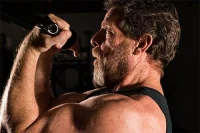
Marty Gallagher is a champion strength athlete, coach, author, and RAW Podcast host known for powerlifting, Olympic lifting, and serious strength training.
