
 Call us today at 1-888-758-7527


Chasing Ken Patera: Olympic Weightlifting Part 1
Overhead Barbell Press King: Ken Patera was the greatest overhead presser in history. Ken pushed an official 505 pounds in competition and 550 off the racks in training. Photo on the right shows Ken Patera lined up for introductions before the 1972 Olympic Games. Next to Ken are Serge Redding, the great Belgian lifter, and the greatest Olympic weightlifter of all-time, Vasiliy Alexeev, who once said of Patera, “He, Ken Patera, is stronger than me – but my superior technique gives me the edge.”
This is part one of Marty Gallagher’s raw, road-worn chase of Ken Patera, Olympic weightlifting greatness, and the hardcore Portland gym scene of 1969. Before the story reaches Sam Loprenzi’s gym, the free weights, the Olympic barbell, the weightlifting platforms, and the legend of Patera’s overhead barbell press, Marty takes the long route: Washington DC, riots, road travel, hippie houses, strange food, lost edge, and finally the discovery of a serious lifting gym.
Leaving Washington DC for Portland
I moved from Washington DC to Portland in the fall of 1969. My buddy and I were burned out on the downtown DC scene, too many hard drugs, too much violence and too much chaos and too many cops. I had participated in a riot two weeks before we left and had gotten my first taste of tear gas. I discovered I liked rioting, it was exhilarating. It was another warning sign that I needed to exit the urban scene.
Years later I discovered that it was Buck Chaillet, Mark Chaillet’s dad, then a captain on the DC police force, who gassed us that day. Buck told me that his 100-member riot squad were thrilled when the protesters got out of hand. It gave Buck and the boys a chance to unleash chemical hell on the college punks.
I was not a college kid, I was a rioter. I was with a contingent of working-class street toughs looking for action. We were drunk on gallon jugs of Thunderbird wine which we used to wash down the “white-X” amphetamine tabs. Someone, my pal Ray, threw a brick through the window of the Chase Manhattan Bank and that was all the excuse Buck and boys needed: he gave the order and hundreds of earnest white-bread college students protesting the war or Nixon or whatever were on the receiving end of 100 rounds of super-strong, now banned, CS tear gas.
Meanwhile, Ray and I, locals that lived in a commune three blocks away, knew the Dupont Circle neighborhood like the back of our hand. We leapt up on a dumpster, jumped a barbwire topped 10-foot fence and skipped away, gleefully listening the screams and moans of the American U, Georgetown, U of Maryland and Corcoran student protesters puking their guts out, crying and getting “wood shampoos,” cop billyclub head action for resistors or lollygaggers. Good times.
Buck and I laughed our asses off when, fifteen years later, we somehow figured we were both in the same riot. “That was one of the most enjoyable experiences in my 30-year career. I think we made 200 arrests that day.” Buck fondly remembered. When I told him Ray got the whole thing started, Buck said, “I’d love to buy that boy a drink - or ten.”
Ray split the DC scene the same time I did. He had an opportunity to work on a tramp steamer that would sail from New York to Marseilles. He hitchhiked across Europe and on into Marrakesh and North Africa. He returned to the USA as a ship porter, completing a twenty-month epic journey and all before his 21st birthday.
The Portland Road Trip
Don Del Rio was my pal. He looked like Colin Farrell and had a long list of girlfriends. One of them, D, had beckoned him, like one of Ulysses’ Sirens, “Come to Portland; its hip, peaceful, mellow, green, and cheap – oh, and if you have to, you can bring that goon friend of yours,” referring to me. Oregon? Sure. Why not?
He gave up his cool apartment and bought a used Ford Econoline van with 180,000 miles for $500. We began an epic cross country run that took us from DC to a rural Michigan hippie farm. Then onto Dayton for a stay with some babes that went to the Dayton Art Institute. Next was a weeklong stay in rural Arkansas. Then in quick succession Taos, LA, San Francisco and finally Portland. It took us over a month and we racked up 3,000-plus miles. Every minute seemed stuffed with crazed adventures, an incredible array of characters, real danger, altered states, and genuine on-the-road excitement.
Del Rio and I arrived in Portland and stayed with D, his new girlfriend. I’d met her before. She was extremely shapely, extremely attractive, very smart and highly opinionated. She had very little use for me; she considered me, deservedly, a bad influence on her good-looking boyfriend, who she felt could be tamed. Mae West once observed, “The wildest men make the best pets.” D was certain she could remold Del Rio into a Stepford Husband if she could curb my influence.
Del Rio, despite his charming demeanor, was hardcore, far more so than me; he was stealth. Before he met D at the uber-radical Antioch college, he had spent four years in the marines in the elite Force Recon. He was a bush marine with in-country tours in Nam. He won medals in the battle of Hue in 1968. This guy might look like a male model, but he was a seasoned killer for real – but a charming, demure, thoughtful, intelligent, sensitive killer.
Lotus Land, Lost Edge, and the Need for Real Training
D had two room-mates, both were equally luscious Reed college coeds. The three girls lived in a three-story 10-room renovated brownstone rowhouse located in an upscale downtown neighborhood and all of it paid for by D’s dentist dad. It was a long way from the commune.
For the next six weeks we stayed with these super-friendly, perky, delightfully naïve college girls. I ate their macrobiotic food while listening to Gordon Lightfoot, Joni Mitchell, the Incredible String Band or Laura Nyro. We laughed and giggled all day long, we did nothing, we existed – why ever even go outside? We were being mothered and coddled and fed and nurtured and spoiled everyday all the time.
As men, Del Rio and I were growing weaker by the day, we were becoming placid and controllable, like cows. It was soft subjugation, volunteered slavery. Del Rio was ravaging D like a porn star and judging from her morning glow and great mood, she was loving it. Still, we were growing soft and fat, amorphous and blubbery: too many homemade maple honey sugar muffins, too many pancakes, too many desserts, too many salads, too much exotic cheese with wine. No steaks, no cheeseburgers, no meat, no beer, no whiskey.
On the other hand, this situation was a dream come true, we were captives of beautiful women with free room and board. I told Del Rio we were losing our edge and he was like, “So what! Just lie back and take it son! What the hell is wrong with you! We’re on a gravy train with biscuit wheels – and you are bitching!!?” He had a point.
The house was magnificent: built in the 1890s it had 11-foot ceilings, hardwood floors, floor-to-ceiling windows, a fireplace on every floor. For six weeks I slept contentedly on the overstuffed couch under thick quilts in the living room next to an always blazing fire. They even had a cord of pre-cut wood out back.
Do you have any idea how hard it is to get it together, to train like a savage, to train at all, to even think about training when you are being bewitched and beguiled by beautiful women? I was lounging about on throw pillows next to a blazing fire, drinking wine, smoking bud, listening to Gordon Lightfoot sing about the wreck of the Edmund Fitzgerald while eating cinnamon-topped apple brown betty. This at 1 PM on a Tuesday afternoon. How is a man supposed to hold his edge? No one gets anything done in Lotus Land because no one has to.
How does a man not degrade? On the other hand: why ever leave? The girls loved having us: Del Rio was a charming, erudite boy toy, a happily kept man, Rico Suave cubed – was he charming the nymphs – or perhaps they were sex witches out to turn us into domesticated animals?
The girls warmed to me, they seemed amused that despite my Hell’s Angel appearance, I could speak clearly and knew some three syllable words. One of the three, Alyce, was now sending me definite indicators and the indicators pointed to me ravaging her. I played dumb; which made me all the more alluring.
I was raised on squats and Dinty Moore beef stew from a can. Now I was being fed rainbows and fairy dust and peyote and the fuel didn’t agree with my machinery. I was lost in a fog of sensuality and femininity…languid, luscious, lustful…the weeks rolled by and we weren’t getting anything done - nor did we have any plans to get anything done. One week was melting into the next. The sirens were draining all the aggressive maleness out of us. Was D Circe? Were we pigs?
In Homer’s Odyssey, Circe lived in a mansion and fed men “cheese and wine sweetened with honey and laced with magical potions. She turned men into swine after they gorged themselves.” We had been on a gorge-fest and I felt like I was turning into a pig without any help needed, no magical potions or trickery required: I was quite happy, given the right circumstance, to turn myself into a figurative and literal pig – with a big fat satisfied smile on my pudgy face.
Sam Loprenzi’s Gym and the Ken Patera Legend
One morning, I actually got my ass in gear and drove our pathetic Ford Econoline van to southeast Portland to check out Sam Loprenzi’s hardcore gym. I had heard that it was the best Olympic lift gym in Oregon. Sam was a former Mr. America place winner and highly respected.
I arrived, parked and went into a large house in a nice neighborhood. It had been converted into a gym. As soon as I walked through the regular door into the main room I fell in love with the gym. Two weightlifting platforms, plenty of squat racks, weight benches that inclined, a couple of lat pull-down machines, and loads of dumbbells, Olympic bars, and weight plates.
I shook hands with the burly dude on duty at the desk. I told him I was a serious Olympic weightlifter and heard this was the place. Also, that the hottest young heavyweight in the country, Ken Patera, trained at Sam’s. He listened patiently until I finished my introduction – including the fact that it was lifting God Bill Starr that recommended Sam’s place, saying, “Sam’s gym is the place for a serious lifter to train.” The desk man smiled and grimaced at the same time.
“Kid, sorry to say, but as of two weeks ago Olympic lifting is officially banned here.”
“WHAT!! Banned??!!” I stumbled backwards as if I’d been gut shot.
“Yeah – Ken Patera kept dropping the barbells from overhead.” He pointed towards the ceiling. “Sam lives upstairs and he said every time Ken Patera dropped 400 or 500 pounds from nine feet overhead, it sounded like a hand grenade had gone off. It was so loud it would wake him up out of a sound sleep. Sam kept warning Ken. In Kenny’s defense, it was not on purpose; it was the missed attempts with big weights.”
Heartbroken, I left. Despondent, and on a whim, rather than jump back in the van, I took a walk around the nice neighborhood. As a consolation prize, on my meandering 15-minute walk without purpose, I came across a spotless small house in a spotless quiet neighborhood with a For Rent sign. The owner happened to be there cutting the grass. He said the rent was 75 dollars a month. I told him we’d take it.
Del Rio and I lived there for the next three years.
Read Chasing Ken Patera Part 2 here.
Equipment Notes for Olympic Weightlifting and Strength Training
The Sam Loprenzi gym description is a time capsule of serious barbell culture: platforms, racks, benches, dumbbells, Olympic bars, and plates. Modern lifters building a garage gym, school weight room, commercial training facility, first responder gym, or military strength room can recreate the useful parts of that old-school environment with dependable strength training equipment and enough clear space to train safely.
For squat and rack-based barbell work, compare the Body-Solid Commercial Squat Stand and the Body-Solid Commercial Power Rack. For bench work, pressing assistance and general weight training, options include the Defiant Strength flat utility bench, the Alpha multi adjustable bench, and the Defiant Strength Olympic bench press with plate storage.
For barbell loading and pressing work, a basic setup can include the CAP Barbell 7' Black Olympic Weight Bar and IRON COMPANY premium rubber bumper plates. Dumbbell work can be handled with American Barbell Series 1 urethane dumbbells or rubber hex dumbbell sets, depending on the training environment and user volume.
Training and Editorial Note
This article preserves Marty Gallagher’s hard-edged road story and firsthand lifting history. Olympic weightlifting, overhead barbell presses, missed attempts from overhead, heavy squats, heavy pulls, and high-skill barbell work require proper coaching, appropriate equipment, enough training space, and safe loading practices. The story is historical commentary, not a recommendation to drop heavy barbells in an unsuitable room.
Ken Patera FAQ
Who was Ken Patera?
Ken Patera was an elite American Olympic weightlifter and one of the greatest overhead barbell pressers in history. Marty Gallagher describes him as the overhead barbell press king, noting his official 505-pound competition press and 550-pound rack press in training.
Why is Ken Patera central to this article?
The article is part one of Marty’s story about chasing the Ken Patera legend after moving from Washington DC to Portland in 1969. The first installment ends at Sam Loprenzi’s gym, where Marty discovers that Olympic lifting had just been banned because Patera’s missed overhead attempts were shaking the building.
What equipment did Marty find at Sam Loprenzi’s gym?
Marty describes two weightlifting platforms, squat racks, incline weight benches, lat pull-down machines, dumbbells, Olympic bars, and weight plates. It was exactly the kind of serious lifting room he was looking for after weeks in Portland’s soft Lotus Land.
Why was Olympic lifting banned at Sam Loprenzi’s gym?
According to the story, Ken Patera kept missing 400 to 500-pound overhead attempts. When those heavy barbells dropped from overhead, the noise and impact shook the house and woke Sam Loprenzi upstairs, leading to the ban.
What does this article say about Olympic weightlifting culture?
It shows the old-school seriousness of Olympic weightlifting: platforms, Olympic bars, heavy overhead work, squats, presses, pulls, and lifters willing to chase the best training environment they could find. It also shows how small, intense, local gym cultures shaped serious lifters.
What equipment supports Olympic weightlifting-style training today?
A practical setup includes a quality Olympic barbell, appropriate weight plates or bumper plates, a suitable lifting platform, squat rack or power rack, weight bench, and dumbbells for assistance work. The exact setup depends on the facility, lifting style, and coaching environment.
About the Author
As an athlete Marty Gallagher is a national and world champion in Olympic lifting and powerlifting. He was a world champion team coach in 1991 and coached Black's Gym to five national team titles. He's also coached some of the strongest men on the planet including Kirk Karwoski when he completed his world record 1,003 lb. squat. Today he teaches the US Secret Service and Tier 1 Spec Ops on how to maximize their strength in minimal time. As a writer since 1978 he’s written for Powerlifting USA, Milo, Flex Magazine, Muscle & Fitness, Prime Fitness, Washington Post, Dragon Door and now IRON COMPANY. He’s also the author of numerous books including Purposeful Primitive, Strong Medicine, Ed Coan’s book “Coan, The Man, the Myth, the Method" and numerous others. Read the Marty Gallagher biography here.
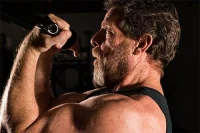
Marty Gallagher is a champion strength athlete, coach, author, and RAW Podcast host known for powerlifting, Olympic lifting, and serious strength training.
