
 Call us today at 1-888-758-7527

Hard Training, Hydrotherapy, and Recovery
“What Would George Do?” Adventures in Neuroplasticity
Empirical observations from the training trenches.
If I go early in the morning, I have unlimited access to a near-empty commercial weight room, a deserted steam room, a sauna no one uses, and an underused, mostly ignored indoor pool for hydrotherapy. All this great stuff is located at a well-kept, clean YMCA run by nice people less than one-eighth of a mile from my country home. Open from 6:30 a.m. onward, the key to having a deserted facility all to yourself was, is, and forever shall be, arrive when the facility opens. My YMCA costs one dollar a day, $30 a month.
I had recently made a commitment to neuroplasticity, this after watching a Seinfeld episode where George Costanza did the opposite of his first instinct and, overnight, through the comic miracle of applied neuroplasticity, thrived every day in every way. I sought to emulate his example.
My Early-Morning YMCA Laboratory
The Y does a deservedly terrific business in childcare, which is good because it certainly isn’t making bank on fitness. The facility has a large room with floor-to-ceiling glass walls that let in sunshine, quite lovely, and filled with selectorized gym equipment and cardio training machines. There is a second well-equipped room for free weights. During the week, from dawn till 9 a.m., both rooms are largely deserted.
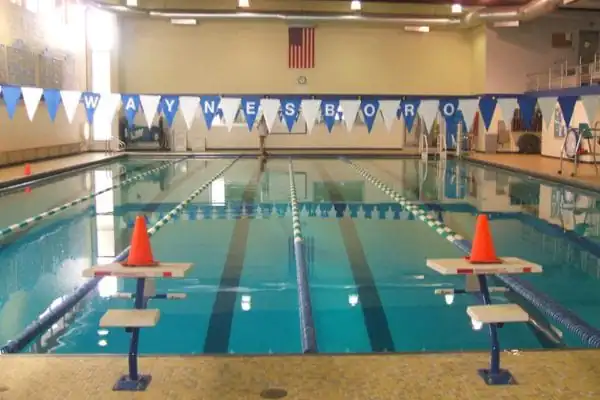
Amongst the fifty or so devices in the exercise machine room, rarely are ten in use at any one time. I have never seen more than five people training at the same time in the free-weight room. I have been a member for 20 years and periodically made use of the small, barely used steam room and the nice, but smallish, sauna. My Y has a steam room that seats four, and I have never had more than one person in it with me. Ditto early morning sauna. If you show up in the 6 to 9 a.m. time range, the indoor pool, six lanes wide, is unused; there is always a lane, or three, available, except Monday morning, when weekend guilt fills the pool’s six lanes.
In my pursuit of purposeful neuroplasticity, I vowed to do the opposite of what I had been doing in resistance training, cardiovascular training, and nutrition. Ergo, I began doing resistance training with resistance training machines, something I had studiously avoided in the past. I would run hard, sprint, run all out, twice weekly. I would do the cross-country and steep billy-goat trail runs on alternate days. I would partake in hydrotherapy, swimming, the most radical of my neuro changes, given my lifelong fear and avoidance of water.
I obtained swim fins, ear plugs, swim goggles, and took the plunge. Literally. Now that I am several months into my newest approach, I have arrived at an interesting mix of intense physical exercise interspersed with hydrotherapy. Here is my current training protocol.
The Daybreak Hybrid Protocol
Daybreak:
- Warm-up, CrossCore suspension trainer, then mild running to raise core muscle temperature: 15 minutes
- 5 to 8 all-out sprints: 15 minutes
- Weight room: pick two push-pull exercises and superset: 15 minutes
- Steam room: 15 minutes
- Pool: 30 minutes
- Sauna: 20 minutes
- Cold shower, dry off: 10 minutes
Total time: two hours, 120 minutes.
Done, I drive home, drink a replenishment shake and take a power nap. This completes the Growth Cycle: stress the muscle, feed the muscle, rest the muscle, grow and strengthen the muscle. This sequence has flexibility.
On days that I sprint, twice weekly, I will not weight train legs.
Machine Training, Sprinting, and Leg Tri-Sets
On the day or days I do not run, I blast my legs. I use the Smith machine to squat alone and safely. I will perform a leg tri-set: ass-on-heels Smith machine squats done to positive failure followed immediately by a set of slow-motion leg curls followed immediately by a set of calf raises done on a preloaded leg press machine. Four leg tri-sets take 15 minutes to complete. Done once weekly, these 12 sets are the sum-total of my leg training for the entire week.
On a non-leg training day, I cross-country run for 40 minutes, and twice weekly I start with an intense sprint session. I will run 5 to 8 all-out sprints, between 40 and 75 yards in length, reaching 100% of all-out capacity on each run. I run on soft wood chips, never on hard surfaces. It takes 15 minutes to run eight 50-yard sprints.
After a three-minute trip to the Y, I will select a classical push-pull resistance pairing. By way of example, I might superset, alternate, dumbbell bench presses with seated cable rows, four supersets, over and done in 15 minutes.
Steam, Pool, Sauna, and Quietude
My first hydrotherapy session occurs when I sit in the skin-blistering steam room after my run and my weight training session. I sit and boil until I cannot take it anymore, usually ten minutes. I take a cold shower and re-enter the steam room, now sitting on the lower level, lasting another five minutes. Now steamed and dramatically overheated, I slip my swim fins on and slip into the cool pool. The cold is heart-stopping and I start swimming, on my back, fast. The pool is cold as ice cubes to my lobster skin. I shiver for half a pool length until my exertions create enough propulsion to create sufficient body heat.
I propel myself using a variety of flushing strokes: on my back, left side, right side, arms only, legs only and underwater, holding my breath briefly. During a 20-minute session I try differing swim strokes to create differing muscular and cardio effect.
I take the final ten minutes to turn the pool into a flotation tank. I lie on my back and become as relaxed as possible while I gently propel myself, barely moving my fins, with no mental thoughts needed or sought. I contemplate the sensation of the water. I fix my eyes on the beams in the ceiling. I attain complete relaxation and effortless concentration. Maintaining this relaxed state, I do “soft” laps, so deeply relaxed I almost fall asleep. I rouse myself, exit the pool and head into the deeply relaxing dry heat of the sauna.
The dry heat of the sauna feels wonderful after the cold walk from the pool to the sauna. Physically zapped, mentally zapped, yet alert. Mentally quiet, the sauna induces ever deeper levels of relaxation. I can last a full 20 minutes. I sit alone on a folded towel on the top-level bench. I place my straight spine against the hot boards. I let my lower belly relax. I take ten “breath of fire” kundalini yoga breaths to commence my Zen session and open my diaphragmatic breathing.
I place my hands in the cosmic mudra and let my body and Mind sink. My Mind, battered from the training, has attained an effortless quietude. I am drenched in my own sweat and I feel as if I am drenched in a hormonal floodtide of endorphins, dopamine, serotonin, growth hormone, et al. These feel-good chemicals seem to flood my bloodstream as I sit erect maintaining an effortless focus, breathing low and full. I listen to the sound of the exhalation around my nostrils, trying to make that sound disappear as I sink deeper into this state of relaxed uber-alertness. The heat, my battered body, it all combines to make focused, thought-free meditation so much easier.
Replenishment, Power Nap, and Recovery
When I start to get sleepy, usually after 20 minutes or so, I take a cold shower, towel off and head home. Within five minutes I am in my kitchen mixing a raw milk protein shake with three scoops of Parrillo peach-flavor Hi-Protein powder. Depending on the current label and serving size, the raw milk and powder deliver roughly 70 grams of protein and more beneficial micronutrients than you can shake a proverbial stick at.
I take a power nap: I fall into a narcoleptic dreamless state. I am a bear hibernating. I feel myself grow asleep. I awake, have a cup of coffee, and start the second half of my day.
My soreness and recovery time from the resistance training and my soreness and recovery time from hard running have been, respectively, dramatically reduced and dramatically shortened. Somehow the combination of steam, dry heat, the cold water, plus the mild muscle flushing I do with my amateurish swimming, combine with the post-workout replenishment and the power nap to dramatically reduce muscle soreness and dramatically shorten recovery time.
From my first CrossCore warm-up until my final cold shower, two hours have elapsed. I cover a lot of bases with this new hybrid approach: muscles are built and strengthened with the lifting; speed, conditioning, and endurance improve with the running. The water therapies appear to alleviate recovery and soreness. Neuroplasticity, in my world, is addressed with my swimming and the overall oddness of this strange approach.
After a two-hour session, my Mind feels as if it had been driven through a carwash. My goal is to make haste slowly exploring this interesting co-mixing of water and hard training. It is quite exciting to train the body and modify the Mind simultaneously.
Equipment Notes for Recovery-Support Work
Hydrotherapy is not created by equipment alone, and recovery is not bought. Recovery is earned through hard training, food, sleep, pacing, patience, and judgment. Still, recovery-support tools can be useful around the edges when they match the athlete and purpose.
For cooldowns, stretching, soft-tissue work, and mobility-support routines, readers and facilities can compare foam rollers and balance training products. A simple option such as the Aeromat 6-inch firm round foam roller can support basic self-myofascial release, stretching, and cooldown work when used appropriately.
For broader recovery-support products, compare non-surgical pain management and recovery-support products carefully and read the current intended-use documentation for each product. A device such as the Lumaflex Body Pro FDA-cleared wearable red light therapy device should be considered only according to current product labeling, instructions, and professional guidance when needed.
The tool does not create recovery. The tool supports recovery only when the training, sleep, food, hydration, and common sense are already in place.
Safety Note for Hard Training, Hydrotherapy, and Recovery
This article preserves Marty Gallagher’s RAW first-person training and hydrotherapy experiment. It is not individualized medical, rehabilitation, nutrition, swimming, sauna, cold-water, heat-exposure, or programming advice.
All-out sprinting, machine training to positive failure, leg tri-sets, steam rooms, saunas, cold showers, cold pool work, and swimming while fatigued can be inappropriate for some people. Beginners, older adults, weak swimmers, deconditioned trainees, injured lifters, and people with cardiovascular disease, blood-pressure concerns, heat intolerance, cold intolerance, diabetes, neuropathy, seizure disorders, medication concerns, or significant medical conditions should seek qualified guidance when needed.
Cold water can trigger a cold-shock response. Heat exposure can increase dehydration and heat-illness risk. Rapidly moving from steam or sauna into cold water adds another layer of stress. Never use heat, cold, or water as a contest of toughness.
Weak swimmers should stay in safe depths, avoid swimming alone, avoid prolonged underwater breath-holding, and use instruction or supervision when needed. Stop or scale back for chest pain, dizziness, faintness, unusual shortness of breath, confusion, numbness, panic, severe cramps, overheating, shivering that does not resolve, sharp pain, or any symptom that feels different from normal training effort.
Raw milk can carry dangerous germs. Pasteurized milk, water, or another tolerated liquid can be used instead in a protein shake. Large protein shakes may not be appropriate for everyone, especially people with kidney disease, diabetes, gastrointestinal disorders, lactose intolerance, eating-disorder history, medication concerns, or significant medical conditions.
Related Recovery Reading
For more Marty Gallagher recovery context, read Sleep, Rest, and Recovery for Muscle and Strength Gains and Training Recovery: Water, Heat, and Cardio Therapies.
RAW with Marty Gallagher, J.P. Brice, and Jim Steel Podcast.
About the Author: Marty Gallagher
As an athlete Marty Gallagher is a national and world champion in Olympic lifting and powerlifting. He was a world champion team coach in 1991 and coached Black's Gym to five national team titles. He's also coached some of the strongest men on the planet including Kirk Karwoski when he completed his world record 1,003 lb. squat. Today he teaches the US Secret Service and Tier 1 Spec Ops on how to maximize their strength in minimal time. As a writer since 1978 he’s written for Powerlifting USA, Milo, Flex Magazine, Muscle & Fitness, Prime Fitness, Washington Post, Dragon Door and now IRON COMPANY. He’s also the author of multiple books including Purposeful Primitive, Strong Medicine, Ed Coan’s book Coan, The Man, the Myth, the Method and numerous others. Read the Marty Gallagher biography here.
Marty Gallagher is a champion strength athlete, coach, author, and RAW Podcast host known for powerlifting, Olympic lifting, and serious strength training.
