
 Call us today at 1-888-758-7527


Sleep, Rest, and Recovery for Muscle and Strength Gains
To trigger the adaptive response, stress the body, feed the body, REST the body, grow the body
Strength gains and muscle gains do not come from training alone. In Marty Gallagher’s framework, the transformative tripod is intense physical training, nutrient-dense power eating, and deep qualitative rest. For powerlifters, bodybuilders, weightlifters, athletes, first responders, and military personnel, recovery is not downtime in the lazy sense; it is where the body and mind are given the conditions to refuel, repair, and come back ready for the next high-intensity strength training session.
The Fundamental Goal: Transform the Body
What is the fundamental goal of all diet and fitness-related activities? The goal is to transform the body. People don’t go to the gym and diet just to stay the same. Optimally, fitness and diet adherents want big dramatic change in return for earnest effort. How do we define transformed? A radical physical transformation occurs when the trainee successfully adds a significant amount of lean muscle mass and successfully reduces body fat to a significant degree.
Only by altering body composition to a significant degree can it be said the trainee has successfully engineered a dramatic physical transformation. Moderate training and mild dieting elicit moderate and mild results. Radical training and precision eating elicit the sought-after dramatic results. It is a myth of the first order that submaximal training, no matter how consistent, and flawed nutrition will deliver extraordinary results.
The overarching goal is to successfully trigger the “adaptive response.” By subjecting the body to stresses, the trainee forces the body to construct new muscle. The trainee maneuvers the body into using body fat as fuel to power activity. Three separate and distinct strategies are pursued simultaneously to facilitate building muscle and melting off body fat.
- Intense physical training
- Nutrient-dense power eating
- Deep qualitative rest
The Three-Part Strategy: Training, Refueling and Rest
Training: stresses need be of sufficient intensity. The human body does not casually or easily grow new muscle. The human body fights to preserve its stored body fat. Only by exerting to an extreme degree is the body shocked into creating new muscle. Muscle growth is a defensive biologic response to self-inflicted trauma. Exerting to an extreme degree in an aerobic format, and being nutritionally precise, compels the body, forces the body, to burn body fat as fuel. Miraculous biologic feats do not occur in response to moderate efforts. For lifters, this can include hard work with free weights; for conditioning, it can include brutally honest work performed on appropriate cardio equipment or through other demanding formats.
Refuel: in the aftermath of the sufficiently intense training session, the body, shattered by the requisite intensities, is depleted and exhausted and optimally needs refueling. High quality nutrients need be consumed after the workout. Optimal replenishment starts with amino acid and glycogen replenishment. The idea is to provide the body with the raw building blocks needed to refuel, refit, repair and rebuild. Training results are factually improved if the athlete optimally replenishes in the workout aftermath.
Quality rest: intense training and quality calories are still not enough; the third leg of the transformative tripod is quality rest. The word “quality” needs refining and defining. Superficial rest is no rest at all. Hard training and precision eating are juxtaposed with regularly reoccurring sleep sessions. Recovery and growth occur during deep restorative sleep. Sleep allows the body to power down and commence physiological and psychological healing. Here are three excellent definitions of sleep.
“Sleep is the natural periodic suspension of consciousness during which the powers of the body are restored.”
“Sleep is a condition of body and mind which typically recurs for several hours every night, in which the nervous system is inactive, the eyes closed, the postural muscles relaxed, and consciousness practically suspended.”
“Sleep is a naturally recurring state characterized by reduced or absent consciousness, relatively suspended sensory activity, and inactivity of nearly all voluntary muscles.”
Deep Sleep and the Adaptive Response
True sleep, deep sleep, is restorative and healing. The optimal sleep session is akin to mini-hibernation or a state of suspended animation. As the athlete sleeps, rebuilding and repair take place. All the requisite elements required to trigger the adaptive response are present and accounted for: the athlete has engaged in a high intensity training session and has refueled amply and with great expertise.
Optimally, each night the athlete falls into a deep, quality sleep state, amplified by physical exhaustion, amplified by the satiated feeling of fullness. Miraculous biologic occurrences take place when the athlete is able to routinely engage in quality rest. In a perfect world, there is also room for power naps during the day. Elite athletes will power nap for 30-60 minutes at strategic times during the day.
Sleep, Stress, and the Mind Gym
Lack of quality sleep is a widespread problem. My father was an insomniac. I got my eyes opened about sleep and rest recently while working with Tier I spec ops fighters. I am a Subject Matter Expert for Naval Special Warfare Development Group (DEVGRU) and regularly work with active duty spec ops soldiers. Last August I took a team of coaches in for a four-day strength seminar.
Every morning we started our day at the famed “Mind Gym.” I was part of a group of coaches and operators that participated in tests and drills designed to improve psychological function to improve job performance. The one-hour morning sessions were conducted by the base psychologist and covered an amazingly wide variety of remedial strategies. Sleep, rest, recovery, and healing were discussed and noted that they were all interrelated.
One topic that continually surfaced was difficulty sleeping, or more precisely, difficulty in obtaining quality sleep on a regularly reoccurring basis. Techniques and tactics were discussed. We talked as a group about the relationship between mental stress and insomnia. An overactive, agitated mental state makes deep sleep impossible. When stress interferes with sleep, a downward spiral commences. When there is no quality rest, recovery will be incomplete, partial, less than optimal. Without quality rest, the machinery wears down and eventually wears out.
Hard Exercise and the Stressed Mind
Psychologically speaking, you cannot reason with an agitated, over-active, stressed-out mind. You cannot talk a stressed-out over-active brain into becoming silent. Hardcore weight trainers inadvertently invented the ultimate stress-reliever: intense exercise. Instead of attempting to distract or refocus or bedazzle an over-active stressed-out mind, intense exercise is used to bludgeon the mind into quietude. Crudely speaking, exercise of sufficient intensity bitch-slaps the stressed-out internal observer into stunned silence.
Truly heavy weightlifting or truly intense cardio, some expression of 100% of capacity, throws the circuit breaker on conscious thought: without thought there is no stress. The stressed mindset continually talks to itself. Hard exercise slaps the internal commentator hard across the face. Intense physical effort precludes preoccupation. You cannot fixate on the causes of your stress while struggling to come erect with the sixth rep in a limit 455-pound set of barbell squats. Athletically speaking, you cannot generate a 100% all-out effort if you are preoccupied or distracted.
Extreme exercise causes mental shutdown as mind and body must unify to deal with the severity of the training effort. Extreme effort short-circuits inner dialogue and allows the over-heated, over-worked brain to take a break. When exercise throws the stress circuit-breakers, the brain, finally silent, can begin to heal and repair itself. The over-worked brain is like any other over-trained muscle: when allowed to be silent and rest, mental healing, physical recovery and physical and psychological growth occur.
Intense physical effort unleashes a floodtide of beneficial hormones. When the training is sufficiently intense, adrenaline, dopamine, norepinephrine, endorphins, serotonin and anandamide are all released. This exercise-induced hormonal cocktail is an excellent stress-reliever and calms the chattering stress-mind. To unleash this wonderful hormonal flood, the athlete must exert to 100% of capacity in some manner or fashion. Nothing less will trigger the adaptive response.
Mild exercise is insufficient to shut down the chattering mind and will not trigger beneficial hormonal secretions. The active stress-mind can still operate just fine when engaged in moderate exercise or sub-maximal exercise.
The Recovery Takeaway for Strength Gains and Muscle Gains
The key to triggering hypertrophy and fat loss is to skillfully combine intense exercise with quality calories. Underpin the training and eating with deep, restorative sleep: quality rest so rich and intense that upon awaking the athlete feels refreshed, reinvigorated and revitalized. Learn how to sleep like a hibernating bear. The deeper the sleep, the deeper the healing. Quality sleep is not optional: rest and recovery must be an integral part of any truly effective transformative effort. Period.
This is training commentary, not medical advice. Persistent sleep problems, recovery issues, or stress-related health concerns should be addressed with appropriate professional guidance. For the athlete, the practical lesson remains clear: hard training, nutrient-dense eating, and deep rest are not separate topics. They are three parts of the same strength-building system.
Equipment Notes for High-Intensity Training and Recovery Planning
The article is about sleep, rest and recovery, but the adaptive response begins with a legitimate training stress. A facility built for high intensity training needs tools that match the intended work. For barbell training, IRON COMPANY customers can compare Olympic weightlifting bars, the Iron Grip Competition Series 20kg Needle Bearing Bar, and the CAP Barbell Rebel Olympic Power Bar for different strength training and weightlifting environments.
High-intensity lower-body and upper-body work can also be supported by a leg press hack squat machine, a leg extension and curl machine, a multi-press station, or a Body-Solid G9S two-stack gym, depending on the space, training population, and program design.
For athletes using cardio to create high-output conditioning stress, the same principle applies: the equipment must fit the work. Repeatable conditioning sessions may use treadmills, the Assault AirRunner Classic, exercise bikes, or a commercial upright fitness bike. The recovery side of the equation does not reduce the need for intense work; it makes the intense work productive.
Sleep, Rest, and Recovery FAQ
Why are sleep, rest and recovery important for strength gains?
In Marty Gallagher’s framework, strength gains and muscle gains depend on the full tripod: high-intensity training, nutrient-dense eating, and deep restorative sleep. Training creates the stress, food provides the raw material, and quality rest gives the body the opportunity to recover and adapt.
Can hard training work without enough recovery?
Hard training without recovery is incomplete. Marty’s position is that intense training and quality calories are still not enough if deep rest is missing. Without quality rest, recovery is partial and the athlete eventually wears down.
What does nutrient-dense power eating mean in this article?
Nutrient-dense power eating means feeding the body after hard training with enough quality calories and building blocks to refuel, repair and rebuild. The article emphasizes replenishment after intense training rather than casual or careless eating.
How does intense exercise affect the stressed mind?
Marty argues that truly intense exercise can silence the chattering, stressed mind because the effort requires complete mind and body unification. When the effort is severe enough, the athlete cannot remain distracted and still produce a true 100% effort.
Is mild exercise enough to trigger the adaptive response?
In this article, no. Marty’s point is that moderate effort creates moderate results. He argues that dramatic transformation requires sufficient intensity, precise eating, and deep rest working together.
What equipment supports the kind of training described here?
The exact equipment depends on the facility and athlete, but serious strength and conditioning work can include barbells, free weights, leg training machines, multi-press stations, complete gym systems, treadmills, air runners, and exercise bikes matched to the training goal.
About the Author
As an athlete Marty Gallagher is a national and world champion in Olympic lifting and powerlifting. He was a world champion team coach in 1991 and coached Black's Gym to five national team titles. He's also coached some of the strongest men on the planet including Kirk Karwoski when he completed his world record 1,003 lb. squat. Today he teaches the US Secret Service and Tier 1 Spec Ops on how to maximize their strength in minimal time. As a writer since 1978 he’s written for Powerlifting USA, Milo, Flex Magazine, Muscle & Fitness, Prime Fitness, Washington Post, Dragon Door and now IRON COMPANY. He’s also the author of numerous books including Purposeful Primitive, Strong Medicine, Ed Coan’s book “Coan, The Man, the Myth, the Method" and numerous others. Read the Marty Gallagher biography here.
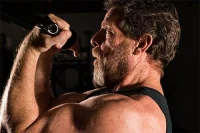
Marty Gallagher is a champion strength athlete, coach, author, and RAW Podcast host known for powerlifting, Olympic lifting, and serious strength training.
