
 Call us today at 1-888-758-7527

Nutritional Primitive
Gourmet Peasant Food: Cooking Fewer Things Better
Nutritional Primitive is my name for gourmet peasant food: cooking fewer things better. The lifter does not need a 27-ingredient French masterpiece. He needs the ability to buy good food, cook it simply, season it correctly, avoid ruining it, and eat it in service of muscle, strength, health, and sanity.
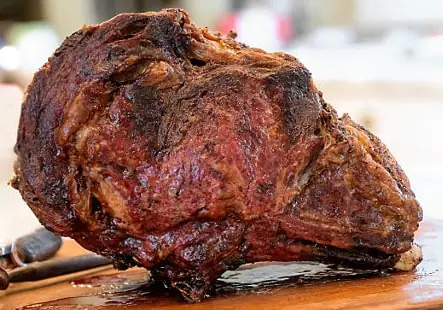
The image above shows the reward: properly cooked meat on a cutting board. Nothing is more primal than a great roast, steak or slab of protein handled with respect. Salt, pepper, heat, patience, and a thermometer will take a man farther than ten thousand bad diet hacks.
A standing rib roast cooked to a rare culinary target can be magnificent. The old Gallagher method is brutally simple: salt and pepper, insert the meat thermometer into the center of the roast, place it in the oven and stop cooking before you murder it. That said, rare culinary targets and official food-safety targets are not the same thing. Official food-safety guidance lists 145°F with a 3-minute rest for beef roasts. A 120°F rare roast is a personal doneness choice, not the official safety minimum.
Bourdain Was Right About Basic Cooking
Anthony Bourdain drove home a point I have believed for years: basic cooking is a virtue. The ability to feed yourself with some degree of proficiency should be taught to every young man and woman. A person should have a small but serviceable list of specialties — not a restaurant menu, just a few things they can prepare with confidence.
What should every man, woman, and teenager know how to do? Dice an onion. Mastery of such a simple task teaches basic knife skills. Make an omelet. Omelet work teaches patience, sensitivity and control. Roast a chicken. Grill and properly rest a steak, regardless of the cut. Cook vegetables to desired doneness. Recognize fresh fish. Steam shrimp, mussels, clams, or lobster without turning them into rubber.
Everyone should be encouraged to develop a modest, unique, delicious repertoire of a few dishes they are proud to prepare and share.
Kitchen-Challenged Alpha Males
A surprisingly large number of alpha males are completely flummoxed by simple food preparation. Their idea of good home cooking is a burnt burger, or a dried-out boneless-skinless chicken breast, murdered on an overworked George Foreman Grill. “It’s healthier!” they insist. Add some green beans out of a can and steamed rice turned into mush through neglect and overcooking. Salad is damp and out of a bag, then covered with some sort of insulin-spiking “heart healthy” dressing.
No wonder these men eat out all the time.
I have tried to stage culinary interventions for some of those most in need. Even the simplest recipe causes the kitchen-challenged alpha chimp to gaze at me in wide wonder, as if I had asked him to prepare cullis of grouse, old style, a complicated recipe from Escoffier.
Here is the roast-chicken intervention: turn the oven to 350°F. Take the chicken out of the wrapper. Remove the packet from the cavity. Salt and pepper the outside and inside. Set the whole chicken on the raised broiler pan that comes with the oven. Put the bird on the middle rack. Cook until the thickest part reaches the safe temperature for poultry. Take it out. Let it rest. Eat it.
Official food-safety guidance lists poultry at 165°F. Use a thermometer and stop guessing.
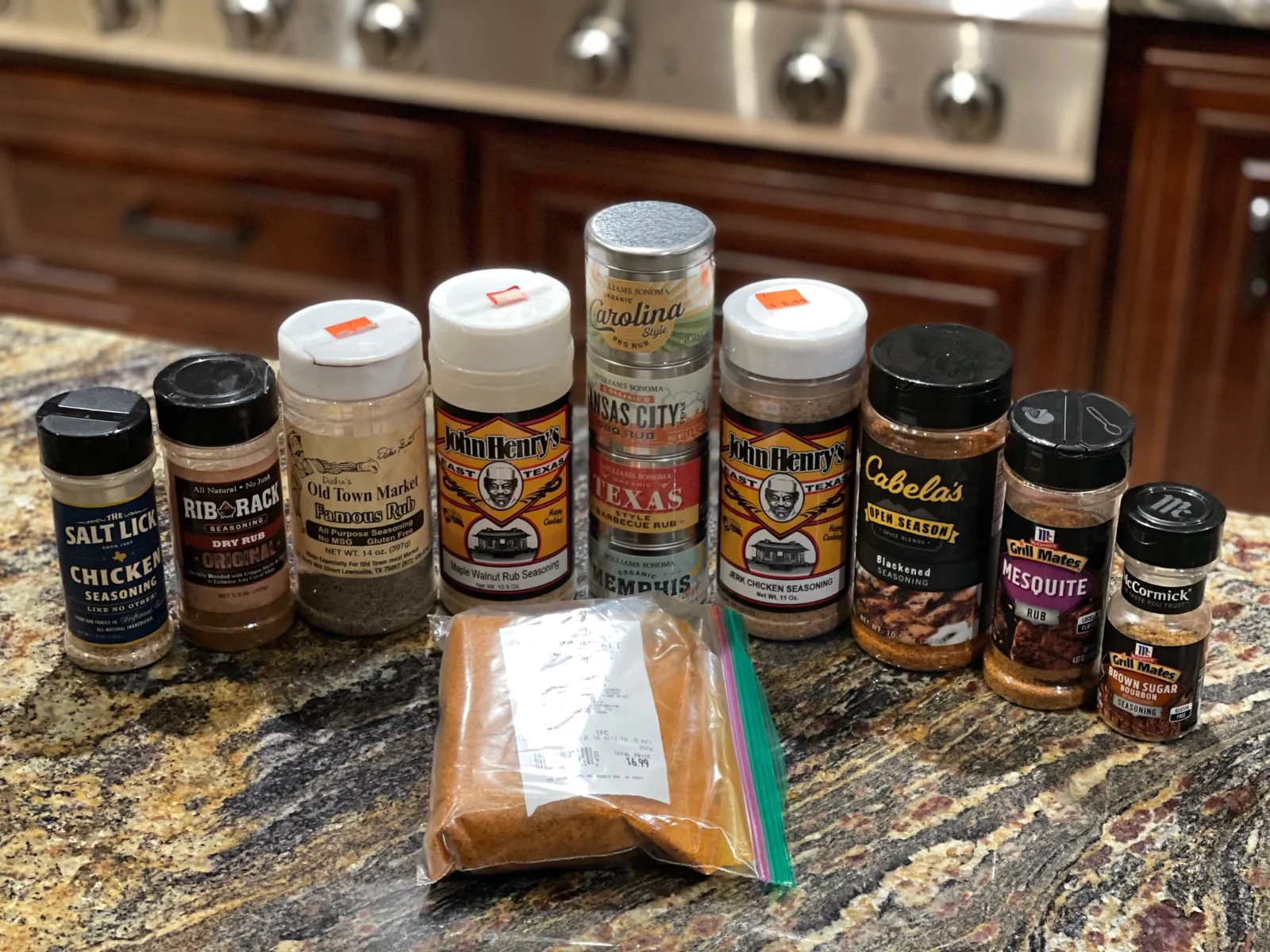
Basic spices and proper doneness can turn simple food into gourmet peasant food.
Gourmet Peasant Food for Strength Athletes
There is no reason each of us cannot develop a narrow menu of Simple Simon dishes that are genuinely delicious and that support our muscle-building, strength-infusing training efforts. Done right, uber-simplistic food preparation produces what I call gourmet peasant food: perfectly cooked, nutrient-dense proteins and fresh produce, expertly, simply, and quickly prepared, infused with vibrant taste and practical nutritional horsepower.
- Elite chefs seek out the freshest, most potent proteins and produce because freshness intensifies flavor and taste.
- Strength athletes seek fresh, potent proteins and produce because food quality supports training, recovery and body composition.
- Elite chefs and elite athletes often seek the same foodstuffs for different reasons: flavor for one, potency and usefulness for the other.
- Why not expropriate the preparation tactics elite chefs use to perfectly prepare the proteins and produce we repeatedly eat?
Do not turn this into food snobbery. Organic, local and grass-fed can be good choices when budget and availability allow. Conventional foods can also support serious training when selected intelligently and cooked well. The real enemy is not ordinary food. The enemy is dependence, laziness, and repeated bad choices.
Learn by Watching, Then Cook by Temperature
Learning how to cook is now absurdly simple. Follow along as an expert chef prepares what you want to eat, step by step. Miss something? Stop the video and back it up. Search a foodstuff and you can have expert visual instruction inside one minute.
Want to know exactly how to roast a chicken or a leg of lamb? Call it up. You will have a dozen chefs relating step-by-step procedures that take most of the guesswork out of cooking. Use instruction to reverse-engineer your shopping list.
The trick is not to become a chef. The trick is to become competent with a few powerful foods: chicken, pork, beef, eggs, fish, shellfish, lamb, potatoes, rice, vegetables, and fruit. Learn the basics. Repeat them. Get good at them.
The Salmon Lesson
Suppose you are at the grocery store and a filet of salmon is on sale. You get a fantastic filet for 40% off. It needs cooking right away because the sell-by date is closing in. If it has been kept cold, smells clean, and shows no sour, rancid, fishy or ammonia odor, you can cook it for supper. If it smells wrong, throw it out. Do not be brave with bad fish.
That night, take a pair of kitchen shears and cut the salmon filet into serving sizes. In a large non-stick skillet, place enough olive oil to cover the bottom of the pan. Bring the olive oil to medium heat — not high. Use tongs to lower portion-sized filets into the pan, skin side down. Let the fish gently sauté for five minutes. Use the tongs to turn the fish over. After two minutes, insert a probe thermometer.
A 125°F salmon target is a culinary medium-rare style target and will be used by many experienced cooks. Official food-safety guidance is more conservative: fish is listed at 145°F, or cooked until the flesh is opaque and separates easily with a fork. Know which standard you are choosing and why.
Be careful with hot oil. Do not get careless. I have a bachelor friend who set the kitchen on fire fumbling around and spilling hot oil on kitchen curtains. “They ignited like gas-soaked newspapers!” he said.
The Thermometer Changes Everything
Invest in a food thermometer. This tool is critical and takes the guesswork out of determining doneness, an impossible task for the neophyte. Pick up the type with the long, braided wire leading to a probe tip. This wire allows you to monitor what is going on inside the oven or smoker. Watch the digital readout as the temperature rises. Most thermometers have alarms that can be set to buzz when the chicken, roast, or meatballs hit the chosen temperature.
Stick a probe in every serious protein. Want to know the recommended temperature for a specific food? Look it up from a reliable food-safety source. Every chef worth listening to will also relate the temperature goal for the protein being prepared. Once you own and use a food thermometer, a whole universe of power-food possibilities opens up.
Produce, Potatoes, Rice, Shrimp, and Shellfish
Produce need not be boring. Learn to sauté onions, potatoes, asparagus, carrots, and whatever else is in season. Baking potatoes is a snap. Potato doneness is attained when a probe enters and exits the baked potato cleanly and easily.
Rice needs attention. Make sure the water amount is correct and follow cooking times exactly. Do not space out. Rice does not care that you got distracted by a podcast or a text message.
Steaming is great for vegetables. Steam is also great for shrimp and shellfish. I use my spaghetti pot with a lid as a steamer. Be careful of over-steaming shrimp and shellfish. Too long in steam turns them into inedible rubber. Steamed vegetables have specific cook times that can be found in seconds.
For seafood safety, most fish should reach 145°F or cook until opaque and flaking. Shrimp, lobster, crab, and scallops should become pearly or white and opaque. Clams, mussels, and oysters should open during cooking; throw away any that do not open.
Shopping Becomes Part of the Training Template
The bottom line is to get serious about food preparation. You will be dealing with food for the rest of your life. Stop depending on others — mom, wife, girlfriend, carryout joint, or restaurant — for your food-fuel. You can eat better and cheaper at home when you know what you are doing.
With expert instruction free for the taking, there is no reason not to create scrumptious chicken, pork, beef, fish, shellfish, and lamb proteins. There is no reason not to consume seasonally appropriate produce, preparing it simply and expertly. It is just as easy to expertly prepare outstanding foods as it is to ill-prepare those same foods.
Instead of spending $8 on fast food, take that $8 and get a pound of burger, a monster chunk of salmon, a whole chicken, a bag of potatoes, or a pile of vegetables. Once you get the hang of home cooking, shopping becomes exciting as you hunt for something great: a giant steak, jumbo shrimp, a leg of lamb on sale, or Saint Louis ribs marked down to half price.
When you get excited about obtaining the power foods used in dishes you create, the nutritional portion of the transformational template is all but won.
Food-Safety Note for Meat, Seafood, Hot Oil, and Leftovers
Cooking for strength does not exempt anyone from food safety. Official food-safety guidance lists beef, bison, veal, goat and lamb steaks, roasts, and chops at 145°F with a 3-minute rest; ground meat at 160°F; poultry at 165°F; egg dishes at 160°F; leftovers at 165°F; and most seafood at 145°F or appropriate visual doneness.
Keep seafood and other perishables cold. FDA guidance says seafood used within two days should be stored in a refrigerator at 40°F or below. Perishable foods should not sit out more than 2 hours, or more than 1 hour when temperatures are above 90°F.
Hot oil burns and starts fires. Use medium heat when medium heat is called for. Keep curtains, towels, and paper away from the stove. Have a lid or appropriate extinguisher strategy available. Do not pour water onto a grease fire.
This article preserves Marty Gallagher’s old-school strength-athlete cooking philosophy. It is not individualized medical, nutrition, allergy, food-safety, or dietetic advice.
Related Nutritional Primitive Reading
For a deeper look at what lifters can steal from culinary professionals, read What We Can Learn From Elite Chefs. For the post-training protein-and-recovery angle, read The Steak Dinner Caper.

RAW with Marty Gallagher, J.P. Brice, and Jim Steel Podcast
About the Author: Marty Gallagher
As an athlete Marty Gallagher is a national and world champion in Olympic lifting and powerlifting. He was a world champion team coach in 1991 and coached Black's Gym to five national team titles. He's also coached some of the strongest men on the planet including Kirk Karwoski when he completed his world record 1,003 lb. squat. Today he teaches the US Secret Service and Tier 1 Spec Ops on how to maximize their strength in minimal time. As a writer since 1978 he’s written for Powerlifting USA, Milo, Flex Magazine, Muscle & Fitness, Prime Fitness, Washington Post, Dragon Door and now IRON COMPANY. He’s also the author of multiple books including Purposeful Primitive, Strong Medicine, Ed Coan’s book Coan, The Man, the Myth, the Method and numerous others. Read the Marty Gallagher biography here.

Marty Gallagher is a champion strength athlete, coach, author, and RAW Podcast host known for powerlifting, Olympic lifting, and serious strength training.
