
 Call us today at 1-888-758-7527


Why We Love Dumbbell Training
In Resistance Training, Harder Is Better
In resistance training, harder is better.
The trend in resistance training is to create modes, machines, devices, and methods that make resistance training easier and therefore more sellable. For instance, a chest press machine has a payload that travels on a ball-bearing smooth motor pathway. The machine eliminates the “third dimension of tension,” the need to control side-to-side motion. The elimination of the need to control the payload from the pathway makes pushing and pulling easier — and easier is inferior.
Smoothness and ease are insufficient to trigger the deepest adaptive response in serious lifters. The adaptive response occurs in response to stress. The more stressful the resistance training, assuming the stress is technically owned and recoverable, the greater the potential results. In resistance training, brutal and crude trump ease and smoothness.
In a perfect world, all tools and modes would deliver equal results. That would be fair. In the real world there is a proportional relationship between effort and results: the greater the appropriate effort, the greater the potential for muscle growth and dramatic increases in power and strength.
Why Dumbbells Are the King of Honest Muscle Stimulation
Resistance machines are stable and allow trainees to devote 100% of available strength to push or pull. Barbells, and most particularly dumbbells, are unstable and force muscle stabilizers to fire in order to keep the payload from straying sideways. From a muscle stimulation standpoint, dumbbells are the undisputed king of honest muscle fiber stimulation.
- Dumbbells force each arm to carry its fair share.
- Dumbbells force the trainee to consciously adhere to a specific motor pathway.
- Dumbbells can be used in an amazing array of effective exercises.
- Dumbbells are not just for the upper body; dumbbells are used in squats and calf raises.
- Dumbbells are superb tools for extending range of motion when the joint, load and setup allow it.
Elite strength athletes will periodically shift to an all-dumbbell format to break up the staleness of training with a barbell exclusively. This is tough work and the trainee would “smart bomb” after each session with a post-workout replenishment protein / carb shake, assuming that approach fits the trainee.
A Full Week of Dumbbell-Only Training
Here is an example of an all-dumbbell weekly training split. This is not a universal prescription. It is a hard template for a serious trainee who already owns the exercises, the warm-ups and the recovery process.
| Day | Dumbbell work |
|---|---|
| Monday | Goblet squats, 5 sets; single-leg calf raise holding dumbbell, 5 sets |
| Tuesday | Dumbbell bench press, 6 sets; seated dumbbell curls, 5 sets; overhead dumbbell triceps extensions |
| Wednesday | Stiff-leg dumbbell deadlift, 5 sets; hamstring dumbbell deadlift, 3 sets; dumbbell rows, 5 sets |
| Thursday | Off |
| Friday | Incline dumbbell bench press, 5 sets; dumbbell biceps curl, 5 sets; seated dumbbell triceps extension |
| Saturday | Dumbbell cleans, 5 sets; Dorian-style 70-degree reverse-grip rows |
| Sunday | Seated dumbbell presses, 5 sets; standing dumbbell lateral raises, 4 sets |
Arms are supersetted: a set of biceps, a set of triceps, rest, repeat. Generally speaking, every set is successively heavier, topping out with an all-out top set.
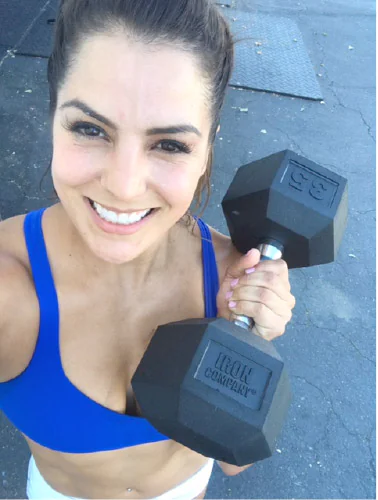
Rubber hex dumbbells can handle hard functional fitness training when used on appropriate flooring and with adequate space.
Dumbbells Make Barbells Feel Fresh Again
A dose of straight dumbbell training will make barbells feel fresh and exciting. The idea is to get as strong as possible in all the dumbbell exercises. Then, when the trainee switches back to barbells, the barbell poundage seems ridiculously easy compared to the awkward dumbbells.
Dumbbells introduce instability, unilateral loading, longer ranges of motion, and more exacting control. That is precisely why they are valuable. They make familiar barbell patterns feel newly alive.
Serious Leg Training with Dumbbells
Another point: a lot of trainees scoff at the idea that any serious leg training can be done with dumbbells. We seriously suggest you give the goblet squat a serious test ride. Use an ultra-deep upright torso style. Generally speaking, a man with a legitimate 315-pound squat, raw and below parallel, will find he will be unable to complete 10 reps with 80 pounds in the deep goblet squat.
Strong men will clean a pair of dumbbells to the shoulders and front squat. Dumbbells held under the chin become more of a grip exercise than a leg exercise when the bells get past 80 pounds. Between the goblet / dumbbell front squat and single-leg calf raise, you can blast your legs fully, completely, optimally, with no compromise.
A limited set of ultra-deep goblet squats, say 8 to 10 reps with the final rep barely completed, and you will be decimated, shattered.
The single-leg calf raise done on a block or stair-step can tax calves every bit as much as loading a standing calf machine to 400 pounds or a seated calf raise machine to 200 pounds. Start repping on the left side. Hold a light dumbbell in your right hand, at your side. Use your left hand to grab onto a pole or doorway to maintain balance. Place the right foot behind the left ankle.
Now relax and stretch downward as far as possible. Let the payload, the bodyweight and the dumbbell, increase the depth of the stretch. Now go all the way up onto the inside ball of the foot and hold this tiptoe position for a full second. Rep until failure. Switch feet. Rep to failure again. Now do both legs quickly for 15 to 20 fast reps. Do three sets. Your calves will be maximally blowtorched.
Top Sets, Failure, and the Barely Completed Rep
The ideal top set ends with the barely completed rep, a rep so difficult that attempting another rep is out of the question.
This is not slop. This is not panic. This is not uncontrolled flailing. The barely completed rep must still be owned. The lifter must retain position, control, awareness, and enough technical integrity that the set creates adaptation instead of stupidity.
Rubber Hex, Urethane, and the New Dumbbell Technology
We love the new generation of urethane dumbbells. There is not too much in the way of technology that I embrace; however, urethane dumbbells have improved free-weight training. In the not-too-distant past, the worst fate that could befall a gym floor was iron and metal dumbbells dropped on the floor, repeatedly and continually. The noise was jarring and disturbing.
Rubber gym flooring helped deaden the noise, but dropped iron and metal dumbbells tore expensive rubber gym flooring to shreds. Now, thank the Gods, we have classy, compact, rubber and urethane-coated dumbbells that, when used on appropriate rubberized flooring and within their intended use, can absorb impact better than old-school iron.
In a perfect world, it is preferable to periodically be able to set down or drop dumbbells without damage or noise. In the not-too-distant past, rubberized dumbbells were oversized and inflated, cumbersome and cheap. The new generation of rubber hex dumbbells and solid steel urethane dumbbells are dense as plutonium and have sculpted handles that are diamond-knurled to improve grip. This is Star Trek stuff. Not all tech is superfluous.
Safety Note for Heavy Dumbbell Training
This article preserves Marty Gallagher’s RAW dumbbell-training perspective. It is not individualized medical, rehabilitation, or programming advice.
Heavy dumbbell presses, dumbbell cleans, overhead triceps extensions, goblet squats, dumbbell rows, single-leg calf raises, deep ranges of motion, and training to failure can stress the shoulders, elbows, wrists, grip, spine, hips, knees, ankles, and recovery capacity.
Build gradually. Warm up thoroughly. Use safe flooring, enough space, appropriate footwear, controlled lowering, a clear escape plan, and dumbbells that match the exercise. Do not drop dumbbells casually in crowded areas, near mirrors, near other lifters, on unsuitable flooring, or in a way that risks feet, fingers, faces, or equipment.
Stop or scale back for sharp pain, joint pain, numbness, dizziness, chest pain, unusual shortness of breath, uncontrolled dumbbell path, grip failure, repeated technical collapse, missed warm-ups, or any symptom that feels different from normal training effort.
Equipment Notes for Dumbbell Training
The tool does not create the result. The lifter’s effort, progression, technique, recovery, and willingness to struggle create the result. Still, the right dumbbells make serious dumbbell training easier to run, safer to organize, and more pleasant to live with.
Readers and facilities can compare dumbbells, rubber hex dumbbells, urethane solid-head dumbbells, pro-style dumbbells, and weight benches.
Specific options such as IRON COMPANY rubber hex dumbbell sets, IRON COMPANY urethane hex dumbbells, IRON COMPANY urethane solid steel dumbbells, American Barbell Series I urethane dumbbells, and Intek Silverback cerakoted steel dumbbells may fit different homes, garages, personal-training studios and commercial gyms when the product, user, flooring, storage, and intended use align.
The equipment does not make dumbbell training magic. It merely gives the lifter a better way to impose honest stress.
Related Dumbbell Reading
For a triceps-specific dumbbell routine, read Best Dumbbell Tricep Workout. For dumbbell buying context, read The Ultimate Rubber Hex Dumbbell Buying Guide and Best Commercial Dumbbell Buying Guide.
RAW with Marty Gallagher, J.P. Brice, and Jim Steel Podcast.
About the Author: Marty Gallagher
As an athlete Marty Gallagher is a national and world champion in Olympic lifting and powerlifting. He was a world champion team coach in 1991 and coached Black's Gym to five national team titles. He's also coached some of the strongest men on the planet including Kirk Karwoski when he completed his world record 1,003 lb. squat. Today he teaches the US Secret Service and Tier 1 Spec Ops on how to maximize their strength in minimal time. As a writer since 1978 he’s written for Powerlifting USA, Milo, Flex Magazine, Muscle & Fitness, Prime Fitness, Washington Post, Dragon Door and now IRON COMPANY. He’s also the author of multiple books including Purposeful Primitive, Strong Medicine, Ed Coan’s book Coan, The Man, the Myth, the Method and numerous others. Read the Marty Gallagher biography here.
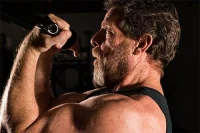
Marty Gallagher is a champion strength athlete, coach, author, and RAW Podcast host known for powerlifting, Olympic lifting, and serious strength training.
