Iron Indian Clubs & Power Club Exercise Bats | Apollo Athletics (E-BAT)
Apollo Athletics E-BAT Iron Indian Clubs and Power Club Exercise Bats are sold as single clubs in 5, 10, 15,... Read More
Available



Description
Features
Reviews
Specifications
Warranty
Shipping
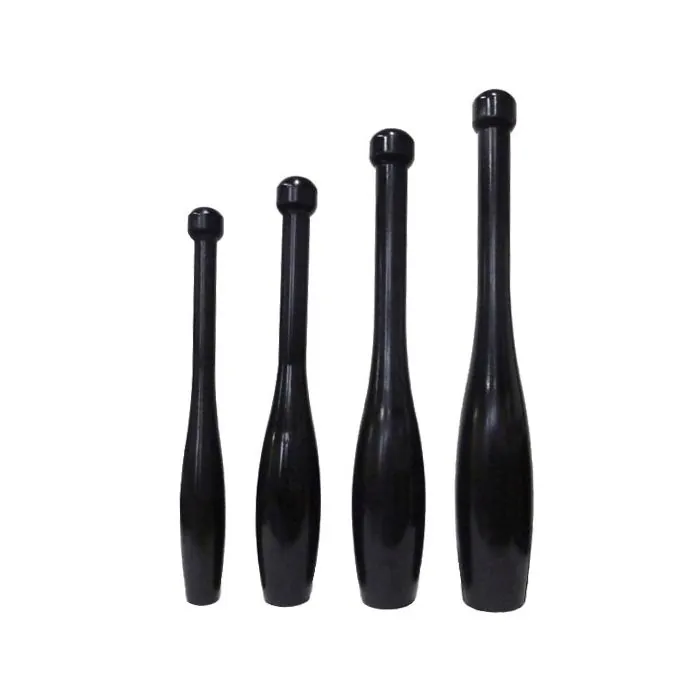
Apollo Athletics Iron Indian Clubs and Power Club Exercise Bats are single iron training clubs for rotational club swings, presses, squats, cleans, holds, grip strength training, core conditioning, flexibility exercises, and shoulder mobility work. Available in 5, 10, 15, and 20 lb. options, the E-BAT design uses ductile iron construction, balanced weight distribution, smooth texture, thinner ends, and a painted black finish.
Reviewed and curated by J.P. Brice – President & CEO.
Apollo Athletics E-BAT Iron Indian Clubs and Power Club Exercise Bats
The Apollo Athletics E-BAT gives lifters a weighted club option that sits between traditional Indian clubs, heavier power clubs, and other unconventional strength tools. These iron exercise bats are built for rotational training patterns that are difficult to duplicate with a dumbbell or kettlebell because the load, barrel length, grip length, and swing path all change how the club moves around the body.
The supplied size range includes 5, 10, 15, and 20 lb. single clubs. The lighter 5 lb. and 10 lb. options are better suited to wrist, hand, and shoulder-mobility style rotational exercises. The heavier 15 lb. and 20 lb. options are better matched to power swings, presses, squats, cleans, holds, and slower strength-focused club movements.
Key Benefits
- Single club options: Choose from 5, 10, 15, and 20 lb. Iron Power Club Exercise Bats.
- Rotational training tool: Designed for club swings, presses, squats, cleans, holds, flexibility exercises, core conditioning, and shoulder mobility drills.
- Ductile iron construction: Made from ductile iron with a fully machined design and painted black finish.
- Balanced weight distribution: The club shape helps support controlled rotational movement patterns.
- Smooth grip texture: Smooth texture provides a straightforward hand contact surface for club training.
- Different feel from traditional Indian clubs: Longer shape and thinner ends are designed to support more fluid behind-the-neck and overhead swings.
- Residential and commercial use rating: Intended for home gyms, garage gyms, exercise studios, cross-training facilities, and commercial gym settings.
Pro Tips from the Floor
- Buy by movement, not by ego: A 10 lb. club can feel very different from a 10 lb. dumbbell because the club moves farther away from the hand during rotational swings.
- Order singles intentionally: These are sold as single clubs. If your training plan uses matched-pair club exercises, confirm quantity before checkout.
- Plan the swing path: Behind-the-neck, overhead, and rotational club movements need clear space around the user, not just enough room to stand in place.
How to Choose the Right Iron Power Club Weight
Choose the 5 lb. or 10 lb. Iron Power Club when the training priority is wrist rotation, hand control, shoulder mobility exercises, flexibility work, and technique practice. These lighter sizes use a thinner diameter around the grip area, which better supports smaller rotational patterns and controlled movement drills.
Choose the 15 lb. or 20 lb. Iron Power Club when the training priority is heavier power swings, presses, squats, cleans, holds, and rotational strength work. Because heavier clubs challenge grip, timing, and leverage, buyers should progress carefully and leave enough room around the body for the full club path.
For gyms and studios, a mixed size run can help serve more users than buying only the heaviest option. A lighter club can support warm-ups, technique work, and mobility-focused training, while heavier clubs can be reserved for strength-focused users who can control the movement.
What Makes These Clubs Different from Traditional Indian Clubs?
Traditional Indian clubs are often associated with lighter, flowing mobility work. The Apollo Athletics Iron Power Clubs are longer and thinner around the ends compared to many traditional Indian club shapes, which supports a different feel during overhead and behind-the-neck swings. They are also offered in heavier single club weights for buyers who want to add strength, grip, and core-conditioning demands to club training.
These clubs are also different from steel macebells and sledge hammers. A macebell places more load at the end of a long handle, while a sledge hammer is typically selected for striking-style conditioning. The E-BAT is a shorter, bat-style power club for rotational strength, grip work, shoulder mobility drills, and functional club exercises.
Training Applications
Apollo Athletics Iron Power Club Exercise Bats can be used for cross-training, core conditioning, flexibility exercises, shoulder mobility exercises, grip strength training, rotational club swings, presses, squats, cleans, and holds. They are a natural fit for home gyms, garage gyms, exercise studios, sports performance areas, cross-training facilities, and commercial gym accessory zones.
When adding club training to a facility, consider where the exercises will actually happen. A club rack, open training area, or dedicated functional training zone is easier to manage than leaving clubs near benches, dumbbell walkways, racks, mirrors, or cable machines. The club path should remain clear during overhead, behind-the-neck, and rotational movements.
Space, Flooring, and Facility Planning
Club training does not require a large machine footprint, but it does require safe movement clearance. Buyers should plan for the athlete’s arm reach, the club length, and the full circular path created by rotational swings. Do not evaluate this product only by storage size; evaluate the space needed during the exercise.
For training areas that include clubs, macebells, kettlebells, dumbbells, sleds, or bodyweight work, a compatible rubber gym flooring layout can help define the training zone. Flooring can support a more organized room layout, but it does not replace proper technique, spacing, supervision, or equipment inspection.
When to Choose a Different Product
Choose a different product if you need a pair packaged together, a longer macebell with a larger leverage arc, a sledge hammer for tire-slam training, or a compact dumbbell or kettlebell for more familiar loading. Also choose a different product or request additional documentation if your purchase requires verified country of origin, product-level GSA eligibility, TAA compliance, Buy American documentation, Berry Amendment documentation, or a specific government procurement status.
If your goal is medical rehabilitation after a shoulder injury, do not treat this product page as medical guidance. This product supports flexibility exercises and shoulder mobility exercises, but individual rehabilitation-focused decisions should be made with qualified professional guidance.
Related Training Categories and Buyer Resources
Build out a complete club training and functional strength area by pairing Apollo Athletics Iron Power Clubs with free weights, strength training equipment, cross-training, boxing, and MMA equipment, core training equipment, popular power clubs and sledge hammers, and rubber gym flooring.
For broader equipment planning and facility purchasing context, review IRON COMPANY capabilities for fitness equipment and gym flooring projects, GSA and CMAS bid information, The Complete Guide to Gym Equipment, and Why Commercial Gyms Choose IRON COMPANY for Fitness Equipment. Product-level government eligibility, contract status, and procurement requirements should be verified before treating this power club as available through any specific purchasing channel.
Common Questions About Apollo Iron Indian Clubs
Are Apollo Iron Power Clubs sold as singles or pairs?
There are single club options for 5, 10, 15, and 20 lb. Iron Power Clubs. If you want matched-pair exercises, confirm quantity before placing the order.
What weights are available?
Available single club sizes are 5 lb., 10 lb., 15 lb., and 20 lb.
Which size should I choose for mobility work?
The 5 lb. and 10 lb. clubs have a thinner diameter around the grip and are better suited to wrist and hand rotational club exercises. They are the better starting point when control, mobility, and technique are the priority.
Which size should I choose for power swings and presses?
The heavier 15 lb. and 20 lb. clubs are better used for power swings and presses. Buyers should choose weight based on skill level, grip control, exercise selection, and available training space.
How are these different from traditional Indian clubs?
These Iron Power Clubs are longer and thinner around the ends than traditional Indian clubs, which supports more fluid behind-the-neck and overhead swings.
Can these be used for shoulder mobility exercises?
Yes, these clubs can be used for shoulder mobility exercises. Buyers using clubs for injury recovery should seek qualified professional guidance.
Can commercial gyms use these clubs?
The intended use rating is Residential and Commercial. Commercial facilities should still plan storage, user supervision, exercise space, cleaning, and replacement needs based on how often the clubs will be used.
What should I check before ordering?
Confirm the selected weight, whether you need one club or two, the available training space, current shipping terms, and any required procurement documentation before ordering.