
 Call us today at 1-888-758-7527

Lifespan, Strength Training and Improving Resilience
Don’t Fear the Stressors
Don’t fear the stressors. Properly applied stressors breed resilience, and resilience is one of the great physical currencies of long life.
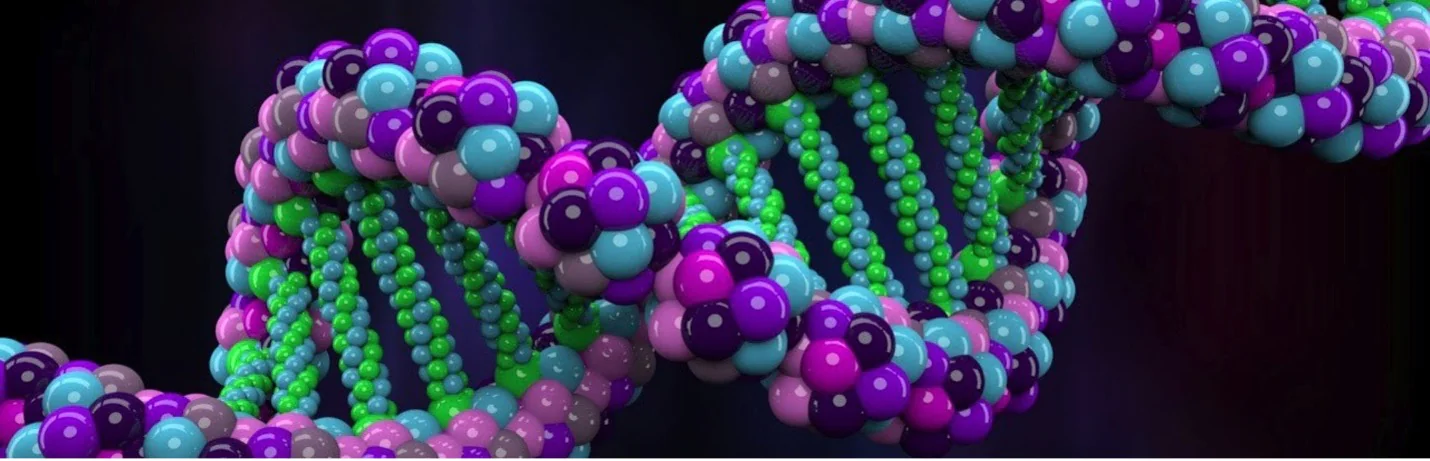
Human DNA strand: living to extreme old age is a tantalizing idea, but no pill, machine, supplement, algorithm, or billionaire-funded laboratory has yet defeated time. Until then, the old path still has teeth: train hard, eat well, recover deeply, and build the kind of resilience that lets the organism come back after stress.
Youngish tech billionaires continue funneling massive amounts of money into research and development for life extension. The 2021 tech gods were just the latest uber-elite to use their wealth to seek out the elusive “elixir of immortality.” Time is the undefeated heavyweight champion. Everyone everywhere has a biological clock ticking every instant of every day; the sand grains tumble through the hourglass unimpeded for every one of us, without distinction. As Jim Morrison pointed out, “No one gets out of here alive.”
The Latest Search for the Elixir of Immortality
The billionaire boys hope that by assembling the world’s best aging experts, the best scientists and the finest medical professionals money can buy, by funding all the research needed, they can somehow beat the biological clock. The goal is to find a method, pill, genetic modification, medical procedure, or magic bullet that will add decades to the human lifespan.
These modern oligarchs are only the latest in a long line of powerful men seeking a shortcut to longer life. The big jackpot is immortality. The quest for immortality can be traced back thousands of years to ancient India and China. The Chinese formalized alchemy, the quest for extraordinarily long life or immortality. Alchemists established schools, created sects and formed cults. Their message was tantalizing, and their influence and legitimacy were sanctioned and funded at the highest levels of ancient societies.
According to historical accounts, numerous emperors from China’s various dynasties succumbed to the negative effects of the elixirs of immortality they consumed. Mercury, jade and cinnabar were all wrapped into these ancient immortality projects. Mercury fascinated the alchemists of ancient China. This toxic metal was believed to have spiritual significance and was often treated as a key to immortality.
The modern version hopes for a safer answer.
Ancient Alchemy and Modern Longevity Science
Optimally, modern life-extension scientists would create a pill, procedure, or vaccine that safely reduces excess body fat while simultaneously building and strengthening lean muscle mass. That would radically alter body composition. In turn, a leaner, stronger body could improve the odds of longer healthspan, assuming the person avoided cancer, accidents, extreme mental stress, infectious disease, and the rest of life’s ambushes.
It might come as a shock to the larger medical community, but systems for radically altering body composition already exist. They are not effortless. They are not magic. They require coordinated work: strength train, perform cardio, institute a disciplined nutritional approach, recover properly, and pay homage to the psychological aspects of the process.
Science is finally coming around to a watered-down version of what some of us have been practicing for decades.
Biological Age, Resilience, and the 150-Year Question
A 2021 Nature Communications paper analyzed aging trajectories and suggested that progressive loss of physiological resilience may place a practical human lifespan limit somewhere around 120 to 150 years. The crucial idea was not that people are suddenly going to live to 150 as a new norm. The useful concept was resilience: the organism’s ability to recover after a stressor.
Another 2021 paper, a pilot randomized clinical trial published in Aging, tested an 8-week diet and lifestyle intervention in healthy men aged 50 to 72. The program included diet, sleep, exercise, relaxation guidance, probiotics, and phytonutrients. The reported result was a statistically significant difference in DNAmAge compared with controls. Interesting? Absolutely. Final proof that lifestyle makes men “three years younger” in the ordinary sense? Not so fast. The authors themselves called for larger and longer trials.
That is the correct way to read these things. The science is promising; the headlines are breathless. Between the two lies the truth.
If you dig deeper into the study, you find that the reported epigenetic-age shift came from a sensible multi-part lifestyle program: better diet, enforced sleep, relaxation or meditation, supplements, and moderate exercise. In other words, the matrix mattered.
The Purposeful Primitive Matrix
A decade before the study, I wrote a 450-page book called The Purposeful Primitive. It was written to share our transformational matrix, a blending of hardcore, minimalistic strength training, intense cardiovascular exercise, nutrient-dense food, and equal emphasis on Brain Train, the psychological aspects related to triggering, obtaining, and sustaining radical physical transformation.
We created the transformational matrix science is now discovering in diluted form. Our approach was amped-up. Our modes and methods were done with greater training intensities. Our dieting was more disciplined. Ergo, our gains and progress were light years superior to those experienced by mild-intervention participants.
Our strength training is necessarily brutal, maximally intense and infrequent. Our cardio is frequent, short duration, often sprinting or burst-cardio protocols. Our nutrition approach champions locally sourced, seasonally appropriate proteins and produce. Rest and recuperation are critical. Brain Train addresses psyche, long-term adherence, habit force, set-to-set resilience, mentally accelerated recovery, and the stress-relieving post-workout state we call the glow state.
Science came around to a watered-down version of the Purposefully Primitive matrix. The mainstream waters down everything it touches and leaves gains lying on the table. Their nutrition is timidity masquerading as sensibleness, their exercise meek, mild and one-dimensional, and their recovery / meditation approaches safe as warm milk.
Our advice: keep the matrix, scale it intelligently and, when appropriate, amp up the intensities.
Strength Training and Burst Cardio as Resilience Practice
Human lifespan research keeps returning to two related ideas: biological age and resilience. Biological age is influenced by stress, lifestyle, and chronic disease. Resilience, in this context, means how quickly a person returns to normal after responding to a stressor.
If humans can control and limit destructive stress, live a healthy lifestyle full of exercise and attention to diet, avoid body-wasting disease and retain the ability to recover after stress, they improve their odds of remaining strong and functional far longer.
Strength training and burst cardio create a specific kind of resilience. Hit a max set, recover, hit another max set. Sprint all out, recover, sprint again. This is resilience training personified.
For the elite strength trainer, intense stress is created by an all-out top set occurring within a workout. After setting a new personal record in the squat, say 405 for 5 reps, the trainee must recover quickly because it is now time to bench press.
Over time, the elite strength trainer becomes adept at recovering quickly and completely after one maximum effort and before the next. Repeated maximum exertions followed by full and complete recovery is resilience training.
Mild Exercise Has Value — But Hard Effort Builds a Different Quality
The lifestyle intervention study used a minimum of 30 minutes of exercise per day, at least 5 days per week, at an intensity of 60% to 80% of maximum perceived exertion. For public health, that kind of exercise has real value. For the feeble, untrained, injured or totally out of condition, even mild exercise can be life-changing.
But do not confuse minimum effective health exercise with hard, transformative training. A 60% effort is not the same thing as a limit set in the squat, a hard deadlift, a burst-cardio sprint, or a brutal conditioning session. Moderate work may support health; high-end physical transformation requires stressors strong enough to demand adaptation.
Effective strength training purposefully creates stressors — the effort — and then the body must speedily and effectively recover, regaining homeostasis. Over time and with repeated practice, resilience improves.
Compare this to the person with zero physical stressors in life. No heavy lifting. No sprinting. No sweating. No struggling. No difficult recovery. No physical reason for the organism to become tougher.
Stress, Recover, Repeat
Effective training self-induces physiological stress. The stressing of targeted muscles is the stimulus for growth. Muscle growth is a defensive action on the part of the body. Adding muscle, creating additional muscular horsepower, is the body’s way of coping with repeated and continual stressors.
Stress, recover, stress again. Repeat ad infinitum.
Mild stresses are not the same as serious adaptive stressors, at least not for the trained and healthy. There is an undeniable relationship between degree of exertion, rapidity of recovery, and the building of that nebulous quality called resilience.
Until science comes up with the magic bullet that effortlessly extends life, the surest all-natural way to improve your physical odds is to add appropriate stressors to your life: hardcore resistance training, sweaty cardio, disciplined nutrition, real sleep, real recovery, and serious Brain Train.
Intense exercise, scaled to the right person at the right time, is one of the great natural stress relievers. Add nutrient-dense food-fuel and legislated rest, and you have covered the major bases. Want to develop life-extending resilience? Embrace exercise-generated stressors — intelligently.
Equipment Notes for Resilience-Oriented Strength Training
Resilience training does not require a complicated room. It requires basic tools that allow safe, measurable, progressive stress.
For the resistance-training side of the matrix, lifters and facilities can compare free weights, barbells, weight plates, barbell collars, and power cages and platform racks. The basics support the basics: squats, deadlifts, presses, rows, and controlled progressive overload.
The equipment does not create resilience. The athlete does. The bar, plates, collars, and rack simply give the athlete a safer place to create stress, recover, and return better.
Suggested Equipment for Resilience-Oriented Training
A simple resilience-focused training space does not need to be complicated. The goal is to create repeatable strength stress, recover from it, and return stronger. For that purpose, useful equipment options include the Body-Solid GSFR100 all-in-one functional trainer and Smith machine for guided strength work, the TKO DS-935 3-way adjustable bench for pressing and support work, American Barbell Series 1 urethane dumbbells for hard, simple free-weight training, and an IRON COMPANY urethane barbell set for foundational barbell movements. The tools are secondary. The stress, recovery, progression, and discipline create the resilience.
Safety Note for Intense Training, Aging, and Resilience
Hard training is useful only when scaled to the lifter’s body, health, age, training history, orthopedic reality and recovery ability. Beginners, older trainees, deconditioned people, injured lifters and anyone with cardiovascular disease, diabetes, kidney disease, neurological concerns, medication issues, or major medical conditions should seek qualified guidance before adding intense strength training, sprinting or burst cardio.
Stop or scale back for chest pain, faintness, unusual shortness of breath, sharp pain, dizziness, numbness, abnormal fatigue, repeated technical collapse, or any symptom that changes normal movement.
Resilience is not recklessness. The goal is not to smash the body. The goal is to apply enough stress to force adaptation, then recover fully enough to do it again.
This article preserves Marty Gallagher’s RAW training philosophy and longevity commentary. It is not individualized medical, rehabilitation, nutrition, or programming advice.
Related Resilience and Transformational Matrix Reading
For more on the full Gallagher framework, read The Purposeful Primitive. For a companion article on coordinating strength training, cardio, nutrition, and mindset, read Balance and Synergy: Strength Training, Cardio and Nutrition.
RAW with Marty Gallagher, J.P. Brice, and Jim Steel Podcast.
About the Author: Marty Gallagher
As an athlete Marty Gallagher is a national and world champion in Olympic lifting and powerlifting. He was a world champion team coach in 1991 and coached Black's Gym to five national team titles. He's also coached some of the strongest men on the planet including Kirk Karwoski when he completed his world record 1,003 lb. squat. Today he teaches the US Secret Service and Tier 1 Spec Ops on how to maximize their strength in minimal time. As a writer since 1978 he’s written for Powerlifting USA, Milo, Flex Magazine, Muscle & Fitness, Prime Fitness, Washington Post, Dragon Door and now IRON COMPANY. He’s also the author of multiple books including Purposeful Primitive, Strong Medicine, Ed Coan’s book Coan, The Man, the Myth, the Method and numerous others. Read the Marty Gallagher biography here.
Marty Gallagher is a champion strength athlete, coach, author, and RAW Podcast host known for powerlifting, Olympic lifting, and serious strength training.
