
 Call us today at 1-888-758-7527

Fasted Cardio Training
Fasted Cardio Training - The Bodybuilding Rationale
Fasted cardio training is a potent bodybuilding fat-loss tactic when it is used inside the larger matrix: disciplined nutrition, progressive resistance training, adequate protein, intelligent calories, consistency, and recovery.
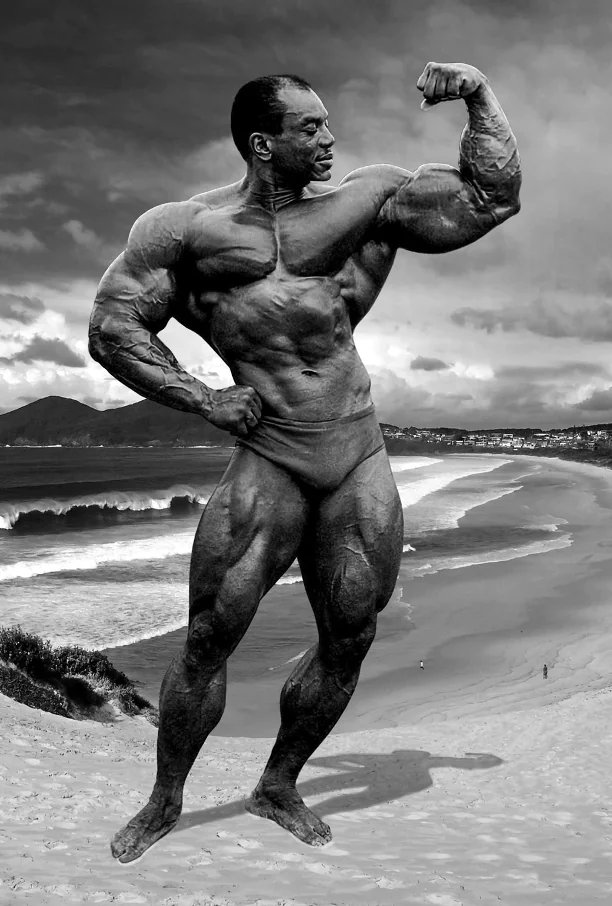
“Look everybody! My arm is as big as my head!” Sergio Oliva, 1968: strip off the fat, preserve the muscle.
If you were to venture into any hardcore bodybuilding gym at 6 a.m., you would encounter a small army of competitive bodybuilders laboring away on cardio machines like treadmills, exercise bikes, and elliptical trainers. Say what you will about bodybuilding and bodybuilders, they are, indisputably, among the world’s greatest and most effective practical dieters. When it comes to stripping off body fat while preserving muscle, competitive bodybuilders have accumulated a massive amount of hard-earned empirical knowledge.
That does not mean every contest-prep trick is healthy, sustainable or appropriate for ordinary trainees. Bodybuilding is form before function. Bodybuilders are not handicapped by having to improve athletic performance on show day, so they are free to go to extremes that athletes are not. In 1965, definable bodybuilder dietary protocols, commonalities used for reducing body fat, began to emerge. An elite consensus formed: highly specific methodologies could be used to systematically reduce body fat and display the muscle beneath.
The Starvation Era Before Modern Bodybuilding Cardio
The first generation of formalized pre-competition dieting began with a primal ketogenic approach: the infamous “fish and water” diet. Pick a lean protein, eat it. Eat it often. Drink water. Nothing else. Maintain that for six weeks without a single bobble, miscue, mulligan, bad day, cheat meal, skipped meal, or skipped workout. Be perfect. Nothing less would suffice.
Be prepared to use an electric cart to sit on when you shop at Walmart. You will be listless, starving, mentally and physically exhausted — and ripped.
From roughly 1965 until the mid-1980s, many bodybuilders leaned themselves out by starving themselves in the lead-up to a competition. Starvation will indeed lean you out, but an unacceptable amount of hard-earned muscle can be lost during the process. When the body senses starvation, it fights to preserve precious body fat, the last line of defense against starvation. In order to survive the caloric drought, the starving body can break down muscle tissue to feed itself.
Muscle cannibalism is the predictable side effect of combining very low caloric intake with high volumes of exercise. I call it starvation-and-overwork fitness: overwork, underfeed, repeat. Day after day, week after week, month after month. It can work on the scale. It can also leave the lifter flat, weak, stringy and half-dead.
Frank Zane captured multiple Olympia titles weighing around 180 pounds, standing 5-9, sporting 17-inch arms. Arnold was once asked to describe Zane’s physique. The snarky one replied, “A chicken — with 17-inch arms!” Chris Dickerson won Olympia-level titles with a pair of small but highly defined arms. These smaller, superbly defined men could exist on tuna fish and water for months on end.
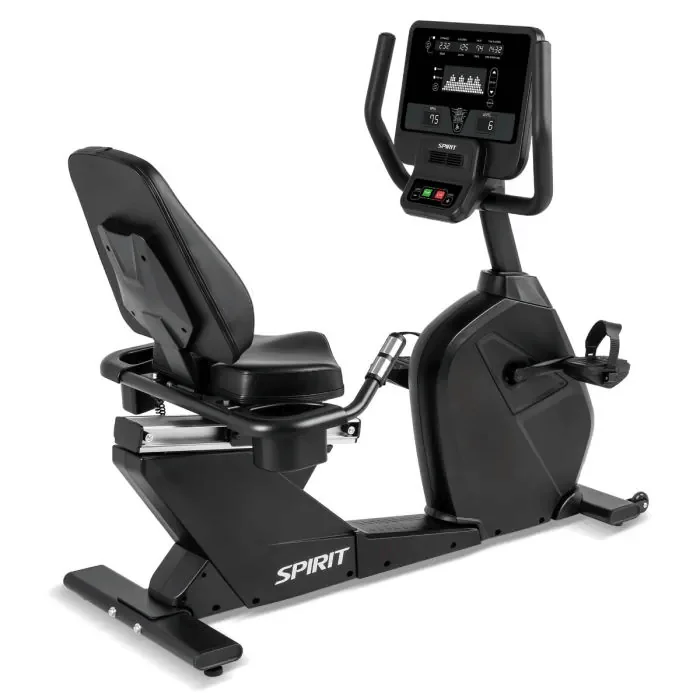
Spirit Fitness recumbent exercise bike for fasted cardio training
John Parrillo and the Clean-Calorie Cardio Shift
The era of the modern bodybuilder was ushered in during the mid-1980s when bodybuilding gurus like John Parrillo began having competitive bodybuilders increase their caloric intake and include cardiovascular exercise in the training template. The inclusion of cardio into the bodybuilding template was met with fierce resistance.
The “settled science” of the day was that aerobics would “melt muscle” and prove totally counterproductive. Indeed, aerobics can tear down muscle if we are talking about an experienced runner logging 35 miles a week training for a marathon. That is not the same thing as a bodybuilder with no cardio background riding a stationary bike like a trained bear on a tiny bike in the Moscow Circus.
The matter was settled onstage when Parrillo began churning out massive, muscled-up, healthy-looking bodybuilders, men sporting body-fat levels every bit as low as their emaciated competitors. Parrillo had his bodybuilders convert to eating ample amounts of “clean calories,” approved bodybuilding foods: lean protein, fiber carbohydrates, complex starch carbohydrates, and bodybuilding supplements, with junk removed.
Parrillo added cardio exercise to the training template. He wanted his bodybuilders to perform a certain type and kind of aerobic exercise. He discovered things empirically: he prepared hundreds of bodybuilders for competition and found that they responded best when cardio was done daily and done with enough intensity to cause the trainee to sweat. The more sweat, the better. Cardio timing also turned out to be important.
Why Morning Fasted Cardio Caught On
Parrillo reasoned that if daily aerobic exercise was done upon arising, before breakfast or any calories, the fat-burning effect of the session would be amplified. Coming off 5 to 8 hours of sleep, the body has been fasting. Before breaking the fast, Parrillo wanted his bodybuilders to perform a sweaty, intense aerobic session. Fasted cardio training was born.
The body uses a mixture of fuels during exercise. Glycogen availability, exercise intensity, duration, diet and training status all matter. In a fasted state, the body may rely more heavily on fat during the session than it would after a carbohydrate-containing meal. That is the kernel of truth inside the fasted-cardio method.
However, fasted cardio is not magic. A fasted session can increase in-session fat oxidation, but long-term fat loss still depends on the entire diet, training plan, energy balance, protein intake, resistance training, and consistency. The body is not a single-fuel engine and fat loss is not decided by one morning workout in isolation.
Results are predicated on the assumption that the bodybuilder is already adhering tightly to a highly disciplined bodybuilding diet: no refined carbohydrates, no sweets, no alcohol, no fruit juices, no random junk food. As Jack LaLanne once said, “If man made it, don’t eat it.” That line is a rough strength-culture rule, not a religion.
Glycogen, Insulin, and Fat Burning Without the Myths
The old bodybuilding explanation says that insulin shuts down fat burning. That is directionally useful but too absolute. Insulin suppresses fat mobilization acutely, but it is not an on / off light switch that determines whether body fat can ever be reduced. Protein can stimulate insulin too. Fibrous carbohydrates, protein and fat usually create a different response than a giant slug of refined sugar, but the human metabolism is not as simple as “insulin present, fat loss impossible.”
There is an insulin response associated with eating complex carbohydrates, the only starches allowed in a strict bodybuilding diet: rice, oatmeal, and potatoes. The response is typically moderated when starch carbohydrates are eaten with protein, fat, and fiber. Starch carbs are generally better used inside an intelligently designed meal than eaten as a naked pile of calories.
Parrillo also emphasized purposefully inducing an insulin response immediately after a hardcore weight-training session. The idea was to use the post-workout window to enhance recovery, healing and growth. If done right — not too many carbohydrates, not too few, the right kind, with sufficient protein — post-workout nutrition can support recovery. If done wrong, it is just another excuse to eat junk.
Multiple Meals, Protein Shakes, and Muscle Retention
Competitive bodybuilders traditionally adhere to a multiple-meal eating schedule. Small meals are eaten at evenly spaced intervals throughout the day. In bodybuilding practice, it is often easier to consume six 500-calorie meals than three 1,000-calorie meals when the goal is high protein, controlled starch intake, digestive comfort and precise food control.
Multiple meals are useful when they help the bodybuilder hit protein, control hunger, maintain energy and stay compliant. They are not magic. The food content, calorie target, training demands and the athlete’s ability to follow the plan matter far more than the mere number of meals.
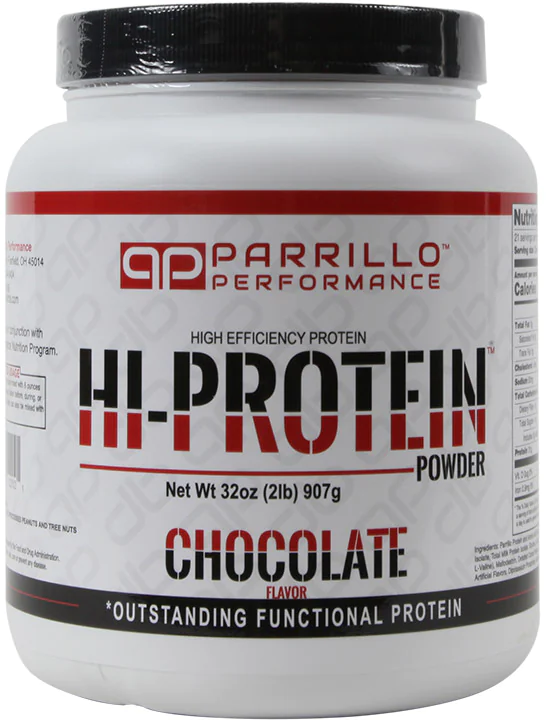
Parrillo Hi-Protein Chocolate Shake for maximum muscle and strength gains
Bodybuilders augment with supplements. Protein powder supplements are universally used because they are practical. A single protein shake can provide 30 to 50 grams of protein. One shake allows the bodybuilder to avoid having to obtain, cook and consume two more boring chicken breasts or choke down another large can of plain tuna. Two protein shakes a day might provide 60 to 100 grams of high-value protein and a taste break from the bland foods many bodybuilders live on.
The modern bodybuilding consensus is a powerful strategy. Its effectiveness is rooted in decades of empirical refinement. The broad outlines are codified and widely practiced:
- clean up the diet
- increase clean calorie consumption when needed
- establish a multiple-meal eating schedule when it helps compliance
- use supplements strategically, not randomly
- control carbohydrate placement and quantity
- start the day with a sweat-producing fasted cardio session when appropriate
- use post-workout nutrition after hard resistance training
- stay true to the eating and training — no endless breaks, cheat days, or time-outs
The Second Cardio Session Before a Show
Heading into the final four weeks before a bodybuilding show, some bodybuilders add a second cardio session late in the day, after the last meal. The second daily cardio session gets a head start on calorie burning and glycogen use. The goal is to burn calories in real time and enter the sleep-fast in a depleted state. The more depleted the body is going to bed, the quicker the morning fasted-cardio session begins to feel meaningful.
The bodybuilder can deepen the already deepened fasted cardio session by not consuming natural starch carbohydrates past late afternoon on the previous day. All these twists and turns, all the interlocking parts, present a confusing mosaic.
The takeaway is simple: if you have the time, situation, mode, and inclination, fasted cardio can be highly effective when it is part of a disciplined bodybuilding matrix.
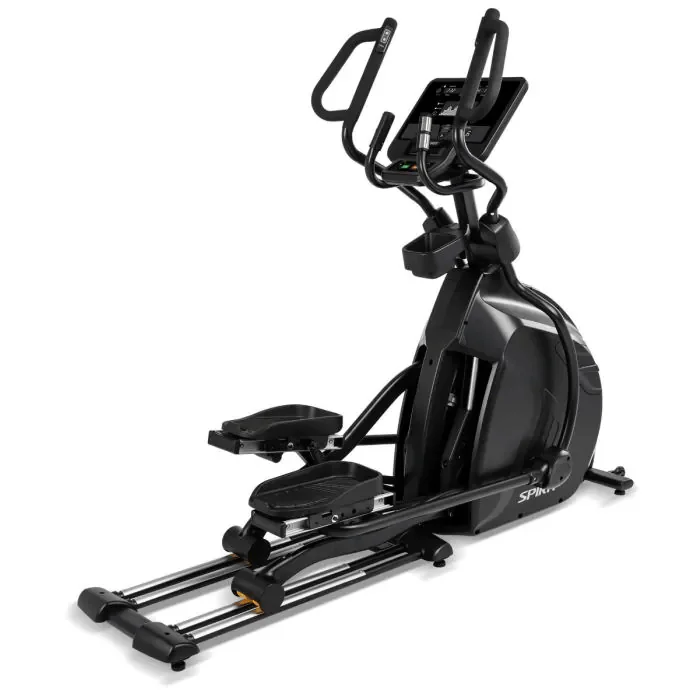
Spirit Fitness elliptical trainer for fasted cardio training
How to Use Fasted Cardio Without Turning It Into Punishment
There can be real physiological and psychological benefits associated with properly performed and consistent fasted cardio. Mental focus and clarity can increase as the workout unfolds. Endurance improves. The heart, lungs and circulatory system are trained. Calories are burned. The metabolism can remain elevated after a hard session. A string of consistent sessions can make a serious dent in body fat when nutrition supports the effort.
But be clear: fasted cardio does not give anyone permission to eat like a lunatic the rest of the day. It is not a cheat-code workout. If a bodybuilder burns 400 or 500 calories in a fasted session and then wipes that out with sloppy eating, the math does not care that the workout was done before breakfast.
Wake up, drink some coffee if it agrees with you, pick a cardio mode, put on some music, have at it, get into it. Are you sweating? If so, you are doing fasted cardio as it was intended to be done. String a bunch of sessions together in a long and continual link. Be consistent. Be intense enough to matter. Try not to undo the hard work in the gym with what you eat and drink before and after training.
Fasted cardio works best when it is implemented properly and in totality: disciplined food, enough protein, enough resistance training, enough recovery, and enough honesty to stop pretending one morning session can fix an undisciplined day.
Equipment Notes for Fasted Cardio Training
Fasted cardio does not require a special machine. The best tool is the one the lifter will use consistently, safely, and hard enough to matter.
For indoor fasted cardio, lifters, and facilities can compare treadmills, exercise bikes, elliptical trainers, indoor rowing machines, and stair climbers.
A slat-belt sled treadmill such as the Spirit Fitness CTSBS900 commercial slat belt sled treadmill, a stair unit such as the StairMaster GAUNTLET StepMill, a rower such as the Throwdown HIIT Rower, an air bike such as the Assault Bike Elite, or a climb-style elliptical such as the Star Trac 8CE Climb Elliptical Trainer can support the work when the mode matches the lifter, facility, joints, schedule, and goal.
The equipment does not create the fat loss. The plan, the consistency, the food, the effort and the recovery create the fat loss.
Safety Note for Fasted Cardio, Aggressive Fat Loss, and Medical Conditions
Fasted cardio is not appropriate for everyone. People with diabetes, blood-sugar regulation problems, pregnancy, underweight status, eating-disorder history, cardiovascular disease, kidney disease, medication concerns, fainting history, or significant medical conditions should seek qualified medical or nutrition guidance before using fasted training, aggressive calorie restriction, or twice-daily cardio.
Stop or scale back if fasted cardio produces faintness, chest pain, unusual shortness of breath, dizziness, confusion, shakiness, nausea, severe weakness, abnormal fatigue, or loss of normal movement. Training before breakfast should sharpen the day, not wreck it.
This article preserves Marty Gallagher’s RAW bodybuilding and cardio-training perspective. It is not individualized medical, nutrition, contest-prep, rehabilitation, or programming advice.
Related Cardio Reading
For a broader Marty Gallagher article on cardio planning, intensity, and tracking, read Cardiovascular Conditioning Goals. For equipment selection context, read Cardio Equipment for Home, Commercial and Rehab Use.
About the Author: Marty Gallagher
As an athlete Marty Gallagher is a national and world champion in Olympic lifting and powerlifting. He was a world champion team coach in 1991 and coached Black's Gym to five national team titles. He's also coached some of the strongest men on the planet including Kirk Karwoski when he completed his world record 1,003 lb. squat. Today he teaches the US Secret Service and Tier 1 Spec Ops on how to maximize their strength in minimal time. As a writer since 1978 he’s written for Powerlifting USA, Milo, Flex Magazine, Muscle & Fitness, Prime Fitness, Washington Post, Dragon Door and now IRON COMPANY. He’s also the author of multiple books including Purposeful Primitive, Strong Medicine, Ed Coan’s book Coan, The Man, the Myth, the Method and numerous others. Read the Marty Gallagher biography here.
Marty Gallagher is a champion strength athlete, coach, author, and RAW Podcast host known for powerlifting, Olympic lifting, and serious strength training.
