
 Call us today at 1-888-758-7527

How Bodybuilding Training Differs From Strength Training
Different Goals Beget Different Training Strategies
Different goals beget different training strategies.
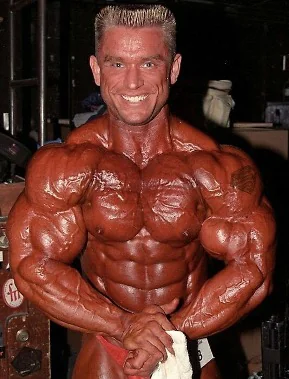
The above image shows a competitive bodybuilder in the type of extreme, artificially low body-fat condition required for the stage. Such a look is temporary, difficult, and unsustainable.
There are major tactical and strategic differences between bodybuilding training and the periodized lifting protocols used in hardcore strength training. The differences in training styles and workout content are the logical result of radically divergent goals.
Bodybuilding Training: Size, Shape, and Muscular Appearance
Bodybuilding training is designed to increase muscle size, alter proportion and improve appearance. On the day of a bodybuilding contest, there is no athletic test to master, no lift to improve upon, no sport of skill to perform. The bodybuilder’s report card is visual: muscular size, symmetry, separation, definition, stage presence, and the illusion of invulnerability.
The workout goal is to maximally inflate current muscle tissue or construct new muscle tissue, ideally new muscle not marbled with an unacceptable amount of body fat. For the bodybuilder, strength increases resulting from bodybuilding training are a useful side effect, but not the central scorecard.
A good bodybuilder can be shockingly strong, and many of the best bodybuilders have trained brutally hard. The distinction is not that bodybuilders are weak. The distinction is that bodybuilding training is organized around physique presentation, not around proving a maximum squat, bench press, deadlift, or overhead press on report-card day.
Strength Training: Performance Is the Report Card
Strength training’s goal is to improve strength. The benchmark, the report card, is performance in key resistance-training lifts. Strength is measured by increases in poundage-handling ability or increases in the number of reps performed with a particular poundage. For the strength trainer, muscle-size gains are a welcome secondary benefit.
The mission of the hardcore athlete is to increase the current quotient of usable athletic strength and improve it to a significant degree. Slight increases barely move the performance needle. The goal is profound: create radical improvements in strength as evidenced by performance in the Core Four movements: squat, bench press, deadlift, and overhead press.
The Core Four need to be performed when the athlete is fully rested, using highly specific techniques, compound multi-joint exercises, full range of motion, and limit-equaling or limit-exceeding poundage for low reps.
The strength athlete continually pushes against the limits of capacity. Capacities shift day to day and week to week. Regardless, if capacities are diminished or enhanced, equaling or exceeding those capacities is where the gains lie hidden in plain sight. The strength athlete systematically seeks to exceed previous poundage or rep limits using periodized preplanning. Every periodized session has specified goals.
The Rested Effort and the Core Four
The goal of strength training is to grow stronger. To become stronger, the trainee needs to generate what I call a 102% effort when 100% rested. This is not literal math. It is a coaching phrase. It means the lifter equals current capacity and nudges past it — one more rep, five more pounds, a cleaner top set — while rested enough to do the work correctly.
The maximal rested effort triggers strength gains and, in turn, hypertrophy. To strengthen and grow a muscle requires extreme physical effort, herculean effort. The key to successful strength training is to generate small consistent gains, week in and week out.
- Train at 102% when the body is 100% rested.
- There is no strength gain worth chasing at 102% when the body is 79% rested.
There are no strength or speed gains to be had training all-out when fatigued and sloppy. Another consequence of successful strength training: a stronger athlete has more muscular horsepower. Strength can support speed, power and resilience, though sport skill, bodyweight, mechanics, and conditioning still matter.
Hardcore power training, done correctly, can build, thicken, and strengthen bones, tendons, and ligaments. Heavy poundage does not make a lifter indestructible, but intelligent heavy training can make an athlete more durable, more resilient and better prepared for the physical shocks of sport and life.
Further compress the minimal amount of time required to practice hardcore strength training by incorporating supersets, tri-sets and other time-saving structures when appropriate. Alternate push-pull movements, stressing muscles lying on opposite sides of a limb or torso. Mirror-image movements can make short and infrequent sessions shorter yet.
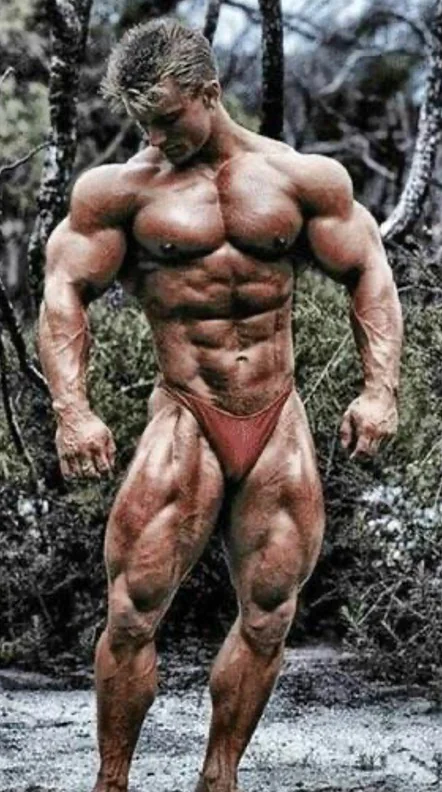
A young bodybuilder at a lean but more functional body-fat level: healthy, powerful, and plenty defined enough.
Why Bodybuilding Show Day Is Not Athletic Performance Day
The bodybuilder’s goal while engaged in bodybuilding training is ultimately visual. There is no athletic test to be mastered on “show day.” On the day of a pro competition, the competing pros can look like mythologic gods. Despite their vibrant appearance, these men may be weak, tired, starved, and dehydrated.
Top bodybuilders use a series of procedures and protocols to forcibly morph themselves into a non-sustainable physiological state, a state needed to attain the very low body-fat levels required to be competitive. The final look is temporary. It is not a health standard. It is not a performance standard. It is a stage condition.
Pro bodybuilders are great actors. Onstage, they project and portray a myth: tanned gods descended from Olympus. These are the leanest, most muscular, most vibrant-looking men on the face of the planet. The pro bodybuilder on the day of a major competition can be exhausted, depleted, dehydrated, and close to collapse.
As a writer for Muscle & Fitness magazine at its mighty prime in the 1990s, I had a front-row center seat and backstage pass for the Olympia, the Night of Champions and the Arnold Classic. I often wandered backstage and was continually shocked at the contrast between the onstage versus the backstage demeanor of the contestants.
Onstage, the men were the ultimate humans: inflated, massively muscled, ripped to the bone, tanned, manically smiling, white teeth aglow, swaggering in states of perpetual semi-flexion. These muscle monsters were, without doubt, the greatest bodybuilders on the planet.
They would pose individually and in groups: preening, strutting, elbowing one another, attempting to electrify the audience when they posed to music at the night show. The instant the pros walked offstage and got backstage, many would collapse. They were drained, starved and depleted by the procedures and protocols needed to attain the requisite stage condition while carrying hundreds of pounds of hungry muscle.
Immediately before a show, pros can become dangerously depleted. Body-fat levels dip so low that some athletes report painful feet when walking barefoot on hard floors. Onstage the pro enters an oxygen-depleted state of continual semi-flexion. They must stay semi-flexed for their entire time onstage. The top pros are called out for individual and group posing, further draining already drained bodies.
On contest day, many suffer from dehydration so severe that muscles cramp without warning. These involuntary spasms can become so severe that the bodybuilder needs medical attention. In the 1990s, I saw a famous IFBB pro hit a front double-biceps pose at a big show and lock up. He was so dehydrated that he was unable to relax his flexed muscles. He had a whole-body spasm, fell backward still locked in his double-biceps pose, and was rushed for emergency care.
He was administered saline solution to rehydrate his parched muscles. He had pulled too much liquid from his body and was flirting with a cardiac emergency. The heart is a muscle too, and severe dehydration and electrolyte disruption are serious business.
Another trick of the trade: after starving down for weeks, after dangerously reducing liquid intake, pro bodybuilders have often used powerful diuretics to pull the last traces of liquid from the body. In doing so, they dramatically improve day-of-show muscular clarity — while increasing risk. When bodybuilders look their best, they may be at their worst from any health, fitness, or performance vantage point.
Competitive bodybuilders present an onstage image, a physical appearance of invulnerability, that can be exactly opposite their weakened, worn-down, starved, and drained reality.
What Normal Lifters Should Steal From Bodybuilding
These severe and extreme tactics are only employed in the final weeks and days before a major show. Bodybuilding nutrition before the extremeness of final contest prep can be sane, safe and highly useful. Bodybuilders are masters of body-fat reduction. Study their useful principles. Do not copy their dangerous peak-week extremes.
How do you melt away excess body fat without melting away hard-earned gym muscle? Ask a bodybuilder. Anyone can starve themselves and lose body weight. Bodybuilders discovered, through decades of contest-preparation trial and error, that crash dieting is counterproductive, unhealthy, unnecessary, and harmful.
A precipitous cutting of calories triggers the body’s primal defense network and slams the brakes on the metabolism. When the body perceives starvation, it can sacrifice its own muscle tissue while sparing precious body fat, the last line of defense against death. The starving body can strip muscle walls of amino acid content to fuel a caloric shortfall while protecting stored body fat.
Obese individuals routinely reduce from 300 pounds to 200 pounds yet remain obese. Starvation dieting can melt muscle faster than it melts body fat. The end product of a successful starvation diet can be a miniaturized version of the crash dieter’s previous obese self, now lighter yet still carrying a high body-fat level.
Bodybuilding’s attention to nutrition and its inclusion of cardio into the bodybuilding training template are highly recommended when used sanely. Resistance training combined with disciplined nutrition and consistent cardio creates one of the best body-composition strategies ever devised.
No need for normal folks to seek unhealthy and unnaturally low body-fat levels. Many men achieve a lean, athletic, defined look around 10% to 12% body fat, but that is not a universal medical optimum. Age, sex, health status, sport, genetics, and sustainability all matter. One hybrid solution is to combine consistent cardio and disciplined eating with a dose of hardcore strength training.
Strength Training and Bodybuilding Are Not Enemies
As Bruce Lee once observed, “Absorb what is useful, discard what is not.” Be clear on the lines of demarcation that exist between the resistance-training strategies unique to bodybuilding training and the differing strategies unique to strength training.
Inflating a muscle via bodybuilding training is different than strengthening a muscle via strength training. Each requires a specific mode and method. Each makes different use of resistance-training tools. Each produces a different primary result.
Still, the two worlds overlap. Bodybuilders can benefit from intelligent strength work. Strength athletes can benefit from bodybuilding’s attention to muscle retention, food quality, cardio, and body composition. The smart trainee steals the best from each camp without confusing the report cards.
Dramatically different strategies produce dramatically different results. As the old thunderous line goes: be hot or be cold; do not be lukewarm. Amen.
Equipment Notes for Bodybuilding and Strength Training
Bodybuilding and strength training use many of the same tools differently. The bodybuilder may chase pump, tension, angle, fatigue, and muscular feel. The strength athlete chases measurable performance in the squat, bench press, deadlift, and overhead press.
For physique-focused readers, bodybuilding equipment can include dumbbells, benches, cable work, plates, and accessories. For barbell-centered strength work, lifters and facilities can compare Olympic weightlifting bars, weight plates, and dumbbells.
A serious strength environment may use a bar such as the IRON COMPANY Iron Cowboy Powerlifting Bar, loading such as IRON COMPANY Urethane Olympic Grip Plates, and support gear such as weightlifting belts or weightlifting straps, wraps and sleeves when those tools match the lift, lifter, and training goal.
For bodybuilding-style dumbbell work, a product such as Intek Hybrid Cerakoted Steel Dumbbells is one example of a hard-use dumbbell option. For bench-focused assistance work, a specific belt such as the IRON COMPANY 6.5 mm Thick 3-Inch Suede Lever Bench Press Belt belongs in the conversation only when the lifter understands how and why to use it.
The equipment does not decide whether you are bodybuilding or strength training. The goal, the loading, the reps, the exercise selection, the rest intervals, the nutrition, and the report card decide that.
Safety Note for Contest Prep, Heavy Training, and Extreme Depletion
Extreme contest preparation, severe dehydration, electrolyte manipulation, diuretics, crash dieting and sub-5% body-fat goals are not appropriate for normal trainees. These practices can be dangerous and should not be copied casually.
Heavy strength training also requires respect. Use appropriate warm-ups, technically sound progression, suitable racks and benches, secure collars, competent spotters when needed and honest stop rules. Sharp pain, dizziness, chest pain, unusual shortness of breath, muscle cramping, faintness, confusion, numbness, or repeated technical collapse are signals to stop or seek qualified help.
Anyone with cardiovascular disease, kidney disease, diabetes, eating-disorder history, pregnancy, underweight status, medication concerns, significant injury history, or major medical conditions should seek qualified medical, nutrition, or coaching guidance before aggressive dieting, dehydration strategies or high-intensity strength programs.
This article preserves Marty Gallagher’s RAW training and bodybuilding commentary. It is not individualized medical, nutrition, contest-prep, rehabilitation, or programming advice.
Related Bodybuilding Reading
For a broader introduction to the physique side of the iron world, read The Ultimate Guide to Bodybuilding. For a companion Marty Gallagher article on what strength athletes can learn from physique culture, read Bodybuilders and What They Can Teach Us.
RAW with Marty Gallagher, J.P. Brice, and Jim Steel Podcast
About the Author: Marty Gallagher
As an athlete Marty Gallagher is a national and world champion in Olympic lifting and powerlifting. He was a world champion team coach in 1991 and coached Black's Gym to five national team titles. He's also coached some of the strongest men on the planet including Kirk Karwoski when he completed his world record 1,003 lb. squat. Today he teaches the US Secret Service and Tier 1 Spec Ops on how to maximize their strength in minimal time. As a writer since 1978 he’s written for Powerlifting USA, Milo, Flex Magazine, Muscle & Fitness, Prime Fitness, Washington Post, Dragon Door and now IRON COMPANY. He’s also the author of multiple books including Purposeful Primitive, Strong Medicine, Ed Coan’s book Coan, The Man, the Myth, the Method and numerous others. Read the Marty Gallagher biography here.
Marty Gallagher is a champion strength athlete, coach, author, and RAW Podcast host known for powerlifting, Olympic lifting, and serious strength training.
