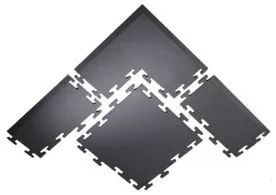
interlocking rubber tiles
Interlocking Rubber Tiles for Gym Flooring, Weight Rooms, and Modular Training Areas
Interlocking rubber tiles are modular gym flooring tiles for home gyms, garage gyms, commercial weight rooms, schools, studios, tactical training areas,... Read More
Interlocking Rubber Tiles for Gym Flooring, Weight Rooms, and Modular Training Areas
Interlocking rubber tiles are modular gym flooring tiles for home gyms, garage gyms, commercial weight rooms, schools, studios, tactical training areas, and facility fitness spaces. Compare tile thickness, rubber material, tile size, center/border/corner configuration, net coverage, cutting waste, loose-lay versus taped or adhered installation, subfloor conditions, transitions, cleaning requirements, freight, and product-level procurement documentation before ordering.
Interlocking gym flooring is usually selected when buyers want a rubber floor that can be carried in smaller pieces, installed in stages, replaced one section at a time, or fit around walls, posts, racks, and irregular rooms. The right tile is not determined by thickness alone; it must match the training use, room layout, equipment, subfloor, and maintenance plan.
IRON COMPANY has supplied gym equipment and flooring solutions since 1997. Buyers can compare individual product pages, request a quote, and contact Customer Care for help reviewing current product availability, flooring fit, freight requirements, and order documentation.
How to Choose Interlocking Rubber Tiles
Start with the training zone, not the tile name. A cardio room, selectorized strength area, garage gym, free-weight room, sled lane, power rack station, Olympic lifting zone, school weight room, and commercial facility can require different tile thicknesses, seams, installation methods, and transition details.
- Training use: Match the tile to cardio equipment, selectorized machines, bodyweight training, dumbbells, kettlebells, free weights, power racks, barbell work, sled work, or multi-use fitness areas.
- Tile thickness: Thin rubber tiles may fit light fitness and machine areas, while thicker rubber tiles or dedicated platforms may be needed where heavy weights are repeatedly dropped. Verify the exact product guidance before assigning a tile to a heavy lifting zone.
- Tile size: Common formats include 2' x 2' modular tiles, large-format 47" x 47" tiles, 4' x 6' interlocking mats, and 24" x 24" high-density tiles. Larger tiles can reduce visible seams, while smaller tiles may be easier to move, cut, and replace.
- Net coverage: Nominal tile size is not always the same as finished installed coverage. Interlocking tabs, trimming, wall cuts, and center/border/corner layout can change the final quantity required.
- Tile configuration: Some products use center, border, and corner tiles. Others use universal puzzle edges, large-format seams, or product-specific interlocks. Confirm the required layout before ordering.
- Installation method: Many interlocking rubber tiles are selected for loose-lay installation, but high-traffic walkways, rolling loads, sled work, or aggressive lateral movement may require tape, adhesive, perimeter control, or a different product.
- Subfloor and moisture: Concrete, wood, basement slabs, garages, upper floors, and moisture-prone spaces require different planning. Address moisture, slope, cracks, and uneven areas before installing rubber flooring.
- Cleaning and warranty: Review each manufacturer’s cleaning instructions before using disinfectants, solvents, degreasers, citrus cleaners, pine oils, bleach, or high-moisture cleaning methods.
Compare Interlocking Rubber Tile Formats
2' x 2' Interlocking Rubber Tiles
Best fit: Home gyms, garage gyms, basements, phased projects, smaller weight rooms, and buyers who want easier handling than heavy rolls or large mats.
Buyer guidance: Confirm the actual tile thickness, net coverage, tab style, color options, minimum order quantity, and whether the product uses center, border, and corner configurations. Smaller tiles can simplify DIY handling, but more seams require better layout planning.
Large-Format Interlocking Rubber Tiles
Best fit: Buyers who want fewer visible seams, a cleaner installed appearance, and a larger modular tile for commercial gyms, training studios, and open strength areas.
Buyer guidance: Large tiles can reduce seam count, but they are heavier and may be harder to maneuver through tight rooms, stairs, or around equipment. Check freight, handling, cutting, and replacement logistics before ordering.
Interlocking Stall Mats and Box Mats
Best fit: Cross-training rooms, garage gyms, and heavy-use free-weight areas where a thick 4' x 6' mat format is preferred over smaller puzzle tiles.
Buyer guidance: Interlocking stall mats are not automatically the same as refined indoor weight-room tiles. Compare surface texture, odor, edge fit, cut tolerance, thickness, weight, material, cleaning instructions, and whether the product is appropriate for the planned indoor environment.
High-Density and Vulcanized Rubber Tiles
Best fit: Facilities comparing heavier training zones, repeated equipment traffic, and more demanding strength environments where product documentation supports that use.
Buyer guidance: Vulcanized composition rubber, re-vulcanized rubber, recycled rubber, and polyurethane-bound crumb rubber are not identical materials. Compare density, tile construction, thickness, surface texture, cleaning requirements, finish options, and warranty terms on the exact product page.
Engineering Architecture: Crumb Rubber vs. Vulcanized Compounds — A common buying error is assuming all rubber composition shares the same weight limits and density. The manufacturing process directly governs impact deflection, acoustic dampening, and chemical longevity. Polyurethane-Bound Crumb Rubber: Represented by standard interlocking rubber flooring tiles and budget-friendly choices like the Regupol AktivLok Economy series (5/16"). These suit standard cardio areas, selectorized machine rows, and lighter-use commercial spaces. They offer a cost-effective footprint but are more porous, meaning they can compress entirely under extreme localized drops. Vulcanized & Re-Vulcanized Formats: Represented by ultra-dense SurfaceCo Interlocking Stall Mats (4' x 6' x 3/4") or the heavy-duty North West Rubber Stamina Vulcanized Interlocking Flooring Tiles. These are molded under heat and pressure into a non-porous, waterproof sheet. They offer high tensile strength, suitability for heavy powerlifting, very low moisture absorption, and durability against subfloor fracturing under repeated barbell drops.
Color Fleck and Solid Black Rubber Tiles
Best fit: Buyers balancing appearance, budget, room design, and replacement planning.
Buyer guidance: Solid black is often selected for utilitarian weight rooms and budget-sensitive layouts. Color fleck can help coordinate rooms and soften the visual appearance of a large rubber floor. Verify current color options, fleck percentage, lead time, and replacement-match availability before ordering.
Interlocking Rubber Tiles vs. Rolls, Mats, Turf, Foam, PVC, and Safety Tiles
Interlocking rubber tiles are one flooring format inside a larger gym flooring plan. Compare them with rubber flooring rolls when you want fewer seams across a rectangular room. Compare them with rubber gym mats when you need localized protection under racks, platforms, cardio machines, or lifting stations instead of a full wall-to-wall tile layout.
Compare artificial turf for sled lanes, agility training, and movement-based training zones. Compare foam gym/play tiles and foam exercise mats only for lighter-use areas where soft cushioning matters more than free-weight durability. Compare MMA, wrestling, and gymnastics mats when the primary use is grappling, tumbling, martial arts, or mat-based training.
Buyers planning non-weight-room spaces can also compare carpet tiles, PVC flooring tiles and planks, aerobic flooring tiles, and safety tile flooring when those product types better match the room, user population, or surface requirement.
Structural Comparison: Interlocking Tiles vs. Rolls vs. Localized Mats — Before filtering by budget or aesthetics, buyers should determine whether a modular tile matrix is the right format for their facility shape and operational flow. Interlocking Rubber Tiles: Suited to complex, irregular room dimensions featuring alcoves, structural pillars, or multi-stage installations. They allow for easy handling in tight spaces (such as basements or upper-level rooms) and offer cost-effective maintenance, as single damaged puzzle modules can be swapped out without ripping up the entire floor. Rubber Flooring Rolls: Suited to large, wide-open rectangular commercial spaces. Rolls reduce the overall seam count, creating a uniform, continuous surface that limits dirt buildup and handles rolling loads well. Localized Gym Mats: Suited to targeted, isolated protection directly beneath heavy power racks or standalone cardio machines, rather than full wall-to-wall flooring layouts.
Thickness Planning for Interlocking Rubber Gym Flooring
Tile thickness should be selected by training use, subfloor, drop frequency, equipment type, and product documentation. A thinner rubber tile may be appropriate for light cardio, selectorized strength, bodyweight work, or light dumbbell areas. A thicker rubber tile or dedicated lifting platform may be a better fit for free-weight areas, power racks, kettlebells, and repeated barbell work.
Do not assume that any rubber tile, at any thickness, will protect every floor from every drop. Drop height, plate type, load, subfloor condition, tile density, tile construction, seams, and user behavior all matter. If a room includes repeated heavy dumbbell drops, Olympic lifting, powerlifting, or high-impact strength work, review the product page, manufacturer documentation, and facility requirements before choosing tile thickness.
For mixed-use facilities, a zone-based approach can be more practical than installing the same thickness everywhere. A cardio area, free-weight aisle, rack station, dedicated platform, sled lane, and stretching zone may each require a different flooring format or thickness.
Net Coverage, Tile Counts, Cutting Waste, and Layout Planning
One of the most common buying mistakes is ordering by raw room square footage only. Interlocking tabs, wall trimming, doorway cuts, columns, angled rooms, alcoves, and center/border/corner configurations can change the final quantity. Many flooring product pages include area calculators and overage options, but complex rooms should still be measured and sketched before ordering.
Plan the layout before placing a large order. Decide where full tiles will begin, where trimmed tiles will land, how visible seams will run, and whether border or corner pieces are needed. Avoid ending a high-traffic doorway, rack station, or rolling path with a thin sliver of cut tile when a different starting point would create a stronger-looking layout.
For simple rooms, buyers often plan extra material for cuts and future replacement pieces. For rooms with posts, angled walls, multiple doorways, platforms, or wall-to-wall trimming, request help with a layout or quote before assuming the product calculator alone captures every cut and waste factor.
Spatial Geometry: Nominal Dimensions vs. Net Installed Coverage — One of the costliest procurement mistakes is ordering exact room square footage. Modular interlocking gym flooring suffers from material loss due to tab engagement and perimeter trimming. The Interlocking Tab Deduct: When puzzle edges interlock, the tabs overlap. Consequently, the actual finished module size of standard 2' x 2' interlocking rubber weight room tiles is slightly smaller than its raw, unassembled footprint. Trimming & Cutting Waste: Achieving a flush, wall-to-wall finish requires cutting off the interlocking tabs along perimeter walls. Irregular space shapes, doorways, and corner pillars multiply this cutting waste. Module Size Selection: Smaller 2' x 2' formats like IRON COMPANY Interlocking Rubber Puzzle Tiles (available in 1/4", 3/8", 1/2", and 3/4" center tiles) offer simple handling for individual installers. Conversely, large-format solutions like IRON COMPANY Big Foot Rubber Gym Flooring Tiles (47" x 47") dramatically slash the visible seam count across open commercial weight rooms but require more room maneuverability during installation. Buying Guidance: Always incorporate a 5% to 10% overage buffer to accommodate perimeter wall cuts, ensuring the room does not end with unstable, narrow slivers of rubber at high-traffic entryways.
Loose-Lay, Tape, Adhesive, and Seam Control
Interlocking rubber tiles are often selected because they can be installed without a permanent full-spread adhesive in many home gym and standard fitness room layouts. The weight of the rubber, interlocking tabs, room boundaries, and surrounding equipment can help keep the floor organized when the product and use case support loose-lay installation.
Loose-lay is not the right answer for every training environment. High-traffic commercial walkways, sled-push lanes, aggressive agility drilling, repeated lateral movement, heavy rolling loads, and open edges can place more stress on tile seams. In those cases, buyers should review product instructions and consider approved double-sided tape, pressure-sensitive adhesive, perimeter control, transition strips, or a different flooring format.
For adhesives, seam products, floor prep, reducer strips, cutters, cleaning supplies, and installation accessories, review gym flooring adhesives, cleaners, and tools. Always confirm that any adhesive, tape, sealer, or cleaner is compatible with the selected rubber tile.
Application Matrix: Loose-Lay vs. Permanent Adhesion — While the primary selling point of modular interlocking gym flooring is the ability to install without glue, specific clientele types and high-impact equipment types mandate secondary reinforcement. Loose-Lay (Non-Adhesive): Sufficient for home fitness spaces, light dumbbell training, and static cardio equipment. The heavy structural mass of the rubber combined with perimeter wall boundaries keeps the puzzle edges tightly unified. Permanent Seam Control: High-traffic commercial corridors, heavy rolling loads, or areas dedicated to aggressive lateral movement and heavy push/pull sleds place severe horizontal shear stress on rubber floor edges. Under these intense lateral loads, loose-lay tabs can slowly stretch and separate. System Upgrades: For advanced high-performance applications, dual-durometer systems like Ecore Performance UltraTile High-Density (24" x 24" x 1") or Ecore Performance Rally Tile are built for high energy absorption. In demanding multi-use facility configurations, seams must be locked using approved double-sided flooring tape, perimeter reducer strips, or pressure-sensitive adhesive.
Subfloor, Moisture, Transitions, and Room Conditions
Rubber tile installation should begin with the surface under the tile. Concrete should be clean, flat, stable, and dry enough for the product and installation method. Wood subfloors, upstairs rooms, basements, garages, commercial slabs, and older floors can require different moisture, leveling, transition, and edge-control planning.
Basements and garages deserve extra attention. Moisture, temperature swings, vehicle residue, uneven concrete, floor drains, cracks, and door thresholds can all affect the finished layout. Address water intrusion and subfloor problems before rubber flooring is installed; rubber tiles should not be used to hide an unresolved moisture or drainage issue.
Plan doorways, garage thresholds, room entries, turf transitions, roll-to-tile transitions, and mat-to-tile edges before installation. Reducers and transition strips can help create cleaner edges and reduce abrupt height changes when they are compatible with the tile and the surrounding surface.
Subfloor Stability & Environmental Dynamics (Moisture & Climate) — Rubber puzzle tiles are highly durable, but their long-term performance depends heavily on the condition of the subfloor type underneath and the ambient climate of the facility. Subfloor Substrate Conditions: Concrete or wood subfloors must be clean, flat, and level. Deep pits or cracks will cause interlocking seams to peak, split, or create micro-tripping hazards. The Vapor Trap Health Concern: Concrete basements and garage slabs naturally emit moisture vapor. Because premium vulcanized tiles are waterproof, laying them loose-lay over an unsealed, high-moisture slab traps vapor underneath. Over time, this creates mold, mildew, and persistent odors. Moisture issues must be corrected or sealed before laying down the tile matrix. Thermal Expansion: In unclimbed garage gyms or facilities subject to extreme seasonal temperature swings, rubber naturally expands and contracts. Tiles wedged too tightly against concrete walls during cold weather can buckle and lift when summer temperatures rise.
Best Fit and Not Ideal For
Interlocking Rubber Tiles Are a Strong Fit For
- Home gyms, garage gyms, basements, commercial gyms, school weight rooms, studio gyms, and modular fitness spaces.
- Buyers who want a flooring system that can be installed in phases, replaced by section, or adjusted as the room changes.
- Rooms with irregular layouts, posts, doorways, or areas where rolls may be hard to handle.
- Facilities that want to combine rubber flooring with free weights, strength equipment, cardio equipment, turf, mats, or specialty flooring zones.
- Government and institutional buyers prepared to verify product-level documentation before procurement.
People that should purchase interlocking rubber tiles:
- Home and Garage Gym Owners Facing Irregular Room Layouts — Residential fitness enthusiasts looking to convert tight basements, spare bedrooms, or angled garage spaces into functional workout zones benefit immensely from modular gym flooring tiles. Spatial Compatibility: Unlike heavy, continuous rolls that require perfect rectangular dimensions and massive cutting effort, smaller 2' x 2' Interlocking Rubber Gym Tiles adapt easily to residential obstacles like floor drains, support pillars, and structural alcoves. Simplified Logistics: Individual modular tiles are far easier to transport down narrow residential stairwells or maneuver through standard residential doorways than rolled alternatives. Subfloor Protection: Installing thick, impact-deflecting options—such as the IRON COMPANY Interlocking Rubber Puzzle Tiles 2' x 2' x 3/4"—provides a robust shield over raw concrete basement slabs, mitigating the risk of cracking under dropped kettlebells or dumbbells.
- Commercial Multi-Housing and Corporate Fitness Center Managers — Property managers overseeing apartment amenities, hotel fitness rooms, or corporate office wellness floors require durable, premium-looking surfaces that maximize long-term asset value. Cost-Efficient Maintenance: High-traffic multi-housing walkways face continuous wear and tear. If a single section of the floor gets damaged by improper equipment use or chemical spills, facility managers can swap out a single center, border, or corner tile instead of paying to replace a large, glued-down sheet. Aesthetic Flexibility: Patterned formats—such as the Regupol AKTIVLOK Color Fleck Rubber Interlocking Gym Tiles—help soften the look of a large room while successfully concealing minor surface debris, chalk dust, and footprints better than solid black. Acoustic Mitigation: To preserve a quiet environment for tenants below an upper-level corporate facility type, upgrading to specialized high-density lines helps buffer impact noise from cardiovascular machinery.
- Tactical Government and Institutional Military Procurement Officers — Procurement professionals specifying heavy-duty flooring matrices for active-duty military bases, police department weight rooms, or municipal fire stations demand maximum product documentation and structural performance. Contract and Procurement Eligibility: IRON COMPANY has supplied gym equipment and flooring since 1997 and holds GSA contract 47QSMA22D08NN; product-level eligibility is confirmed per item before a government purchase. Severe Mechanical Mass: Tactical environments utilize punishing workout programs that put intense stress on equipment. Installing vulcanized formats like SurfaceCo Interlocking Stall Mats (4' x 6' x 3/4" Re-Vulcanized) provides a dense, non-porous floor built for intense traffic.
- Boutique Training Studios and Rehabilitation Clinics in Leased Real Estate — Fitness professionals operating out of a rented or short-term leased space need an agile flooring layout that offers premium underfoot performance without sacrificing their initial infrastructure investment. The Non-Permanent Asset: Because a floating modular system can be laid loose using puzzle edges, it requires no permanent full-spread adhesive. If the business relocates to a larger facility type when its lease expires, the entire floor matrix can be taken apart, stacked, and transported to the new building structure. Ergonomics and Safety: Specialized options like the Ecore Performance Rally Tile Interlocking Gym Flooring balance force reduction with stable footing for physical therapy clients or high-performance group choreography.
- Private Weight Rooms and Powerlifting Barns Built for Heavy Iron — Lifters whose fitness goals center around extreme powerlifting, tactical conditioning, or repeated high-impact barbell work require dedicated density to preserve their foundational subfloor conditions. Deflecting Structural Impact: Dropping heavy plates from overhead can destroy standard thin flooring. Extreme free-weight zones demand maximum-thickness solutions or large-format architectures. High-Density Deflection: Utilizing ultra-thick configurations like Ecore Performance UltraTile High-Density 24" x 24" x 1" modular tiles provides a dual-durometer composition that resists heavy steel plates bottoming out. Seam Reduction: For massive open free-weight aisles, choosing IRON COMPANY Big Foot Rubber Gym Flooring Tiles - 47" x 47" slashes the overall number of visible seams in half compared to smaller modules, creating a highly stable foundation beneath heavy commercial dumbbell racks.
- Budget-Conscious Facility Starters Expanding in Phased Stages — Start-up training clubs, garage gym beginners, or multi-room facilities managing a tight baseline budget can leverage modularity to grow their training floor safely over time. Phased Upgrades: Buying full-room rolls requires significant upfront capital. Interlocking flooring systems allow operators to buy exactly what their current equipment footprint demands today. Modular Integration: A facility can place a row of Economy Interlocking Rubber Puzzle Tiles - 2' x 2' x 5/16" | Regupol (AktivLok Economy) beneath their initial cardio section and interlock additional tiles later as they buy more equipment and expand their square footage.
Interlocking Rubber Tiles May Not Be the Right Choice For
- Large rectangular rooms where rubber rolls would provide fewer seams and a more continuous surface.
- Dedicated heavy-drop zones where a lifting platform, thicker rubber mats, shock pads, or product-specific flooring system may be more appropriate.
- Sled lanes, agility lanes, or rolling-load areas where the selected tile cannot control seam movement without tape, adhesive, or another installation method.
- Rooms with unresolved moisture, uneven subfloors, active leaks, or drainage problems.
- Projects requiring exact certifications, fire ratings, slip-resistance data, VOC documentation, country-of-origin data, or procurement compliance that has not been verified for the exact SKU.
People that should do more research before buying interlocking rubber tiles:
Evaluating operational boundaries is just as critical as analyzing product benefits when planning a facility investment. While interlocking rubber flooring tiles, interlocking gym flooring, and rubber puzzle tiles for gyms are versatile, specific fitness goals, architectural layouts, and facility types call for alternative solutions.
Here is a summarized breakdown of the top six people and facilities that should NOT choose interlocking rubber tiles for their fitness spaces.
- Owners of Large, Unobstructed Rectangular Commercial Fitness Centers — Facilities featuring massive, wide-open open-concept layouts—such as commercial health clubs, university weight rooms, or school fitness corridors—should generally bypass modular puzzle systems. The Seam Disadvantage: Across thousands of continuous square feet, smaller interlocking rubber weight room tiles or high density floor tiles introduce hundreds of visible seams. Over time, these seams can trap dirt, dust, and sweat, increasing daily maintenance hours. Alternative Preference: Continuous rolled rubber flooring is the better fit here. Rolls provide a continuous, uniform surface with far fewer seams that handles heavy rolling loads, looks cleaner across large open spaces, and reduces long-term seam wear.
- High-Performance Agility Training Centers and Dedicated Sled Lanes — Coaches and owners of athletic conditioning clinics or tactical cross-training areas whose primary functionality relies on directional sprint work or heavy equipment friction should avoid interlocking designs. The Shear Force Failure: Forceful foot strikes, sprint turnarounds, and heavy push/pull sled work apply severe horizontal shear stress to gym floors. Tab Stretching: Under consistent lateral torque, loose-lay interlocking rubber flooring tiles or interlocking gym tiles can slowly stretch and pull apart at the seams, creating dangerous tripping hazards. Alternative Preference: Linear artificial turf lanes or thick, full-spread glued rolled rubber are required to handle intense dynamic traction without structural joint separation.
- Multi-Story Leased Real Estate Operators Lacking Acoustic Structural Isolation — Business owners opening premium fitness studios, corporate gyms, or wellness spaces on upper levels of commercial buildings—especially those under strict landlord leasing restrictions—face strict structural constraints. The Acoustic Vibration Limit: Standard interlocking rubber puzzle tiles or thin economy interlocking flooring tiles are suited to surface scratch protection and minor noise suppression. However, they lack the mechanical mass required to block low-frequency kinetic shockwaves from dropped barbells or heavy deadlifts. Alternative Preference: Dropping heavy weights on an upper floor transmits impact noise down the building structure and can disturb neighboring tenants. These spaces require specialized, ultra-thick architectural floating shock-absorption platforms engineered with structural air-gaps to break the kinetic travel path.
- Enclosed Spaces with High Off-Gassing Sensitivity and Low Ventilation — Home buyers surfacing tight, unclimbed spaces like enclosed basement rooms, interior walk-in closets, or medical facility types with limited fresh air exchange need to evaluate health concerns and off-gassing sensitivity. The Aroma Trait: Manufactured rubber items emit an initial aroma during the post-factory curing phase. In an open garage gym with a roll-up door, this scent dissipates rapidly. In an unventilated indoor basement, however, the concentrated sulfur or polyurethane binder smell can linger and bother sensitive users. Alternative Preference: These specific environments should look toward premium virgin rubber alternatives, interlocking pvc flooring solutions, or non-rubber carpet tiles that feature minimal aromatic profiles.
- Facilities with Active Subfloor Moisture, Uneven Concrete, or Drainage Issues — Property owners trying to quickly cover a cracked, uneven, or moisture-prone garage or basement slab will find that modular gym flooring cannot fix a flawed foundation. The Vapor Barrier Trap: Vulcanized interlocking flooring tiles and heavy interlocking stall mats are waterproof and non-porous. If laid over a basement concrete slab that suffers from hydrostatic pressure or water leaks, the rubber tiles will trap that rising moisture vapor underneath. Mildew Risks: This can allow mold, mildew, and odors to develop. Furthermore, deep cracks or severe concrete sloping telegraph through the tiles and can cause the puzzle seams to separate or lift underfoot. Alternative Preference: Moisture mitigation systems, self-leveling underlayment concrete preparation, and proper drainage must be fully resolved before any rubber tile matrix is installed.
- Serious Olympic Weightlifters and Elite Powerlifting Facilities — Athletes whose singular fitness goals involve dropping maximum-capacity barbells from overhead positions, or executing maximum-load structural lifts, require more than basic floor tiling. Kinetic Force Transference: Even high-density rubber puzzle tiles for gyms—when laid directly over a raw concrete subfloor—can compress fully under severe, localized force drops. When a multi-hundred-pound barbell bottoms out, the residual kinetic force transfers straight into the concrete below, risking structural fracturing. Alternative Preference: Elite lifting zones require multi-layered wood and rubber Olympic weightlifting platforms or ultra-thick, multi-inch high-density vulcanized drop zones designed to dissipate the energy.
Common Interlocking Rubber Tile Buying Mistakes to Avoid
- Ordering exact square footage: Wall cuts, interlocking tabs, doorways, posts, and layout direction can create waste. Plan overage and keep replacement pieces where possible.
- Ignoring net installed coverage: A nominal 2' x 2' tile may not always behave like a perfect 4-square-foot finished module after tabs, cuts, and layout choices are considered.
- Mixing center, border, and corner pieces incorrectly: Some systems require the right combination of tile configurations. Confirm layout before ordering.
- Choosing thickness by price only: Thin tiles may be practical in light-use areas, but heavy free-weight zones require product-specific thickness and density review.
- Assuming all interlocks are the same: Tab depth, cut precision, edge fit, and tile weight can affect seam behavior, especially under lateral movement or rolling loads.
- Using the wrong cleaning product: Harsh chemicals can damage rubber surfaces or binders. Follow the manufacturer’s cleaning instructions and use rubber-compatible products.
- Trapping moisture below the floor: Moisture problems should be corrected before installation, especially in basements, garages, and older slabs.
- Overlooking transitions: Doorways, garage thresholds, turf edges, and mat transitions should be planned before the floor is installed.
- Assuming every tile is eligible for government purchasing: Company contract status does not prove product-level eligibility, country-of-origin status, or solicitation fit.
- Ignoring freight and handling: Large quantities of rubber flooring can be heavy, palletized, and difficult to move without a receiving plan.
Selecting modular gym flooring requires a deeper understanding of material density, compound engineering, and spatial geometry than simply measuring a room's square footage. Whether you are surfacing a home garage gym, a commercial fitness center, or a tactical government installation, specifying the wrong interlocking tiles can lead to premature wear, buckling seams, and subfloor damage.
To ensure your investment delivers the necessary structural performance and impact protection, avoid these top four common pitfalls buyers encounter when purchasing interlocking rubber gym tiles.
Equating Raw Material Thickness with Impact Performance — The most prevalent misconception in gym flooring procurement is that a tile’s total thickness determines its structural integrity and impact absorption. In reality, a tile's durability under heavy drops depends largely on its manufacturing process and compound density. Thin, high-density vulcanized rubber can vastly outperform thick, loosely bound crumb rubber under specific physical forces. Polyurethane-Bound Crumb Rubber: This material consists of recycled tire crumbs bound together with polyurethane under pressure. While suited to general cardio rooms, selectorized strength machines, and light dumbbell areas, standard crumb rubber tiles—such as the economy interlocking flooring tiles—are more porous and less dense. Under severe, localized impact from heavy iron dumbbells or kettlebells, thin crumb rubber can compress completely, transferring the residual kinetic energy directly to the concrete subfloor below. Vulcanized and Re-Vulcanized Composition Rubber: These tiles are engineered using extreme heat and pressure, melting the rubber compounds into a solid, non-porous sheet. Vulcanized interlocking flooring tiles, high-density floor tiles, and heavy-duty interlocking stall mats offer high tensile strength, moisture resistance, and impact deflection within a slimmer profile. If your fitness goals include heavy powerlifting or Olympic lifting, a dense, vulcanized system can matter as much as thickness for properly protecting the subfloor.
Factoring Raw Room Square Footage Rather Than Net Installed Coverage — A frequent mathematical error during project planning is ordering rubber puzzle tiles for gyms based solely on the raw dimensions of the room. Unlike straight-edged rubber rolls, modular interlocking gym flooring suffers from material loss due to tab engagement and perimeter wall trimming. The Interlocking Deduct: When puzzle edges mesh together, the outer tabs overlap. Consequently, the nominal size of a tile is often larger than its net installed coverage. A series of 2' x 2' interlocking rubber weight room tiles loses a fraction of an inch at each seam once assembled across a room layout. Perimeter and Cutting Waste: To achieve a clean, wall-to-wall finish, the interlocking tabs adjacent to the walls must be cut straight. If your room features irregular shapes, concrete pillars, alcoves, or doorways, the cutting waste multiplies. Starting a high-traffic entryway or equipment rack station with a thin, weak sliver of cut rubber weakens the floor at that point. To avoid running short during installation, facility planners should calculate net coverage based on the specific tile configuration (center, border, and corner tiles) and incorporate a 5% to 10% overage factor for cutting waste.
Assuming Loose-Lay Installations Work for All Lateral Loads and Facilities — Interlocking rubber flooring is highly popular because it can be installed as a loose-lay system without messy full-spread adhesives. While this works for flat home gym basements and static selectorized strength zones, a loose-lay approach is not suited to specific types of athletic equipment and high-traffic commercial environments. Lateral Forces and Sled Lanes: Exercises involving heavy push/pull sleds, intense agility drilling, or aggressive lateral plyometrics place severe horizontal shear stress on gym flooring. Over time, these rolling loads and forceful foot strikes stretch the interlocking tabs, causing the seams to separate, peak, or buckle. Commercial and High-Traffic Walkways: In large commercial health clubs or military tactical facilities, continuous foot traffic along main pathways can cause loose-lay puzzle tiles to slowly shift. For high-demand facility types, heavy rolling loads, or open-ended configurations without wall boundaries, the floor must be stabilized using approved double-sided flooring tape, perimeter reducer strips, or pressure-sensitive adhesive to lock the seams together permanently.
Overlooking Subfloor Types, Moisture Dynamics, and Climate Contraction — Rubber puzzle tiles are highly durable, but they cannot fix an inherently flawed subfloor. Laying high-density modular flooring over an uneven, damaged, or moisture-prone surface creates long-term functional issues. Subfloor Irregularities: If a garage or basement concrete slab has deep cracks, significant sloping, or major pits, interlocking tiles will telegraph those imperfections to the surface. This creates uneven seams and micro-tripping hazards underfoot. The Vapor Barrier Trap: Concrete slabs emit moisture vapor. Because vulcanized interlocking rubber tiles are non-porous and waterproof, they act as an accidental vapor barrier. If you trap active moisture underneath a loose-lay floor without addressing drainage or sealing the slab first, mold, mildew, and odors can develop beneath the gym tiles. Thermal Expansion and Contraction: In unclimbed garage gyms or facility spaces subject to massive seasonal temperature swings, rubber will naturally expand and contract. If tiles are wedged too tightly against perimeter walls during a cold winter installation, they can buckle and lift off the subfloor when temperatures rise in the summer.
Brand and Material Specifier Guide — Achieving the right structural outcome depends on aligning these engineering realities with the correct manufacturer lineup. For precise facility planning, consider how these specific modular platforms approach density, size, and layout constraints: Heavy-Duty Vulcanized Protection: For extreme free-weight zones, cross-training areas, and institutional environments demanding heavy impact deflection, look to heavy re-vulcanized compounds. SurfaceCo Interlocking Stall Mats (4' x 6' x 3/4") and the SurfaceCo Games System provide a non-porous, commercial-grade shield designed to sit beneath heavy dumbbell racks and take repeated barbell drops. For architectural environments requiring strict acoustics and extreme density, Ecore Performance UltraTile High-Density 24" x 24" x 1" tiles utilize a dual-durometer vulcanized composition rubber to absorb massive impact energy. Large-Format Layouts: To minimize the overall number of visible puzzle seams across a large commercial floor while retaining modular flexibility, large-format tiles are the practical choice. IRON COMPANY Big Foot Rubber Gym Flooring Tiles provide a massive 47" x 47" footprint, cutting the total number of floor seams in half compared to standard options and delivering a clean, uniform aesthetic. Precision-Cut Modular Puzzle Tiles: For highly efficient DIY handling in residential basements, garage gyms, or multi-stage facility transformations, modular 2' x 2' puzzle configurations balance ease of installation with reliable structural support. IRON COMPANY Interlocking Rubber Puzzle Tiles (available in 1/4", 3/8", 1/2", and 3/4" thicknesses) utilize precise center, border, and corner cut options to build a stable, interlocking weight room matrix. If architectural styling or room coordination is a priority, the Regupol AKTIVLOK series offers vibrant color fleck and solid black varieties in a highly durable, recycled rubber format, complemented by their AktivLok Economy lineup for budget-conscious project footprints. Advanced Ergonomics and Structural Splicing: For premium training studios and commercial spaces balancing high-performance force reduction with aesthetic design, the Ecore Performance Rally Tile offers a vulcanized composition rubber matrix that provides underfoot comfort, structural stability, and sound dampening under foot traffic. For high-end marbled aesthetics or specialized speckled colorways that must withstand rigorous commercial traffic, the North West Rubber ProXL Marbled and North West Rubber ReAction Speckled solid color interlocking tiles provide dense wear layers built for commercial traffic.
Cleaning, Maintenance, and Replacement Planning
Rubber flooring maintenance should follow the exact product instructions. A practical routine often includes dry dust-mopping or vacuuming to remove grit, wiping up sweat or chalk residue, and damp cleaning with rubber-compatible products. Avoid unapproved solvents, bleach, acidic cleaners, petroleum-based products, and standing water unless the product documentation specifically allows them.
Interlocking tiles make selective replacement easier than a continuous glued floor, but replacement planning still matters. Keep track of product name, SKU, thickness, tile configuration, color, fleck blend, order date, and any dye-lot or batch information that may affect future matching.
For commercial facilities, document who owns the inspection and cleaning routine. Check seams, cut edges, transition strips, high-traffic areas, rack zones, and rolling equipment paths for movement or damage before small problems turn into larger flooring issues.
Featured Interlocking Rubber Tile Options
IRON COMPANY Interlocking Rubber Puzzle Tiles for Gyms 2' x 2' x 3/4"
These 3/4" interlocking rubber puzzle tiles are listed with center, border, and corner tile configurations plus multiple color-fleck options. Review the current product page for tile configuration, color availability, coverage, shipping, warranty, and whether this thickness fits the planned training zone.
Ecore Performance Rally Tile Interlocking Gym Flooring
Performance Rally Tile is listed as a vulcanized composition rubber interlocking gym flooring option for strength training and general fitness environments. Compare its base-layer options, color choices, installation requirements, current specifications, and product documentation before specifying it for a facility.
IRON COMPANY Big Foot Rubber Gym Flooring Tiles - 47" x 47"
Big Foot Rubber Gym Flooring Tiles use a large 47" x 47" format intended to reduce visible seams compared with smaller tiles. Review handling requirements, trim planning, color options, order quantity, freight details, and whether the larger tile format fits the room and delivery path.
SurfaceCo Interlocking Stall Mats - 4' x 6' x 3/4"
These SurfaceCo interlocking mats are listed as 4' x 6' x 3/4" re-vulcanized rubber mats. Compare mat weight, surface texture, edge fit, room handling, cleaning requirements, and product-level documentation before using this format as a wall-to-wall flooring system or heavy-use training surface.
Ecore Performance UltraTile High-Density
Performance UltraTile High-Density is listed as a 24" x 24" x 1" modular tile made from vulcanized composition rubber. Review current color options, base-layer details, impact-use guidance, shipping terms, and installation documentation before specifying it for heavier training zones.
Regupol AKTIVLOK Black Rubber Interlocking Flooring Tiles
Regupol AKTIVLOK Black is listed as a 2' x 2' x 3/8" recycled rubber interlocking flooring tile with center, edge, and corner tile options. Confirm current minimum order quantity, tile configuration, sealer options, installation method, and maintenance guidance before ordering.
Product names, availability, prices, ratings, material attributes, color options, minimum order quantities, lead times, shipping terms, warranties, procurement status, and installation requirements can change. Review the current product page and request a quote before ordering.
Related Flooring, Equipment, and Installation Categories
Compare the complete gym flooring selection when deciding whether interlocking rubber tiles are the right format for your room. Buyers comparing rubber flooring formats can also review rubber flooring rolls, rubber gym mats, artificial turf, and safety tile flooring.
For other room types, compare foam gym/play tiles, foam exercise mats, carpet tiles, PVC flooring solutions, MMA, wrestling, and gymnastics mats, and aerobic flooring tiles.
Plan the flooring around the equipment that will sit on it. Review free weights, cardio equipment, and strength training equipment before finalizing tile thickness, layout, transitions, and installation method.
Interlocking Rubber Tile Guides and Buyer Resources
For flooring education and planning context, read The Ultimate Guide to Gym Flooring, Selecting the Best Rubber Flooring - Tiles, Rolls, Mats, and Home Gym Flooring: The Complete 2025 Buyer’s Guide.
Facility and procurement buyers can also review IRON COMPANY capabilities for fitness equipment and gym flooring projects and GSA bid information. Product-level eligibility, configuration details, ordering method, freight, installation scope, and documentation should be verified before treating any interlocking rubber tile as available through a specific purchasing channel.
For current ordering support, quote help, or category guidance, visit IRON COMPANY Customer Care.
Government and Institutional Rubber Flooring Purchasing
IRON COMPANY holds GSA contract 47QSMA22D08NN. Contract status does not establish that every interlocking rubber tile, color, thickness, edge configuration, adhesive, sealer, or flooring accessory is available through GSA, a Government Purchase Card, or a specific agency purchasing channel.
Before ordering, verify product-level contract eligibility, country of origin, current pricing, ordering method, freight, installation scope, warranty terms, and any applicable TAA, Buy American, Berry Amendment, or agency-specific requirements. Institutional buyers should also confirm intended use, subfloor condition, maintenance requirements, transition details, and replacement-piece availability for the exact flooring system.
We have delivered and installed interlocking rubber tiles across sizes, thicknesses, and colors, as standalone installations or as part of entire gym buildouts with strength equipment and free weights. Our customers include garage gyms, personal training studios, rehabilitation clinics, commercial gyms, university weight rooms, professional sports teams, performance centers, and the federal government, US embassies, and military bases.
Garage gyms, CrossFit boxes, sports performance facilities, high schools and universities, and military bases come to IRON COMPANY for help selecting gym flooring products, such as interlocking rubber tiles, from our online catalog — products compatible with their existing strength equipment, including power cages, bench presses, and storage solutions, that meet their budget, fitness goals, and aesthetic preferences.
Federal government and military customers worldwide purchase TAA compliant interlocking rubber tiles that are available through our GSA contract as well as the IRON COMPANY website. TAA compliance means that products sold to the US federal government must be manufactured or substantially transformed either in the United States or within a designated TAA-compliant nation that maintains a fair trade agreement with the US. Examples include interlocking rubber tiles by IRON COMPANY, Ecore, North West Rubber, Regupol, and SurfaceCo; TAA status is confirmed per product before a GSA order.
Common Questions About Interlocking Rubber Tiles
Are interlocking rubber tiles better than rubber rolls?
Interlocking rubber tiles are often easier to carry, replace, and install in stages. Rubber rolls usually create fewer seams across large rectangular rooms. Choose by room shape, installer skill, desired seam count, equipment layout, freight access, and whether future modular replacement matters.
Should I Choose Interlocking Rubber Tiles, Rolls, or Standalone Mats?
Buyers frequently compare these formats to see which fits their space dimensions and shape.
- Interlocking Rubber Tiles: Suited to complex, irregular room shapes featuring structural posts, alcoves, or tight doorways. They can be carried in smaller pieces, installed in stages, and allow for easy maintenance—if a single module is damaged, you can replace that specific tile rather than ripping up an entire floor section.
- Rubber Flooring Rolls: The preferred standard for massive, wide-open rectangular commercial gyms. Rolls reduce the seam count, giving a near-continuous surface that limits dirt trapping across large square footage.
- Standalone Gym Mats: Suited to localized, isolated drop zones directly beneath a standalone power rack or dumbbell bench, rather than wall-to-wall room coverage.
How thick should interlocking rubber gym tiles be?
Thickness depends on the training use, subfloor, drop frequency, equipment type, and product documentation. Light cardio and machine areas may not need the same thickness as free-weight, rack, kettlebell, or repeated barbell-drop zones. Review the exact product page before assigning a tile to a high-impact area.
What Thickness of Interlocking Rubber Tiles Do I Need for My Gym?
Selecting the wrong thickness can result in a fractured subfloor or unnecessary material costs. The right thickness depends on your fitness goals, equipment type, and subfloor type.
- Light Fitness & Machine Areas (1/4" to 5/16"): Suited to stationary cardio lines, stretching zones, and selectorized strength machines. Thinner options, such as IRON COMPANY 2' x 2' x 1/4" Interlocking Rubber Weight Room Tiles or the Regupol AktivLok Economy series, provide cost-effective surface scratch protection but are not built for free-weight impact.
- Standard General Strength Training (3/8" to 1/2"): The baseline standard for residential home gyms and commercial wellness facilities utilizing dumbbells, kettlebells, and light home benches. This includes mid-range platforms like IRON COMPANY 3/8" or 1/2" Interlocking Rubber Flooring Tiles.
- Heavy Free Weights & High Impact (3/4" to 1"+): The choice for powerlifting, Olympic lifting, tactical cross-training areas, and institutional military weight rooms. Heavy-duty, high density floor tiles—such as IRON COMPANY 2' x 2' x 3/4" Interlocking Rubber Puzzle Tiles or the Ecore Performance UltraTile High-Density series—absorb heavy impact to help protect underlying concrete slabs from cracking under dropped barbells.
Can interlocking rubber tiles be installed without adhesive?
Many interlocking rubber tiles are selected for loose-lay installation, especially in home gyms and standard fitness spaces. High-traffic commercial areas, sled work, rolling loads, open edges, or aggressive lateral movement may require approved tape, adhesive, or perimeter control. Follow the product instructions.
Do Interlocking Rubber Gym Tiles Require Glue or Adhesive?
A major selling point of interlocking gym flooring is its ability to be installed as a "floating floor" without full-spread liquid adhesive. However, whether you can use a loose-lay installation or require permanent bonding depends on your facility type and the lateral forces involved.
- When Loose-Lay Works: In flat home gym basements, residential garage gyms, or commercial machine spaces with clear wall boundaries, the heavy structural mass of the rubber combined with puzzle edges keeps the tiles locked together naturally.
- When Adhesive or Tape is Required: High-traffic commercial walkways, open-ended layouts without walls, or spaces handling intense lateral traction—such as dedicated sled lanes, sprinting rows, or aggressive plyometric drilling—can slowly stretch loose-lay tabs. To prevent seam separation, these heavy-use training zones require double-sided flooring tape or pressure-sensitive adhesive.
How much extra material should I order?
Do not order exact room square footage without considering cuts, tabs, layout direction, columns, doorways, and future replacement pieces. Many product calculators include overage planning, and complex rooms may need a quote or layout review before ordering.
How Do I Calculate Net Installed Coverage vs. Raw Room Square Footage?
One of the costliest procurement mistakes is ordering the exact square footage of a room. Modular puzzle tiles suffer from mechanical material loss during assembly.
- The Tab Deduct: When puzzle edges mesh together, the outer tabs overlap. Consequently, the actual nominal footprint of an assembled tile is slightly smaller than its raw, unassembled size.
- Perimeter Trimming Waste: To achieve a clean, flush wall-to-wall finish, the interlocking tabs adjacent to the perimeter walls must be cut off straight. Irregular walls, columns, and doorways multiply this cutting waste.
- Format Layout Strategy: Smaller modules like standard 2' x 2' tiles are easy for a single installer to maneuver. Large-format profiles like IRON COMPANY Big Foot Rubber Gym Flooring Tiles (47" x 47") drastically cut down on total seam count but require careful planning for edge cuts. Facility managers should always incorporate a 5% to 10% overage buffer to ensure they do not run short or end up with weak, unstable slivers of rubber at high-traffic entryways.
Do interlocking rubber tiles work in garage gyms?
They can be a practical garage gym flooring option when the concrete is clean, stable, and suitable for the selected tile. Plan around moisture, door thresholds, temperature swings, vehicle residue, floor drains, racks, barbell paths, and transition edges.
Are rubber puzzle tiles good for heavy weightlifting?
Some thicker or high-density rubber tiles may be appropriate for heavier training zones when product documentation supports that use. Repeated heavy drops may still require a dedicated lifting platform, thicker mats, or other specialty flooring. Verify the exact product before ordering.
How should rubber gym floor tiles be cleaned?
Follow the manufacturer’s care instructions. A common approach is to remove grit with vacuuming or dust-mopping, clean with rubber-compatible neutral-pH products, and avoid unapproved solvents, bleach, acidic cleaners, petroleum products, harsh degreasers, and standing water.
How Do I Deal with Rubber Off-Gassing Smell and Clean the Tiles Safely?
Health concerns, off-gassing sensitivity, and daily maintenance are major talking points for indoor installations, particularly in enclosed residential basements, corporate wellness spaces, or leased office buildings with low fresh air exchange rates.
- The Off-Gassing Phase: Brand-new recycled rubber flooring retains a temporary aroma from the factory curing process. Vulcanized and re-vulcanized composition rubber—such as SurfaceCo Interlocking Stall Mats (4' x 6' x 3/4") or North West Rubber Stamina Vulcanized Tiles—are denser and non-porous, meaning they trap fewer odors long-term but may have a distinct initial presence that requires fresh air ventilation or pre-installation staging to dissipate.
- Safe Cleaning Protocols: Harsh chemical cleaners, bleach, solvents, citrus degreasers, or pine oils can degrade the polyurethane binders or rubber compounds and may void the manufacturer warranty — follow the manufacturer's care instructions. Ongoing maintenance should strictly consist of vacuuming or dry-mopping to remove abrasive grit, followed by a damp mop utilizing a rubber-compatible, neutral-pH floor cleaner.
At-a-Glance: Specialized Modular Flooring Options — To assist in matching your architectural environment, climate, and clientele type to the proper flooring model, consider how these premium engineered series are categorized: Elite Commercial Aesthetics: For architectural spaces requiring unique visual branding, custom colorways, or marbled styling to elevate room aesthetics, look toward the North West Rubber ProXL Marbled or North West Rubber ReAction Speckled interlocking tile lines. Advanced Ergonomics & Shock Absorption: For boutique fitness studios or athletic clinics prioritizing joint safety and sound level dampening under foot traffic, Ecore Performance Rally Tile Interlocking Flooring features an advanced composition designed to mitigate impact stress. UTILITY & Standard Weight Rooms: For utilitarian facility spaces, budget-sensitive projects, or multi-room layouts requiring simple black styling, the Regupol AKTIVLOK Black and Regupol AKTIVLOK Color Fleck series offer reliable durability and standardized configuration layouts.
Can interlocking rubber tiles be purchased through GSA?
IRON COMPANY holds a GSA contract, but eligibility must be verified for the exact tile, color, thickness, configuration, and ordering method. Request a current quote and supporting product-level documentation before using a federal purchasing channel.
Why Buy Interlocking Rubber Tiles from IRON COMPANY?
Established in 1997, IRON COMPANY supplies gym equipment, free weights, cardio equipment, strength equipment, accessories, and flooring solutions for residential, commercial, vertical-market, institutional, military, and government buyers. The team provides product sourcing, quote support, category guidance, and customer care for individual flooring orders and complete facility projects.
Learn more about IRON COMPANY, review the company’s Better Business Bureau profile, or contact IRON COMPANY at 888-758-7527 for assistance.
Shop Interlocking Rubber Tiles
Compare the interlocking rubber tiles above by thickness, tile size, material, configuration, color, net coverage, installation method, subfloor, cleaning requirements, freight, and procurement documentation. For home gyms, garage gyms, commercial fitness centers, school weight rooms, government facilities, or multi-room flooring projects, request a current quote before finalizing the layout.