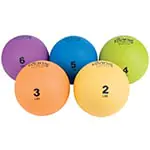
Exercise balls from IRON COMPANY include medicine balls, slam balls, wall balls, stability balls, fitness balls, therapy balls, massage balls, yoga balls, Pilates balls, and ball rebounders for home gyms, garage gyms, commercial fitness centers, schools, athletic training rooms, personal training studios, corporate wellness spaces, rehabilitation-supportive environments, and government or institutional facilities.
The right exercise ball depends on the movement, impact level, user type, and room layout. A no-bounce slam ball for power training is not the same as a soft-shell wall ball, a rubber medicine ball, a burst-resistant stability ball, a weighted therapy ball, or a small inflatable Pilates ball. Choosing the correct category helps buyers protect the product, train more effectively, avoid warranty issues, and build a cleaner, better-organized functional training space.
IRON COMPANY has supplied gym equipment and flooring solutions since 1997 and supports buyers who need help comparing exercise balls by training style, impact rating, storage needs, facility use, and package planning. Whether you are building a compact home training area, outfitting a commercial group exercise room, adding medicine ball rebounders to an athletic performance space, or sourcing portable tools for an institutional fitness program, this page helps you choose the right exercise ball category before selecting a specific product.
How to Choose Exercise Balls by Training Style and Impact Level
Start with the exercise, not the product name. Medicine balls are generally used for controlled throws, catches, rotational drills, partner work, rebounder throws, and core training. Slam balls are built for repeated ground slams and high-impact conditioning where a low-bounce or no-bounce response is important. Wall balls are typically larger and softer for repeated wall-target throws and cross-training conditioning. Stability balls and fitness balls are better for balance, posture awareness, core training, active sitting, and controlled low-impact exercise. Therapy balls, massage balls, yoga balls, and Pilates balls are used for smaller-movement training, grip work, posture-focused drills, self-massage, mobility, and studio-based exercise.
One of the most common buying mistakes is using a medicine ball or wall ball for repeated ground slams. If the workout calls for aggressive ball slams, choose a purpose-built slam ball with a heavier-duty shell instead of assuming every weighted ball can handle the same impact. Using the wrong ball for high-impact slam exercises can damage the product and may void the product warranty.
Weight and diameter can also be misunderstood. Many medicine balls, wall balls, and slam balls may look similar in size, but weight can be created through different core, shell, and filler designs. That means two balls with a similar outside diameter can feel very different during throws, carries, slams, catches, or rotational training. For group settings, storage planning matters as much as ball selection because multiple balls can roll into walkways, clutter turf lanes, or make a functional training area harder to supervise.
Exercise balls also package well with other functional training tools. Stability balls can be paired with dumbbells, toning bars, resistance bands, and certain cable exercises to add variety and instability. Medicine balls and slam balls pair well with rubber gym flooring, turf areas, ball storage racks, resistance bands, foam rollers, heavy ropes, sandbags, and other functional training equipment when building a more complete training station or package deal.
Match the Exercise Ball to the Movement
Different exercise balls are built for different types of force, grip, bounce, control, and user interaction. Use this guide to match the ball category to the way it will actually be used.
| Movement or Training Goal |
Recommended Ball Type |
Why It Matters |
| Repeated ground slams, high-impact conditioning, bootcamp circuits, and explosive power work |
Medicine Balls, Slam Balls, and Wall Balls |
Choose a true slam ball when the ball will be thrown hard into the ground. Standard medicine balls and wall balls are not the right tool for repeated slam-ball impact. |
| Wall throws, partner throws, rotational power, rebounder throws, and controlled strength drills |
Medicine Balls, Slam Balls, and Wall Balls |
Medicine balls and wall balls are better when the goal is throwing, catching, wall-ball conditioning, or controlled power development rather than repeated ground slams. |
| Solo medicine-ball throws, reaction drills, partner-free training, and repeated throw-and-return stations |
Ball Rebounders |
Ball rebounders and wall targets create a dedicated throwing station when a partner or open wall space is not available. |
| Core training, balance work, posture awareness, active sitting, and low-impact exercise |
Stability Balls and Fitness Balls |
Stability balls and fitness balls are better for controlled movement, trunk control, posture-focused training, and active sitting than impact-based conditioning. |
| Grip strengthening, targeted self-massage, sensory work, light resistance, and recovery-support routines |
Therapy Balls and Massage Balls |
Therapy and massage balls are compact tools for smaller movements, grip work, and targeted pressure instead of full-body power training. |
| Pilates, yoga, pelvic floor strengthening, posture drills, mobility, and compact studio movement |
Yoga Balls and Pilates Balls |
Yoga and Pilates balls are best when precision, light resistance, alignment, and compact movement matter more than heavy impact or explosive power. |
Compare Exercise Ball Types
| Ball Type |
Best Fit |
Selection Guidance |
| Medicine Balls, Slam Balls, and Wall Balls |
Explosive power, rotational throws, wall-ball conditioning, slams, bootcamp training, athletic performance, and cross-training workouts. |
Choose this category when the training plan includes throwing, slamming, catching, carrying, wall targets, or full-body conditioning. Select a true slam ball for ground slams, a medicine ball for controlled throws, and a wall ball for repeated wall-target work. |
| Stability Balls and Fitness Balls |
Core training, balance, posture awareness, active sitting, stretching, low-impact movement, and rehabilitation-supportive exercise. |
Choose this category when the goal is controlled movement, trunk stability, posture-focused work, flexibility, or an exercise ball chair for office or wellness use. Match ball size to user height and intended application. |
| Therapy Balls and Massage Balls |
Grip strengthening, hand exercise, targeted pressure, massage work, mobility, sensory work, and small-range resistance drills. |
Choose this category when the buyer needs compact therapy balls, textured massage balls, weighted therapy balls, or strap-assisted tools for controlled use rather than high-impact power training. |
| Yoga Balls and Pilates Balls |
Yoga studios, Pilates classes, pelvic floor work, posture refinement, flexibility, core activation, and low-impact studio resistance. |
Choose this category when the exercise requires a smaller, lighter, or more controlled ball for precision movement instead of a larger stability ball or heavier medicine ball. |
| Ball Rebounders |
Solo medicine-ball throws, reaction drills, rebounder training, wall-target stations, partner-free workouts, and athletic training rooms. |
Choose this category when users need a dedicated station for repeated medicine-ball throws without needing a training partner or repeatedly using an open wall. |
Buyer Planning Notes for Exercise Balls
- Choose by impact level first: For hard ground slams, buy a purpose-built no-bounce slam ball. For throws, catches, and partner drills, choose medicine balls or wall balls based on movement style.
- Do not rely on diameter alone: Many weighted balls may share a similar outside diameter while using different internal cores, shell designs, or fillers to achieve different weights and handling characteristics.
- Plan storage early: Commercial gyms, schools, studios, and athletic rooms should consider ball storage racks so medicine balls, slam balls, and stability balls do not roll into walkways or clutter group-training areas.
- Match flooring to the workout: Repeated slams, throws, and group conditioning require appropriate gym flooring or turf planning to help protect the facility and create safer training zones.
- Build complete training stations: Exercise balls can be packaged with resistance bands, tubing, and rings, foam rollers and balance training equipment, exercise mats, heavy ropes, sandbags, and other functional tools.
- Confirm product-level claims: Burst resistance, latex-free materials, outdoor suitability, weight capacity, warranty, and GSA eligibility can vary by product and should be verified before ordering for a specific facility or procurement requirement.
Shop Exercise Balls by Use Case
Home Gyms and Garage Gyms
Home buyers usually get the most value from versatile exercise balls that do not take up much floor space. A slam ball, medicine ball, stability ball, Pilates ball, or therapy ball can add conditioning, core training, posture work, and mobility options without requiring another large machine. If the space already includes free weights or strength training equipment, exercise balls can add variety to warm-ups, circuits, and accessory work.
Commercial Gyms and Group Training Studios
Commercial facilities often need a mix of durable slam balls, medicine balls, wall balls, rebounders, stability balls, and organized ball storage. Group training rooms should plan for traffic flow, product access, wipe-down space, and ball storage so equipment can move quickly between users without cluttering the training floor.
Schools, Universities, and Athletic Performance Rooms
Athletic environments often use medicine balls, slam balls, rebounders, and wall-ball stations for power development, rotational strength, conditioning, core training, and team-based workouts. Stability balls, therapy balls, and Pilates balls may also support warm-ups, mobility, low-impact conditioning, and recovery-support routines depending on the program.
Personal Training, Physical Therapy, and Rehabilitation-Supportive Environments
Stability balls, peanut balls, therapy balls, massage balls, posture balls, and smaller Pilates balls are often better suited than heavy slam balls when the goal is controlled movement, grip-strength drills, posture-focused work, self-massage, mobility, or low-impact exercise. In clinical or rehabilitation-supportive settings, product selection should follow facility protocols and professional guidance.
Corporate Wellness, Apartments, Hotels, and Multi-Use Fitness Rooms
Mixed-use rooms often benefit from stability balls, ball chairs, compact yoga and Pilates balls, therapy balls, and a smaller selection of medicine balls or slam balls. These tools are portable, approachable for mixed skill levels, and easier to store than many larger strength or cardio machines.
Tactical, Government, and Institutional Fitness Spaces
Tactical, government, and institutional buyers may need portable conditioning tools that support a wide range of users and training styles. Slam balls, medicine balls, rebounders, stability balls, and therapy-focused options can all play a role depending on the mission of the facility. IRON COMPANY supports government and institutional purchasing where applicable, but product-specific GSA eligibility and quote requirements should be confirmed before ordering.
Best Fit and Not Ideal For
Best Fit
- Buyers who need portable, versatile training tools for strength, power, conditioning, balance, posture, mobility, active sitting, or recovery-support routines.
- Home gyms, garage gyms, commercial gyms, schools, studios, athletic training rooms, wellness rooms, and institutional fitness spaces.
- Facilities building functional training areas with medicine balls, slam balls, wall balls, rebounders, resistance bands, foam rollers, battle ropes, mats, turf, and storage racks.
- Buyers who want to compare ball type, impact level, bounce, grip, size, storage, and training application before selecting a specific product.
Not Ideal For
- Buyers who expect one exercise ball type to work for every movement, impact level, and user group.
- Facilities planning repeated high-impact ground slams with medicine balls, wall balls, yoga balls, Pilates balls, or stability balls instead of true slam balls.
- Commercial spaces that buy multiple balls without planning storage, walkway clearance, floor protection, or traffic flow.
- Buyers who need verified product-level specifications such as burst rating, weight capacity, outdoor suitability, warranty coverage, or GSA eligibility but have not confirmed those details on the specific product page or quote.
Common Exercise Ball Buying Mistakes
- Using medicine balls or wall balls for repeated slams: If the workout includes hard ground slams, choose a true slam ball designed for high-impact conditioning.
- Choosing by weight only: Diameter, shell texture, grip, bounce, filler, and training purpose all affect how the ball performs.
- Buying stability balls without matching the user: Stability ball size should be selected around user height, intended use, and whether the ball will be used for active sitting, core work, stretching, or controlled exercise.
- Ignoring storage: Medicine balls, slam balls, wall balls, and stability balls need organized storage in group settings so they do not roll across walkways or clutter training zones.
- Overlooking flooring: Slam-ball areas, wall-ball stations, and group training zones should be planned with appropriate flooring or turf to support repeated movement and facility protection.
- Assuming all exercise balls are commercial grade: Some balls are better suited to home, studio, or light-duty use, while others are intended for more frequent commercial or institutional training.
Exercise Ball Categories at a Glance
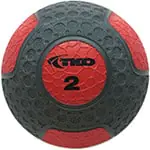
This is the category to focus on when you need weighted exercise balls for explosive strength, rotational throws, wall-ball conditioning, partner drills, no-bounce slam training, or high-volume functional fitness. Rubber medicine balls, soft-shell wall balls, tire-tread slam balls, handle medicine balls, and D-Ball slam balls each solve different training problems, so the best choice depends on whether the movement is controlled, rebounding, wall-based, or high impact.
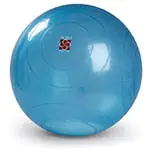
Stability balls and fitness balls are the better fit for core training, balance, posture awareness, active sitting, stretching, low-impact movement, and rehabilitation-supportive exercise. This subcategory includes standard stability balls, therapeutic peanut stability balls, self-guided stability balls, and ball chair options for office, wellness, clinic, home, and studio environments.
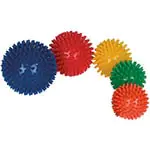
Therapy balls and massage balls are compact tools for grip strengthening, hand exercise, targeted self-massage, sensory work, upper-body light resistance, and recovery-support routines. They are a better choice than medicine balls or slam balls when the goal is controlled pressure, small-range movement, or progressive grip work rather than power conditioning.
Yoga balls and Pilates balls support controlled studio movement, pelvic floor work, posture refinement, flexibility, core activation, alignment drills, and low-impact resistance training. Choose this subcategory when a smaller, lighter, and more precise exercise ball is a better fit than a large stability ball or a heavy weighted ball.
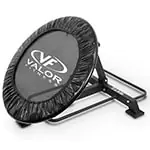
Ball rebounders and wall ball targets help create repeatable medicine-ball throw stations for solo training, reaction drills, rotational power work, and partner-free conditioning. They are especially helpful in home gyms, performance rooms, studios, and commercial spaces where users need a dedicated throwing target instead of relying on a partner or open wall space.
Featured Exercise Ball Options
- Aeromat Extreme Elite Rubber Medicine Balls for controlled throws, core training, partner drills, rebounder training, and group fitness settings.
- Aeromat Dual Power Grip Medicine Balls for multi-grip pressing, rotational work, core training, and functional strength drills.
- Body-Solid Tire Tread Slam Ball Medicine Balls for textured-grip conditioning and slam-ball training.
- D-Ball by Mondo 9 Inch USA-Made Slam Ball for no-bounce slam training in a compact 9 inch diameter.
- D-Ball by Mondo 14 Inch USA-Made Slam Ball for heavier no-bounce slam-ball training in larger weight options.
- Dynamax Medicine Balls for soft-shell non-bouncing medicine-ball work and wall-ball conditioning.
- Aeromat EVA Foam Posture Balls for posture-focused drills, mobility work, and controlled exercise.
- Resist-A-Ball Stability Balls for core training, balance, posture work, and active fitness routines.
- Aeromat Elite Height Adjustable Ball Chair for active sitting, posture awareness, and office wellness applications.
- Aeromat Power Yoga-Pilates Light Weight Balls for controlled studio resistance, yoga, Pilates, and low-impact movement.
Related Categories for a Better Ball-Training Area
A complete exercise ball training area may require more than the ball itself. Use Ball Storage Racks to keep medicine balls, slam balls, wall balls, and stability balls organized. Add Gym Flooring when slams, throws, group circuits, or high-traffic training zones are part of the layout. For broader programming, browse Resistance Bands, Tubing, and Rings, Foam Rollers and Balance Training, Sandbags, Heavy Ropes, and Power Clubs and Sledge Hammers.
Exercise balls can also complement larger equipment areas. See Free Weights, Strength Training Equipment, and Cardio Equipment when building a complete home gym, commercial fitness room, school weight room, corporate wellness center, or government training space.
Common Questions About Exercise Balls
What type of exercise ball should I choose?
Choose the ball based on the movement. Slam balls are best for repeated ground slams and high-impact conditioning. Medicine balls are better for controlled throws, partner drills, rotational work, and rebounder training. Wall balls are better for wall-target conditioning. Stability balls support balance, posture, core training, and active sitting. Therapy, massage, yoga, and Pilates balls are better for controlled, lower-impact movement.
What is the difference between medicine balls, slam balls, and wall balls?
Medicine balls are commonly used for controlled throws, catches, core drills, partner work, and rotational strength. Slam balls are designed for aggressive ground slams with low bounce or no bounce. Wall balls are usually larger and softer for repeated throws against a wall or target. If you plan to slam the ball into the ground, choose a true slam ball instead of a medicine ball or wall ball.
Are exercise balls suitable for commercial gyms?
Yes, many exercise balls are suitable for commercial gyms when the correct ball type is matched to the use. Commercial buyers should compare impact level, durability, storage, flooring, user volume, and product-specific specifications before ordering.
Can stability balls be used as office chairs?
Yes. Ball chairs and supported stability-ball chair kits are designed for active sitting, posture awareness, and low-level core engagement in office, wellness, and home environments. Choose an option that fits the user height, workspace, and intended sitting routine.
Do I need a ball rebounder or wall target?
You do not always need one, but ball rebounders and wall targets are useful when users want partner-free medicine-ball throws, reaction drills, repeatable throw-and-return stations, or a dedicated wall-ball training target.
Can therapy balls and massage balls be used in rehabilitation-supportive settings?
Therapy balls and massage balls can support grip drills, light resistance, targeted self-massage, sensory work, and controlled movement routines. In clinical, rehabilitation-supportive, or medical settings, product selection and use should follow facility protocols and professional guidance.
Are exercise balls available for government purchase?
IRON COMPANY supports government and institutional purchasing where applicable, including GSA-related purchasing support for qualified buyers. Product-level eligibility can vary, so confirm GSA availability, contract requirements, and quote details before ordering.
How should I store exercise balls in a busy gym?
Use ball storage racks, towers, stackers, or wall storage where appropriate. Organized storage helps prevent medicine balls, slam balls, wall balls, and stability balls from rolling across the floor, blocking walkways, or cluttering group training zones.
Why Buy Exercise Balls from IRON COMPANY?
IRON COMPANY is an established e-commerce supplier of gym equipment, gym flooring, and facility support products with experience serving residential, commercial, vertical-market, military, government, institutional, and facility buyers. Instead of treating exercise balls like generic accessories, IRON COMPANY helps buyers match the ball type, impact level, room layout, storage plan, flooring needs, and facility use to the actual training goal.
For government and institutional purchasing support, visit GSA and CMAS Bid Information. For help comparing medicine balls, slam balls, wall balls, stability balls, therapy balls, Pilates balls, rebounders, storage racks, and functional training packages, contact IRON COMPANY or visit Customer Care.
Shop Exercise Balls
Build a stronger, more versatile training space with exercise balls from IRON COMPANY. Shop medicine balls, slam balls, wall balls, stability balls, fitness balls, therapy balls, massage balls, yoga balls, Pilates balls, and ball rebounders above, or contact IRON COMPANY for help matching the right ball type to your training goals, facility layout, storage plan, and procurement needs.
Read Less