
 Call us today at 1-888-758-7527


Stepping Outside the Box to Build Human Strength
Bringing outside elements into play
Improving human strength is not always a matter of adding another barbell set, another heavier single or another rearranged training split. Marty Gallagher’s point in this resistance training article is more subtle: after a serious athlete exhausts what can be gained inside the conventional box, the next leap in strength, power, hypertrophy, and performance often comes from outside elements such as nutrition, cardio conditioning, post-workout recovery, psychological recalibration, coaching changes, sleep, and ruthless weak-point analysis.
Stepping Outside the Box of Conventional Strength Training
If you have a true passion, over time and with continual repetition, you seek to improve. Be it painting, baseball, racecars, skydiving, tennis, sculpture, or bowling, the passionate seek to become better. If you pursue your art, your passion, long enough, at some point you exhaust all the conventional possibilities. At some point the mature artist needs to step outside the box of his art to improve his art.
At some point, the passionate masters “the known.” True art lies in channeling the unknown. When you deal with the known, at best the artist can hope for is clever rearranging of the contents of the box of current orthodox thinking.
Some of the configurations will be imaginative and refined, but factually they are just differing variations of what we already know. Krishnamurti once noted that artistic breakthroughs are a result of “freedom from the known.” Walter Pater once noted that the greatest art “has an element of strangeness.” Strangeness only emerges from the unknown. How does the passionate athlete step outside the box of conventional thought? They purposefully introduce an element of strangeness and in doing so, they step outside the box.
The Hegelian Dialectic holds that conventionality, staying within the box of conventional thought, gives rise to a thesis, a status quo. Every thesis eventually gives rise to an antithesis, a challenger: a rebel arises, assaulting the conventional barricades of the thesis. The antithesis overthrows the thesis. Over time, the antithesis, that which was once revolutionary and unconventional, morphs into a staid and reactionary thesis. Hostile and defensive, resistant to any change, the antithesis becomes the new dogmatic thesis. Meet the new boss, same as the old boss.
When the antithesis becomes the new thesis, a rebel challenger inevitably arises to overthrow the antithesis-turned-thesis and a synthesis occurs. A blending of the two previous incarnations forms the genesis for the synthesis. Over time the futuristic synthesis becomes fossilized and mainstream; the once-cutting edge synthesis becomes another static thesis: thesis, antithesis, synthesis, and the cycle repeats ad infinitum.
Hegel was describing the box and its contents: the only way to avoid the thesis/antithesis dualism is to step outside the box of the known.
You are either a scientist or a fundamentalist: the scientist welcomes new ideas and innovations. The fundamentalist defends a static position and does not seek nor want any new input. A fundamentalist uses phrases like “settled science,” and “experts agree” to squelch any and all discussion. Fundamentalism is the enemy of science and progress.
Human Strength Requires More Than the Barbell
One of my many passions is the acquisition of human strength. Strength is the premier bio-motor attribute, speed, strength, endurance, flexibility, and agility, because strength bleeds over into speed. There is no speed without strength. I have been in passionate pursuit of strength for five decades. After my first decade, I realized that, past a certain point, if I wanted to increase my lean muscle mass, my power and strength, I needed to explore potential progress stimulators that occur and take place outside the workout, away from the barbell and free weights.
The outside-the-box idea does not replace hard resistance training. It supports it. A serious athlete still needs the base: strength training equipment, repeatable loading, disciplined effort, and a clear plan. The difference is that a mature athlete eventually understands that the workout is not the only place where strength is built. The work outside the workout can determine whether the work inside the workout keeps producing.
Outside-the-Gym Progress Stimulators
- Nutrition: food, drink and supplementation can be revamped to accelerate size and strength acquisition. Nutrition is synchronized with a goal. Clean up the content, adjust portion size, bias selections towards nutrient-dense foods. Potent food fuels the effort. Post-workout nutrition accelerates recovery. Nutrition fuels hypertrophy.
- Cardio conditioning: if a strength athlete is in shape, they can train harder, more often, longer and recover quicker. Aerobic exercises tune and tone the internal organs as surely as resistance training builds and strengthens the external muscles. Cardio combined with disciplined power eating is the key to favorably altering body composition. When outdoor work is not practical, cardio equipment, treadmills, exercise bikes, and indoor rowing machines can support the larger strength plan.
- Psychological recalibration: the first step in engineering a radical physical transformation is changing your mind. Here is what we know: whatever you are doing isn’t working. What is needed is a dramatically different approach, not more of what you are already doing. The transformational process commences in the Mind of the athlete.
- Post-workout therapies: I have had fantastic results using differing post-workout protocols. I use intense steam baths, sauna, whirlpools with high-power jets aimed at fatigued muscles. Modern versions of the ice bath are the current cutting-edge rage for accelerating post-workout recovery. If you have access, deep massage is ideal. For some facilities and athletes, non-surgical pain management accessories or a LumaFlex Body Pro red light therapy device may fit into a broader recovery strategy.
- Differing coaching: sometimes you need to change mentors. Sometimes we outgrow our informational sources; we all obtain our information from somewhere and if the source is unvarying in the protocol, stagnation is a certainty. This is the very definition of stepping outside the box: walking away from the comfortable sameness of our favored strategies.
- Quality rest and recuperation: this is a tough one. Most folks don’t really have all that much time. Tough enough to get five hours of sleep a night, much less the recommended eight. Optimally a hard-training athlete power naps during the day. The quality of the rest is paramount, better three hours of deep REM trance-sleep than ten hours of restless sleep.
- Different situation and environment: not to be insensitive, but many people’s situation prevent the mounting of a serious regimen. If you are working massive amounts of overtime in pressure-packed situations and have three kids, life prevents the requisite adherence. Burning desire and motivation are insufficient if you don’t have time to train.
- Attack weak points: we train in certain favored ways using certain favored exercises, modes, and drills. Our preferences create our strong points. At some point the serious athlete reaches an apex training strong points. Most continue to pound away at the strong points. The elite recognizes the transformative lift comes from attacking weak points.
These outside-the-gym pursuits augment my ongoing progressive resistance sessions. Use combinations of these augmentations to break through plateaus and overcome sticking points. If you are stuck in your strength training, if you have rearranged the contents of the box until the possibilities are exhausted, then perhaps it is time to step outside the box and investigate some outside possibilities.
Engage in some ruthless self-assessment: zero in on your weak points. Avoid the commonplace trap of continually playing to your strengths. Addressing weak points is where the big gains lie hidden in plain sight. Put some strangeness into your training by bringing in some outside elements. Avoid the endless cycle of thesis-antithesis-synthesis that come from staying within the confines of the conventional box.
Equipment Pairings for Outside-the-Box Strength Work
The core message is philosophical, but practical tools still matter. A lifter seeking more strength, more power and better body composition needs the right resistance training foundation and the right support tools around it. For strength work, start with dependable free weights, racks, benches, and loading options. For the “outside” elements, select cardio and recovery tools that support the goal without replacing the primary work.
For cardio conditioning, a power athlete can use the Assault Fitness AssaultRunner Pro treadmill for hard running intervals, the Schwinn Fitness IC Classic indoor cycling bike for repeatable indoor bike work, or the AirRaid indoor rower for demanding full-body conditioning. The best tool is the one that fits the athlete, the facility, and the training phase.
For post-workout recovery support, tools should be evaluated as part of a larger strategy that includes sleep, nutrition, hydration, proper programming, and honest rest. No accessory replaces intelligent loading or recovery discipline, but the right recovery tool can help the athlete stay consistent during long strength training cycles.
Training and Recovery Note
This article is strength training commentary, not medical advice. Nutrition changes, cardio conditioning, recovery accessories, heat, cold, massage, red light therapy, supplementation, sleep strategies, and major changes in training environment should be matched to the athlete’s health status, experience, training load, and recovery capacity. The practical lesson is not reckless novelty; the practical lesson is to identify where conventional training has stopped working and bring in the outside element that actually addresses the weak point.
Stepping Outside the Box FAQ
What does stepping outside the box mean for human strength?
In this article, stepping outside the box means looking beyond the barbell workout itself. Marty Gallagher argues that after a serious athlete exhausts conventional resistance training options, progress may come from outside elements such as nutrition, cardio conditioning, recovery, coaching, sleep, mindset, and weak-point training.
Does stepping outside the box replace strength training?
No. The outside elements support the main strength work. The athlete still needs serious resistance training, progressive loading, disciplined technique and enough effort to stimulate strength, power, and hypertrophy. The outside elements make the strength work more productive.
Why is cardio conditioning useful for strength athletes?
Marty’s position is that a better-conditioned strength athlete can train harder, recover more effectively, and improve body composition. Cardio conditioning does not replace heavy strength training, but it can support the larger transformation when coordinated with nutrition and recovery.
How does nutrition affect strength and hypertrophy?
Nutrition fuels the training effort and supports recovery after hard sessions. Marty emphasizes nutrient-dense food, goal-specific eating, post-workout nutrition, and disciplined intake as tools that can help the athlete build size, strength, and power.
What is psychological recalibration?
Psychological recalibration means changing the mental approach before trying to change the body. If the current method is not working, the athlete needs more than a minor adjustment. Marty frames the transformation process as beginning in the Mind of the athlete.
How should athletes choose outside-the-box recovery tools?
Recovery tools should match the athlete and the training stress. Sauna, steam, massage, cold exposure, red light therapy, and other recovery methods should be evaluated carefully and used as part of a larger plan that also includes sleep, nutrition, hydration, and smart programming.

About the Author
As an athlete Marty Gallagher is a national and world champion in Olympic lifting and powerlifting. He was a world champion team coach in 1991 and coached Black's Gym to five national team titles. He's also coached some of the strongest men on the planet including Kirk Karwoski when he completed his world record 1,003 lb. squat. Today he teaches the US Secret Service and Tier 1 Spec Ops on how to maximize their strength in minimal time. As a writer since 1978 he’s written for Powerlifting USA, Milo, Flex Magazine, Muscle & Fitness, Prime Fitness, Washington Post, Dragon Door and now IRON COMPANY. He’s also the author of numerous books including Purposeful Primitive, Strong Medicine, Ed Coan’s book “Coan, The Man, the Myth, the Method" and numerous others. Read the Marty Gallagher biography here.
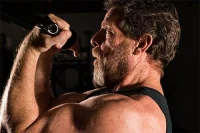
Marty Gallagher is a champion strength athlete, coach, author, and RAW Podcast host known for powerlifting, Olympic lifting, and serious strength training.
