
 Call us today at 1-888-758-7527

The Eternal Wisdom of John McCallum on Weight Training
This essay from Marty Gallagher revisits John McCallum and explains why the old lessons still land: hard weight training, useful cardio training, simple dieting, and long-view patience still beat trendy confusion. For lifters chasing more muscle, more strength, and lower body fat, the lesson still holds: timeless ideas often outlast fashionable programs.
The Eternal Wisdom of John McCallum on Weight Training
Keys to Progress, the gift that keeps on giving
My wife thinks I have a screw loose because I read certain books over and over. This past year I reread Tolstoy’s Haji Murid and The Cossacks, plus Dostoevsky’s Crime and Punishment, Faulkner’s The Bear and LeCarre’s Smiley’s People. I also watch movies repeatedly. “How can you stand to do that? You know the plots, the punchlines, the jokes — how can you stand to re-read books and re-watch movies? It seems like such a waste of time.” I thought I had a well-thought-out defense. “I pick up on things in books and see things in movies that I missed the first time.” She was unimpressed. “That’s lame…maybe you should have paid better attention the first time around.”
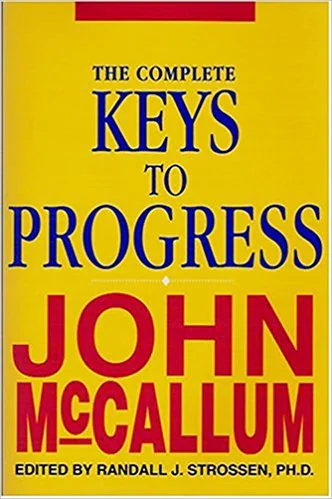
She might have a point. A few days ago, on a complete whim, I happened to pick up my well-worn copy of John “Mac” McCallum’s book Keys to Progress. A copy sits next to my Yamaha studio piano and has sat, untouched, for years. For some reason on this day the yellow cover caught my eye. I picked it up and fanned the pages. The book is a compilation of 100+ monthly articles written between 1965 and 1972. I happened to open the book to a chapter entitled The Definition Diet. Despite having access to this article for 50 years, I had never read it.
I didn’t read Mac for trimming-down advice. I read Mac for his “Bulk and Power” advice. I had skipped every article Mac had ever written related to refining and reducing. Reading these never-read Mac articles for the first time was, for me, like discovering a new Leonardo da Vinci painting or an undiscovered Hemingway hunting novel.
I had unearthed a mini-treasure trove of unread articles: Hardening Up, Pros and Cons of Definition, The Case for Running, Trimming Down, The Definition Diet, Running Part II, P.H.A. for Definition, More on PHA, Supplements, The Fountain of Youth Parts I, II and III, Smoking — It’s Time You Quit, Vitamin D Muscle Muffins, and The Causes of Failure. I had a goldmine of unread Mac. Topics I had no interest in as a boy interested me greatly now.
Why John McCallum Still Matters
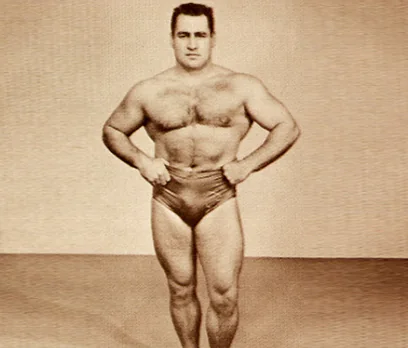
I began reading McCallum as a skinny, athletic, driven 15-year-old. I could not have picked a better mentor. McCallum had a column that ran every month in Strength and Health magazine. His articles shaped me. They offered effective, result-producing advice on mostly weight training. His advice has proven timeless.
He sat me straight on so many things. He taught me the ultra-basics insofar as what exercises to practice, which ones to stress and which ones to ignore. He outlined intensity, volume, frequency, techniques, tactics, psyche and willpower. He had articles way ahead of the times on off-beat topics such as sleep, nerves, concentration, desire, hard work, health, endurance and definition — the ancient phrase denoting low body fat, as in shredded, ripped or buff.
Mac was the first to stress the 5-rep set and why it offered the best compromise between the pure power derived from super-low-rep 1-3 rep training and the differing attributes of high-rep 10-15 rep sets. Mac placed squats above all other exercises. He felt all men should work toward barbell squatting 500. He recommended high-volume, full-body workouts. This was high-frequency stuff. He worked the same muscle 2-3 times weekly. Coming up, I never read his definition articles or trimming-down articles. I was a lean boy fighting to be rid of “the skinny body.”
Bulk and Power Before Dieting
I enthusiastically ate everything in sight while reading classic Mac articles such as Bulking the Upper Body, The Get Big Drink, Desire, The Secrets to Success and Neck Specialization. Who could forget The Super Bulk and Power Thing and Gain Weight to Build Your Arms? I memorized those articles and put into actual practice the lessons he shared. For a teenage boy without a care in the world, could there be a more resonant message than frequent, low-rep barbell training, done with my buddies and paired with sanctioned gluttony?
The results were astounding. I added 80 pounds of muscle in five teen years and won a national teen lifting title. That is why rediscovering the other side of McCallum — the trimming-down side, the cardio side, the body-fat side — hit me so hard years later.
The Definition Diet Rediscovery
In 2018, on a whim, I fanned the pages of Keys to Progress and fate stopped me on The Definition Diet, a 2,000-word treatise on how best to shed a muscular body of excess body fat. For the first time, I read the article. It was prophetic. Here is the premise of the article, written in 1965, decades before the Atkins Diet or Paleo diet.
“The Definition Diet, like most good things, is simple. It’s tasty, nutritious, easy to figure, easy to follow and the ideal adjunct for the hardcore weight trainee. The secret of the diet is this — eliminate carbohydrates. Not reduce them. Eliminate them. Eliminate them completely. You don’t cut calories. You don’t count them. You don’t restrict the amount of food you eat at all. You simply don’t eat any carbohydrates at all.”
As Emeril would say, “BAM!” Is this not the primordial rationale behind all the low-carb/no-carb diet strategies? How did Mac know this back in 1965? How did he know that carbs were the enemy? What gave him that insight? Please keep in mind that in 1965 there were no nutrient breakdown labels on foods and dieting and nutrition were in the stone age. Yet John McCallum was recommending the best-selling Atkins Diet twenty years before it was invented. His food recommendations from back in the day would line up well with Weston A. Price and the Paleo people.
In the year 2018, what I believed I knew about dieting and shedding body fat could be boiled down to three blunt ideas:
- Any foodstuff eaten that is not protein, fibrous carbohydrate or fat is, functionally speaking, undigested sugar.
- Natural carbs and refined carbs spike insulin.
- If carbs are eliminated, insulin subsides and body fat becomes easier to oxidize.
In that framing, no carbs means no more insulin problem. Add to an insulin-free body some hardcore training and the body is maneuvered into using body fat as fuel. In a no-carb environment, insulin receptor sites unclog and come back online, now fully functioning. The human body is designed to routinely clear reasonable amounts of insulin without problem — or so the old-school logic went.
McCallum Was Ahead of the Times on Cardio Too
Mac was also a big advocate of running and felt that weightlifters, bodybuilders and strongmen should run. “Exercise of a rhythmic nature, carried on uninterrupted for at least a half an hour, provides the cardiovascular stimulation necessary for really outstanding heart health.” Again, prophetic and twenty years ahead of the rise of aerobics. For leaning out, Mac stressed a three-way combination: hardcore weight training paired with running and underpinned with a no-carb diet.
Variations on this ultra-basic ketogenic approach are still used to this day by pro bodybuilders looking to get maximally shredded prior to a major competition. Mac was unaware that fibrous carbohydrates — green beans, salad greens, onions, spinach, broccoli and the like — could be consumed without spiking insulin in the same way as starch-heavy foods.
For a modern trainee, the cardiovascular side of McCallum’s lean-out phase might come from outdoor running or from structured work using cardio equipment such as exercise bikes, stairclimbers, or treadmills. The old principle is the same even if the tools have changed.
The Pendulum Swing Between Size and Leanness
Mac was the Godfather. He combined serious weight training with serious cardio and used primal nutritional periodization. He would urge his followers to pendulum swing back and forth between bulk-and-power cycles and lean-out cycles. “Grow bigger and stronger — then get leaner and fitter. This way we start off a bit higher with each successive successful cycle.” He stressed that small incremental gains compounded over long periods of time. This resulted in the truly sensational gains, the kind and type of gains we expect from our training efforts.
All systems are ultimately judged by the results — or lack thereof. For building muscle size and strength, Mac’s high-volume, bar-bending weight training approach, supported by a high-protein, high-calorie, nutrient-dense nutritional approach, was without peer. Caloric-induced anabolism was combined with limit-exceeding training, resulting in maximum strength and maximum increases in muscle size.
The Mac pendulum swing would then move toward a PHA-style weight training circuit, supported by a no-carb ketogenic diet, plus serious running. Max size and strength cycles were juxtaposed with leaner, lighter, better-stamina cycles. The man was light years ahead of his time.
What McCallum’s Wisdom Looks Like Today
McCallum’s lessons still apply because they remain rooted in simplicity: train hard, train regularly, eat to match the phase, use cardio intelligently, and accept that size phases and lean-out phases may require different priorities. If you were building a modern McCallum-style setup, the basic ingredients would still be straightforward: free weights for bulk-and-power phases, cardiovascular work for lean-out phases, and practical options such as functional training equipment or a dual-stack functional trainer for PHA-style circuits.
If a trainee wants more machine variety while preserving the same old-school intent, well-chosen selectorized gym equipment and plate-loaded leverage gym equipment can complement the same basic plan. Lifters training at home can also build around compact home gyms and durable rubber gym flooring to keep the bulk-and-lean cycle repeatable year-round.
This compilation book can be purchased online and is called The Complete Keys to Progress by John McCallum. This is the iron version of the Dead Sea Scrolls. Buy it. Study it. Learn its eternal wisdom.
FAQ
Who was John McCallum?
John McCallum was a widely read strength writer whose monthly columns in Strength and Health helped shape old-school thinking on weight training, muscle gain, cardio, recovery, diet and long-term physical progress.
What is Keys to Progress?
Keys to Progress is the collection of McCallum’s classic articles. Gallagher treats it as foundational reading because it covers bulking, power, diet, cardio, supplements, psychology and the kind of simple, result-driven advice that still resonates.
What was McCallum’s “Definition Diet”?
As Gallagher describes it, McCallum’s definition diet centered on eliminating carbohydrates rather than merely reducing them. The broader idea was to pair low-carb eating with hard training and cardio to strip body fat from a muscular body.
Did John McCallum recommend cardio for weight trainees?
Yes. One of Gallagher’s main rediscoveries is that McCallum strongly supported running and rhythmic cardio work for better heart health, improved stamina and lean-out phases.
What was McCallum’s “pendulum swing” approach?
The pendulum swing was the idea of alternating size-and-strength phases with lean-out-and-fitness phases. Grow bigger and stronger first, then get leaner and fitter, so each successful cycle starts from a higher baseline.
About the Author
As an athlete Marty Gallagher is a national and world champion in Olympic lifting and powerlifting. He was a world champion team coach in 1991 and coached Black's Gym to five national team titles. He's also coached some of the strongest men on the planet including Kirk Karwoski when he completed his world record 1,003 lb. squat. Today he teaches the US Secret Service and Tier 1 Spec Ops on how to maximize their strength in minimal time. As a writer since 1978 he’s written for Powerlifting USA, Milo, Flex Magazine, Muscle & Fitness, Prime Fitness, Washington Post, Dragon Door and now IRON COMPANY. He’s also the author of numerous books including Purposeful Primitive, Strong Medicine, Ed Coan’s book “Coan, The Man, the Myth, the Method" and numerous others. Read the Marty Gallagher biography here.

Marty Gallagher is a champion strength athlete, coach, author, and RAW Podcast host known for powerlifting, Olympic lifting, and serious strength training.
