
 Call us today at 1-888-758-7527

The Timeless Influence of Muscle Magazines on Strength Training
The timeless influence of muscle magazines on strength training is not nostalgia for paper, ink, and newsstands. It is a story about how serious lifters learned weightlifting, resistance training, bodybuilding, powerlifting, eating, recovery, and toughness before the internet turned fitness into an endless scroll. Marty Gallagher’s memories show how the best old muscle magazines taught lifters to seek hard truth, train with free weights, and build strength that lasted.
How Muscle Magazines Shaped Generations of Lifters
As a teenager, I read articles in muscle magazines that forever changed me and the direction of my life. I learned my earliest lessons about weight training, techniques and tactics from articles in muscle mags and many of those early lessons now serve as the foundation for all that I do and all that I am. I was lucky enough to fall under the influence of great mentors: real men and real athletes that were untainted by commercialism. They spoke the hard truth about transformative training and I read their every word and embraced their harsh methods.
John “Mac” McCallum and the Keys to Progress
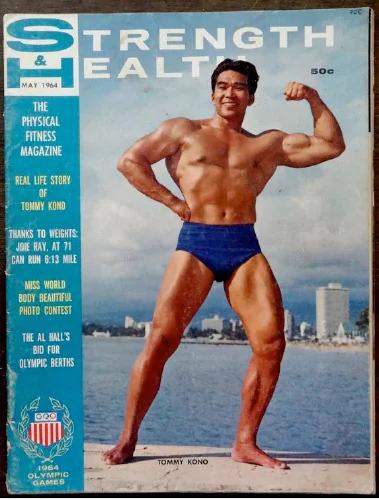
John “Mac” McCallum was an early influence. He generated a monthly column in Strength & Health magazine called Keys to Progress. I first started reading his articles in 1964 and what he emphasized became what I emphasized. Mac was all about size, muscle, power, function, and athleticism. His strategy was lift big, eat big, rest big, and grow big – which was music to my scrawny ears. I was a lifelong athlete and a good one: my teen struggles were all about adding muscle size to my whippet-lean body.
Mac cleared things up for me with powerhouse articles like “building bulk and power,” “the high protein diet,” “parallel bar dips: squats for the upper body,” “gain weight to build your arms,” “causes of failure” and “hard work.” Mac wrote over 100 Keys to Progress articles and I morphed into a teenage national weightlifting champion following his advice.
Mac was at his most expressive and compelling when advocating for barbell squats. “Squats, done right, are better than all the other progressive resistance exercises put together.” He labelled squats, “the undisputed King of all weight training exercises.” This was priceless, timeless, profound, and prophetic advice. Mac was the first to identify the 5-rep set as the King of rep ranges. He pointed out that 5s struck the perfect balance between low rep grind strength and high rep hypertrophy. His focus on squats and 5s have stayed with me to this day.
A Newsstand Purchase That Started an Iron Journey
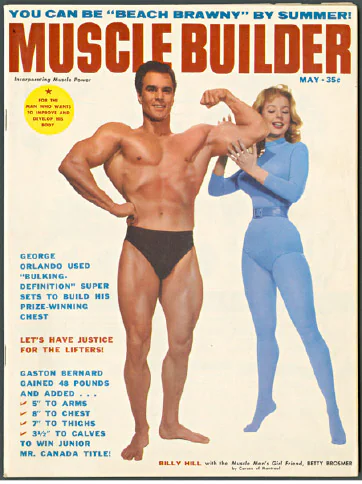
I grew up addicted to the muscle magazines, most particularly Strength & Health. I remember my first muscle mag purchase. It was traumatic. I had accumulated perhaps $5, this from mowing grass for neighbors in 1964. I was a fourteen-year old that summered with my grandmother in rural Arkansas. The local newsstand was in a corner of the biggest store in our town of 900, the Western Auto, a forerunner of Walmart.
I worked up my courage as I walked to the magazine rack. I gathered up three magazines, Strength & Health, Muscle Builder and Iron Man. Even at age 14 I was completely aware of the weird stigma attached to those that purchased magazines, this in the mid-sixties, that featured nearly naked men in muscle poses on the cover.
I was petrified walking to the counter with my three muscle magazines. I rolled them up so that no one could see what I had in my hand. I was terrified over the possible reaction of the grizzled, tanned, redneck owner that ran the register. I was ready to piss myself. What if he confronted me. “Hey boy, I am going to call your people and alert them that you are some sort of newly forming pervert.”
Instead, he took my $5 bill, gave me $1.85 in change, bagged the mags and sent me on my way. He never even looked at me. This was the beginning of my iron journey. There is a Hindu Sanskrit motto, “The happiest man connects the morning of his life to the evening.” They wrote that about me. For the next five years every month without fail, I would head to a newsstand and scoop up 4-5 muscle mags then take them home and devour them.
Lift Big, Eat Big, Rest Big, Grow Big

I was on a transformative mission: I wanted to morph myself into a physical monster. Being a true alpha, above all else I sought power, size, and strength. The magazines contained the information I needed to progress. Great champion weightlifters, athletes, bodybuilders, and strongmen would write articles that shared training information and strategies. I would adapt these new ideas and strategies, work on my techniques, and sharpen my psyche.
Another invaluable McCallum tactic was his advocacy of high calorie eating. Mac used the anabolic attributes of regular food to underpin the savage lifting he advocated. Food, and lots of it, would fuel new muscle growth, accelerate recovery and prevent body breakdown. Mac told us to eat lots of calories with an emphasis on protein.
What a fabulous thing to tell a ravenous, athletic alpha teen – gorge yourself, eat everything and anything. My father, an unathletic Irishman, was totally supportive. He encouraged my eating and I came to love sanctioned gluttony. My high school day would commence with a half-dozen eggs, spam, and four slices of Wonderbread, “builds strong bodies eight ways.”
School lunches were 35-cents and a pint of milk was 3-cents. I would get two lunches and four extra pints. Being a strapping jock, I sweet talked the cafeteria lunch ladies and they would ladle me extra meat loaf, chicken or chili. Our high school food was quite good and friends and admirers, I was a star athlete, would come by to offer their leftovers. No matter what class I had after lunch, I would fall asleep. At night, we would eat hot dogs, burgers, Velveeta grilled cheese sandwiches, TV dinners, dinner rolls, ice cream – all the stuff two boys and a man would buy turned loose in a grocery store. My Irish cousins used to call me “Mash Potato King.”
I would lift weights three times a week with my comrades in my basement gym. Our metabolisms were like blast furnaces. None of us got fat because when we weren’t lifting we were in all types and kinds of high-intensity individual and team sports. The muscle mags were our information sources and in hindsight they were damn good sources. We scoured the articles, always on the lookout for tips, tactics or techniques that would take physique or performance to the next level.
The Simple Truth Hidden Inside Old Muscle Magazines
Nowadays we are awash in information and most of it is garbage. Commercialism taints everything and nowadays everyone tries to pimp a product or service. The standard procedure is to reverse-engineer a rationale as to why the trainee must use the Guru’s product or service. We are living in an era where we are cursed with way too many choices.
The great Zen master Forrest Gump once said, “Simple is as simple does” and I think modern man’s lack of progress vis a vis strength and muscle, is due to overcomplicating a relatively simple process. We righteously adhered to the Gump-ian strategy of sophisticated simplicity: lift big, eat big, rest big, grow big.
We didn’t overthink shit. We weight trained hard as hell with dumbbells and barbells because we trained in front of our peers whose opinions we care about. We always sought to outdo one another and pushed each to new heights. Year round we played football, baseball, basketball, we wrestled, ran track, and threw the shot and discus – that was our cardio and athletics kept us lean and fit.
We ate like famished zombies at a Vegas buffet and grew like fertilized weeds. We were unconcerned about micro-nutrient content, body fat percentiles and staying in the fat-burning zone. Instead of distractedly riding a stationary bike while looking at a built-in TV, we pummeled each other in fierce athletic competitions. Our primal ways got gains. I wonder with all the technological distractions that marks this era if that type of Spartan youth environment can ever be replicated.
Those first five years of my immersion gave me strength, vitality and a hardiness that has stayed with me to this day. At the time of this reflection, at age 67, I am on zero meds and never have been. I am still one of the best lifters, for my age, in the world. I still abide by our Gump approach: I run in the wondrous woods every day at dawn and eat delicious power foods. My wife says, “Being raised by wolves has made you bulletproof, compared to the aches, pains, weakness, and injuries the rest of us endure.” Seems there might be some truth to that.
Practical Equipment Lessons from the Muscle Magazine Era
The best old muscle magazines did not make the iron game complicated. Their training message was direct: build around the basics, practice the big movements, eat enough to recover, and repeat the process long enough to become a different human being. For modern lifters, that still points back to durable, simple tools.
For athletes building a home gym, school weight room, firehouse gym, tactical training space, or commercial strength area, a straightforward setup can cover a lot of ground. Rubber hex dumbbell sets and TKO solid steel head urethane encased dumbbells support the pressing, rowing, curling, carrying, and assistance work that lifters have used for generations.
On the barbell side, TKO solid steel head urethane encased barbells can support fixed-weight work, while a bar such as the Body-Solid black oxide Olympic weightlifting bar fits the old-school spirit of squats, pulls, presses, rows, and Olympic lifting variations. Add dependable weight plates, including urethane Olympic plates with grips or TKO solid rubber bumper plate sets, and the core lessons from those early magazines still have a place to live.
Frequently Asked Questions
How did muscle magazines influence weightlifting?
Muscle magazines influenced weightlifting by giving young lifters access to training ideas, technique advice, eating strategies, and stories from serious athletes. For Marty Gallagher, magazines like Strength & Health helped shape the habits that led him toward national-level weightlifting and a lifelong iron journey.
Why was John “Mac” McCallum important to strength training?
John “Mac” McCallum was important because his Keys to Progress articles taught lifters to value hard work, heavy squats, food, rest, size, power, and athletic function. His message was simple enough for a teenager to use, yet strong enough to influence serious resistance training for decades.
What was the main training lesson from the old muscle magazines?
The main lesson was sophisticated simplicity: lift big, eat big, rest big, and grow big. Gallagher’s article argues that many modern lifters get trapped by too many choices, while the old magazines pushed direct action with barbells, dumbbells, food, sports, and peer-driven effort.
Are old-school muscle magazine lessons still useful today?
Yes. The tools and information sources have changed, but the core lessons still hold up: train hard, use basic free weight exercises, recover well, eat in a way that supports the goal, and stay consistent. Modern lifters can still benefit from the clarity of that approach.
What role did dumbbells and barbells play in the article?
Dumbbells and barbells were the center of the author’s early training environment. They represented direct, honest work done in front of peers, where effort mattered and everyone tried to outdo one another. That pressure helped turn simple weight training into a powerful physical education.
Does the article reject stationary bikes, exercise bikes, or fitness bikes?
No. The article contrasts hard athletic competition with distracted stationary bike riding, but it does not make every exercise bike or fitness bike useless. The deeper point is that cardio should be done with purpose, not treated as background activity while the mind is somewhere else.
About the Author
As an athlete Marty Gallagher is a national and world champion in Olympic lifting and powerlifting. He was a world champion team coach in 1991 and coached Black's Gym to five national team titles. He's also coached some of the strongest men on the planet including Kirk Karwoski when he completed his world record 1,003 lb. squat. Today he teaches the US Secret Service and Tier 1 Spec Ops on how to maximize their strength in minimal time. As a writer since 1978 he’s written for Powerlifting USA, Milo, Flex Magazine, Muscle & Fitness, Prime Fitness, Washington Post, Dragon Door and now IRON COMPANY. He’s also the author of numerous books including Purposeful Primitive, Strong Medicine, Ed Coan’s book “Coan, The Man, the Myth, the Method" and numerous others. Read the Marty Gallagher biography here.

Marty Gallagher is a champion strength athlete, coach, author, and RAW Podcast host known for powerlifting, Olympic lifting, and serious strength training.
