Exercise Bikes
Exercise Bikes for Home, Commercial, School, and Facility Gyms
Exercise bikes from IRON COMPANY include upright exercise bikes, recumbent exercise bikes, indoor cycling bikes, air bikes, fan bikes, and bike-erg style cardio options for home... Read More
Exercise Bikes for Home, Commercial, School, and Facility Gyms
Exercise bikes from IRON COMPANY include upright exercise bikes, recumbent exercise bikes, indoor cycling bikes, air bikes, fan bikes, and bike-erg style cardio options for home gyms, garage gyms, commercial fitness centers, personal training studios, group cycling rooms, schools, corporate wellness centers, apartment fitness rooms, tactical training areas, government fitness facilities, and institutional cardio spaces.
Exercise bikes provide seated or cycle-style cardio training with less vertical impact than running-based equipment, but the right bike depends on the user population, riding posture, resistance system, console features, power requirements, seat adjustment range, pedal design, room layout, flooring, maintenance expectations, and whether the bike will be used by one person at home or many users in a shared facility.
Use this category to compare upright stationary bikes, recumbent bikes, studio cycling bikes, air-resistance bikes, commercial exercise bikes, light commercial exercise bikes, and specialized rehab-supportive cardio options. IRON COMPANY has supplied gym equipment and flooring solutions since 1997 and supports residential, commercial, vertical-market, military, government, institutional, and facility buyers with product guidance, quoting, sourcing, and cardio equipment planning support.
How to Choose the Right Exercise Bike
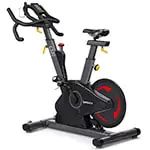
The right exercise bike starts with the rider position. Upright exercise bikes place the user in a more traditional seated cycling posture and are often selected for general cardio rooms, apartment fitness centers, corporate wellness spaces, schools, and home gyms. Recumbent exercise bikes use a reclined seat position with back support and forward pedals, making them a strong option when buyers want seated comfort, step-through access, and a more supported riding posture. Indoor cycling bikes are built for more athletic cycle-style training, standing climbs, sprint intervals, group cycling classes, and riders who want a studio cycling feel.
Resistance type is another major buying decision. Magnetic resistance bikes are often selected when smooth operation, predictable resistance levels, and quieter use are priorities. Friction-resistance indoor cycles can deliver a more traditional studio-bike feel but may require more wear-part awareness. Air bikes and fan bikes use the rider’s effort to create resistance through a fan, so the harder the user works, the more resistance the bike produces. This makes fan bikes useful for high-intensity interval training, cross-training, and conditioning areas, but they are usually louder than magnetic-resistance bikes.
Distinct Mechanical Classifications: Magnetic vs. Air Resistance — Buyers frequently mismatch their workout environment and fitness goals by selecting the wrong internal resistance system. Silent Magnetic Resistance: Engineered for multi-user spaces, apartment housing, and quiet residential training. Units like the Spirit Fitness CR800 Commercial Recumbent Bike and the BodyCraft U1000 Upright Bike deliver micro-adjustable, smooth resistance transitions suited to steady-state cardio, rehab-supportive pacing, and precise programming metrics. Dynamic Air Resistance: Built for explosive high-intensity interval training (HIIT), metabolic conditioning, and cross-training. Equipment such as the Assault Air Bike Classic, AssaultBike Pro X, Xebex Air Bike 1000, and the Body-Solid Endurance FB300B Fan Bike use large steel fans that scale resistance exponentially based on user effort. These units provide a quad-limb, total-body workout but produce high noise levels and significant airflow, which suits tactical training spaces and dedicated garage gyms rather than quiet multi-housing zones.
Buyers should also compare power requirements before planning a cardio room. Some upright, recumbent, and indoor cycling bikes are self-powered or generator-powered through user pedaling, which can reduce cord clutter and improve layout flexibility. Other models with large displays, touchscreens, TV features, or powered console systems may require external AC power. Before ordering multiple bikes for a commercial row, studio, apartment fitness room, school, or government facility, confirm the electrical plan, outlet locations, circuit capacity, delivery path, and final room layout.
Compare Exercise Bike Types
Exercise bikes are not interchangeable. Use the stacked comparisons below to decide whether an upright bike, recumbent bike, indoor cycling bike, air bike, or specialized rehab-supportive cardio bike is the right fit for your space, training goals, user population, and facility plan.
Upright Exercise Bikes
Best fit: Home gyms, apartment fitness centers, corporate wellness rooms, schools, commercial cardio floors, and facilities that want a traditional seated cycling position with a relatively compact footprint.
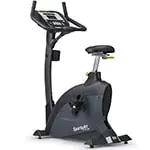
Buyer guidance: Choose upright stationary bikes when users want familiar cycling posture, easy cardio access, and a smaller footprint than many recumbent bikes. Compare resistance levels, seat adjustment range, console display, power requirements, pedal design, handlebars, and user comfort before ordering for a shared facility.
Recumbent Exercise Bikes
Best fit: Home gyms, senior living fitness rooms, wellness spaces, commercial cardio areas, rehab-supportive environments where appropriate, and facilities that want seated cardio with a more supported riding posture.
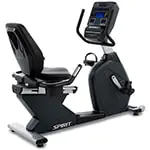
Buyer guidance: Choose recumbent exercise bikes when comfort, step-through access, back support, and stable seated positioning are priorities. Compare seat design, seat travel, back support, pedal reach, walk-through access, console location, resistance range, and product-specific use rating before ordering for multi-user environments.
Indoor Cycling Bikes
Best fit: Studio cycling rooms, group fitness classes, HIIT training spaces, athletic conditioning areas, personal training studios, home gyms, and buyers who want a more aggressive cycle-style training experience.
Buyer guidance: Choose indoor cycling bikes when standing climbs, sprint intervals, class formats, handlebar positioning, flywheel feel, and rider engagement are priorities. Compare flywheel design, resistance system, drive type, handlebar positions, seat adjustment, pedal compatibility, console options, maintenance requirements, and flooring needs before building a studio bike fleet.
Air Bikes, Fan Bikes, and BikeErg-Style Options
Best fit: Cross-training spaces, tactical training rooms, garage gyms, athletic conditioning areas, interval training, and users who want resistance that scales with effort.
Buyer guidance: Choose air bikes and fan-resistance bikes when conditioning, interval work, and high-output training are priorities. Models such as the Assault Air Bike Classic, AssaultBike Pro X, Concept2 BikeErg, and Schwinn Aetherion Bike can be considered when buyers want fan-driven or performance-oriented bike training. Plan for fan noise, airflow, training clearance, and maintenance needs before placing air bikes next to quieter cardio or stretching zones.
Specialized Rehab-Supportive Cardio Options
Best fit: Facilities comparing controlled seated cardio equipment, rehab-supportive fitness environments, wellness spaces, senior-focused training rooms, and institutional cardio areas where product-specific documentation supports the intended use.
Buyer guidance: Specialized products such as the Spirit Fitness 7.0R Recumbent Bike and Spirit Fitness 8.5S Recumbent Stepper should be reviewed by model, feature set, facility needs, and manufacturer documentation. Do not assume all exercise bikes are appropriate for clinical, medical, rehab, or therapeutic use. Product-level intended use, warnings, facility requirements, and user guidance should be reviewed before purchasing for these environments.
Match Exercise Bikes to Facility Type and User Needs
Home Gyms and Garage Gyms
Home gym and garage gym buyers usually balance footprint, noise, comfort, training style, and budget. Upright bikes and compact indoor cycles can work well where space is limited. Recumbent bikes may be a better choice when comfort and back support matter more than a small footprint. Air bikes can be useful for high-output conditioning, but buyers should consider fan noise, airflow, and available training clearance.
Commercial Gyms and Corporate Wellness Rooms
Commercial gyms and corporate wellness spaces should plan exercise bike purchases around user volume, maintenance, console usability, adjustability, cleaning routines, power requirements, and layout. A commercial cardio floor may need a mix of upright bikes, recumbent bikes, and indoor cycles to serve different user preferences. Heavily used facilities should verify the product’s intended use environment, warranty terms, and service requirements before ordering a fleet.
Structural Duty Ratings: Residential vs. Full Commercial Warranties — A massive budget mistake is attempting to save upfront capital by purchasing a home-use model for a shared facility. Residential & Light Commercial: Engineered for low-occupancy residential training or small, controlled settings. Full Commercial: Built with heavy-gauge steel tubing, commercial-grade roller bearings, and thick-gauge crank axles designed to run multiple hours per day. Models like the Star Trac 8UB Commercial Upright Exercise Bike or the Spirit Fitness CR900 Commercial Recumbent Bike are built for health clubs, schools, and military installations; the use rating is on each product page. Deploying a home-use bike in these high-volume settings can void the manufacturer warranty and shortens its service life — check the use class.
Group Cycling Studios and Performance Training Areas
Group cycling rooms need indoor cycling bikes that can be adjusted quickly for different users and training formats. Buyers should compare seat and handlebar adjustability, flywheel feel, drive system, resistance mechanism, pedal options, console compatibility, maintenance requirements, and how the bikes will be arranged for coaching, visibility, cleaning, and user traffic.
Schools, Tactical, Government, and Institutional Facilities
Schools, tactical training facilities, government fitness rooms, and institutional buyers should plan exercise bike purchases around durability expectations, user population, receiving conditions, power access, maintenance staffing, flooring, traffic flow, and quote requirements. IRON COMPANY can support bulk quoting and government purchasing where applicable. Product-level eligibility, contract requirements, freight details, and quote terms should be confirmed before ordering.
IRON COMPANY supplies exercise bikes to residential customers, personal training studios, high schools and universities, multi-unit housing complexes, hotel fitness spaces, commercial gyms, VA hospitals, and federal procurement customers.
Federal government and military customers worldwide purchase TAA compliant upright and recumbent exercise bikes that are available through our GSA contract as well as the IRON COMPANY website. TAA compliance means that products sold to the US federal government must be manufactured or substantially transformed either in the United States or within a designated TAA-compliant nation that maintains a fair trade agreement with the US. Examples include exercise bikes by Spirit Fitness, SportsArt America, Body Solid, Xebex, and BodyCraft; TAA status is confirmed per product before a GSA order.
Institutional GSA Procurement Compliance: For federal purchasing agents, base supply officers, and municipal facility coordinators, selected full-commercial generator units, air bikes, and rehabilitation platforms are available through the IRON COMPANY GSA contract (47QSMA22D08NN); eligibility is confirmed per product.
Senior, Wellness, and Rehab-Supportive Environments
Facilities serving users who prefer a supported seated posture should compare recumbent exercise bikes, step-through designs, seat adjustment, back support, pedal reach, console visibility, and ease of entry and exit. Any medical, clinical, rehabilitation, or therapy-related purchasing decision should be tied to product-specific documentation and the facility’s own professional review process rather than broad category assumptions.
Specialized Clinical, Rehab, and Performance Training Needs — Standard consumer cycles generally lack the fine-tuned adjustments used for restricted joint mobility, specific patient entry, or data-tracked professional athletic training. Medical & Rehabilitation Standards: Facilities like VA hospitals and physical therapy centers often require specialized, accessible equipment. The Spirit Fitness 7.0R Medical Rehabilitation Recumbent Bike, Spirit Fitness 8.5S Rehab Recumbent Stepper, and Spirit Fitness 8.0U Upright Bike for Rehabilitation offer adaptations including bidirectional pedaling, micro-resistance increments, and adjustable swivel seats for wheelchair transfers. Athletic Studio Training: High-performance road cycling simulation requires rigid frame geometry and specialized mechanical drivetrains. For studio cycling formats, group classes, or sprint work, buyers must look to professional indoor club trainers like the Schwinn Aetherion Indoor Group Cycling Bike, Schwinn IC Classic Bike, or the BodyCraft SPR Indoor Cycle, which offer precise racing geometry, heavy flywheels, and specific dual-sided pedal compatibility.
Best Fit and Not Ideal For
Best Fit
- Buyers who want seated cardio equipment for endurance training, interval work, warmups, cooldowns, conditioning, and lower-body cardio routines.
- Home gyms, garage gyms, personal training studios, group cycling rooms, commercial fitness centers, schools, apartment fitness centers, corporate wellness rooms, tactical training spaces, and institutional cardio areas.
- Facilities comparing upright exercise bikes, recumbent exercise bikes, indoor cycling bikes, air bikes, fan bikes, and bike-erg style cardio equipment.
- Buyers who need to evaluate power requirements, console features, resistance systems, seat adjustment, user comfort, flooring, freight, and maintenance before ordering.
People and facilities that should purchase exercise bikes:
- High-Traffic Commercial Gyms, Corporate Wellness Centers, & Apartment Fitness Rooms — Multi-user fitness spaces must accommodate an unpredictable mix of training experience levels, physical heights, and personal fitness goals every single day. For these vertical markets, stationary bikes provide a low-maintenance cardio anchor. Why it fits: Unlike treadmills, which feature complex moving belts and high electrical pull, high-end stationary bikes have few exposed parts, lowering your facility’s ongoing maintenance overhead. The configuration: Commercial properties benefit from cord-free floor management and wide user adjustability. Self-powered generator units like the Star Trac 8UB Commercial Upright Exercise Bike or the Spirit Fitness CR800-BLK Commercial Recumbent Bike harvest their own energy from user pedaling, so they can be positioned without running electrical conduit. For facilities prioritizing user retention through premium tech, looking at a club-grade unit like the Star Trac 6RB Recumbent Bike with an optional integrated touchscreen console delivers the high-end digital connectivity modern members expect.
- Clinical Rehabilitation Centers, Physical Therapy Practices, & Senior Living Communities — Facilities serving patients recovering from orthopedic surgery, individuals managing chronic joint pain, or senior populations focused on active aging require strict postural support, micro-adjustable telemetry, and zero-barrier frame entry. Why it fits: Standard commercial cardio gear often features wide jumps in resistance that can easily overload a compromised joint. Specialized clinical cycles let medical professionals meter patient exertion precisely while keeping the rider supported. The configuration: These environments must prioritize step-through accessibility and ultra-fine resistance resolution. Medically supportive units like the Spirit Fitness 7.0R Medical Rehabilitation Recumbent Bike, Spirit Fitness 8.0U Upright Bike for Rehabilitation, and the Spirit Fitness 8.5S Rehab Recumbent Stepper are built for these environments. They offer adaptations including fine micro-resistance steps (the level count is on each product page), bidirectional pedaling for targeted muscle tracking, and adjustable high-density foam swivel seats that simplify wheelchair transfers.
- Tactical Training Spaces, Military Installations, & High-Intensity Cross-Training Facilities — When outfitting a fire station gym, police academy training center, military base, or specialized strength and conditioning studio, equipment must be able to withstand relentless, high-impact physical abuse. These users are not looking for passive pacing; they require tools for rapid metabolic conditioning and max-effort output. Why it fits: Traditional cardio consoles can be slow to respond to high-intensity interval training (HIIT). Air bikes avoid that lag by using an exponential resistance curve—the harder the athlete pushes, the greater the air resistance becomes. The configuration: These high-output tactical environments demand heavy-duty steel fan blades and dual-action handlebars for a true quad-limb, total-body workout. Air resistance platforms like the Assault Air Bike Classic, AssaultBike Pro X, Xebex Air Bike 1000, or the Body-Solid Endurance FB300B Fan Bike are built for sprint intervals, active recovery protocols, and tactical readiness testing.
- Group Cycling Studios & Competitive Endurance Training Rooms — Dedicated group class environments and athletic training labs require high-performance indoor cycles built to simulate real-world road cycling physics. These riders need to transition rapidly from seated high-cadence flat work to aggressive, standing out-of-the-saddle climbs. Why it fits: Traditional upright consoles and wider comfort saddles are not designed for high-velocity cycling performance. Studio-style indoor trainers utilize narrow racing saddles, specific drop handlebars, and rigid frame geometry designed to handle massive downward pedaling forces. The configuration: Instructors and club owners need to choose precision-weighted flywheels and adjustable drivetrain configurations. Outfitting your studio fleet with professional platforms like the Schwinn Aetherion Indoor Group Cycling Bike, Schwinn IC Classic Bike, or the BodyCraft SPR Indoor Cycle gives your coaches close mechanical control. These units provide rigid athletic geometry, precise resistance tracking, and highly adaptable dual-sided pedal options to accommodate standard athletic shoes or specialized cycling cleats.
- Premium Residential Home Gyms & Space-Constrained Garage Gyms — Home buyers frequently battle a balance between available room square footage, localized operational noise, and long-term product durability. They need club-quality reliability without the massive footprint or loud operational sound of commercial-row machinery. Why it fits: A premium exercise bike is a self-contained cardio solution with a tighter footprint than a traditional commercial treadmill or full-sized elliptical trainer. The configuration: For a quiet home or apartment setting where noise management is a priority, smooth magnetic resistance is a necessity. Units like the BodyCraft U1000 Upright Bike or a compact studio model like the BodyCraft SPX-MAG Indoor Club Training Cycle offer quiet magnetic operation and simple, intuitive programming. If high-intensity fat loss and metabolic conditioning are your primary residential goals, a space-efficient fan cycle like the Concept2 BikeErg provides a performance monitor and adjustable airflow damping and fits a garage gym floor plan.
Not Ideal For
- Buyers who need impact-based running or walking instead of seated cycling movement.
- Facilities that do not have enough space for safe mounting, dismounting, pedal clearance, cleaning access, and traffic flow around each bike.
- Group cycling rooms that choose bikes without checking seat adjustment range, handlebar positioning, pedal type, resistance system, drive type, and maintenance needs.
- Buyers expecting any exercise bike to eliminate discomfort, prevent overuse, deliver guaranteed weight loss, or serve a medical or rehabilitation purpose without product-specific documentation.
- Facilities that order powered consoles without confirming outlet placement, circuit capacity, cord management, and the final cardio room layout.
People and facilities that should not purchase exercise bikes:
- Facilities Requiring Full Weight-Bearing Functional Movement or Bone Density Training — If your facility caters to tactical athletes, fire departments, military readiness centers, or populations managing osteopenia and osteoporosis, an exercise bike may not meet your core programming requirements. The Structural Limitation: Stationary cycling is a non-weight-bearing, low-impact exercise. Because the user's body weight is supported by the saddle and frame, cycling does not load the skeleton the way weight-bearing exercise does. The Procurement Alternative: Tactical training sectors requiring functional, real-world locomotion, structural spinal loading, or bone mineral density development should bypass stationary cycles. Instead, allocate cardio budgets toward manual or motorized commercial treadmills, heavy-duty stair climbers, or structural non-motorized running platforms that force users to carry and propel their own body mass.
- Group Fitness Spaces that Lack On-Site Electrical Infrastructure (For Premium Screen Tech) — Procurement officers frequently select premium, high-definition touchscreen stationary bikes for a dedicated group room or cardio floor row without auditing their building's electrical circuit map. The Infrastructure Limitation: While standard commercial magnetic units often run on internal self-powered generator systems, premium high-definition entertainment consoles, immersive virtual-world displays, and advanced touchscreens cannot function on pedaling power alone. They demand continuous, dedicated external AC plug-in connections. The Procurement Alternative: If your facility floor plan features mirrored group fitness rooms, multi-housing community centers with strict layout limits, or historical government buildings with rigid electrical code constraints, do not purchase plugged-in console bikes. Attempting to chain multiple high-draw electronic consoles together without a qualified commercial electrical plan can introduce tripping hazards, cord clutter, and overloaded circuits. If you cannot drop electrical lines from the ceiling or install flush floor boxes, stick strictly to base-level generator-powered consoles or look into cordless fluid-resistance rowing machines.
- Sports Performance Facilities and Rehabilitation Clinics Requiring True Multi-Planar Movement — Facilities that train agility-based athletes, fields-sports competitors, or physical therapy patients focused on lateral movement and multi-directional stability should not rely heavily on stationary cycles. The Biomechanical Limitation: Stationary bikes operate exclusively within a fixed sagittal plane. The user is locked into a rigid, linear front-to-back movement pattern with no lateral ankle, knee, or hip variance. The Procurement Alternative: If your members or patients need to train for real-world balance, directional deceleration, side-to-side stability, or comprehensive core-to-extremity power transfer, a stationary bike does not train those patterns. For these specific goals, sports science labs and functional medicine clinics are better served by lateral speed trainers, multi-planar cross-trainers, or dual-action cable functional trainers.
- Compact Multi-Family Housing and Shared Residential Fitness Zones with Sound Barriers — Property managers outfitting small apartment fitness rooms or micro-gyms directly adjacent to residential walls or office quiet zones must be highly selective about mechanical drivetrains and resistance systems. The Environmental Limitation: Certain exercise bike subcategories—specifically heavy-duty dual-action air bikes and chain-drive indoor training cycles—are structurally engineered to generate aggressive resistance through massive steel fan blades or physical mechanical tension. This creates a high level of ambient fan noise, mechanical vibrations, and localized wind currents during intense, high-output sprinting. The Procurement Alternative: If your cardio zone shares a direct drywall barrier with luxury apartments, corporate boardrooms, or multi-family living spaces, a fan-resistance bike is a poor environmental fit and a likely source of noise complaints. If noise mitigation is your property's top priority, bypass air bikes and look into quiet, closed-loop magnetic resistance upright options or commercial elliptical trainers with poly-V belt drives.
- Medical and Bariatric Environments Lacking Verified Weight-Capacity Certification — Procurement agents for clinical settings, long-term care facilities, or bariatric treatment wards must never purchase standard consumer-grade or baseline light-commercial exercise bikes based solely on price or aesthetic fit. The Liability Limitation: Standard upright bikes feature narrow, elevated center housings and high frame barriers that demand significant hip and knee flexion just to mount the machine. Furthermore, lower-tier frames have lower weight limits and narrower saddle bases that are a poor fit for high-capacity users. The Procurement Alternative: If your patient base requires zero-barrier entry, wheelchair-to-seat transfers, or specialized bariatric support, standard upright or entry-level recumbent cycles are a poor fit. If your budget cannot accommodate heavy-gauge medical rehabilitation recumbent equipment with 180-degree swivel seats and step-through geometry, standard stationary cycles are not the right choice. Instead, focus on low-to-the-ground upper body ergometers or stable, flat-platform rehabilitation steppers.
Common Exercise Bike Buying Mistakes to Avoid
- Using a residential bike in a shared facility: A bike intended only for home use may not be the right fit for apartments, schools, corporate wellness rooms, commercial gyms, or institutional environments. Verify the intended use environment, warranty terms, and service expectations before ordering for multi-user spaces.
- Overlooking power requirements: Self-powered bikes can improve layout flexibility, but bikes with certain touchscreen, TV, or powered console features may require external AC power. Before ordering multiple units, confirm outlet locations, cord paths, circuit planning, and whether the layout creates tripping or maintenance concerns.
- Choosing by bike type without checking adjustment range: Seat travel, handlebar adjustment, pedal reach, and console visibility can affect whether the bike fits a wide range of users. Multi-user facilities should compare adjustment ranges carefully before building a full cardio row or studio.
- Ignoring entryway and delivery path dimensions: Commercial upright and recumbent bikes may arrive fully or partially assembled, depending on the model and shipping method. Measure doors, hallways, elevators, stairwells, corners, and final room access before the order ships.
- Placing air bikes too close to quiet zones: Air bikes and fan bikes create noise and airflow during hard use. Place them where fan movement, sound, and high-output training will not interfere with stretching, yoga, low-intensity cardio, or quieter wellness areas.
- Spraying cleaning liquids directly onto consoles: Cleaning solutions should not be sprayed directly into displays, buttons, shrouds, ports, or electronic housings. Use cleaning methods compatible with the product and follow manufacturer care instructions when available.
- Skipping pedal, crank, and drivetrain checks: Exercise bikes create repeated force through pedals and crank arms. Facilities should inspect pedals, crank arms, belts, chains, resistance systems, leveling feet, and console operation on a regular schedule and remove any unit from service if a component feels loose, damaged, or unsafe to use.
Conflating Traditional Upright Bikes with Indoor Cycling Studio Bikes — A frequent misstep during procurement is assuming that all upright stationary cycles provide the same biomechanical experience. They do not. A classic upright exercise bike, such as the Star Trac 4 Series 4UB Light Commercial Upright Bike or the SportsArt C55U Residential Upright Exercise Bike, is engineered primarily for a vertical, posture-supported riding position. These units feature wide, highly contoured, cushioned saddles and console-driven, steady-state cardio programming. Conversely, an indoor training cycle—like the Schwinn Aetherion Bike, the Schwinn IC Classic Bike, or the BodyCraft SPX-MAG Indoor Club Training Cycle—is built for an athletic, forward-leaning posture that mimics outdoor road cycling. This design allows riders to stand up for heavy climbs, execute high-cadence sprint intervals, and manually control a heavy, precision-weighted flywheel. Choosing a traditional upright when users expect a studio-style class results in ergonomics and functionality that do not match their training expectations.
Underestimating the Footprint and Step-Through Needs of Recumbent Frames — Buyers often look at a category layout and assume that recumbent and upright bikes demand identical floor space. Because recumbent bikes utilize a semi-reclined seating position with forward-mounted pedals to minimize joint and lower-back strain, their frames are significantly longer. Beyond checking the physical dimensions, buyers frequently overlook frame accessibility. For residential spaces, commercial facilities, or physical therapy clinics catering to users with limited mobility, senior trainees, or patients in recovery, frame height matters. True accessibility requires looking for models with a walk-through or step-through design, such as the Spirit Fitness XBR95 Recumbent Bike, the Spirit Fitness CR800 Recumbent Fitness Bike, or the SportsArt C55R Residential Recumbent Exercise Bike. This geometry removes the high center barrier so users can mount and dismount without lifting their legs over a bulky plastic shroud.
Misunderstanding Residential vs. Commercial Warranties and Structural Duty Ratings — Attempting to save upfront capital by deploying a residential-grade stationary cycle into a multi-user, shared environment is an expensive mistake. Residential models are internally balanced for lower daily runtimes. True light-commercial and full-commercial units are manufactured with reinforced steel structural elements, heavier flywheels, and industrial-grade roller bearings built to withstand hours of continuous daily abuse. Buying a home model for a corporate gym, apartment fitness center, or school weight room can void the manufacturer warranty — check the use class before ordering. Furthermore, buyers often overlook facility placement rules relative to power requirements. While some advanced touchscreen or entertainment-heavy models require dedicated AC wall power, many commercial units are entirely self-powered. Many self-contained units utilize internal generator systems. They harvest energy from the rider's pedaling, so there is no power cord to route, and the machine can be placed where the floor plan needs it without electrical work.
Grouping Total-Body Fan Bikes into Traditional Upright Categories — When navigating a cardio inventory layout, buyers often group air-resistance fan bikes into the same operational category as standard upright bikes because both require a vertical seating position. However, their function and the goals they serve are different. A traditional upright uses smooth magnetic resistance, which suits quiet environments, reading, or watching entertainment screens during steady-state cardio. An air bike, such as the Assault Air Bike Classic, the AssaultBike Pro X, the Xebex Air Bike 1000, the Body-Solid Endurance FB300B Fan Bike, or the AirRaid Fan Bike by TKO, relies on heavy-duty front fan blades where resistance increases exponentially the harder the rider pedals. Because they incorporate dual-action moving handlebars, they deliver a quad-limb, total-body workout. These units are intentionally loud and aggressive, which suits high-intensity interval training (HIIT) and metabolic conditioning in tactical training spaces, cross-training facilities, and military installations rather than casual, low-impact pacing.
Overlooking Specialized Medical and Rehabilitation Standards — When purchasing fitness equipment for clinical environments, VA hospitals, or senior living communities, standard commercial exercise bikes usually lack the incremental adjustments required for restricted joint mobility or specialized patient access. Standard consumer or commercial bikes generally lack the micro-resistance steps and accessories used under medical supervision. To solve this, facility buyers should look for rehabilitation-focused equipment. Specialized units like the Spirit Fitness 7.0R Recumbent Bike provide critical adaptations. These include specialized adjustments, micro-resistance levels, bidirectionally driven pedaling for forward or reverse muscle tracking, and highly adjustable seat configurations designed to accommodate users who need extra lumbar support and stable alignment while maintaining strict positioning.
Exercise Bike Subcategory Highlights
Indoor Cycling Bikes
Indoor cycling bikes are designed for riders who want a studio-cycle feel, standing climbs, sprint intervals, athletic conditioning, and group cycling formats. These bikes often place the rider in a more forward, performance-oriented position than upright or recumbent bikes. Choose this subcategory when rider engagement, flywheel feel, handlebar positions, resistance control, and cycling-style training are the top priorities.
Recumbent Exercise Bikes
Recumbent exercise bikes use a reclined seat position, back support, and forward pedal placement. They are commonly selected for home gyms, wellness spaces, commercial cardio rooms, senior-focused environments, and buyers who prefer a more supported seated posture. Choose this subcategory when comfort, access, stability, seat design, and a lower step-through feel matter more than a compact upright bike footprint.
Upright Exercise Bikes
Upright exercise bikes provide a traditional seated cycling position in a space-efficient cardio format. They can work well for home gyms, commercial cardio floors, apartment fitness centers, corporate wellness rooms, schools, and personal training studios. Choose this subcategory when buyers want familiar stationary bike training, adjustable resistance, accessible console feedback, and a smaller footprint than many recumbent models.
Featured Exercise Bike Options
- Assault Air Bike Classic is an air-resistance exercise bike option for buyers comparing fan bike conditioning, interval training, and cross-training equipment.
- AssaultBike Pro X is a performance-focused fan bike with belt-drive operation for buyers comparing air bike options for home, gym, and high-output conditioning environments.
- Concept2 BikeErg is a fan-resistance bike ergometer option with PM5 performance monitoring for buyers comparing endurance, interval, and indoor cycling alternatives.
- Schwinn IC Classic Group Cycling Bike is an indoor cycling bike option for buyers who prefer a more traditional chain-drive studio cycling feel.
- Star Trac 4 Series 4UB Upright Bike is a light commercial upright bike option with electronic resistance for facilities comparing traditional seated cardio equipment.
- Schwinn Aetherion Bike is a commercial indoor cycling bike option for buyers comparing magnetic resistance, multi-position handlebars, and studio cycling features.
- Spirit Fitness CR800 Recumbent Fitness Bike is a commercial recumbent bike option with magnetic resistance and a generator-powered console for shared facility cardio areas.
- Spirit Fitness 7.0R Recumbent Bike is a specialized recumbent bike option for controlled seated cardio environments where product-specific documentation supports the intended use.
- Spirit Fitness 8.5S Recumbent Stepper is a recumbent stepper option for buyers comparing seated, synchronized upper-and-lower-body cardio equipment for wellness or rehab-supportive settings where appropriate.
Facility Planning for Exercise Bike Areas
Power and Console Planning
Before placing exercise bikes in a cardio row, confirm whether each bike is self-powered, generator-powered, battery-powered, or requires AC power. Self-powered models can reduce cord clutter and improve layout flexibility. Powered displays, entertainment consoles, or touchscreens may require outlet planning, cord management, and electrical review. For multi-unit cardio rooms, consult qualified electrical professionals when circuit capacity or floor outlet planning is uncertain.
Power Infrastructure: Self-Powered Generators vs. External AC Power — Buyers regularly design equipment rows without confirming floor socket locations, leading to dangerous cord management issues or costly building modifications. Self-Powered Generator Systems: High-end commercial units like the SportsArt C565U and Spirit Fitness CR800 harvest electrical power directly from the user's pedaling action to run the console and resistance motor. This removes the power cord, with its trip risk, and frees the layout. External AC Power Requirements: Advanced entertainment bikes, touchscreen display models, or medical rehabilitation systems featuring premium consoles often require a dedicated plug-in connection to function, requiring strategic layout placement near active wall outlets.
Flooring and Equipment Mats
Exercise bikes should be placed on a stable surface with appropriate flooring or equipment mats when needed. Dense rubber gym mats, rubber flooring, or cardio equipment mats can help support floor protection, sweat management, and equipment stability, depending on the room and subfloor. No mat or flooring setup should be described as eliminating all vibration, noise transfer, or floor damage, especially in upper-level or multi-family installations.
Footprint, Clearance, and Room Flow
Plan spacing around each exercise bike for mounting, dismounting, cleaning, adjustment access, and traffic flow. Recumbent bikes may require more length than upright bikes, while indoor cycling bikes and air bikes may need additional clearance for standing climbs, arm movement, fan airflow, or coaching layouts. Measure the widest moving parts, pedal path, handlebars, and rear clearance rather than relying only on the base footprint.
Postural Ergonomics and True Space Footprints — Procurement coordinators often miscalculate room layout and accessibility needs because they assume all stationary cycles share similar dimension footprints and entry profiles: Traditional Upright Cycles: Features a compact, space-saving footprint with a vertical, posture-supported seat position. Units like the Star Trac 4 Series 4UB Light Commercial Upright Bike or the SportsArt C565U Essentials Upright Cycle suit standard gym floor rows, corporate wellness rooms, and tight residential layouts. Recumbent & Extended Frame Options: Requires a longer physical footprint due to the semi-reclined seating position and forward-mounted pedals. For senior living centers, rehabilitation clinics, or users balancing limited mobility, step-through frame clearance is essential. Options with low-profile accessibility, such as the Spirit Fitness XBR95 Recumbent Bike or the SportsArt C565R Essentials Recumbent Cycle, let buyers compare dimensions for mounting and dismounting without lifting legs over a tall center housing.
Freight, Receiving, and Installation Path
Commercial exercise bikes may ship by palletized freight depending on the model, packaging, weight, and order size. Buyers should confirm loading dock access, liftgate needs, delivery appointments, inside-delivery limitations, hallway and doorway clearance, elevator access, stair limitations, and the path from the delivery point to the final cardio room before shipment.
Upright and recumbent exercise bikes that do not exceed the dimensional threshold and/or maximum gross weight of 150 lbs. can ship via ground parcel (UPS or FedEx).
Most commercial exercise bikes are oversized and too heavy to ship via ground parcel and therefore ship strapped and secured to an oversized custom made wooden pallet via LTL freight through one of our preferred shipping carriers. Some bikes are packed securely enough at the factory to allow multiple units to be stacked and shipped on a single pallet. Customers will receive a 24-hour notification and lift gate service to lower their exercise bike to the ground when delivered curbside.
Most exercise bikes arrive with some assembly required. Tools and instructions are included with most bikes but make sure you have access to basic tools such as a hammer, pliers, and a screwdriver just in case.
Cleaning and Maintenance
Exercise bike maintenance should include wiping sweat from handlebars, seats, frames, and consoles; avoiding direct liquid spray on electronics; checking pedals and crank arms; inspecting belts or chains where applicable; confirming leveling feet; and removing any bike from service if it develops loose components, grinding bearings, failing electronics, or unusual movement. Use cleaning products compatible with the bike’s surfaces and follow manufacturer care instructions when available.
Related Cardio, Flooring, Cleaning, and Training Categories
Exercise bikes are part of a complete cardio and fitness facility plan. Browse Cardio Equipment for treadmills, ellipticals, rowers, climbers, bikes, and additional cardio options, or review Medical and Rehabilitation Cardio Equipment when the facility needs specialized cardio products and product-specific documentation supports the intended use.
For room planning, compare Gym Flooring and Rubber Gym Mats to support cardio areas, equipment rows, and floor protection. For ongoing care, review Gym Cleaning Wipes and Supplies. For broader facility packages, browse Free Weights, Strength Training Equipment, Foam Rollers, and Weight Scales.
Exercise Bike Guides and Buyer Resources
For more help comparing cardio options, review IRON COMPANY guides including The Ultimate Guide to Cardio Equipment, Fan Bike Benefits: Quad-Limb Cardio Training, Fasted Cardio Training, and Science, Carbs, and Cardio: Nutrition for Athletes.
For facility planning, review IRON COMPANY Capabilities: Fitness Equipment and Flooring for Residential, Commercial, and Government Markets, Maximizing Multi-Housing Fitness Centers, The Ultimate Guide to Gym Flooring, and GSA Bid Information. Product-level eligibility, quote requirements, freight details, and procurement requirements should be confirmed before ordering.
Common Questions About Exercise Bikes
What type of exercise bike should I choose?
Choose an upright exercise bike when you want a traditional seated cycling position and a compact footprint. Choose a recumbent exercise bike when seated comfort, back support, and step-through access are priorities. Choose an indoor cycling bike when you want studio-style cycling, standing climbs, sprint intervals, and a more athletic riding position.
Does using an exercise bike help you lose weight?
Yes, but the mechanical system you choose must match your specific training style and metabolic goals. Traditional magnetic-resistance stationary bikes, such as the SportsArt C55U Upright Exercise Bike or the Spirit Fitness CR800-BLK Commercial Recumbent Bike, are highly optimized for long-duration, steady-state cardiovascular conditioning. This format suits burning calories at a controlled, lower-impact pace with less load on the lower back and knees.
However, if your fitness goals prioritize rapid fat loss through high-intensity interval training (HIIT) and maximum caloric burn in short time windows, traditional magnetic programming introduces a limitation: you cannot change resistance fast enough. For aggressive metabolic conditioning, an air-resistance fan bike like the Assault Air Bike Classic, Xebex Air Bike 1000, or the Body-Solid Endurance FB300B Fan Bike is the better fit. These fan bike platforms utilize exponential air resistance—scaling up automatically as the rider pushes harder—and incorporate dual-action moving handlebars to deliver a true total-body, 4-limb cardio, high-output training session.
Is an exercise bike better than a treadmill?
Neither is universally superior; the choice depends on your weight capacity needs, physical joint health, and space restrictions. A treadmill loads the user with impact on every step, which makes it a weight-bearing choice. However, for corporate wellness centers, multi-housing complexes, and senior living facilities, treadmills bring fall-risk, electrical infrastructure cost, and footprint considerations.
An exercise bike provides a non-weight-bearing alternative that isolates cardiovascular output with little joint impact. Stationary cycles also suit unmonitored gym environments. From an operational standpoint, units like the Star Trac 4 Series 4UB Light Commercial Upright Bike demand roughly half the square footage of a commercial treadmill. This allows facility operators to maximize their floor plan capacity without crowding high-traffic walkways.
What is the difference between magnetic resistance and air resistance?
Magnetic resistance uses magnets near a flywheel to create controlled resistance levels and is often selected for quieter cardio areas. Air resistance uses a fan, so resistance increases as the rider works harder. Air bikes can be effective for interval conditioning, but they usually create more sound and airflow than magnetic-resistance bikes.
Do exercise bikes need to be plugged in?
Power requirements vary by model and console. Some exercise bikes are self-powered or generator-powered through user pedaling, while others require external AC power for displays, entertainment features, or advanced console systems. Always review the product’s electrical requirements before planning a facility layout.
What power requirements do commercial exercise bikes have?
Buyers often overlook that a machine's electrical requirement dictates its exact placement on the fitness floor. Many full-commercial cycles are self-powered. Units like the Star Trac 8UB Commercial Upright Exercise Bike and the SportsArt C565R Essentials Recumbent Cycle utilize an internal generator mechanism that harvests electricity directly from the user's pedaling action to drive the console and resistance brake. This frees the layout, avoids powering the console from the wall, and removes cord clutter.
However, if your facility requires high-end digital programming, interactive virtual environments, or large touchscreens—such as the premium console upgrades available on the Star Trac 6UB Upright Bike or Star Trac 6RB Recumbent Bike—the machine will have a strict limitation: it must be plugged into an external AC wall outlet. Attempting to install lines of premium touchscreen equipment without reviewing your building's active circuit capacity can lead to overloaded breakers and exposed wiring hazards.
Are recumbent bikes better than upright bikes?
Neither style is automatically better. Recumbent bikes are often chosen when buyers want a more supported seated posture and easier entry or exit. Upright bikes are often chosen for a traditional cycling position, smaller footprint, and familiar cardio-room layout. The best choice depends on the users, room size, comfort needs, and training goals.
What is the difference between an upright and a recumbent exercise bike?
The fundamental differences lie in postural ergonomics, skeletal accessibility, and spatial footprints. An upright cycle mimics a traditional outdoor bicycle, keeping the user’s spine vertically aligned over the crank axle. This position engages the core muscles and permits an athletic posture, as seen on studio trainers like the Schwinn IC Classic Bike or the BodyCraft SPR Indoor Cycle.
Conversely, a recumbent bike relocates the pedals forward and places the rider in a semi-reclined position supported by a bucket seat. This shift takes load off the lower back and reduces hip and knee extension angles. However, recumbent frames are significantly longer, meaning they demand extra real estate. For clinical settings or aging populations, the key detail to check on a recumbent is frame clearance. Models like the Spirit Fitness XBR95 Recumbent Bike offer a true step-through design, allowing users to mount the saddle without lifting their legs over a high plastic center console barrier.
Can you use an exercise bike for physical therapy and medical rehab?
Only if the bike is specifically engineered with the micro-adjustments and safety configurations required for clinical supervision. Standard residential or entry-level commercial stationary bikes possess wide resistance jumps and fixed frame positions that can easily strain a compromised joint or cause a patient injury.
True clinical settings, VA hospitals, and bariatric physical therapy practices require specialized medical cardio gear. Units like the Spirit Fitness 7.0R Medical Rehabilitation Recumbent Bike, Spirit Fitness 7.0U Upright Bike, and the Spirit Fitness 8.5S Rehab Recumbent Stepper are built for these accessibility needs. They offer fine micro-resistance resolution, bidirectional drivetrain tracking (allowing for reverse pedaling muscle activation), and 180-degree adjustable swivel seats for wheelchair transfers; the resistance levels and the user weight capacity are listed on each product page.
Are indoor cycling bikes good for home gyms?
Indoor cycling bikes can work well in home gyms when the buyer wants studio-style workouts, standing climbs, sprint intervals, and a more athletic cycling feel. Home buyers should consider noise, flooring, seat comfort, handlebar adjustment, resistance type, maintenance, and available space before ordering.
What flooring should be used under exercise bikes?
The right flooring depends on the room, subfloor, bike weight, user intensity, and whether the space is on a ground floor or upper level. Rubber gym mats, rubber flooring, and cardio equipment mats can help support floor protection and sweat management, but no flooring setup should be treated as a guarantee against all vibration, noise transfer, or floor damage.
Can IRON COMPANY help with bulk exercise bike quotes?
Yes. IRON COMPANY can help buyers compare exercise bikes, upright bikes, recumbent bikes, indoor cycles, air bikes, flooring, cleaning supplies, freight, receiving, and facility purchasing options. For government or institutional purchasing, product-level eligibility and quote requirements should be confirmed before ordering.
Why Buy Exercise Bikes from IRON COMPANY?
IRON COMPANY is an established e-commerce supplier of gym equipment, cardio equipment, strength equipment, free weights, gym flooring, and facility products for residential, commercial, vertical-market, military, government, institutional, and facility buyers. For exercise bikes, IRON COMPANY can help customers compare upright exercise bikes, recumbent exercise bikes, indoor cycling bikes, air bikes, fan bikes, specialized cardio options, flooring needs, cleaning supplies, power planning, freight, and receiving considerations before ordering.
For product questions, quote requests, or facility purchasing support, visit IRON COMPANY Customer Care, Contact IRON COMPANY, or review GSA Bid Information for government purchasing support where applicable.
Shop Exercise Bikes
Shop exercise bikes above, or contact IRON COMPANY for help comparing upright exercise bikes, recumbent exercise bikes, indoor cycling bikes, air bikes, fan bikes, specialized cardio options, cardio room flooring, cleaning supplies, freight, receiving, and facility purchasing needs. For government or institutional purchasing, confirm product-level eligibility and quote requirements before ordering.