
 Call us today at 1-888-758-7527

Lifting Weights - Dream Big!
Lifting weights was never just exercise for Marty Gallagher. It was forced evolution, a way to take a skinny athletic boy and remake him into something larger, stronger, and more capable. This article is an inspirational tale of dream-big transformation: muscle magazines, hard training, regular food, barbells, and one unforgettable DEW Line story that showed what can happen when a man has nothing to do but train, eat, sleep, and grow.
Lifting Weights - An Inspirational Tale of Transformative Fanaticism
“Man is the only creature that refuses to be what he is.” — Albert Camus
As a young boy, I refused to be what I was. I had a deep, inherent longing to physically transform myself through lifting weights, from what I was, a tall for my age, skinny athletic boy, into what I wanted to be: a muscled-up physical monster that crushed athletic opponents.
I longed to be maximally muscled, like my sports heroes, my war heroes, my comic book heroes and my mythological heroes. Heroes were important to me. I aspired to be one. But I would need a new body. I burned for vital physical transformation.
At age 11, I began lifting weights. I found the transformative tool I needed to remold my body: the barbell. Like Vulcan in his forge, I got a set of weights and set about reinventing myself, one ball-busting workout at a time. To be a great athlete, I needed a great body. I had the tool and I had the burning desire. Now I sought out cutting-edge training tactics.
Muscle Magazines and Dream-Big Training
This led me to the muscle magazines. At age 14 I began reading Strength & Health, Muscle Builder, All-American Athlete, Iron Man, and Muscular Development. I studied the training routines of the champions like a Talmudic Scholar studying the Torah. I was determined, I was ferocious and focused.
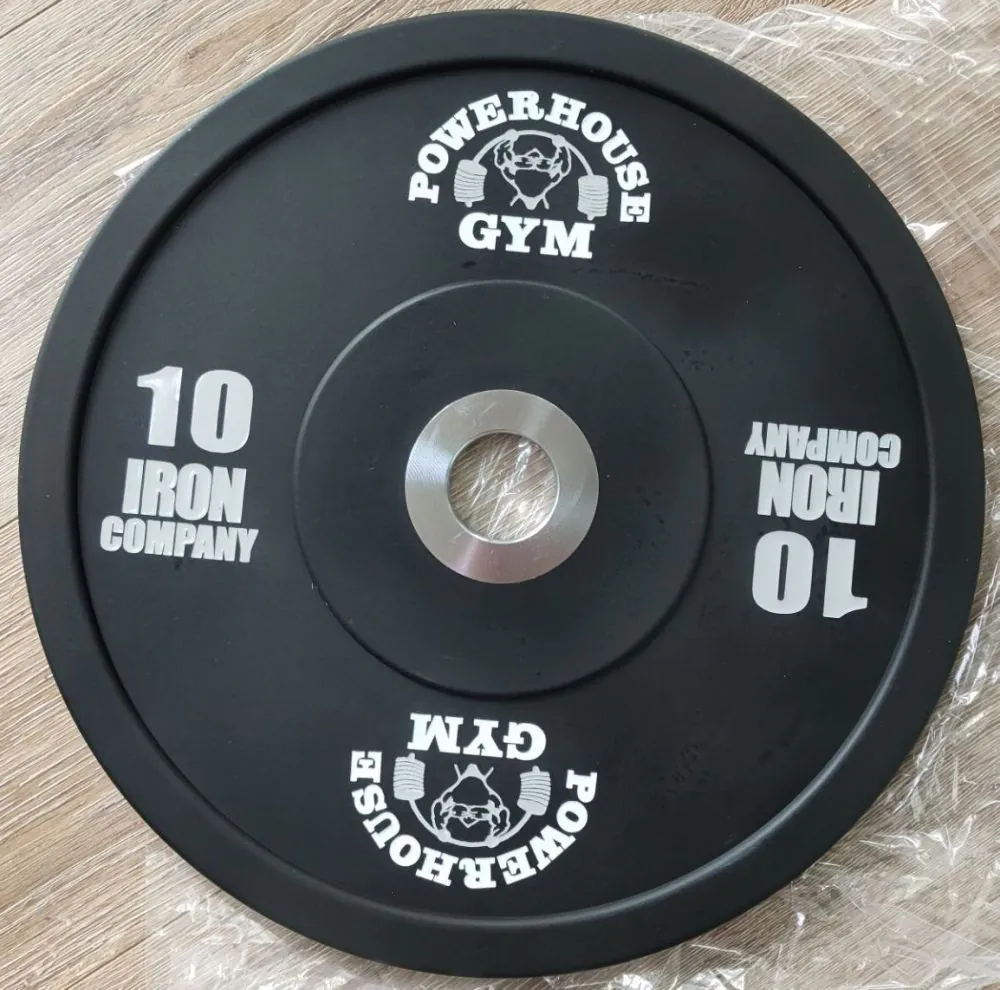
IRON COMPANY urethane bumper plates.
I also had an ideal situation for making gains. I was a kid without any real troubles, worries, responsibilities, or stresses. My Irish dad made sure I had all the calories I wanted; and I wanted a lot. My mentors exhorted us to slam calories and lift heavy weights. This was music to my 14-year-old ears. I developed a ferocious appetite, one that was encouraged and enabled. The only exercises we knew, primal; the only methods we knew, brutal.
Each month my enthusiasm would get a shot in the arm with the arrival of a new batch of muscle magazines. I would rabidly consume the information and mull over the sum of what I had learned for that month. Some articles were so strong I would rush to the basement to try some new exercise or a new take on technique or training for lifting weights.
I loved the highly detailed training routines for lifting weights. The mags of my day were so much more diverse and multidimensional than they are today: each month, each mag would cover Olympic weightlifting, powerlifting, and bodybuilding. This equal emphasis on the three distinctly different schools of progressive resistance training was a fabulous, broad bootcamp for alpha teens.
We were expected to be good at all three types of lifting. We practiced all three and because of the broadness of the methods we were the better for it. Nowadays everyone is a specialist that stays in their narrow lane. Specificity trumps well-roundedness.
Every month I got a new infusion of inspiration. The muscle mags were comic books that used human bodies instead of drawings. The magazines were instructional guides, how-to training manuals for radical physical transformation. The goal was to morph from human to inhumane, from skinny into gargantuan.
The message of the muscle mags was, “You want to look like a superhero? You want to have superhero capabilities and capacities? Here is how to build a superhero body with inhuman strength!” I was all over that.
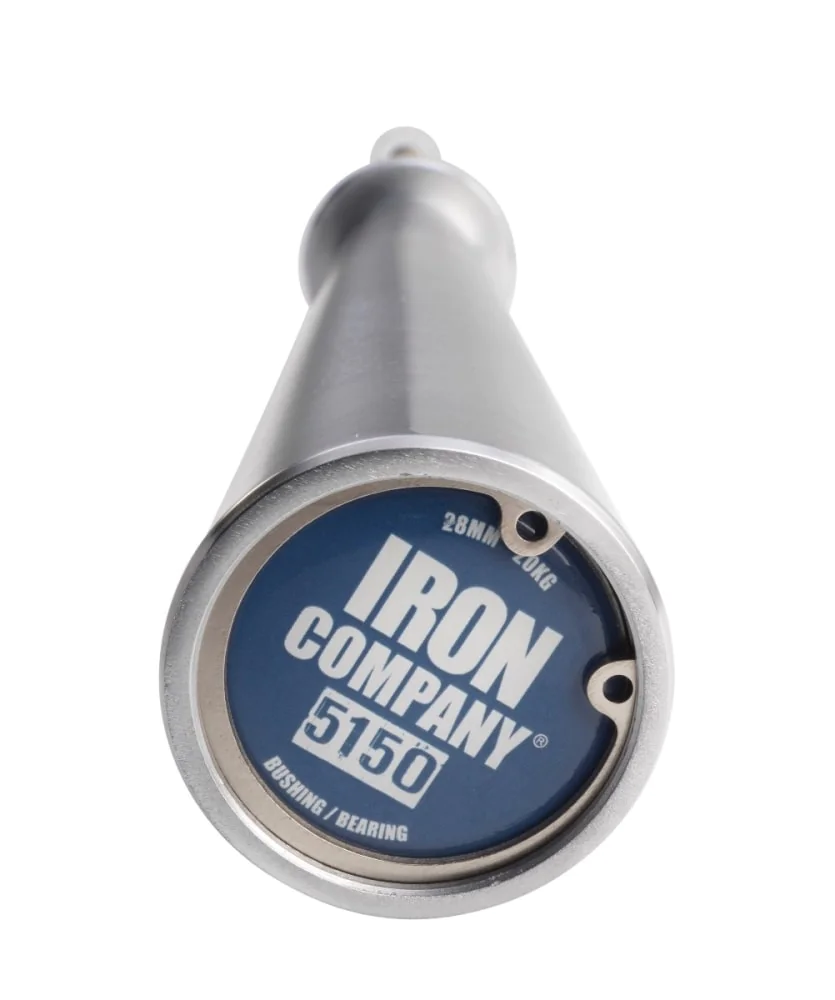
IRON COMPANY 5150 Olympic Barbell for Olympic weightlifting.
Ten Years of Forced Evolution
I loved the tales of transformation, how regular guys had reinvented themselves using regular food, a barbell, consistency — and savage training. I considered myself a project, a work in progress. I was a consistent trainer. I fell in training with a group of older Alpha males.
There was tremendous pressure lifting weights in front of men whose opinion you valued and whose approval you sought. Everyone’s game was taken to the next level. Our sessions were constant and incredibly intense. In every session, my goal was to exceed anything I had done to that point in my life.
For ten years lifting weights was one long upward bar graph of continual progress. Each successive week, each successive month, each successive year for ten straight years, I got bigger and stronger. In a decade I went from weighing 120 to 220. I improved every week, each week bigger and stronger than the week before. It was forced evolution.
The DEW Line Transformation Story
In 1966 at age 16 I read a magazine article that blew my mind. It took hold of my imagination in a way that is hard to explain. I was reading a lot of Jack London books and short stories at the time. His tales of the Yukon and the arctic lifestyle, of man and dog against beast and Nature, captured my imagination.
The magazine article seemed like a Jack London tale. The protagonist was not a superstar athlete, champion bodybuilder or strongman. He was a regular dude, a young serviceman that turned lemons into lemonade. He used the most primitive of tools, the sparsest of methods, the most basic approach to training and nutrition and transformed himself from frail into fearsome in six months.
At the height of the Cold War in the early 1960s, a 20-year-old serviceman was stationed at a DEW Line, defense early warning, outpost. Located close to the North Pole, the young man was one of three soldiers that manned a radar station searching the sky for incoming Russian nuclear missiles.
They lived in a spacious hut in a frigid wasteland. The three alternated 8-hour shifts: eight hours on, sixteen hours off. Nothing to do, nowhere to go. Still, it was vital to the national defense, ergo, the defense department made DEW Line outposts roomy and well-equipped, in hopes that the inhabitants wouldn’t get cabin fever, go postal, and murder the others as they slept.
The arctic stationhouse had good food, a kitchen, pool table, ping pong table, books, and exercise equipment, including an Olympic barbell with squat racks, a weight bench, and some dumbbells. They had unlimited access to food. For cardio there was a certain amount of external maintenance of the camp that had to be done, usually in minus 50-degree temperatures with hurricane gusts.
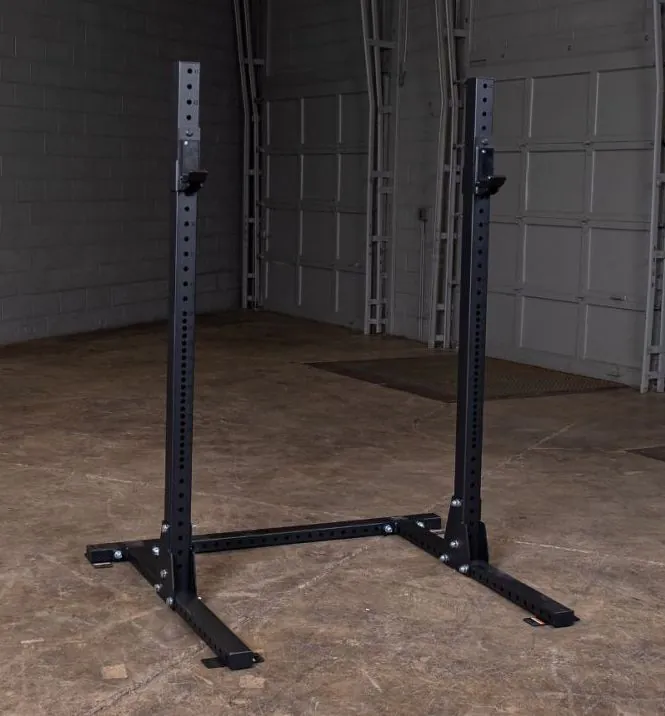
Full commercial squat stand.
A man could work up an appetite twisting wrenches for hours in sub-zero temperatures. Our serviceman found he could create a “stew” that he loved so much he would pretty much eat it all the time without tiring of it. Thick cuts of beef with potatoes, carrots, onions, and garlic. He’d slow cook it all day and make it a gallon at a time. He’d eat his stew with Wonder Bread and butter and never tired of it.
He would eat copious amounts of stew throughout his 16 off-hours. He would eat a loaf of bread a day, with butter, to compliment his stew. He drank powdered milk, which he pronounced not bad, if mixed perfectly with ice cold water. He liked eggs and bacon, and more Wonder Bread, for breakfast.
He could power nap pretty much whenever he wanted and slept a sound eight hours at night. He was lifting weights for two hours a day, seven days a week. Why not? No TV, no videos, hard training defused the stress of cramped living.
He would slowly work his way, “why rush?” through a shopping list of barbell exercises: squats, deadlifts, power cleans, overhead press, bench press, rows, and all manner of curls. You name it, he’d do it. Variety in lifting weights kept things fresh.
His six-month tour had an element of hibernation — a one-dimensional existence during which he might as well have been on the moon or Mars. Out of boredom, incredible things occur.

DEW Line outpost.
The 6’ 4” serviceman started his Greenland DEW station tour weighing 138. He weighed 231 six months later. Our hero likely experienced a natural teenage growth spurt. Couple a natural growth spurt with this perfect storm of nothing but training hard, heavy and often — and then being allowed to stuff your face with nutrient-dense foods at all hours and sleep whenever. Our hero gained nearly 100 pounds, mostly muscle, in six short months.
I saw a very similar physical occurrence with a young friend of mine. Glenn Griggs was an honest 6’ 6" and weighed a spindly, unathletic 150 pounds. He got drafted and sent to Vietnam. Two years later he weighed 245 and looked like an outside linebacker for the Raiders.
Why Big Goals Matter
So, what’s the bottom line? Dream big. Big goals are highly motivating. Much more so than modest, safe, reasonable goals. The sheer insanity of adding 100 pounds of bodyweight in such a short timeframe points out the possible.
This man strode out of the DEW Line hut with a whole new attitude towards life and others. He literally remade himself. His transformative tale was a fantastical tale, one straight out of deepest methodological history.
The hero undergoes humiliation, he retires to the woodshed and transforms himself inwardly and outwardly through lifting weights. He returns to civilization and rights wrongs. My kind of man. I have seen versions of this during my own transformative journey.
I suggest we dream bigger.
Practical Equipment Notes for Dream-Big Weight Training
The story is not about equipment replacing effort. It is about a lifter with time, food, sleep, a goal, and enough basic tools to attack the body from every useful angle. Still, a simple setup matters. A barbell, plates, dumbbells, squat stands or a rack, and a bench can cover an enormous amount of ground when the trainee brings consistency and serious intent.
For modern garage gyms, home gyms, school weight rooms, tactical spaces and commercial facilities, durable basics such as IRON COMPANY premium rubber bumper plates, the IRON COMPANY 5150 Olympic Weightlifting Bar, and a compact support option such as the Body-Solid SPR250 commercial squat stand can support the old-school pattern: lift hard, recover, eat enough, sleep, and come back stronger.
Safety note: dream-big training still needs intelligent progression. Heavy lifting, high-frequency training, aggressive bodyweight gain and major nutrition changes should be scaled to the lifter’s age, ability, health status, recovery, and technique. This article is educational and should not be treated as personalized training, nutrition, or medical advice.
Frequently Asked Questions
What is the main lesson of “Lifting Weights - Dream Big!”?
The main lesson is that big goals can create big motivation. Marty Gallagher uses his own early lifting obsession and the DEW Line transformation story to argue that hard training, food, consistency, sleep, and a powerful vision can change the body and the mind.
Why did muscle magazines matter to Marty Gallagher?
Muscle magazines gave Marty instruction and inspiration. They showed bodybuilders, Olympic weightlifters, powerlifters, and strength athletes, and they provided detailed routines that a motivated teenager could study, copy, test, and use.
What training tools are central to this article?
The central tools are basic: barbells, weights, a weight bench, dumbbells, squat racks or stands, and enough space to train. The article’s message is that simple equipment can become transformational when paired with effort, food, recovery, and time.
Why does Marty Gallagher emphasize lifting in front of serious people?
Gallagher argues that training around older, stronger Alpha males raised everyone’s standards. Lifting in front of people whose opinion mattered created pressure, accountability, and intensity that made ordinary workouts much harder.
Is the DEW Line transformation story realistic for everyone?
No. The article presents the DEW Line story as an extreme and inspiring tale, not a normal expectation. The serviceman had unusual conditions: isolation, unlimited food, time to train, time to sleep, and likely a natural growth spurt. The practical lesson is to dream bigger, not to expect identical results.
What can modern lifters learn from this old-school story?
Modern lifters can learn that transformation usually comes from basics done with force: progressive resistance training, enough food, enough recovery, clear goals, and a willingness to train hard over time. Fancy methods matter less than consistency, effort, and belief.
About the Author: Marty Gallagher
As an athlete Marty Gallagher is a national and world champion in Olympic lifting and powerlifting. He was a world champion team coach in 1991 and coached Black's Gym to five national team titles. He's also coached some of the strongest men on the planet including Kirk Karwoski when he completed his world record 1,003 lb. squat. Today he teaches the US Secret Service and Tier 1 Spec Ops on how to maximize their strength in minimal time. As a writer since 1978 he’s written for Powerlifting USA, Milo, Flex Magazine, Muscle & Fitness, Prime Fitness, Washington Post, Dragon Door and now IRON COMPANY. He’s also the author of numerous books including Purposeful Primitive, Strong Medicine, Ed Coan’s book “Coan, The Man, the Myth, the Method" and numerous others. Read the Marty Gallagher biography here.
Marty Gallagher is a champion strength athlete, coach, author, and RAW Podcast host known for powerlifting, Olympic lifting, and serious strength training.
