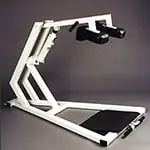
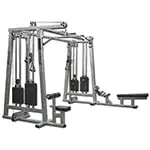
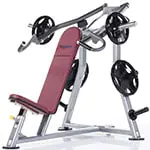
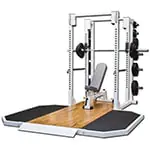
Strength Training Equipment for Home, Commercial, School, and Facility Gyms
Strength training equipment from IRON COMPANY includes power racks, power cages, squat stands, half racks, weight benches, functional trainers, selectorized gym equipment, plate-loaded machines, Smith machines, jungle gym cable machines, home gyms, combination gym equipment, glute trainers, abdominal benches, back and hamstring benches, weightlifting platforms, storage racks, and related strength room systems for home gyms, garage gyms, commercial fitness centers, schools, tactical training rooms, government fitness facilities, and institutional weight rooms.
Strength equipment should match the way the room will actually be used. A home gym strength training package may start with a rack, bench, free weights, and compact cable option. A commercial facility may need premium strength training systems, professional strength training gear for fitness centers, selectorized machines, plate-loaded stations, jungle gyms, benches, and storage. Schools, military buyers, and institutional strength training machine projects often need durable layouts that support many users, clear traffic flow, equipment organization, flooring, freight receiving, and long-term service planning.
Use this category to compare heavy-duty strength equipment for gym projects, space-saving home strength equipment, full body strength equipment for athletes, tactical fitness strength training equipment, commercial-use racks, guided machines, cable systems, platforms, benches, and storage. IRON COMPANY has supplied gym equipment and flooring solutions since 1997 and supports residential, commercial, vertical-market, military, government, institutional, and facility buyers with product guidance, quoting, sourcing, and strength room planning support.
How to Choose Strength Training Equipment by Training Style and Facility Needs
The right strength training equipment starts with the training goal. Rack-based strength equipment is usually the foundation when squats, presses, pulls, barbell lifts, and progressive free weight training are central to the room. Selectorized machines are often better for mixed-skill environments where fast weight changes, guided movement, and ease of use are priorities. Plate-loaded and leverage gym equipment can be a strong fit when experienced users want a more direct loading feel and the facility already has Olympic plates and plate storage.
Functional trainers and jungle gym cable machines are strong choices when cable versatility, adjustable pulley positions, and full-body movement variety matter. Smith machines provide a guided bar path and can complement free-weight racks when buyers want another barbell-style station with a fixed path of travel. Weight benches, core benches, posterior-chain benches, glute trainers, weightlifting platforms, and storage racks should be planned as part of the same strength room layout rather than added as afterthoughts.
IRON COMPANY’s article on strength training equipment selection and uses explains the different types of strength equipment and their benefits, and its buyer’s guide to Legend Fitness strength equipment covers that line.
Buyers comparing commercial grade strength training equipment should verify product-specific use rating, warranty terms, dimensions, anchoring requirements, freight method, installation needs, and any commercial-use claims before ordering. Buyers looking for GSA contract strength equipment should confirm product-level eligibility, quote requirements, freight details, and procurement rules before assuming any specific machine, rack, or strength system qualifies.
Compare Strength Training Equipment Types
Strength equipment categories are not interchangeable. Use the stacked comparisons below to decide whether racks, benches, selectorized machines, plate-loaded equipment, cable systems, Smith machines, home gyms, glute trainers, platforms, or storage racks are the right fit for your training space.
Best fit: Heavy barbell training, school weight rooms, commercial strength rooms, powerlifting areas, Olympic lifting zones, and facilities where squats, presses, pulls, and barbell progression are central to the layout.
Buyer guidance: Choose power cages and platform racks when the room needs a serious rack-based training station with barbell clearance, compatible benches, plate storage, safety planning, and room to expand. Buyers should verify dimensions, rack height, attachment compatibility, platform size, anchoring guidance, and the flooring plan before ordering.
Marty Gallagher’s article on training with a power rack covers the benefits of rack training and the exercises a power rack supports.
Best fit: Open barbell stations, compact commercial strength rooms, school weight rooms, garage gyms, tactical fitness spaces, and facilities that want rack functionality without the footprint of a full cage.
Buyer guidance: Choose half racks and quarter cages when open access, storage options, and expandable rack functionality matter. They can work well when a full power cage would crowd the room, but buyers should still check ceiling height, spotter arms, attachments, plate storage, and walking clearance around the station.
Best fit: Garage gyms, compact strength rooms, performance training spaces, group training areas, and facilities that need more open space or reconfigurable rack layouts.
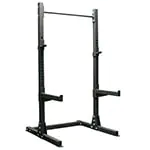
Buyer guidance: Choose squat stands and modular racks when portability, open training space, and lower footprint are priorities. These systems can be useful for space saving home strength equipment and athletic training rooms, but buyers should verify stability, compatibility, spotter options, rack height, and the type of barbell work being performed.
Best fit: Dumbbell training, barbell stations, rack setups, Smith machines, functional training rooms, commercial gyms, schools, and home gym packages.
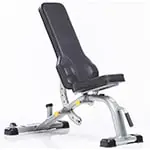
Buyer guidance: Choose weight benches based on bench angle, pad height, pad width, frame design, transport wheels, attachment compatibility, room flow, and the movements being performed. Flat, incline, decline, adjustable, Olympic, and utility benches each serve different needs, so do not assume one bench style solves every strength room requirement.
Many weight benches now include a transport system with a handle in the front and wheels in the back. When buying a weight bench, making sure it has a transport system makes it much easier for you and everyone else using the bench to move it around any space with ease.
IRON COMPANY’s weight bench buying guide for residential and commercial use covers how to choose a bench.
Best fit: Commercial gyms, apartments, hotels, corporate wellness rooms, schools, senior-focused wellness spaces, military fitness rooms, and institutional strength training machines where fast setup and guided movement are priorities.
Buyer guidance: Choose selectorized strength equipment when many users need quick weight changes and straightforward exercise setup. Pin-stack machines can be easier for mixed-skill users than plate-loaded equipment, but buyers should compare weight stack range, adjustment points, shrouds, footprint, service access, and whether the machine supports the intended user population.
Best fit: Bodybuilding gyms, athletic performance rooms, commercial strength floors, school weight rooms, and facilities with experienced users who want plate-loaded machine training.
Buyer guidance: Choose plate-loaded and leverage gym equipment when the room already has Olympic plates, plate storage, and users who understand loading and unloading equipment. These machines can deliver a strong training feel, but buyers should plan for plate quantity, storage, user traffic, machine footprint, and whether the movement pattern matches the facility program.
Best fit: Personal training studios, home gyms, commercial fitness centers, apartments, hotels, tactical rooms, and buyers who want cable-based exercise variety in one footprint.
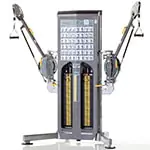
Buyer guidance: Choose functional trainers when adjustable pulleys, unilateral movements, cable exercises, and full-body training variety are priorities. A functional trainer can support presses, rows, fly movements, curls, triceps, core work, rotational training, and accessory movements, but buyers should compare pulley ratio, stack weight, cable travel, handle attachments, footprint, and ceiling height.
IRON COMPANY’s article on functional trainers and exercise variety covers what these machines add to a strength room.
Best fit: Guided barbell training, mixed-equipment strength rooms, commercial gyms, apartments, schools, home gyms, and users who want a fixed-path barbell-style station.
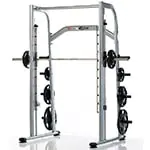
Buyer guidance: Choose Smith machines when guided bar path, bar travel, bench compatibility, and another barbell-style station are important. A Smith machine is not a replacement for every free-weight rack, so buyers should compare training goals, footprint, bar angle, counterbalance details when supplied, plate storage, and whether free-weight barbell stations are also needed.
Best fit: Commercial gyms, school facilities, multi-user strength rooms, military fitness centers, institutional training spaces, and facilities where several users need cable stations at the same time.
Buyer guidance: Choose jungle gym cable machines when the facility needs multiple cable stations in one central structure. Jungle gyms can improve floor efficiency compared with scattering many single cable machines throughout the room, but buyers should plan station count, stack configuration, installation path, cable attachment storage, and user circulation around the unit.
Best fit: Multi-user rooms, compact commercial spaces, schools, military facilities, home gyms, and facilities that need one machine to handle multiple exercises.
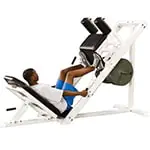
Buyer guidance: Choose combination gym equipment when space efficiency and exercise variety matter. Leg press and hack squat combinations, dual-function arm machines, multi-station strength systems, and other combination units can reduce the number of separate machines needed, but buyers should verify station count, footprint, adjustment range, and whether the combined functions fit the users.
Best fit: Garage gyms, basement gyms, spare rooms, personal training rooms, apartments, hotels, and buyers who want structured strength training without assembling many separate machines.
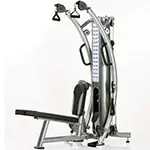
Buyer guidance: Choose home gyms when space-saving home strength equipment and guided resistance are priorities. Home gyms can help buyers train several movement patterns from one compact footprint, but users should confirm weight stack range, exercise stations, ceiling height, room access, assembly requirements, and whether free weights or cardio equipment will also be part of the room.
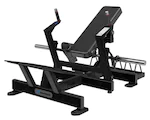
Best fit: Lower-body training areas, athletic performance rooms, commercial gyms, home gyms, schools, and buyers focusing on hip extension, glute development, and posterior-chain work.
Buyer guidance: Choose glute trainers when the training program needs a dedicated lower-body station beyond general racks and benches. Buyers should compare machine type, loading method, pad design, foot platform, room clearance, plate storage, and how the product fits with hamstring, back extension, and leg training equipment.
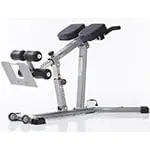
Best fit: Posterior-chain training, back extension work, glute-ham raises, hip-hinge assistance, schools, athletic facilities, commercial gyms, and serious home gyms.
Buyer guidance: Choose back, hamstring, and glute benches when the room needs targeted posterior-chain training that complements squats, deadlifts, lunges, and lower-body machine work. Compare pad adjustment, user positioning, frame footprint, transport features, and whether the bench supports the movements your facility needs.
IRON COMPANY’s article What is a Glute Ham Developer? explains what a GHD is used for.
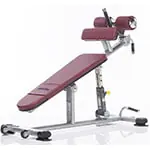
Best fit: Core training areas, home gyms, commercial strength rooms, schools, studios, and facilities that want a more deliberate trunk-training station.
Buyer guidance: Choose abdominal and core benches when decline sit-ups, crunch variations, vertical knee raise work, Roman chair movements, or trunk-focused accessories are part of the program. Buyers should compare adjustment range, pad position, footprint, and whether a multi-use bench can serve the same need.
Best fit: Circuit-style strength areas, compact rooms, youth or adult fitness settings, and facilities that need simple guided resistance without traditional weight stacks or plate loading.
Buyer guidance: Choose hydraulic gym equipment when the room needs controlled resistance, compact machines, and simple transitions between exercises. This category is more specialized than racks or selectorized machines, so buyers should verify use case, user population, resistance behavior, and product-specific guidance before ordering.
Best fit: Any strength room using dumbbells, barbells, plates, kettlebells, cable attachments, medicine balls, or accessories.
Buyer guidance: Choose storage early in the planning process. Dumbbells, plates, bars, kettlebells, cable attachments, and balls left on the floor create clutter and slow down training. Storage racks should match the exact equipment being stored, total load, rack footprint, traffic flow, and floor surface.
Best fit: Buyers who already own or plan to buy compatible benches and want to expand exercise variety with attachments.
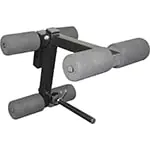
Buyer guidance: Choose bench attachments only after confirming compatibility with the exact bench model. Leg developers, preacher curl attachments, rollers, and similar accessories can make a bench more versatile, but they should not be assumed to fit every bench frame or pad configuration.
Best fit: Olympic lifting, deadlift zones, rack stations, school weight rooms, commercial strength areas, and facilities that need a defined lifting surface.
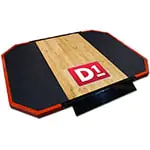
Buyer guidance: Choose weightlifting platforms when barbell work, lifting zones, and flooring protection need to be planned together. Buyers should verify platform size, insert material, frame design, rack compatibility, room clearance, and whether rubber gym flooring or mats are needed around the platform.
Strength Room Planning by Facility Type
Home Gyms and Garage Gyms
Home gym strength training packages usually work best when they start with a clear footprint and a short equipment priority list. Many home buyers begin with a rack or squat stand, adjustable bench, free weights, and storage, then add a functional trainer, Smith machine, home gym system, or compact selectorized unit if the room needs more guided or cable-based exercise variety. For garages, basements, and spare rooms, space-saving home strength equipment should be compared by ceiling height, door access, installation path, and how much open floor space remains after the equipment is installed.
Commercial Gyms and Fitness Centers
Commercial strength rooms usually need a balanced mix of racks, selectorized machines, plate-loaded stations, benches, functional trainers, jungle gyms, and storage. The best commercial setup is not always the one with the most machines. It is the one that supports different training styles without creating crowding, clutter, long wait times, or poor movement paths between stations. Buyers comparing premium strength training systems for commercial facilities should also plan service access, cleaning routines, replacement parts, and member traffic patterns.
Schools, Colleges, and Athletic Performance Rooms
School, college, and performance rooms usually need full body strength equipment for athletes, durable barbell stations, platforms, posterior-chain benches, glute trainers, functional trainers, organized storage, and equipment that can serve multiple training groups. Rack spacing, coaching sightlines, platform placement, plate storage, dumbbell traffic, and safety-zone planning should be considered before product selection is finalized.
Apartment Gyms, Hotels, and Corporate Wellness Rooms
Apartments, hotels, and corporate wellness centers often need approachable strength equipment with straightforward adjustments, manageable footprints, and clear instructions for many user skill levels. Selectorized machines, compact functional trainers, home gym systems, benches, cable stations, and organized storage can offer useful strength training without turning a small room into a crowded commercial floor.
IRON COMPANY’s article on multi-housing fitness centers and apartment gym equipment covers equipment and flooring for shared residential fitness rooms.
Tactical, Fire, Police, Military, and Government Facilities
Tactical fitness strength training equipment should be planned around user volume, durability expectations, training goals, freight receiving, storage, flooring, and equipment that supports strength, work capacity, and general readiness training. IRON COMPANY supports government purchasing where applicable, including GSA contract strength equipment discussions for qualified buyers. Product-level GSA eligibility, quote requirements, shipping terms, installation needs, and procurement rules should be confirmed before ordering.
Institutional and Vertical-Market Facilities
Institutional strength training machines for senior living, municipal recreation centers, fire stations, police departments, schools, hospitality properties, and corporate wellness rooms should be selected around the people using the space. Ease of adjustment, guided movement, service access, room layout, flooring, cleaning, and staff oversight may matter more than maximum loading potential in many vertical-market facilities.
Best Fit and Not Ideal For
Best Fit
- Buyers building a complete strength area with racks, benches, cable systems, selectorized machines, plate-loaded equipment, Smith machines, storage, and flooring.
- Home gyms, garage gyms, commercial fitness centers, school weight rooms, apartment fitness rooms, corporate wellness centers, tactical training rooms, military facilities, government buyers, and institutional strength spaces.
- Facilities comparing commercial-use racks, heavy-duty strength equipment for gym projects, functional trainers, jungle gyms, premium strength training systems, institutional strength training machines, and professional strength training gear for fitness centers.
- Buyers who need practical planning around footprint, ceiling height, traffic flow, storage, flooring, freight, receiving, installation, service access, and product-level use ratings.
People that should purchase strength training equipment:
- People that wish to gain muscle, increase strength, improve performance for their occupation or sport, or just want to maintain their mobility and independence as they age. Resistance training also helps maintain bone density.
- People that want to physically and mentally become the best version of themselves.
- Under a trainer’s guidance, strength training is often part of rehabilitation after an injury.
Not Ideal For
- Buyers looking only for a few portable accessories rather than a true strength equipment layout.
- Rooms without enough clearance for benches, racks, plate-loaded equipment, cable travel, selectorized stations, and user traffic.
- Facilities that have not planned storage for plates, dumbbells, bars, kettlebells, handles, cable attachments, and accessories.
- Projects that require verified product-specific GSA eligibility, warranty coverage, installation requirements, anchoring, capacity, or commercial-use ratings but have not confirmed those details for the exact equipment being ordered.
- Facilities expecting one machine category to serve every training need without considering user skill level, supervision, floor space, and room purpose.
People that should not purchase strength training equipment:
- Those who have injuries, health issues, or any other reason their doctor may suggest an alternative to using strength equipment.
Common Strength Equipment Buying Mistakes to Avoid
- Starting with isolated machines before planning the room foundation: Many strength rooms should begin with the basics: racks, benches, free weights, storage, flooring, and clear movement zones. Machines should then be added based on user needs and program goals.
- Choosing plate-loaded equipment when users need selectorized simplicity: Plate-loaded equipment can be a strong choice for experienced lifters, but selectorized machines may be easier for mixed-skill, hospitality, apartment, school, or wellness settings where fast weight changes matter.
- Ignoring ceiling height and cable travel: Power cages, half racks, functional trainers, jungle gyms, Smith machines, and pull-up stations all require vertical clearance. Measure ceiling height, bar travel, pull-up clearance, and any overhead lights, fans, sprinklers, or ducts before ordering.
- Underestimating walking space: A machine footprint is not the same as the working space. Users need room to enter, exit, adjust, load plates, move benches, spot lifts, and re-rack equipment without crowding adjacent stations.
- Skipping storage until the end: Storage racks for plates, dumbbells, barbells, kettlebells, cable attachments, and balls should be part of the initial strength room plan. Poor storage creates clutter and makes a room harder to supervise and maintain.
- Using home-use equipment in shared facilities: Equipment intended only for residential use may not be appropriate for schools, apartments, commercial gyms, corporate wellness rooms, tactical facilities, or institutional settings. Verify product-level use rating and warranty terms before ordering.
- Assuming government purchasing eligibility across a whole category: Do not assume every product on a category page is GSA eligible, Buy American Act compliant, TAA compliant, Made in USA, or contract-ready. Confirm product-level procurement details before quoting.
Facility Planning for Strength Training Equipment
Room Layout and Traffic Flow
Strength rooms need more than machine footprints on a drawing. Plan working space around racks, benches, selectorized machines, cable stations, plate-loaded equipment, and storage. Leave enough space for users to load plates, move benches, spot lifts, perform cable movements, walk between stations, and return equipment without crossing active lifting areas.
We tell buyers to measure the space where they will be installing the equipment to ensure there is ample room for the footprint as well as the height. We also remind them to check their door widths so we can make sure the equipment will fit through all doors when it arrives.
Flooring and Surface Protection
Strength equipment should be paired with appropriate gym flooring when free weights, racks, machines, benches, and loaded equipment are part of the room. Rubber gym flooring, rubber gym mats, platforms, and specialty flooring products may be appropriate depending on the subfloor, equipment weight, training style, and facility conditions. No flooring setup should be treated as a guarantee against all damage, so plan conservatively for how the room will actually be used.
Make sure to purchase gym flooring that is adequate in thickness for the type of strength equipment you are purchasing to protect your floors and the equipment from damage as well as to minimize vibration and noise while training.
Storage and Organization
Storage is part of strength equipment planning, not a finishing touch. Dumbbell racks, barbell racks, weight plate trees, kettlebell racks, cable attachment racks, and ball storage racks help keep walkways clear and make the room easier to use. Storage should match the equipment being stored, the total weight load, the available wall space, and the traffic level of the facility.
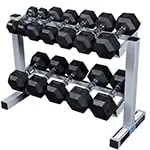
A common issue with gym equipment storage products, such as dumbbell racks, barbell racks, and plate trees, is buying a product that is compatible with your current or future free weight equipment. As an example, hexagonal shaped dumbbells should be stored on a dumbbell rack with flat trays. Round dumbbells, such as urethane dumbbells, should be stored on a rack that includes cradles so the dumbbells are always spaced properly and don’t roll around on the rack. Another example is making sure to buy an Olympic plate tree for Olympic plates and a bumper plate tree for bumper plates. Most bumper plates from 10-55 lbs. are all a consistent diameter of about 18” while Olympic plates from 2.5-45 lbs. all have a different diameter.
Freight, Receiving, and Installation Path
Commercial-use strength equipment, racks, platforms, jungle gyms, selectorized machines, and plate-loaded machines may ship by palletized freight depending on product size and order configuration. Buyers should confirm loading dock access, liftgate needs, delivery appointments, inside-delivery limitations, doorway width, hallway clearance, elevator access, stair limitations, assembly area, and the path from receiving to the final training room.
- Most strength training equipment is oversized and too large or heavy to ship via ground parcel like UPS and therefore ships on oversized custom made wooden pallets where the product is shrouded with shrink wrap and/or cardboard and then strapped securely to the pallet.
- Most single stack strength equipment ships on a pallet fully assembled with little to no assembly required by the customer.
- All strength equipment deliveries come with lift gate service to lower it to the ground when it arrives. Because of the size and weight of this equipment, make sure to have some strong friends available on delivery day to help move it into the desired location where it will be used.
Many buyers will confirm their new equipment will fit properly in the space it will be used, but often forget to measure the width of the doorways it must pass through to get there. IRON COMPANY can usually assist the buyer with a solution to this if we are aware of it as soon as the order is placed.
Anchoring, Assembly, and Maintenance
Some racks, rigs, platforms, and machines may include anchoring guidance or assembly requirements. Follow the manufacturer’s instructions for each product and use qualified installers or facility professionals when anchoring, structural review, or large machine assembly is required. Shared facilities should inspect hardware, cables, upholstery, guide rods, welds, pulleys, footplates, weight stacks, frame components, and adjustment mechanisms on a routine schedule.
We have installed our strength equipment brands including Arsenal Strength, Legend Fitness, TuffStuff, Defiant Strength, and Nautilus all over the United States for residential, commercial, and government customers.
Our installers can perform services including old equipment and flooring removal, new equipment and flooring installation, assembly, trash and debris removal, as well as warranty service.
Make sure to properly maintain their strength equipment at all times. For selectorized equipment, visually inspect cables and pulleys for wear and make sure the cable is always securely fastened to the top plate of the stack. Keeping bearings, bushings, guide rods, and pulleys properly lubricated helps keep the machine running smoothly for years.
Strength Training Equipment Categories at a Glance
Glute trainers are used for targeted hip extension, lower-body development, and posterior-chain training. Choose this category when a dedicated lower-body station makes sense beyond general racks, benches, and plate-loaded machines.
Abdominal and core benches support trunk-focused training with decline benches, crunch benches, sit-up stations, Roman chair-style products, and vertical knee raise options. Choose this category when core training needs a defined station instead of relying only on general benches or floor work.
Back, hamstring, and glute benches help build a stronger posterior-chain area with back extensions, glute-ham raises, hip-hinge assistance, and lower-body accessory movements. These benches pair naturally with racks, platforms, and free weight training.
Combination gym equipment can reduce the number of separate machines needed by combining multiple movements into one station. Choose this category when floor efficiency and machine versatility matter.
Functional trainers provide adjustable cable training for presses, rows, fly movements, arm training, core work, rotational movement, and full-body exercise variety. They are especially useful for home gyms, studios, commercial spaces, and mixed-use strength rooms.
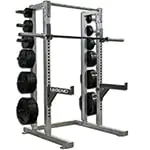
Half racks and quarter cages provide rack capability in a more open footprint than a full cage. Choose this category when a room needs barbell stations, storage, and attachment options without fully enclosing the lifting space.
Home gyms are compact strength systems for buyers who want guided resistance and multiple exercise options from one footprint. They are useful in garages, basements, spare rooms, apartments, hotels, and personal training spaces.
Hydraulic gym equipment serves a more specialized circuit-training role where simple guided resistance and compact machine design are priorities. Review product-specific use case and resistance behavior before ordering.
Jungle gym cable machines bring multiple cable stations into one larger strength system. Choose this category when several users need cable training at the same time in a commercial, school, military, or institutional facility.
Plate-loaded and leverage machines are used for pressing, pulling, rowing, leg training, and bodybuilding-style machine work. Choose this category when plate-loaded resistance and a more direct training feel are important.
Power cages and platform racks support barbell strength training, rack lifts, Olympic-bar work, spotting, and lifting-zone planning. Choose this category when rack-based training is the foundation of the room.
Selectorized gym equipment uses weight stacks and pins for fast resistance changes. Choose this category for mixed-skill facilities, hotels, apartments, commercial gyms, schools, and institutional rooms where guided machine training is important.
Smith machines provide guided bar travel for barbell-style movements. Choose this category when a fixed-path bar station is a useful complement to racks, benches, free weights, and other strength machines.
Squat stands and modular racks are useful when a facility needs barbell training with less footprint than a full power cage. Choose this category for compact home gyms, athletic rooms, and flexible training layouts.
Storage racks keep dumbbells, barbells, kettlebells, plates, cable attachments, and balls organized. Choose this category early when planning a functional strength room that stays clear and manageable during daily use.
Weight bench attachments can expand the use of compatible benches with add-on movement options. Always confirm exact bench compatibility before purchasing an attachment.
Weight benches support dumbbell training, barbell training, rack work, Smith machine use, and general strength exercises. Choose this category when the room needs flat, incline, decline, adjustable, Olympic, or utility bench options.
Weightlifting platforms define lifting zones for barbell work, deadlifts, Olympic lifts, and rack-based training. Choose this category when lifting surface, rack compatibility, and room layout need to be planned together.
Featured Strength Training Equipment Options
Related Free Weight, Flooring, Cardio, and Support Categories
Strength training equipment works best when the rest of the room is planned around it. Browse Free Weights for dumbbells, kettlebells, barbells, weight plates, collars, and handles that support rack, bench, and plate-loaded training. Review Gym Flooring and Rubber Gym Mats when planning floor protection around racks, benches, dumbbell zones, plate-loaded machines, and platforms.
For cardio and full facility builds, compare Cardio Equipment, Weightlifting Platforms, Dumbbell Racks, Barbell Racks, Weight Plate Trees, and Cable Attachment Racks.
Strength Training Guides and Buyer Resources
For more help comparing equipment types and facility planning needs, review IRON COMPANY guides including Strength Training Modalities, The Ultimate Guide to Gym Equipment, How to Build a Stronger Bench Press, KING SQUAT!, The Ultimate How-To Deadlift Guide, Sustained Strength Mastery, Selectorized Gym Equipment and Cable Machines, and Exercise Equipment: Choosing Residential or Commercial.
Government and institutional buyers can review GSA Bid Information for purchasing support where applicable. Product-level GSA eligibility, quote requirements, freight details, installation needs, and procurement requirements should be confirmed before ordering.
Common Questions About Strength Training Equipment
What strength training equipment should I buy first?
Most rooms start best with a rack-based foundation, an adjustable or flat bench, appropriate free weights, storage, and flooring. From there, add selectorized machines, plate-loaded equipment, functional trainers, Smith machines, or cable systems based on user skill level, training goals, supervision, and available space.
What equipment do I need to strength train at home?
Fitness experts will agree that starting with an adjustable weight bench and an adjustable dumbbell set, such as PowerBlocks, is a practical and affordable place to start to begin learning proper form and building your foundation within a minimal footprint.
What is the difference between selectorized and plate-loaded strength equipment?
Selectorized equipment uses weight stacks and selector pins for fast resistance changes and guided machine movement. Plate-loaded and leverage equipment uses Olympic plates and is often selected when users want a more direct loading feel and the facility already has plate storage and experienced users.
What strength equipment works best in a smaller room?
Smaller rooms often do best with space-saving home strength equipment such as squat stands, half racks, compact home gyms, adjustable benches, functional trainers, and well-planned storage. Measure ceiling height, working space, and access paths before ordering.
Is a Smith machine worth adding if I already have a power rack?
A Smith machine can still be useful as a guided bar path station that complements free-weight rack training. It may make sense in mixed-use strength rooms, apartments, schools, hotels, and facilities where users want both free-weight and guided barbell-style training options.
What role does a jungle gym cable machine play in a commercial facility?
A jungle gym cable machine combines several cable stations and weight stacks in one central strength system. This can help commercial gyms, schools, and institutional facilities support multiple users at once without spreading similar cable functions across many separate machines.
Do I need dedicated storage racks in a strength room?
Yes. Storage racks help organize dumbbells, kettlebells, plates, bars, cable attachments, and accessories. Proper storage can improve traffic flow, reduce clutter, make equipment easier to find, and help the room function better during busy training times.
What flooring should go under strength training equipment?
The right flooring depends on the equipment, subfloor, user traffic, and whether free weights or loaded machines are part of the room. Rubber gym flooring, rubber mats, platforms, or dedicated impact zones may be appropriate. No flooring setup should be treated as a guarantee against all damage.
Can IRON COMPANY help with larger strength equipment quotes?
Yes. IRON COMPANY can help buyers compare strength training equipment, racks, benches, selectorized machines, plate-loaded equipment, functional trainers, Smith machines, jungle gyms, storage, flooring, freight, receiving, and facility purchasing options. For government or institutional purchasing, product-level eligibility and quote requirements should be confirmed before ordering.
Which is better: free weights or weight machines?
Free weights are the gold standard for building size and strength because of their inherent instability and their ability to trigger hypertrophy. Weight machines on the other hand are a fantastic way to isolate different muscles throughout the body without the need for a spotter. Beginners, the deconditioned, as well as the elderly can also greatly benefit from these user friendly machines and are often safer to use than free weights.
What makes gym equipment commercial grade vs. home grade?
Strength equipment rated for home use usually has a much lower weight capacity than equipment made for all day use in commercial gyms. Commercial rated strength equipment is usually constructed using 3” x 3” x 11 gauge steel tubing or bigger. Some strength equipment manufacturers have a go big or go home approach and can use 4” x 4” x 7 gauge steel, although 3” x 3” x 11 gauge is usually sufficient enough for even power cages and bench presses. Tubing size and gauge for strength equipment approved for home use can include 2” x 2” x 14 gauge, 2” x 3” x 12 gauge, as well as other combinations. Another thing that differentiates commercial grade from home grade is linear bearings and bushings. Whenever guide rods are present on a machine, such as a Smith machine, leg press, or cable crossover, the carriage or weight stack rides on chrome guide rods. Bushings help keep home gym equipment more affordable but do not glide as easily as linear bearings. Linear bearings can be found in commercial strength training equipment and allow the weight stack or carriage to glide effortlessly while the exercise is being performed and are preferred by most lifters.
Why Buy Strength Training Equipment from IRON COMPANY?
IRON COMPANY is an established e-commerce supplier of gym equipment, strength training equipment, free weights, cardio equipment, gym flooring, and facility products for residential, commercial, vertical-market, military, government, institutional, and facility buyers. For strength equipment, IRON COMPANY can help customers compare racks, benches, cable systems, selectorized machines, plate-loaded equipment, Smith machines, platforms, storage, flooring, freight, receiving, and room planning before ordering.
For product questions, quote requests, or facility purchasing support, visit IRON COMPANY Customer Care, Contact IRON COMPANY, or review GSA Bid Information for government purchasing support where applicable.
Shop Strength Training Equipment
Shop strength training equipment above, or contact IRON COMPANY for help comparing commercial-use racks, weight benches, selectorized gym equipment, plate-loaded machines, functional trainers, Smith machines, jungle gym cable machines, home gym strength training packages, tactical fitness strength training equipment, institutional strength training machines, storage racks, gym flooring, freight, receiving, and facility purchasing options. For government or institutional purchasing, confirm product-level eligibility and quote requirements before ordering.
Read Less