
 Call us today at 1-888-758-7527
Lamar Gant: Forged Passion and Unmatched Powerlifting Records
This Marty Gallagher profile of Lamar Gant is both a tribute and a powerlifting case study: a look at how forged passion, unusual leverage, ruthless meet focus, and flawless competitive composure turned a tiny lifter into one of the most extraordinary strength athletes the sport has ever seen. For lifters chasing a bigger squat, bench press, and deadlift through disciplined free-weight training and serious strength training equipment, the article still delivers a timeless lesson: technique, intent, and obsession can turn a barbell into history.
Lamar Gant: Forged Passion and Unmatched Powerlifting Records
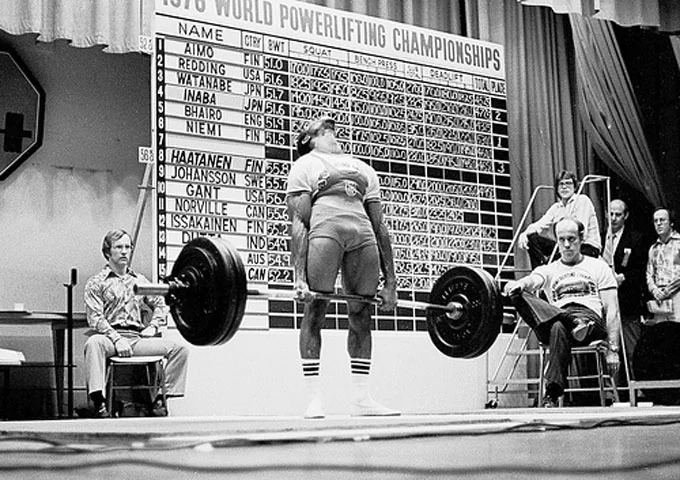
I was proud to know Lamar Gant. He was one of my very few idols. His strength feats are storybook stuff. Nobody will ever match this mini-monster’s powerlifting records. Lamar won his first world championships at age 16 in 1975. Lamar won his last world championship in 1990. In the interim years he accumulated sixteen world championships. That is no typo Jack, and it remains one of the most staggering championship runs the sport has ever seen.
Lamar competed in two powerlifting weight classes, the 123-pound class and the 132-pound class. He set 71 world records and was the first powerlifter in history to hold the world record in all three lifts simultaneously. Lamar set more deadlift records than anyone. For years after his retirement, those all-time best deadlifts in the 123 and 132 classes defined the outer edge of what a small-bodyweight puller could do.
His deadlift feats are mind-blowing. He pulled 623-pounds in the 123-pound weight class and an unfathomable 688-pounds weighing 132-pounds. He was the first and only human to deadlift five times bodyweight; this feat was accomplished when he deadlifted 661 weighing 130-pounds. Gant was no one-lift specialist. Lamar barbell squatted a mind-blowing 615-pounds in the 132-pound class. He also raw bench pressed a 352-pound world record weighing 132. In his bench press, Lamar had an incredible arch. He could bend his spine to such a degree that his flat bench became a short-stroked decline bench press. His squats were super deep with a lot of forward bend.
Scoliosis, Structure, and Why Gant Was So Unusual
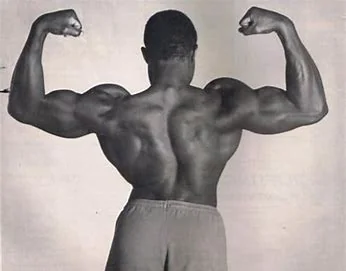
Lamar had idiopathic scoliosis, curvature of the spine. Under stress, like say a 660-pound deadlift, Lamar’s spine would collapse in a compressed S-shape. Combined with his long arms and short torso, he had the perfect structural leverage for the deadlift. Yet he set world records in the bench press where his ungodly long arms worked against him and he set world records in the squat, a lift he was built all wrong for.
I got to know Lamar and coached him at three national championships when he lifted for Black’s Gym. He was already a ten-time world champion when I started working with him. He was the easiest world-level lifter I’ve ever worked with. At the national and world championships he was unflappable. Quiet, alert, sharp as a tack, he truly was unconcerned with competitors, he really had none, and exhibited workman-like composure at all major competitions.
Meet-Day Composure and World-Class Focus
Before the competition he and I would talk and establish his warmup attempts for all three lifts. We would work out the timing of his warm-up attempts and I would purposefully talk to him as little as possible. What needed to be said? This was the ten-time world champion and he did not need juvenile exhortations. My job was to do everything necessary to allow him to get centered and focused.
He would put on the headphones, listen to his music and get in the zone. We would load the Olympic bar and every five minutes he would take a successively heavier warmup attempt. When it was time for us to make our way from the backstage warm-up room to the weightlifting platform, I would signal him with a raised finger and he’d nod. We’d make our way to the lifting platform and stand at the chalk box as he psyched.
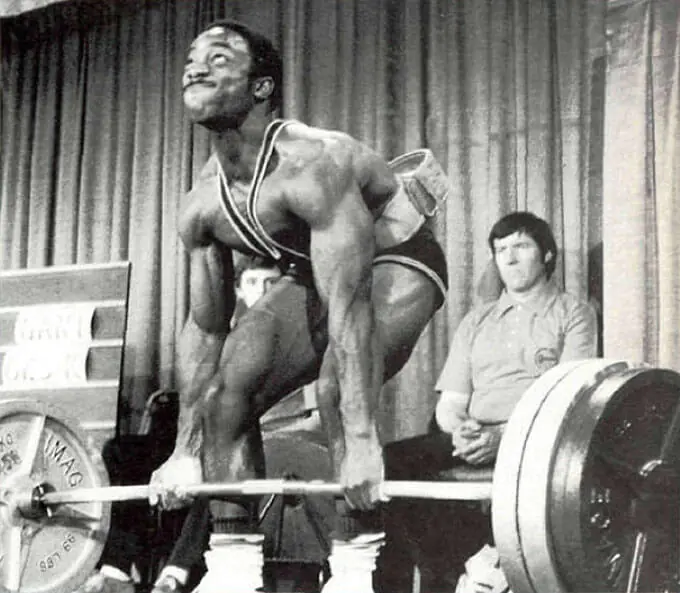
Prior to the lift, I’d say the usual pre-lift coach-athlete prattle that I doubt he even heard. I’d help him affix his weightlifting belt, which he uniquely wore backwards, and instead of having the belt cinched round his waist he wore it higher, around his lower ribs. This was his fulcrum point, not his waist. I assumed the unique belt position was related to his unique condition. Once belted and while chalking up, Lamar would flip a switch. At the last possible moment, he would put himself into a transcendental trance state that had to be seen to be appreciated.
His eyes would get wide and you could see him morph from man into Superman, all inside ten seconds. It was freaky and done with a degree of internal self-control that I’ve never seen before or since. How do you artificially manipulate psyche so severely and so instantaneously? The first time I witnessed his pre-lift psyche, up close, I involuntarily took a step back. It was like turning a corner and encountering a wolverine, teeth bared, three feet in front of you. He’d wheel around and stalk to the barbell like a jungle cat. He never missed.
When One World Championship Meant One World Champion
For the first fifteen years of powerlifting’s existence there was only one national federation, the United States Powerlifting Federation, and one international governing body, the IPF, the International Powerlifting Federation. There was one national champion and one world champion per weight class per year. Back when Lamar lifted, one world championship meant one world champion.
For the first ten years of Lamar’s career the national committee would pay the hotel and airfare for the defending national champions. For the first ten years of powerlifting’s existence the national committee would pay for airfare, hotel and provide a food per diem for American national champions being sent to the world championships. That all went out the window when powerlifting lost its lucrative contract with ABC’s Wide World of Sports and the national committee was bankrupted with the advent of drug testing.
Testing athletes is expensive. The money formerly set aside for the athletic travel fund was now diverted to testing and to lawyers defending the federation from drug-testing related suits brought by athletes. Lawyers defended the federation from lawsuits brought by rival powerlifting federations. It was criminal that the world’s greatest lifter now had to struggle to pay his own way to national and world championships.
One story told of the time Lamar approached Powerlifting USA owner and editor Mike Lambert the day after winning the world title in Europe and explained to Mike that he did not have a plane ticket home, and could Mike lend him enough money to make it back to Denver. Mike, being a fan and knowing Lamar’s greatness, lent him the money. Lamar lugged home the outstanding lifter award from the world championships. He had to sit it on his lap the entire 12-hour trip because it would not fit in the overhead and was too fragile to ship. Pathetic. Worst of all, Lamar was a lifetime 100% drug-free athlete for whom all the drug controversies and fistfights were meaningless and inconsequential.
After the world championships there was always a banquet and Lamar showed he was not only the world’s best powerlifter, he was also powerlifting’s best dancer. He was a fabulous dancer who obviously took his cues from Soul Train. The European women could not get enough of the diminutive muscleman. Like Prince, Lamar was a proud sexy little man.
Lamar Gant’s Invisible Negative
One afternoon during a break in the lifting at the national championships, a bunch of Black’s Gym team members went to lunch. Lamar was with us. He had lifted and crushed the competition the day before. He was done and relaxed and open. I made the most of it. Sitting across from the normally reserved man, I peppered him with questions.
What was his rationale for his unique slowed lowering prior to a deadlift? When Lamar strode to the lifting platform and stood over the barbell he would begin a slow-motion robotic descent to the bar. He told me he was “building tension.” He observed that, “On the squat and bench press, we begin the lift with the eccentric, the negative, the lowering. This allows us to use gravity to build tension. I brake as the eccentric ends and the concentric commences. This creates tremendous tension and makes the pull easier. I create artificial tension by flexing and tensing as I lower myself down to start a deadlift. I am creating an invisible negative.”
He stood up from the table and invited me to do the same. He began to do his patented slow lowering and invited me to, “Feel my traps and erectors as I lower.” He didn’t have to ask me twice. Even through his shirt, his erectors and traps were the hardest, most fat-free muscles I had ever felt, like polished marble. He coiled as he dropped down and at the bottom his body vibrated with tension. Incredible.
His brand of forged passion was an uncanny ability to overcome a never-ending series of adversities, yet year after year he won, not just winning but vaporizing the best powerlifters in the world. His 688-pound deadlift at 132-pounds was done after squatting 588. Never forget that. Even if someone someday exceeds the pull in a deadlift-only context, ask them to go back and squat 580 first.
Do yourself a favor and spend some time looking at Lamar Gant’s lifts on YouTube. We will never, ever see his like again. Ever. Period.
Equipment Pairings for Serious Old-School Powerlifting
Lamar’s story belongs to the era of brutally honest barbell work. Lifters building that same kind of no-nonsense training room can start with weightlifting platforms, explore weight lifting belts and head harnesses, and compare options such as the Schiek 2006 wide weightlifting belt, the IRON COMPANY all-leather powerlifting belt, and the Forged Passion leather weightlifting belt.
For the barbell itself, old-school lifters can look at the Body-Solid black oxide Olympic weightlifting bar or the Body-Solid chrome Olympic weightlifting bar, pair them with dependable weight plates like deep dish Olympic plates or premium rubber bumper plates, and lock everything down with secure barbell collars such as Lock-Jaw barbell collars.
FAQ
Who is Lamar Gant?
Lamar Gant is one of the most remarkable powerlifters of the old-school era, a multiple-time world champion who lifted in the 123-pound and 132-pound classes, set 71 world records, and became the first powerlifter to hold the world record in all three lifts at once.
Why is Lamar Gant’s deadlift still so famous?
Because his deadlift numbers were outrageous for his bodyweight. He pulled 623 pounds in the 123-pound class, 688 pounds at 132 pounds, and became the first and only man to deadlift five times bodyweight when he pulled 661 at 130 pounds.
How did Lamar Gant’s scoliosis affect his lifting?
Marty describes Gant’s idiopathic scoliosis as part of what made him unique. His spinal shape, long arms, and short torso gave him tremendous deadlift leverage, yet he still became a record setter in the squat and bench press, lifts that should have been less favorable for his build.
Why did Lamar Gant wear his belt backwards and high on his torso?
According to Marty, Gant wore the belt higher around the lower ribs instead of around the waist, using it more like a fulcrum point. Marty assumed the unusual placement was connected to Lamar’s structure and lifting style.
What can modern powerlifters learn from Lamar Gant?
They can learn that technique refinement, meet-day composure, and forged passion matter just as much as bodyweight and brute force. Gant built tension deliberately, trusted his process, and competed with unusual calm and total commitment.
About the Author
As an athlete Marty Gallagher is a national and world champion in Olympic lifting and powerlifting. He was a world champion team coach in 1991 and coached Black's Gym to five national team titles. He's also coached some of the strongest men on the planet including Kirk Karwoski when he completed his world record 1,003 lb. squat. Today he teaches the US Secret Service and Tier 1 Spec Ops on how to maximize their strength in minimal time. As a writer since 1978 he’s written for Powerlifting USA, Milo, Flex Magazine, Muscle & Fitness, Prime Fitness, Washington Post, Dragon Door and now IRON COMPANY. He’s also the author of numerous books including Purposeful Primitive, Strong Medicine, Ed Coan’s book “Coan, The Man, the Myth, the Method" and numerous others. Read the Marty Gallagher biography here.
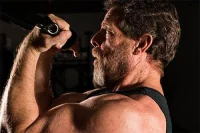
Marty Gallagher is a champion strength athlete, coach, author, and RAW Podcast host known for powerlifting, Olympic lifting, and serious strength training.
