cable attachments
Cable Attachments for Home, Commercial, School, and Facility Gyms
Cable attachments from IRON COMPANY include lat pulldown bars, tricep ropes, straight bars, curl bars, stirrup handles, D-handles, seated row handles, V-bars, ankle straps,... Read More
Cable Attachments for Home, Commercial, School, and Facility Gyms
Cable attachments from IRON COMPANY include lat pulldown bars, tricep ropes, straight bars, curl bars, stirrup handles, D-handles, seated row handles, V-bars, ankle straps, abdominal straps, aluminum cable bars, steel cable machine bars, and specialty grip attachments for home gyms, garage gyms, functional trainers, selectorized machines, cable crossovers, jungle gyms, commercial fitness centers, schools, tactical training rooms, government fitness facilities, and institutional weight rooms.
Cable machine attachments change how a user connects to the resistance source. The right attachment can change grip angle, grip width, wrist position, range of motion, exercise selection, and the way a movement feels on a cable machine. Choosing the right cable attachment depends on the exercise being performed, the machine’s cable end, the user population, handle diameter, grip texture, swivel action, attachment eyelet, material, storage plan, cleaning routine, and whether the equipment will be used by one person at home or many users in a shared facility.
Use this category to compare gym cable attachments for pulldowns, rows, tricep pressdowns, bicep curls, face pulls, cable crossovers, glute kickbacks, abdominal training, grip training, and functional trainer exercises. IRON COMPANY has supplied gym equipment and flooring solutions since 1997 and supports residential, commercial, vertical-market, military, government, institutional, and facility buyers with product guidance, quoting, sourcing, and gym accessory planning support.
How to Choose the Right Cable Attachments
The right cable attachment starts with the movement pattern. A wide lat pulldown bar supports upper-back and lat-focused pulling patterns. A seated row handle or parallel-grip V-handle supports rowing movements. A tricep rope, straight bar, or pressdown bar supports tricep pressdowns, face pulls, curls, and arm training. A single stirrup handle or D-handle supports unilateral pulling, pressing, fly, raise, and crossover movements. An ankle strap supports lower-body cable movements when the strap and machine setup are appropriate for the exercise.
Material and handle design matter. Steel cable attachments are often selected when buyers want a traditional gym-machine feel, chrome finish, knurling, and fixed or revolving machine-bar options. Urethane-grip and rubber-grip attachments can give users a different handle feel and may be easier for some facilities to organize visually. Aluminum cable attachments can reduce attachment weight compared with solid steel options, which may be useful when the buyer wants a lighter attachment for lower starting resistance or easier handling.
Compatibility should be checked before ordering. Most cable attachments are designed to connect to pulley-based machines through a cable-end clip or carabiner, but buyers should still verify the machine’s cable end, carabiner size, attachment eyelet, available clearance, weight-stack starting resistance, and whether a fixed or revolving attachment is better for the intended exercise. Do not assume every cable attachment is ideal for every machine, every movement, or every user.
Materials used to manufacture these cable machine attachments can vary depending upon the muscle being targeted but can include leather, nylon webbing, powder coated steel tubing and solid steel bars that can be knurled for added grip. Cable attachments clip on to strength machines such as cable crossovers and functional trainers via a large carabiner. The carabiner allows the attachments to be changed out quickly when the user changes exercises.
Top 10 Educational Highlights for Choosing Gym Cable Attachments
When investing in professional gym accessories, buyers must balance immediate procurement needs with long-term performance thresholds. Sourcing the wrong cable machine handles can lead to premature equipment degradation, structural wear, or restricted biomechanical movement patterns.
To help residential enthusiasts, commercial club managers, and federal procurement officers choose their tools, here are the top 10 educational highlights to review before buying. To see our full inventory of matching suites, knurled solid steel, and aluminum components, explore our primary Cable Attachments Category Page and view our high-capacity setups on Page 2.
1. Match Your Target Budget to Performance Tiers — Buyers must balance immediate financial boundaries with long-term structural performance by evaluating their available budget across standard versus commercial product lines. Sourcing standard economy components fits residential spaces well, while investing in commercial options can reduce replacement expenses on high-traffic floors.
2. Verify Available Space and Lateral Clearances — Facilities must measure their available training space and calculate the required clearance needed for wide cable attachments like pro-style lat bars and revolving solid lat pulldown bars. Adequate overhead and lateral margins keep extended gym machine bars from colliding with frame shrouds, selectorized stacks, or surrounding facility walls.
3. Ensure Strict Machine Eyelet Compatibility — You must verify mechanical compatibility with your existing selectorized machines and functional trainer columns so that your current snap hooks or carabiners latch through each attachment eyelet thickness. Importer variances in connection sizing can cause unintended friction, restricted cable travel, or premature carabiner wear.
4. Prioritize Safety and Routine Material Inspections — Prioritizing user safety requires regular material checks on high-tension welds, steel connection rings, and heavy-duty fabric stitching. High-use flexible items—including woven tricep ropes, non-slip abdominal training straps, and single pulley handles—must be taken out of service immediately if they reveal fraying, loose hardware, or compromised seams.
5. Evaluate Rubber Grips vs. Premium Polyurethane — Managers must evaluate standard rubber grips versus industrial urethane grips when configuring multi-user spaces. Non-porous polyurethane resists cracking, tearing, and chemical degradation much better over time when exposed to persistent friction, heavy handling, and strict anti-bacterial wiping protocols.
6. Analyze Solid vs. Hollow Core Structural Longevity — Consider solid steel versus hollow steel configurations based on your planned load factors and traffic levels. Solid steel machine bars provide a traditional, substantial weight-stack feel and resist structural bending or tube deformation when users train at high weight capacities.
7. Balance Revolving vs. Non-Revolving Mechanical Swivels — Choosing smooth revolving ez-curl attachments, revolving curl bar attachments, or revolving solid straight bars changes how the wrist moves compared to fixed bars. Smooth center-swivel hangers allow rotation during high-repetition pulling or curling movements, absorbing torsional force at the wrist.
8. Define Targeted Muscle Groups and Biomechanics — Understand which cable attachments exercise and isolate specific muscle groups to optimize your physical training layouts. Deploying a tailored mix of pronated lat row handles, supinated lat row handles, neutral lat row handles, or padded ankle straps allows operators to effectively target the lats, mid-back, biceps, triceps, or glutes.
9. Map Variety Options to Target Clientele Profiles — Assess your target clientele, fitness goals, or patient type to choose specialized ergonomic gear. Sports performance rooms often require dense fat grip cable attachments or thick grip training attachments for forearm muscle recruitment, while physical therapy clinics frequently require lightweight aluminum cable attachments for patients needing lower starting resistance.
10. Confirm GSA Contract and Warranty Procurement Terms — Federal procurement officers must verify product eligibility before buying through our GSA contract (GSA 47QSMA22D08NN); TAA and GSA status is confirmed per product before a GSA order. Additionally, review the manufacturer warranty terms listed on each product page.
Standard Cable-End Eyelet Assembly Components
When connecting cable attachments to a selectorized weight stack, the cable-end assembly acts as the critical bridge transferring resistance from the weight plates to the user. To help you choose compatible attachments and maintain safe operating conditions on your functional trainers or pulley systems, here is a summarized list of the sequential components that make up a standard cable-end assembly:
- Snap Hook or Carabiner: The primary heavy-duty metal clip that connects directly to the eyelet of your straight bar, lat pulldown bar, or tricep rope, enabling rapid accessory changes between exercises.
- Cable Eyelet Fitting (Thimble / Terminal): The reinforced steel loop or teardrop-shaped metal guide at the very end of the line that receives the carabiner and prevents the cable from rubbing or pinching under tension.
- Cable Crimping Sleeve (Swage Collar): A heavy-duty copper or steel alloy cylinder compressed under thousands of pounds of pressure around the cable tail to lock the loop permanently in place, securing the overall load rating.
- Heat-Shrink Tubing: A protective, non-abrasive polymer sleeve melted over the compressed metal swage collar to smooth over sharp edges, protect user clothing, and shield the crimp from sweat and moisture.
- Rubber Stopper Ball (Donut): A dense rubber or polyurethane sphere positioned right above the terminal loop that cushions the impact against the pulley housing, preventing the cable from getting sucked into the machine wheel when an attachment is released.
- Retaining Washer or Stop Collar: A flat metal plate located directly behind the rubber stopper ball to distribute impact forces evenly and prevent the crimp assembly from shoving through the rubber ball over time.
- Aircraft Cable: The primary high-tensile steel wire strand wrapped in an industrial nylon or vinyl coating that snakes through the pulley track straight down to the selectorized weight stack.
Compare Cable Attachment Types
Cable machine attachments are not interchangeable. Use the stacked comparisons below to decide whether a lat bar, row handle, tricep rope, straight bar, curl bar, stirrup handle, ankle strap, ab strap, or specialty grip attachment is the right fit for your cable machine, functional trainer, home gym, or commercial facility.
Lat Pulldown Bars
Best fit: Lat pulldowns, straight-arm pulldowns, upper-back training, wide-grip pulling patterns, commercial cable machines, jungle gyms, selectorized units, and functional trainers with enough overhead clearance.
Buyer guidance: Choose lat pulldown bars when grip width, upper-back emphasis, and a familiar cable-machine pulling pattern are priorities. Compare total bar length, handle angle, grip texture, center swivel, machine clearance, and whether the bar will be used in a home gym, studio, or high-traffic facility.
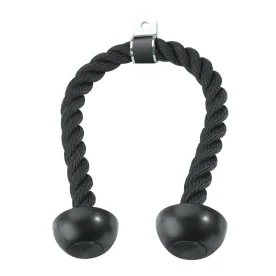
Tricep Ropes and Rope Attachments
Best fit: Tricep pressdowns, overhead tricep extensions, face pulls, hammer-style curls, core work, and cable movements where independent hand movement helps the user finish the motion naturally.
Buyer guidance: Choose tricep rope attachments when rope flexibility, hand separation, and rubber or molded end stops are useful for the exercise. Buyers should compare rope length, rope material, end caps, attachment eyelet, cable clearance, cleaning needs, and whether the rope will be used in a high-traffic setting.
Straight Bars and Revolving Straight Bars
Best fit: Tricep pressdowns, straight-bar curls, upright rows, pullovers, front raises, and controlled cable movements where a straight hand position is preferred.
Buyer guidance: Choose a straight bar when a fixed-width grip and direct bar feel are important. A revolving straight bar can help the bar rotate during the movement, while a fixed straight bar may feel more direct. Compare bar length, grip diameter, knurling, swivel action, and machine fit before purchasing.
Curl Bars and Angled Pressdown Bars
Best fit: Cable curls, reverse curls, pressdowns, overhead extensions, arm training, and buyers who prefer angled hand positions instead of a fully straight grip.
Buyer guidance: Choose curl bars and angled bars when wrist position and grip angle matter for the intended exercise. Compare angle pattern, bar length, handle texture, revolving center, and whether users will perform close-grip, wide-grip, or mixed arm-training movements.
D-Handles, Stirrup Handles, and Single Cable Handles
Best fit: Single-arm rows, cable presses, fly movements, lateral raises, front raises, curls, crossovers, unilateral pulldowns, and functional trainer exercises.
Buyer guidance: Choose stirrup handles or D-handles when single-arm training, unilateral work, and independent left-right movement are priorities. Buyers should compare handle shape, grip diameter, strap or metal frame construction, rotating action, and whether the handle is being purchased as a single or pair.
Seated Row Handles and V-Bars
Best fit: Seated cable rows, close-grip pulldowns, mid-back training, neutral-grip pulls, and cable movements where the user wants both hands fixed in a compact parallel grip.
Buyer guidance: Choose row handles and V-bars when a close-grip or neutral-grip pulling pattern is the goal. Compare handle spacing, grip texture, eyelet construction, overall width, and whether the attachment allows enough clearance between the user, cable, and machine frame.
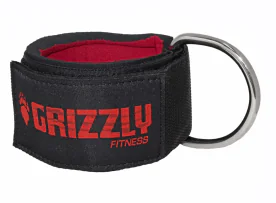
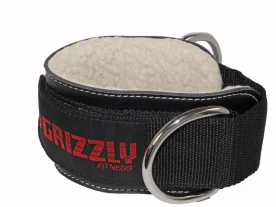
Ankle Straps and Ankle Cuffs
Best fit: Cable glute kickbacks, hip abductions, leg curls, hip extensions, and lower-body cable movements where the strap is appropriate for the user and machine setup.
Buyer guidance: Choose ankle straps when lower-body cable training is part of the program. Compare padding, closure style, D-ring placement, pair versus single packaging, user comfort, and whether the strap’s intended use matches the movement being performed. Avoid using damaged straps or worn D-rings in shared facilities.
Ab Straps and Hanging Training Straps
Best fit: Hanging knee raises, vertical leg raises, core training, and setups where the attachment is intended for bodyweight-style abdominal work.
Buyer guidance: Choose ab straps only when the rack, bar, or machine connection point is appropriate for the movement and the user understands the exercise setup. Review product-specific attachment method, padding, stitching, weight/user guidance, and inspection needs before using in a shared training environment.
Grip Training and Specialty Cable Attachments
Best fit: Grip-focused rows, pull-down variations, forearm training, specialty hand positions, and facilities that want cable attachments beyond standard handles and bars.
Buyer guidance: Choose specialty cable handles only when they match the training goal and user population. Cannonball grips, dog-bone handles, nunchuck grips, fat-grip attachments, and other specialty tools can expand exercise variety, but they may not be the best fit for beginners or facilities that need simple, familiar attachment choices.
Match Cable Attachments to Machines and Facility Needs
Functional Trainers
Functional trainers often use paired adjustable pulleys, which makes D-handles, stirrup handles, ankle straps, straight bars, rope attachments, and dual-handle movements especially useful. Buyers should consider whether attachments will be used one side at a time, both sides together, or across two cable columns. For shared facilities, keep frequently used handles close to the machine and store specialty attachments where they can be found without cluttering the training floor.
Selectorized Cable Machines
Selectorized cable machines and weight-stack units may be used with lat bars, row handles, tricep bars, curl bars, single handles, and ropes depending on the machine station. Before ordering, compare the machine’s pulley height, cable travel, connection point, exercise station, weight-stack starting resistance, and whether a fixed or swiveling attachment works better for the movement.
Jungle Gym Cable Machines
Jungle gym cable machines and multi-station cable systems often support many users at once, so attachment planning matters. Facilities should stock enough common attachments so one missing handle or rope does not interrupt multiple stations. A cable-attachment rack can help organize lat bars, row handles, ropes, and stirrup handles in a predictable location near the cable stations.
Home Gyms
Home gyms usually need fewer attachments, but the right selection can make one pulley station more useful. A practical home gym setup may include a lat bar, tricep rope, straight bar, curl bar, D-handles, and ankle strap. Buyers should choose attachments that match the pulley height, available room, storage space, and exercises they actually perform.
Best Fit and Not Ideal For
Best Fit
- Buyers who want to expand exercise variety on selectorized machines, functional trainers, cable crossovers, jungle gyms, and home gym pulley systems.
- Home gyms, garage gyms, personal training studios, schools, commercial fitness centers, corporate gyms, tactical training rooms, government fitness facilities, and institutional weight rooms.
- Facilities comparing lat bars, tricep ropes, D-handles, stirrup handles, row handles, V-bars, curl bars, straight bars, ankle straps, ab straps, and cable attachment storage.
- Buyers who need practical planning around machine compatibility, handle feel, swivel action, cleaning, inspection, storage, and replacement needs.
People and facilities that should purchase cable attachments:
Top 10 Facilities and Buyers That Benefit Most From Professional Cable Attachments
Expanding the training variety of a functional trainer column or selectorized weight stack requires matching your accessory catalog to your exact user population. Investing in professional-grade cable machine handles allows facility operators and home gym owners to add muscle isolation options, meet their safety guidelines, and pursue athletic or rehabilitation goals.
To help you decide if expanding your strength layout aligns with your spatial boundaries and financial framework, we have detailed the top 10 buyers and facilities that benefit most from our specialized equipment. To evaluate precise dimensions or view heavy-duty bundles, explore our primary Cable Attachments Category Page and browse our high-capacity suites on Page 2.
1. Federal Government and Military Procurement Officers — Tactical drop zones, government fitness facilities, and military bases require durable gear for multi-shift usage. Procurement officers can source USA-made cable attachments and American-made cable attachments—such as our heavy-duty leather ankle straps with sheepskin linings—through our GSA contract (GSA 47QSMA22D08NN); GSA status is confirmed per product before a GSA order. TAA status is confirmed per product before a GSA order.
2. Commercial Fitness Centers and Full-Scale Health Clubs — High-traffic commercial spaces require heavy-duty accessories that hold up to daily use while simplifying facility maintenance routines. Health club managers benefit significantly from substituting standard porous overlays with commercial chrome cable machine attachments with urethane grips. This non-porous polyurethane finishing stands up to anti-bacterial wiping protocols and gives a non-slip hold that lasts longer than rubber overlays.
3. Physical Therapy Clinics and Medical Rehabilitation Spaces — Clinical and wellness rooms catering to post-injury patients require low starting resistance and highly controlled biomechanical execution paths. Healthcare providers routinely source high-strength aluminum cable attachments—such as lightweight aluminum straight bars, aluminum curl bars, or an aluminum tricep pressdown bar—to avoid the heavy tare weight of solid steel bars. This allows clinicians to introduce light resistance training on crossover cables in the early phases of recovery.
4. High School and University Athletic Weight Rooms — Educational institutions outfitting multi-station jungle gyms or functional trainer zones must balance strict financial boundaries with material durability. Athletic directors optimize their budgets by avoiding piecemeal ordering and instead purchasing comprehensive cable machine attachment bundles—such as an outfitting package featuring a coordinated mix of lat bars, row handles, and a dedicated storage rack. This strategy delivers uniform styling across the strength floor while keeping walkways clear of tripping hazards.
5. Private Personal Training and Corporate Wellness Studios — Vertical market studios and corporate wellness centers must expand exercise selection within tight spatial boundaries. Introducing flexible single pulley handles, woven nylon strap single pulley handles, and adjustable stirrup handles onto paired adjustable pulleys allows trainers to execute unilateral presses, flyes, raises, and core rotational tracks without crowding the training floor. These compact accessories expand the utility of a single cable column, allowing studios to accommodate diverse client body profiles efficiently.
6. Powerlifting Clubs and Elite Strength Facilities — Competitive environments require dry traction and rigid material integrity to support heavy force production. Gym owners look specifically for heavy-duty knurled cable attachments and solid steel machine bars—such as a hard chrome revolving solid straight bar or a solid seated row handle—to resist structural bending at the top of the weight stack. The deep cross-hatch diamond knurling gives grip retention when athletes train to muscular failure on heavy rowing patterns.
7. Sports Performance Labs and Grip Strength Enthusiasts — Advanced conditioning facilities looking to increase forearm muscle recruitment and stimulate neural activation patterns require specialized ergonomic adaptations. Sourcing specialized grip training attachments—including 3-inch cannonball grips, grappler training grip attachments with straps, grappler nunchuck grips, or a thick dog bone cable attachment—calls for more hand work during standard pulling movements. These tools develop hand strength beyond what a basic narrow handle calls for.
8. Bodybuilding Competitors and Hypertrophy Specialists — Physique athletes targeting precise muscular symmetry need specialized biomechanical angles to isolate target muscle groups effectively. Hypertrophy specialists utilize our line of ergo-wing gym machine bars, deploying an ergo-wing narrow pronated lat row handle, an ergo-wing narrow supinated lat handle, or an ergo-wing medium neutral lat handle to change wrist angles and emphasize the contraction. These tailored shapes reduce hand fatigue, allowing competitors to work the lats and mid-back without over-rotating the wrists. Unlike free weights, which lose tension at various points in a lift due to changing mechanical advantages and the downward pull of gravity, cable attachments provide uniform, omnidirectional resistance throughout the entire range of motion. This constant mechanical tension keeps the target muscle fibers under load through the range of motion.
9. Multi-Unit Housing Complexes and Hospitality Fitness Zones — Unsupervised fitness spaces in hotels and apartment complexes prioritize intuitive operation, low maintenance requirements, and effortless organization. Property managers lean heavily toward fixed, high-traction straight bar cable attachments, angled pressdown bars, and tricep ropes featuring molded rubber end stops. Pairing these straightforward accessories with a freestanding accessory storage rack encourages members to return items to their proper locations, keeping the shared multi-station zone clean and organized.
10. Dedicated Home Gym and Garage Gym Owners — Residential enthusiasts looking to bring a professional, club-grade feel into a garage or basement require versatile accessories that fit within strict overhead and lateral clearances. Home buyers can elevate a standard home gym pulley station by adding fundamental basics like heavy-duty abdominal training straps for core work, a deluxe tricep rope for face pulls, a revolving ez-curl attachment for arm development, and a compact parallel-grip seated row attachment, giving them commercial-grade capability on a residential budget.
Technical Summary of Cable Attachment Configurations
| Material & Texture Attribute | Mechanical Swivel Function | Ideal User Profile | Operational Benefit |
|---|---|---|---|
| Knurled Solid Steel Bars | Smooth Revolving Center | Powerlifters, Elite Clubs | Fluid wrist rotation, dry traction, resists bar bending |
| High-Strength Aluminum | Smooth Revolving Center | Rehab Patients, Home Gyms | Light tare weight, low starting resistance, corrosion-resistant finish |
| Polyurethane Molded Grips | Fixed or Swiveling Hanger | Commercial Clubs, Tactical Drop Zones | Resists chemical cracking, non-slip hold, simplifies facility sanitation |
| Heavy-Duty Webbing & Fabric | Reinforced D-Ring Connection | Core Training, Lower-Body Work | Neoprene padding between the strap and the skin during glute kickbacks |
Not Ideal For
- Machines that do not have a compatible cable-end clip, carabiner, eyelet, or attachment connection point.
- Facilities expecting one attachment to work perfectly for every movement, user, and machine station.
- Shared gyms that buy many attachments but do not provide storage, inspection routines, or staff/member re-racking expectations.
- Buyers who need product-specific load ratings, government purchasing eligibility, Made in USA status, or warranty terms but have not verified those details for the exact item being ordered.
- Users attempting exercises outside the attachment’s intended use or using worn straps, damaged eyelets, frayed rope, loose grips, or compromised connection points.
People and facilities that should not purchase cable attachments:
When Cable Machine Attachments May Not Be the Right Investment
While expanding your accessory catalog introduces wide exercise variety, certain operational setups, training spaces, or financial constraints make extra cable machine handles an inefficient choice. We want every piece of gear you purchase to match your functional column layouts and training protocols.
To help residential operators, commercial club managers, and logistics coordinators assess compatibility before ordering, here are the top 6 scenarios where purchasing separate cable attachments is not ideal. To review structural sizing or check our heavy-duty storage racks, return to our primary Cable Attachments Category Page or browse our high-capacity configurations on Page 2.
1. Spaces Without Dedicated Accessory Storage Solutions — Shared training spaces or compact garage setups that lack a plan for equipment organization should avoid buying large accessory bundles. Leaving loose gym machine bars, tricep ropes, or flexible single pulley handles scattered on the training floor clutters vital walkways, introduces immediate tripping hazards, and accelerates surface scratching. If your room cannot accommodate a freestanding accessory tree or a wall-mounted rack to maintain a safe environment, holding off on bulk acquisitions is recommended.
2. Micro-Gyms and Training Zones with Strict Spatial Boundaries — Facilities operating inside narrow footprints or rooms with low ceilings must balance variety with true spatial restrictions. Extended gym machine bars—such as a 48" revolving solid lat pulldown bar or a wide pro-style lat bar attachment—require expanded overhead and lateral clearance to operate cleanly. If your functional trainer columns or crossover cables are placed too close to facility walls, structural pillars, or machine frame shrouds, wide bars can collide with your surroundings and mar surfaces.
3. Equipment Layouts Lacking Selectorized Machine Compatibility — Do not buy advanced handles if your current strength layout lacks the necessary connection infrastructure. Cable machine handles are engineered strictly to link with vinyl-coated aircraft cables on selectorized weight stacks or functional trainer pulleys. If your fitness center relies exclusively on plate-loaded leverage machines, barbell power cages, or standalone hydraulic stations that do not use a standard snap hook or carabiner eyelet system, these accessories have nothing to connect to.
4. Environments Unable to Support Routine Safety Inspections — High-traffic athletic facilities or unsupervised corporate wellness zones that cannot commit to structured equipment maintenance requirements should limit their accessory counts. If your staff cannot systematically audit woven ropes, stirrup handles, or padded ankle straps for structural fraying, loose hardware, or compromised seams, adding flexible items adds risk.
5. Extreme Budget Constraints Where Economy Lines Compromise Safety — Buyers operating under severe financial boundaries must realize that forcing a low budget onto a heavy-duty commercial setting can compromise safety. Sourcing cheap, generic imported bars with thin rubber overlays for a tactical drop zone or multi-unit housing complex can lead to rapid material failure. If your procurement framework cannot stretch to support industrial-grade tool finishing—such as TKO chrome cable machine attachments with urethane grips or knurled steel—delaying the upgrade avoids spending on gear that can peel and crack.
6. Clinics and Studios Focused Purely on Fixed-Axis Rehabilitation — Physical therapy clinics or specialized wellness centers that treat patients requiring strict, locked linear movement paths may find free-moving attachments inefficient. Flexible nylon strap cable handles, dynamic single cable handles, and revolving center swivels introduce a high demand for joint stabilization and forearm muscle recruitment. For patients with severe neural deficits or acute joint trauma, stable, fixed-axis selectorized machines may be the better fit before transitioning to the multi-planar freedom of a functional trainer cable column.
When to Hold Off: At-A-Glance Assessment Guide
| Operational Limitation | Affected Cable Accessory | Potential Risk Factors | Better Alternative Solution |
|---|---|---|---|
| No Accessory Storage | Loose machine bars, ropes, ankle cuffs | Floor clutter, tripping hazards, accelerated surface finish scratching | Postpone purchase until a dedicated storage tree is factored into the budget |
| Tight Spatial Clearances | Wide pro-style lat bars, 48" straight bars | Hardware binding, structural wall impacts, limited biomechanical travel | Utilize narrow neutral lat row handles or flexible single pulley handles |
| No Active Inspection Routine | Woven tricep ropes, ab training straps | Safety stitching failures, fabric fraying under high-tension weight-stack loads | Focus on knurled solid steel bars that feature fewer high-wear fabric parts |
| Mismatched Budget Tiers | Cheap rubber-grip imported handles | Grip peeling, tackiness, premature degradation under sanitizing sprays | Secure fewer items, focusing on urethane-grip tools |
Common Cable Attachment Buying Mistakes to Avoid
- Assuming all cable attachments are universal: Many attachments connect through common cable-end clips, but buyers should still verify the machine’s carabiner, cable end, eyelet size, clearance, and movement path before ordering.
- Buying one handle style for every exercise: A lat pulldown bar, tricep rope, stirrup handle, row handle, curl bar, and ankle strap each solves a different training need. Choose attachments based on movement pattern instead of trying to force one attachment into every exercise.
- Ignoring fixed versus revolving action: Some straight bars, curl bars, and lat bars revolve at the center connection point, while other attachments are fixed. Revolving action can change the feel of curls, pressdowns, rows, and pulldowns, so compare the attachment style before building a full package.
- Overlooking grip diameter and surface feel: Knurled steel, urethane grips, rubber grips, fat grips, ropes, and nylon straps all feel different in use. Facilities with many users should consider comfort, cleaning, durability, and familiarity before buying large quantities of specialty handles.
- Failing to plan attachment storage: Cable attachments left on the floor or hanging from random machine parts can clutter training spaces and make equipment harder to find. Plan a wall rack, accessory rack, or dedicated storage area near the cable stations.
- Skipping inspection and replacement routines: Inspect ropes, straps, stitching, D-rings, eyelets, swivels, grips, and welds regularly. Remove any cable attachment from service if it shows fraying, cracks, loose grips, sharp edges, bent hardware, or questionable connection points.
- Using harsh cleaners on grips and straps: Incompatible cleaners, bleach-heavy sprays, harsh solvents, or abrasive tools may damage rubber, urethane, nylon, leather, or chrome finishes. Use cleaning methods compatible with the product material and follow manufacturer care guidance when available.
Top 5-6 Cable Attachment Buying Mistakes to Avoid
When outfitting a selectorized machine zone or functional trainer column, selecting the correct cable machine handles directly impacts user safety, biomechanical efficiency, and equipment longevity. Because gym machine bars and cable attachments concentrate tension onto a single connection point, minor logistical oversight can stall a strength room setup or compromise performance.
To help residential enthusiasts, commercial club managers, and federal procurement officers make an informed decision, we have detailed the top 5-6 misunderstandings buyers face below. For a complete review of our verified inventory, check our primary Cable Attachments Category Page and view additional heavy-duty options on Page 2.
1. Assuming Gym Cable Attachments are Universally Compatible — A primary misconception is that every pulley machine accessory fits onto every selectorized machine or functional trainer. While most cable attachments for gym use incorporate a standard eyelet, the actual clearance of your machine's carabiner or snap hook must match the attachment's thickness. Furthermore, oversized gym machine bars—such as a wide lat pulldown bar or a full-length pro style lat bar—may conflict with the protective shroud or tight framing of compact home gym stations, leading to restricted cable travel or surface finish damage.
2. Overlooking Fixed Hangers vs. Smooth Revolving Centers — Many buyers mistake a rigid, fixed connection hanger for a smooth revolving straight bar or revolving curl bar attachment. When performing high-repetition bicep curls or tricep press downs, a fixed center hanger can force the wrist joints to over-rotate, increasing joint strain and shifting focus away from the target muscle groups. Opting for a revolving ez-curl attachment or an American Barbell hard chrome revolving solid straight bar introduces fluid rotation that follows natural body mechanics.
3. Confusing Rubber Grips with Premium Polyurethane Finishing — When outfitting high-traffic commercial spaces or tactical training environments, buyers often fail to differentiate between cheap rubber overlays and industrial urethane handle coatings. Standard rubber grip cable attachments can degrade, crack, and become tacky over time when exposed to sweat and friction. Rubber grips can also expand and begin to spin on the attachment handle making gripping the attachment firmly on a heavy or high rep set more difficult. Conversely, choosing commercial cable machine attachments with urethane grips provides a non-slip hold, longer grip life, and resistance to harsh sanitization. These grips resist the expansion and slipping that rubber grips can show.
4. Overlooking Specialty Grip Training Attachments for Force Production — A frequent training floor mistake is substituting standard d-handle cable attachments or single pulley handles for dedicated, thick-diameter tools. Some athletes believe pulling with conventional nylon strap cable handles builds functional forearm and wrist security at the same level as fat grip cable attachments. Sourcing specialized grip training attachments—such as Body-Solid fat grip seated row handles, 3-inch cannonball grips, nunchuck grips, or a dense dog bone cable attachment—calls for greater hand activation and muscular engagement than a standard narrow handle.
5. Misusing Core and Abdominal Straps for High-Load Pulling — A severe safety hazard occurs when facility users confuse basic abdominal training straps or hanging ab straps with heavy-duty structural attachments. Ab straps gym gear is engineered specifically to support suspended bodyweight core exercises, featuring plush padding for comfort. Using these canvas or neoprene straps for high-load pulling patterns or heavy selectorized stack movements can tear the safety stitching, damage the fabric, and cause sudden connection failures under tension. For heavy upper-body work, dynamic single cable handles or knurled steel bars must be deployed.
6. Assuming All Premium Gym Accessories Carry TAA Compliance — Procurement planners frequently bundle large fitness projects under the impression that any premium cable machine handle qualifies for federal placement. For military and government buyers operating under strict guidelines, TAA compliance dictates that items must be substantially transformed or manufactured in the United States or in a designated country under the Trade Agreements Act. Sourcing a generic import instead of a TAA-compliant package—such as American made cable attachments or USA-made leather ankle straps with sheepskin lining—can lead to contract rejections during inspection; TAA status is confirmed per product before a GSA order.
Direct Cable Attachment Comparison
| Cable Attachment Type | Best Operational Use | Material and Finish Advantages | Optimal Facility Placement |
|---|---|---|---|
| Aluminum Cable Attachments | Low starting resistance, rehab, rapid transitions | Lightweight high-strength alloy, corrosion-resistant | Vertical market, home gyms, wellness clinics |
| Knurled Cable Attachments | Heavy rows, high-traction pulling patterns | Precision cross-hatch diamond knurled steel | Commercial clubs, sports performance centers |
| Urethane Grip Attachments | Multi-user clubs, strict hygiene protocols | Non-porous polyurethane finish | Tactical facilities, high-traffic commercial gyms |
| Cable Attachment Packages | Complete outfitting, bulk multi-station setups | Cost-effective bundle pricing, uniform styling | High school weight rooms, university campuses |
Cable Attachment Planning for Shared Facilities
Storage and Organization
Cable attachments should be stored where users can find them quickly without blocking walkways or cluttering the machine area. A facility with several cable stations may need a dedicated cable attachment rack, wall hooks, labeled storage, or a central accessory station for lat bars, row handles, ropes, straight bars, curl bars, ankle straps, and D-handles. Good storage makes the room easier to manage and reduces time spent searching for missing attachments.
Inspection and Maintenance
Shared facilities should inspect cable attachments on a recurring schedule. Steel bars should be checked for sharp edges, bent eyelets, grip wear, and swivel function. Rope attachments should be checked for fraying, loose end caps, and worn connection points. Straps and cuffs should be checked for stitching, D-rings, closures, and padding condition. Any questionable attachment should be removed from service until it can be reviewed or replaced.
Cleaning and Material Care
Cable attachments may include steel, chrome, aluminum, nylon, rubber, urethane, leather, and foam padding. Use cleaning products that match the material and avoid flooding swivels, straps, or padded areas with liquid. Wipe down handles after use, keep attachments dry when possible, and avoid abrasive tools that can damage grips or finishes.
Bulk Orders, Freight, and Procurement
Most individual cable attachments are small enough for parcel shipping, but bulk orders, accessory racks, and multi-location facility packages may require more planning. Commercial, school, government, and institutional buyers should confirm quote requirements, receiving needs, storage plans, and product-level purchasing eligibility before ordering. IRON COMPANY can support bulk quoting and government purchasing where applicable, but product-level eligibility and contract requirements should be confirmed before purchase.
Shipping Methods: Ground Parcel Logistics
Because individual cable attachments do not exceed the weight or dimensional limitations of traditional parcel carriers, they qualify exclusively for standard ground shipping. There is no need for specialized heavy freight handling or palletized delivery services.
Standard Ground Parcel Deliveries (UPS, FedEx, or USPS)
- Direct Door-to-Door Service: Individual items—such as lat pulldown bars, tricep ropes, single stirrup handles, seated row double-D handles, and padded ankle straps—are packed straight into reinforced corrugated cardboard shipping boxes. They travel via standard ground parcel networks and are delivered directly to your doorstep, front office, or facility receiving desk.
- Multi-Box Order Distribution: If you order multiple pieces or comprehensive cable accessory bundles to outfit a multi-station gym, your products may be distributed across one or several boxes. Packing configurations depend on the total count and geometry of the items so that components do not shift or strike against each other during transit.
Robust Transit Protection
Even though parcel boxes are easy to handle, gym accessories are solid steel and iron components that require proper cushioning for transit.
- Finishing Safeguards: Attachments are packaged to shield their high-polish chrome finish, knurling, or industrial powder-coat from surface scratches.
- Heavy-Duty Packaging: Where possible, we utilize dense packing materials within each corrugated box to immobilize the bars and handles so they do not break through the cardboard walls during sorting and transit.
Receiving and Organizing Your Equipment
Because ground parcel carriers deliver directly to your door, receiving your items is simple and straightforward. However, a few best practices will help you transition your new gear to the training floor efficiently.
Package Inspection
Upon arrival, we recommend opening your shipping boxes immediately to review the contents. Inspect each piece to confirm that all components, revolving swivels, and attachment eyelets are intact and moving smoothly.
Facility Maneuvering and Tools
While individual attachments are easy to carry by hand, a bulk bundle order containing numerous bars and ropes can result in a heavy overall box. If you have ordered an accessory package for a large facility, having a basic two-wheel hand truck or a small utility cart on hand will help you transport the boxes from your front door or loading area straight to the weight room floor.
Organizing the Strength Floor
Once unpacked, check the connection point and carabiner clearance of your new attachments against your functional trainers and selectorized cable columns for compatibility. For residential setups and shared commercial spaces alike, storing your new bars, ropes, and cuffs on a dedicated accessory tree or wall rack keeps your training space clean, organized, and clear of tripping hazards.
Featured Cable Attachment Options
- Body-Solid Solid Steel Cable Attachments include multiple machine bar options such as stirrup handle, tricep pressdown bar, seated row/chin bar, revolving straight bar, and revolving curl bar options for pulley-based gym equipment.
- TKO Chrome Cable Machine Attachments with Urethane Grips include chrome-finished steel bars and handles with polyurethane grips in options such as stirrup handle, seated row handle, straight bar, triceps bar, V-bar, curl bar, multi-exercise bar, and lat bars.
- Body-Solid Aluminum Cable Attachments include lightweight aluminum straight bar, curl bar, double-swivel bar, and lat bar options for home gyms, cable crossovers, functional trainers, and pulley-based equipment.
- American Barbell Tricep Pressdown Rope with Rubber Ends is a nylon tricep rope attachment with rubber ends and a steel cable attachment for pressdowns, extensions, face pulls, and related cable movements.
Related Accessories and Training Categories
Cable attachments are part of a larger gym accessory plan. Browse Accessories for additional training tools, or compare related accessory categories such as Weightlifting Gloves, Weightlifting Straps, Wraps, and Sleeves, Weight Belts and Head Harnesses, Gym Chalk and Chalk Bowls, Hand Grippers, PlateMate Add-On Weights, Barbell Pads, and Interval Timers and Stopwatches.
For machines that use cable attachments, review Strength Training Equipment, Selectorized Equipment, Jungle Gym Cable Machines, Functional Trainers, and Home Gyms.
Cable Machine Guides and Buyer Resources
For more help comparing cable machines and machine-based training options, review IRON COMPANY guides including Cable Crossover Machine Purchasing Facts and Tips and Selectorized Gym Equipment and Cable Machines: Selection and Uses. Government and institutional buyers can also review GSA Bid Information for purchasing support where applicable.
Three more IRON COMPANY articles cover the machines these attachments connect to: the editorial team’s cable crossover machine purchasing facts and tips (which calls cable attachments essential for varied training), multi-station jungle gyms for full-body workouts (accessory handles and cable attachments added to compatible units) and functional trainers for strength and exercise variety (cable attachments among the accessories it names).
Product-level eligibility, quote requirements, current availability, shipping method, and procurement details should be confirmed before ordering cable attachments for government, institutional, commercial, or multi-location facility projects.
Common Questions About Cable Attachments
Are cable attachments universal?
Many cable attachments are designed to connect to common gym machine cable ends, carabiners, or pulley-based equipment, but buyers should still verify the attachment eyelet, machine clip, cable clearance, and intended exercise before ordering. Do not assume every attachment fits every machine or every movement. Yes, most professional gym cable attachments share a common metal connection opening designed to accept common carabiners, snap hooks, and selectorized clip hardware. However, buyers must verify strict cable-end compatibility by double-checking eyelet thickness against their current snap hooks. Additionally, long bars like a 48" revolving solid lat pulldown bar require ample lateral clearance so the bar does not collide with frame shrouds or facility walls during heavy pulling sets.
What cable attachment should I choose for lat pulldowns?
Lat pulldown bars are the most common choice for traditional lat pulldowns and upper-back cable work. A straight bar, multi-grip bar, or row handle may also be used for certain variations depending on the machine, user preference, and training goal.
What cable attachment is commonly used for tricep pressdowns?
Tricep ropes, straight bars, V-bars, and angled pressdown bars are commonly used for tricep pressdowns. A rope allows the hands to separate during the movement, while bars provide a more fixed hand position.
Should I choose steel, aluminum, rubber-grip, or urethane-grip cable attachments?
Steel attachments provide a traditional machine-bar feel and are common in many gym settings. Aluminum attachments can be lighter and easier for some users to handle. Rubber-grip and urethane-grip attachments provide a different hand feel and may be preferred in certain shared facilities. Compare material, grip texture, cleaning method, machine fit, and user population before purchasing.
Should I choose rubber grips or urethane grips for machine bars?
For multi-user settings and long-term durability, urethane grip cable attachments hold up better than standard rubber variants. While standard rubber grip options are fine for low-volume residential setups, they tend to peel, crack, and become sticky over time under friction and sweat exposure. Choosing commercial chrome cable machine attachments with urethane grips provides a non-porous polyurethane surface that keeps its non-slip hold and withstands anti-bacterial wiping protocols.
Do I need an accessory rack for cable attachments?
An accessory rack is worth considering for commercial gyms, schools, studios, and any facility with several cable attachments. Organized storage helps keep floors clear, reduces missing attachments, and makes it easier for users to return each handle, bar, rope, or strap to the correct place.
How should cable attachments be inspected?
Inspect cable attachments for worn grips, frayed rope, loose rubber ends, cracked urethane, bent eyelets, rough edges, loose swivels, damaged stitching, and worn D-rings. Remove any attachment from service if the connection point, grip, rope, strap, or swivel appears damaged.
How should gym machine handles be stored and maintained?
To preserve your equipment investment and keep multi-station zones clear of clutter, attachments should be organized on freestanding accessory racks or dedicated storage trees. Storing lat bars, ropes, and stirrup handles off the ground reduces tripping hazards and keeps metal surfaces from being scratched. Maintenance requirements include inspecting woven ropes and single pulley handles weekly for fabric fraying, verifying swivel fluidity, and avoiding harsh chemical solvents that can strip protective chrome or urethane handle coatings.
Can IRON COMPANY help with bulk cable attachment quotes?
Yes. IRON COMPANY can help buyers compare cable attachments, accessory racks, functional trainers, selectorized machines, jungle gym cable machines, home gyms, and related training accessories. For government or institutional purchasing, product-level eligibility and quote requirements should be confirmed before ordering.
When configuring a commercial gym floor, planning a residential garage gym, or managing a federal equipment procurement, selecting the correct cable machine handles dictates your daily training variety and structural safety. Sourcing the wrong components can cause biomechanical wrist strain, cable clearance issues, or rapid equipment wear.
We have answered the top 10 questions that strength coordinators and facility managers ask IRON COMPANY. To view precise dimensions or check contract pricing, explore our main Cable Attachments Category Page and view high-capacity packages on Page 2.
What cable attachments are best for building back thickness?
To target back thickness, seated row handles and close-grip row attachments give a direct pulling track. Utilizing a solid seated row handle or parallel-grip chinning triangle pulls the elbows tightly down alongside the torso, concentrating the load into the rhomboids, teres major, and mid-latissimus dorsi. For broader development, swapping to specialized ergo-wing gym machine bars—such as the ergo-wing medium neutral lat handle—shifts grip force toward the mid-back with less forearm fatigue.
What is the difference between revolving and non-revolving attachments?
The foundational difference is the swivel: revolving cable attachments incorporate an integrated center swivel that allows the bar to spin independently of the cable clamp. Opting for a revolving ez-curl attachment or an American Barbell hard chrome revolving solid straight bar lets the bar rotate with the hands during high-repetition bicep curls or tricep press downs. Fixed, non-revolving bars lack this center swivel, so the wrists rotate with the bar under heavy resistance.
Are solid steel or hollow cable attachments better for commercial clubs?
Solid steel cable attachments are recommended for high-traffic commercial clubs for their rigidity and traditional weight-stack feel. Solid configurations—like hard chrome solid seated row handles—are built for heavy weight-stack loads; capacities are listed on each product page. Conversely, hollow core handles are engineered to keep the tare weight of the accessory as low as possible, making them lightweight alternatives for specialized clientele or home setups where lower starting resistance is favored.
Can you build grip strength using functional trainer attachments?
Yes, but transitioning from standard narrow bars to thick-diameter grip training attachments can help expedite strength goals. Standard thin steel bars allow your hands to lock closed easily, which limits active forearm recruitment. Deploying specialized 2-inch fat grip cable attachments, heavy-duty nunchuck grips, or a thick dog bone cable attachment onto a functional trainer column forces your hand and finger flexors to work to maintain a hold, building grip strength.
What exercises can be done using a tricep rope attachment?
A heavy-duty tricep rope attachment is a versatile pulley accessory, extending far beyond basic arm work. While routinely used for overhead tricep extensions and tricep press downs, its flexible design allows for a range of multi-planar exercises. Facility operators can utilize a nylon tricep rope to execute face pulls for posterior deltoid health, hammer curls for forearm and upper arm thickness, woodchoppers for abdominal core training, and straight-arm pulldowns for lat isolation. Performing upright rows with a tricep rope primarily builds shoulder width and upper back thickness by heavily targeting the lateral deltoids and upper trapezius. The flexible nylon rope allows your hands to separate naturally at the peak of the contraction, which many lifters find easier on the wrists and shoulders, while secondarily loading the anterior deltoids, rear deltoids, biceps, brachialis, and forearms.
How do I safely use ab straps and lower-body cable cuffs?
Safety when training with non-revolving fabric accessories requires matching the accessory strictly to its intended biomechanical movement pattern. Abdominal training straps and hanging ab straps are explicitly engineered to support hanging bodyweight core movements; using them as lifting straps for high-load weight-stack rows can compromise the stitching. For lower-body tracking, ensure padded nylon ankle straps or heavy-duty leather ankle straps feature reinforced steel D-rings that snap cleanly into the carabiner.
How can government buyers purchase cable attachments on GSA contract?
Federal procurement officers, tactical training facility coordinators, and military logistics teams can buy cable attachments through IRON COMPANY's GSA contract; GSA status is confirmed per product before a GSA order. USA-made leather ankle cuffs, solid steel bars, and commercial accessory storage trees are among the products offered under contract number GSA 47QSMA22D08NN; eligibility is confirmed per product. Sourcing via this schedule follows the federal bidding process; TAA status is confirmed per product before a GSA order.
At-A-Glance Accessory Selector Matrix
| Training Objective | Recommended Cable Accessory | Finishing & Material Benefit | Biomechanical Target |
|---|---|---|---|
| Max Back Thickness | Solid Seated Row / Chinning Handle | Hard chrome solid steel finish, resists bar bending | Rhomboids, mid-lats, and lower trapezius |
| Revolving Arm Curls | Revolving EZ-Curl Attachment | Integrated center swivel hanger, absorbs wrist torsion | Biceps brachii and brachioradialis |
| Hygiene-First Commercial Floors | Urethane Grip Machine Bars | Non-porous polyurethane coating, resists wipe cracking | Triceps, upper back, and lat structures |
| Advanced Forearm Overload | 3-Inch Cannonball or Nunchuck Grips | Dense textured surface coating, forces active hand bracing | Hand flexors, grip power, and brachialis |
| Padded Glute Training | Sheepskin Lined Leather Ankle Strap | Heavy-duty leather, nickel-plated D-ring connection | Gluteus maximus, medius, and hip abductors |
Why Buy Cable Attachments from IRON COMPANY?
IRON COMPANY is an established e-commerce supplier of gym equipment, strength equipment, free weights, cardio equipment, gym flooring, and facility products for residential, commercial, vertical-market, military, government, institutional, and facility buyers. For cable attachments, IRON COMPANY can help customers compare lat bars, tricep ropes, D-handles, stirrup handles, row handles, curl bars, straight bars, ankle straps, ab straps, cable attachment storage, functional trainers, selectorized machines, and complete facility accessory packages.
For product questions, quote requests, or facility purchasing support, visit IRON COMPANY Customer Care, Contact IRON COMPANY, or review GSA Bid Information for government purchasing support where applicable.
IRON COMPANY supplies professional-grade strength training accessories to residential customers, home gyms, garage gyms, personal training studios, vertical market studios, high schools, universities, multi-unit housing complexes, hotel fitness spaces, commercial fitness centers, sports performance rooms, corporate wellness centers, VA hospitals, and federal procurement clients. Since 1997, IRON COMPANY has supplied cable attachments to strength rooms worldwide. We provide pulling and pressing options for everyday enthusiasts, competitive athletes, and shared training facilities.
Federal government and military procurement officers worldwide purchase TAA-compliant ankle straps, tricep ropes, stirrup handles, abdominal training straps, single pulley handles, and comprehensive cable attachment packages available through our GSA contract (GSA 47QSMA22D08NN) as well as the main website. TAA compliance dictates that products supplied to the United States federal government must be manufactured or substantially transformed in the United States or in a designated country under the Trade Agreements Act.
To satisfy strict procurement guidelines and facility upgrades, we supply USA-made cable attachments and American-made cable attachments. TAA status is confirmed per product before a GSA order. Beyond our domestic lines, we offer standard and commercial-grade attachments sourced globally across budgets and training preferences.
For commercial fitness centers and military facilities seeking lightweight options with lower starting resistance, our high-strength aluminum cable attachments provide structural integrity without the heavy tare weight of solid steel. Conversely, institutions looking for a traditional, heavy-duty feel choose our solid steel, precision-knurled cable attachments for traction and grip security during intense training sessions.
Through our established supply channels, facility managers can customize their selectorized machine zones and functional trainers using distinct handle textures and ergonomic variations. Our catalog includes:
- Molded Surface Options: Cable attachments with rubber grips and cable attachments with urethane grips for a non-slip hold, simpler sanitization, and reduced surface wear.
- Thick-Grip Adaptations: Fat grip cable attachments designed to increase forearm muscle activation and build hand strength.
- Core & Upper-Body Basics: Heavy-duty abdominal training straps, tricep ropes, and flexible single pulley handles built to move naturally with the body's joints.
Our inventory covers the major pulling and pressing movements. Gyms and rehabilitation facilities frequently source specialized items like the tricep pushdown bar, straight bar cable attachments, solid seated row handles, and dedicated grip training attachments. For fluid wrist rotation, we offer revolving ez-curl attachments, revolving curl bar attachments, and V-bar press down attachments that incorporate smooth center-swivel hangers.
For upper-back development, facilities utilize our wide pro-style lat bar attachments alongside specialized ergo-wing variations. These bars are available as pronated lat row handles, supinated lat row handles, and neutral lat row handles to isolate target muscle groups and accommodate multiple wrist positions. Whether you are replacing a worn tricep press down attachment or deploying a fully matching suite of bars, our direct partnerships allow us to source, bundle, and deliver these components to keep your strength floor operational.
For a complete look at our verified product specs, warranties, and multi-station outfitting options, explore our primary Cable Attachments Category Page and view additional heavy-duty configurations on Page 2.
Shop Cable Attachments
Shop cable attachments above, or contact IRON COMPANY for help comparing lat pulldown bars, tricep rope attachments, D-handles, stirrup handles, seated row handles, V-bars, curl bars, straight bars, ankle straps, ab straps, specialty grips, cable attachment racks, and machine compatibility for your home gym, commercial gym, school, government facility, or institutional training space. For government or institutional purchasing, confirm product-level eligibility and quote requirements before ordering.