Free weights let users train without being locked into a fixed machine path. A well-planned free weight area can support presses, rows, squats, deadlifts, carries, curls, lunges, Olympic lifts, accessory movements, conditioning circuits, grip training, and sport-specific strength work. The best setup depends on the user population, training goals, available floor space, storage, flooring, bar-and-plate compatibility, traffic level, receiving needs, and whether the room is built for one home user or many users in a shared facility.
People wanting to build muscle, increase strength, improve performance in their sport or occupation, or those just wanting to maintain their mobility and independence as they grow older should be involved in a resistance training program using free weights.
Will free weights make women bulky? No, free weights will not make the average female bulky as they do not naturally produce enough of the male hormone testosterone to allow an overabundance of muscle growth.
Which is better, free weights or machines? Free weights are the gold standard in resistance training and for inducing hypertrophy. Unlike exercise machines, free weights such as dumbbells, barbells, and kettlebells do not move in a frozen pathway. It is the added instability experienced through the use of free weights that helps give free weights the advantage over machines.
Free weights are the standard most strength coaches build around for raw strength, athletic power, and muscle growth. The core difference lies in the freedom of movement. Exercise machines restrict your path of motion to a single, frozen track. Conversely, free weights—such as fixed dumbbells, kettlebells, and heavy barbells—do not move in a guided pathway. This introduces structural instability into the lift, forcing your primary target muscles to work dynamically with secondary stabilizer joints and core muscles to keep the weight balanced. While selectorized machines offer value for precise isolation or early post-injury physical therapy, a progression plan anchored by free weights carries over more directly to tactical duties, occupational demands, and sport.
IRON COMPANY’s article by Marty Gallagher on free weights and progressive resistance training explains the different types of free weights and what they are used for.
How to Choose Free Weights for Your Training Space
The right free weight equipment starts with the primary movements the room needs to support. Barbells and Olympic bars are usually the backbone of heavy compound strength training and long-term loading progression. Dumbbells are a flexible choice for unilateral training, presses, rows, curls, raises, lunges, and accessory work. Kettlebells add dynamic training options such as swings, carries, cleans, presses, squats, conditioning circuits, and grip-focused movements. Weight plates tie the room together by loading barbells, plate-loaded equipment, adjustable handles, sleds, landmines, and specialty training tools.
Facility type matters as much as the equipment type. Home gym and garage gym buyers often need broad training variety in a compact footprint, which may favor adjustable dumbbells, a basic bar-and-plate package, kettlebells, bumper plates, and wall or rack storage. Commercial gyms, schools, apartments, tactical facilities, and institutional weight rooms usually need durable fixed dumbbell runs, multiple bars, plate storage, collars, kettlebell storage, flooring protection, and clear traffic flow so many users can train and re-rack equipment efficiently.
Compatibility should be checked before ordering. Olympic bars use 2-inch sleeves and require Olympic plates or bumper plates with matching center holes. Standard bars and many regular dumbbell handles use smaller 1-inch plates. Collars must match the bar sleeve size. Dumbbell racks, kettlebell racks, bar holders, plate trees, and storage systems should be selected around the actual equipment being stored, not purchased as an afterthought.
How do I choose the right weight? Choose a set of dumbbells, a barbell set, or set of kettlebells that allows you to do light warm up sets on the way up to your heavier sets to reduce the possibility of injury. Depending on your fitness goals and the type of lifting you are doing, you’ll want the heaviest weight to be challenging enough to hit, or get close to, the desired rep range. Rep range examples include from just a single rep used by powerlifters and Olympic weightlifters to a range of 8-12 reps typically performed by bodybuilders, athletes, and those just trying to become a version of themselves. Higher rep ranges with slow and controlled movements are typically the safest, especially for the aging. Making light weights heavy by slowing the rep speed is but one arrow in the weight trainer’s quiver.
New lifters can also read IRON COMPANY’s article on how to start weight lifting.
Compare Free Weight Types
Free weight categories are not interchangeable. Use the stacked comparisons below to decide whether dumbbells, kettlebells, barbells, weight plates, collars, handles, or specialty tools are the right fit for your training space.
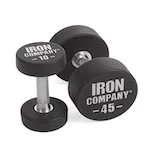
Buyer guidance: Choose dumbbells when unilateral training, accessory work, hypertrophy training, pressing, rowing, curls, raises, lunges, and general strength variety are priorities. Adjustable dumbbells save space in smaller rooms, while fixed dumbbell sets are usually faster for multi-user training areas. Pair larger dumbbell runs with compatible dumbbell racks and appropriate gym flooring.
IRON COMPANY’s rubber hex dumbbell buying guide compares rubber hex dumbbells with other dumbbell types and covers storage racks and the rubber mats used where they are trained with.
Assuming All Dumbbell Shapes and Structural Connections Handle High-Velocity Impact — When selecting dumbbells for a shared fitness floor, institutional buyers regularly overlook the mechanical bond connecting the head to the handle, which dictates how the weight handles structural stress over time. The Solid-Head Welded Bond vs. Bolt-Together Limits: Budget-conscious buyers often opt for bolt-together dumbbells, which are fine for residential training but wear quickly under multi-user stress. Dropping a bolt-secured dumbbell can loosen and strip the threads, leaving a head that can spin or come loose. Full-commercial facilities require a permanent structural solution. IRON COMPANY, Iron Grip Barbell Company and Intek Strength solid steel dumbbells use a welded or bonded head-to-handle joint with no threads to work loose. Anti-Roll Ergonomics: For tactical fitness spaces and functional training rooms, traditional round heads introduce safety challenges on uneven floors. Hex, 8-sided or 12-sided anti-roll heads from TKO Sports Group or Troy Barbell keep the weights from rolling between intervals. Note: Multi-sided weight plates do not maneuver on a weightlifting platform like round plates do. Many seasoned deadlifters prefer round plates to allow them to move the bar into position before a lift.
IRON COMPANY’s dumbbell purchasing guide walks through fixed, adjustable and pro-style dumbbells before you buy.
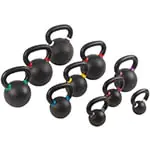
Buyer guidance: Choose kettlebells when the goal includes dynamic movement, compact equipment, conditioning circuits, grip training, and total-body work. Adjustable kettlebells save space, cast iron kettlebells provide a traditional training feel, coated kettlebells may help reduce cosmetic contact marks depending on use, and competition kettlebells can support more consistent external dimensions across weight increments when that matters.
Overlooking Specialized Fluid Dynamics: Kettlebells, Macebells, and Power Clubs — Many buyers assume that kettlebells and heavy club options are interchangeable variations of a single training style, leading to incorrect programming deployment. Kettlebell Coating and Handle Variations: Traditional cast iron kettlebells from Ader Fitness or custom options from IRON COMPANY feature slightly textured handles engineered to hold gym chalk, allowing the bell to smooth-spin inside a trainee’s palm during high-rep snatches. Conversely, cheap slick coatings can slip out of sweaty hands, creating immediate property damage risks. For competitive training, competition steel models from Ironskull Fitness maintain an identical exterior dimensions regardless of their physical weight, preventing users from having to alter their biomechanical catching technique as they advance in strength. Macebells and Power Clubs: Unlike the centered gravity profile of a dumbbell or kettlebell, mace bells and power clubs feature an intensely offset, leveraged weight distribution. These tools are built to challenge rotational stability, shoulder mobility, and core coordination via cyclical swinging patterns, rather than standard linear pressing mechanics.
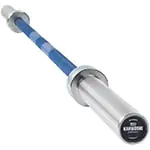
Buyer guidance: Choose barbells and barbell sets when progressive loading and compound strength training are central to the room. Buyers should compare bar type, sleeve size, bar length, grip, shaft diameter, spin, stiffness, whip, finish, plate compatibility, and the training style the bar is expected to support.
Misjudging Barbell Specialization: Olympic Lifting vs. Powerlifting Mechanics — A frequent mistake during weight room procurement is assuming all 7-foot bars function identically. They do not. The internal engineering of a bar governs how it responds to specific lifting forces, and using the wrong tool compromises performance and safety. The Sleeve Bearing vs. Bushing Mismatch: For dynamic, high-velocity movements like clean-and-jerks or snatches, the sleeves must spin freely to protect the lifter's wrists from rotational torque. Bars built for these lifts, including models from American Barbell and Ivanko Barbell, use needle bearings for fast, smooth sleeve rotation. Conversely, powerlifting bars engineered for squats, benches, and deadlifts, like structural bars from York Barbell or Troy Barbell, utilize bronze bushings. These offer a slower, more stable rotation alongside a thicker, more rigid shaft designed for heavy static loads. Knurling and Whip Variance: Power bars feature aggressive, sharp knurling with a center knurl section to bite into a lifter’s back, along with high tensile strength steel that minimizes elastic "whip." Olympic training bars feature elastic steel for optimal whip out of the bottom of a lift and lack a center knurl to prevent scratching the lifter’s collarbone during cleans.
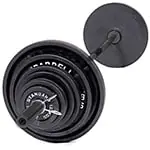
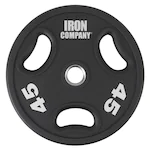
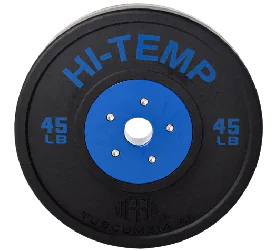
Buyer guidance: Choose weight plates based on bar compatibility, training style, loading density, durability expectations, flooring, and storage. Bumper plates are commonly considered where controlled bar drops or Olympic-style lifts are part of the program. Iron and steel plates are often preferred when loading density and traditional strength training are priorities. Rubber-coated and urethane-coated plates may be better fits where finish, appearance, and surface contact are important buying factors.
Conflating Olympic Plate Materials: Cast Iron vs. True Solid Rubber Bumper Plates — A massive operational misstep is buying traditional cast iron or basic urethane plates for environments where overhead drops or high-impact training occur. The Shatter and Fracture Liability: Standard gray iron plates from CAP Barbell or precision-machined plates from Ivanko are well suited to bench presses, leg presses, and rack training where the weight is returned to a storage rack. However, if iron plates are dropped from hip or overhead height onto standard flooring, they can crack, damage the subfloor, and create a liability risk. True Drop-Shock Dispersal: Dynamic Olympic lifting, tactical training, and functional cross-training demand solid rubber bumper plates. High-density bumpers from York Barbell, Body-Solid, or American Barbell absorb the downward energy of a drop, protecting the subfloor and the bar. For heavy deadlift zones, pairing these plates with secure locking collars such as Lock-Jaw collars keeps the load from shifting during the lift.
How do material compositions (iron vs. rubber vs. urethane) impact performance and safety? Matching product materials to your flooring, users, and facility helps protect your lifters and your investment:
- Milled Steel and Cast Iron Plates: These represent the most classic powerlifting option. They provide high loading density (thinner physical profiles allow more weight to be loaded onto a bar sleeve), making them the choice for heavy deadlifts or compound squats. However, their raw impact profile requires thick rubber gym flooring mats or dedicated multi-layer lifting platforms to prevent concrete subfloor fracturing.
- Solid Rubber & Recycled Crumb Bumper Plates: These are engineered for environments where deliberate bar drops are standard, such as Olympic weightlifting zones or cross-training facilities. The dense rubber composition absorbs shock, controls rebound heights, and mitigates severe structural noise.
- Premium Solid Urethane: Urethane is the premium compound choice for high-traffic commercial gym chains, corporate fitness clubs, and active-duty military wellness environments. Urethane dumbbells and grip plates resist tearing, have little odor, and are less likely to mark PVC or rubber flooring tiles. While requiring a higher initial budget, urethane can lower long-term replacement costs.
Two IRON COMPANY articles compare plate types: Olympic weight plates and barbell plate packages compared and Chuck Miller’s weight plate comparison.
Buyer guidance: Choose this category when bar feel, sleeve rotation, knurling, finish, shaft diameter, bar length, and specialty movement patterns matter. A general-purpose Olympic bar may be enough for a starter room, while Olympic weightlifting, powerlifting, and specialty strength programs may require more specific bar choices.
Metallurgical Construction and Drivetrain Mechanics: Bushings vs. Bearings — Buyers routinely choose Olympic bars based solely on weight capacity, completely overlooking the internal sleeve mechanics required for their specific training style: Bronze Bushing Power Bars: Engineered for slow, high-load powerlifting movements like the squat, bench press, and deadlift. Rigid steel bars like the York Barbell 7' North American Power Bar or options from Troy Barbell and Body-Solid utilize tight-tolerance bronze sleeves. This design minimizes structural sleeve "whip" and offers a stiff, controlled rotation that stabilizes extreme static loads within power cages. Precision Needle Bearing Bars: Manufactured specifically for explosive, high-velocity Olympic weightlifting movements like cleans, jerks, and snatches. Training bars from American Barbell and Ivanko Barbell use needle bearings inside the sleeves. This architectural choice permits immediate, smooth sleeve rotation under load, protecting the lifter's wrists and elbows from dangerous rotational torque when catching a bar overhead.
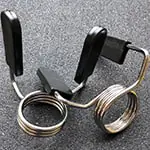
Buyer guidance: Choose collars to help keep loaded plates positioned on the bar during training. Spring collars, lock-style collars, compression collars, and pressure-style collars each serve different needs. Match the collar to the bar sleeve diameter and the training environment before ordering in bulk.
Barbell Sleeves & Collars: How do you establish component compatibility to prevent injury? Operational safety under heavy structural loads demands strict mechanical alignment across your strength equipment types. Equipment sizing falls into two distinct dimensional standards:
- Standard Strength Equipment (Residential): Features a 1-inch bar sleeve diameter and functions exclusively with regular 1-inch center-hole weight plates and lightweight tension collars.
- Heavy-Duty Olympic Equipment (Commercial): Utilizes a 2-inch bar sleeve profile. These require Olympic-spec plates or technique bumper plates engineered with explicit 2-inch inner steel collar inserts.
Mixing these dimensions compromises structural stability. Furthermore, under no circumstances should a lifter execute heavy rows, overhead presses, or heavy barbell sets without clamping the plates down with verified, high-retention hardware. Moving from spring clips to aluminum lever compression clamps or Lock-Jaw resin collars keeps loaded plates seated against the bar shoulder and reduces shifting mid-lift.
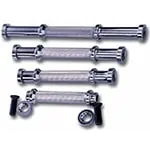
Buyer guidance: Choose dumbbell handles when a buyer wants adjustable loading, replacement flexibility, or a custom dumbbell setup without buying a full fixed dumbbell run. Verify handle diameter, plate compatibility, collar requirements, grip length, and whether the handle is intended for regular or Olympic plates.
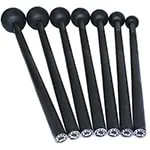
Buyer guidance: Choose specialty free weights when the program goes beyond straight-line lifting. Steel mace bells, power clubs, Indian clubs, and sledge hammers change leverage and load distribution, so buyers should plan for skill level, training clearance, flooring, storage, and coaching environment before adding them to a shared facility.
Gravitational Balance and Dynamic Force: Kettlebells, Macebells, and Heavy Clubs — Buyers often lump kettlebells and specialized swinging clubs into the same generic category, leading to incorrect programming deployment and safety issues: Textured Cast Iron and Competition Kettlebells: Designed for cyclical, single-handed ballistic movements like swings, cleans, and snatches. Classic cast iron kettlebells from Ader Fitness or options from IRON COMPANY feature a slightly textured exterior coating engineered to hold gym chalk, allowing the handle to smooth-rotate within a sweaty palm. Professional competition steel kettlebells from Ironskull Fitness maintain an identical outer dimension across all weight increments, ensuring athletes never have to alter their catching technique as they advance in strength. Leveraged Macebells and Power Clubs: Unlike a balanced dumbbell, clubs and macebells place the entire weight mass at the extreme end of an elongated handle. This intense gravitational offset is built specifically to challenge multi-planar rotational stability, deep shoulder mobility, and core coordination, making it an excellent tactical tool but a poor choice for standard linear strength tracking.
Buyer guidance: Choose barbell training tools when the goal is to expand the use of existing bars and plates. Confirm fit, bar sleeve compatibility, floor space, and whether the tool is intended for home, commercial, school, or institutional use before adding it to a package.
Free Weight Room Planning by Facility Type
Home Gyms and Garage Gyms
Home gym and garage gym buyers usually need the widest training range in the smallest practical footprint. A strong starter setup may include adjustable dumbbells or a limited fixed dumbbell set, a barbell and plates, kettlebells, collars, a bench, a rack, and storage. If the room includes deadlifts, kettlebell swings, heavy dumbbells, or barbell work, plan gym flooring before the equipment arrives so the layout supports the way the space will actually be used.
Miscalculating Compact Footprints: Modular Selectables vs. Fixed Commercial Storage Rows — Home gym owners and space-constrained personal training studios regularly struggle to balance limited square footage with comprehensive weight increments. The Storage Footprint Trap: A full set of fixed commercial dumbbells spanning 5 to 50 lbs requires a lengthy structural storage rack that instantly dominates an entire wall layout. For tight floor plans, trying to cram massive storage racks into small spaces limits traffic flow and restricts auxiliary functional training zones. The Modular Selectable Alternative: When real estate is at a premium, moving toward a self-contained modular system like Powerblock adjustable dumbbells lets you pack a massive array of weight configurations into a single, tight corner footprint. For studio operations or home setups, adjustable handles combined with compact storage give a wide range of loads while keeping floor flow and clearance.
Footprint vs. Product Type: How do space constraints dictate equipment selections? Maximizing your training variety within your available space layout requires selecting structural equipment lines that match your specific facility classification:
- Home and Compact Residential Garages: For limited square footage, single-purpose fixed weight runs can clutter open spaces. Compact setups—like adjustable dumbbell sets, adjustable spin-lock handles, or selectorized kettlebells—let you set an entire range of weight progressions within a minimal footprint. This keeps your training floor clear for dynamic, multi-directional bodyweight movements.
- Commercial Centers, High-Traffic Gyms, and Tactical Installations: In shared training rooms, multi-user accessibility is paramount. Fixed equipment runs—such as full sets of gray cast iron hex dumbbells, specialized steel mace bells, or structural rows of color-coded competition bumpers—are required so multiple personnel can train concurrently. These high-volume zones should be paired with multi-tier storage solutions, wall-mounted bar holders, and heavy-duty kettlebell racks to keep walkways clear.
Commercial Gyms and High-Traffic Fitness Centers
Commercial free weight areas should be planned around traffic flow, storage, cleaning, replacement needs, and multiple users training at the same time. Fixed dumbbell runs, multiple Olympic bars, plate trees, barbell holders, collars, kettlebell racks, and rubber gym flooring usually matter more in this setting than space-saving equipment alone. Popular dumbbell weights, common collars, and frequently used bars may need redundancy so peak-hour training does not slow down.
Structural Head-to-Handle Integrity: Solid-Welded vs. Bolt-Together Dumbbells — Procurement coordinators regularly mismatch their facility type with the structural assembly of their hand weights, leading to premature mechanical failure and high liability risks: Solid-Head Welded or Chemically Bonded Dumbbells: Essential for high-volume commercial fitness clubs, military tactical training facilities, and corporate wellness rooms where weights are frequently dropped. Premium configurations from Iron Grip Barbell Company and Intek Strength feature a solid steel head permanently welded or mechanically joined to a hard chrome handle. This design has no internal threads, so the heads do not loosen, spin, or back out the way bolted heads can. Bolt-Together and Modular Systems: Optimized for residential home gyms, personal training studios, and controlled light-commercial settings. Units from CAP Barbell or modular Powerblock adjustable dumbbells pack a massive array of weight configurations into a single, space-saving footprint. However, if deployed on a high-impact commercial floor, the repetitive shock of dropped weights can stretch and strip the internal bolts, turning a budget-conscious purchase into a maintenance problem.
For stocking a complete room, see IRON COMPANY’s gym equipment purchasing guide.
Schools, Colleges, and Performance Training Rooms
School and performance weight rooms usually benefit from a barbell-centered plan that supports team training, progressive loading, strength development, and broad athlete use. Barbells, bumper plates, dumbbells, kettlebells, collars, platforms, storage, and clear lifting zones should be planned together so coaches and athletes can move efficiently through training sessions.
Coaches outfitting a school weight room can also read Jim Steel’s weight training advice for the young athlete.
Tactical, Fire, Police, Military, Government, and Institutional Facilities
Tactical, fire, police, military, government, and institutional facilities often need straightforward, durable, scalable free weight equipment that supports strength, grip, conditioning, and general readiness training. IRON COMPANY can support quote-based planning and government purchasing where applicable. Product-level eligibility, contract requirements, freight details, and quote terms should be confirmed before ordering.
We have delivered and installed free weight equipment of all kinds, including dumbbells, barbells, and kettlebells, as both standalone sets and as a component of total gym packages worldwide to residential customers building out garage gyms, commercial gyms, university weight rooms, professional sports teams, performance centers, and to the federal government, US embassies, and military bases.
Garage gyms, CrossFit boxes, sports performance facilities, high schools and universities, and military bases come to IRON COMPANY for free weight equipment that is compatible with their existing strength equipment, including power cages, bench presses, and storage, and that meets their budget and fitness goals.
Federal government and military customers worldwide purchase TAA compliant free weight equipment that is available through our GSA contract as well as the IRON COMPANY website. TAA compliance means that products sold to the US federal government must be manufactured or substantially transformed either in the United States or within a designated TAA-compliant nation that maintains a fair trade agreement with the US. Examples include free weight equipment by IRON COMPANY, Iron Grip, Hi-Temp, Body-Solid, American Barbell, Intek, Ivanko, and PowerBlock; TAA status is confirmed per product before a GSA order.
Institutional Acquisition Compliance: For federal purchasing agents, base supply officers, and municipal procurement operations, many of our commercial Olympic bars, solid-welded dumbbells, and bumper plates are available through our GSA contract; product-level eligibility is confirmed per item before a GSA order.
Studios, Apartments, Hotels, and Corporate Wellness Rooms
Smaller shared fitness rooms often get more value from a compact free weight package than from a crowded mix of single-purpose machines. Dumbbells, kettlebells, compact bars, collars, adjustable systems, storage racks, and flooring can support meaningful strength work without overwhelming the room. Buyers should consider who will use the space, how many people may train at once, and how equipment will be organized between sessions.
People and facilities that should purchase free weights:
- High-Traffic Staffed Commercial Gyms, Dedicated Weight Rooms, & Staffed Corporate Fitness Centers — For property managers and commercial club operators balancing unpredictable daily user volume under professional oversight, heavy-duty free weights are a cost-effective, low-maintenance anchor for the room. The Low-Maintenance Edge: Fixed fitness equipment machine lines rely on complex selectorized weight stacks, aircraft cables, and proprietary pulleys that require ongoing inspection and frequent, expensive wear-part replacements. Fixed commercial hand weights and solid bars have no moving parts to service, which reduces ongoing facility overhead. The Premium Inventory Asset: High-volume commercial floors require absolute durability to withstand continuous daily drop forces. Outfitting your dumbbell racks with Iron Grip American Made Solid Steel Urethane Dumbbells (UDB-SS) or IRON COMPANY Urethane Dumbbells (IC-UDB) gives a single-piece welded construction with no threads to loosen. To protect adjacent equipment rows and cut contact noise on multi-housing floors, pair these with Ivanko Rubber Encased Olympic Weight Plates (RUBO).
- High-Performance Athletic Training Labs, High School Gyms, & Collegiate Weight Rooms — Sports science environments and team training facilities require scalable, high-velocity tools capable of handling rapid progressive loading and explosive multi-planar movement patterns. Unmatched Biomechanical Variety: Free weights let athletes move through a natural, unconstrained path of motion, which is why coaches use them to develop explosive triple-extension power, deceleration, and sport-specific core stabilization. The High-Velocity Configuration: Dynamic Olympic weightlifting programs require needle-bearing sleeve rotation to protect athletes' wrists from intense rotational force during clean or snatch catches. Instructors should look at bearing bars from American Barbell or Ivanko. For repeated overhead drops, lifting platforms with Body-Solid Chicago Extreme Solid Virgin Rubber Bumper Plates (OBPX) secured by Lock-Jaw Barbell Collars (LJC) protect the bar and the floor and keep the load in place.
- Tactical Readiness Centers, Fire Departments, & Military Installations — Military supply officers, base commanders, and first responder installations require rugged, straightforward, and adaptable tactical tools built to prepare personnel for high-intensity physical demands and field environments. Functional Locomotion Conditioning: Tactical operations demand raw grip endurance, core trunk stability, and full-body metabolic conditioning that stationary cardio machines do not develop. The Battle-Tested Specification: For brutal high-intensity conditioning circuits, deploying robust cast iron tools like Ader Fitness Premier Cast Iron Kettlebells or IRON COMPANY Powder Coated Kettlebells (IC-PPCK) provides texture-matched handles engineered to grip gym chalk securely during high-repetition ballistic swings.
- Space-Constrained Residential Home Gyms & Elite Compact Personal Studios — Boutique training rooms, personal training studios, and premium garage gyms frequently struggle to balance the need for comprehensive weight increments with a highly restricted layout footprint. Absolute Real Estate Efficiency: Attempting to fill a small room with single-purpose selectorized leg press, chest press, or row machines instantly crowd walkways and ruins room flow. A solitary barbell combined with space-efficient hand weights unlocks hundreds of compound variations inside a tight perimeter. The Compact Layout Remedy: For tight room parameters, retail consumers can bypass lengthy fixed storage rows by integrating premium space-saving systems. Utilizing a single pair of adjustable PowerBlock Sport 24 Dumbbells paired with a PowerBlock Compact Weight Stand delivers a full matrix of load increments within a single, tiny corner footprint. For athletes with limited wall clearance, an IRON COMPANY 47" Chrome Curl Bar (IC-CCB-47) allows accessory and arm work close to the wall.
Strategic Institutional Procurement Compliance: For federal purchasing agents, municipal acquisition professionals, and base logistics coordinators, many of our commercial solid-welded dumbbells, bearing bars, rubber bumper plates, and modular selectable systems are available through our GSA contract; product-level eligibility is confirmed per item before a GSA order.
When Free Weights May Not Fit the Room
- Facilities that want every movement guided by a fixed machine path.
- Rooms without enough open floor space for lifting, carrying, re-racking, spotting, and moving around benches or racks.
- Training spaces that have not planned for storage, collars, plate trees, dumbbell racks, kettlebell racks, bar holders, flooring, and traffic flow.
- Facilities expecting free weights to replace all selectorized machines, cardio equipment, or supervised training programs.
People that have injuries or health conditions should always seek the advice from their doctor first before engaging in an exercise plan involving free weights. An experienced and certified personal trainer can also ensure trainees are executing each lift with proper form and using a proper amount of weight suited for their strength and fitness level.
People and facilities that should NOT consider purchasing free weights:
- Unstaffed Hospitality Fitness Rooms, Unmonitored Apartment Amenity Gyms, & Self-Serve Complexes — If your strength room is designed as an unmonitored, self-serve amenity—such as an automated hotel fitness room, an unstaffed apartment complex gym, or a remote corporate wellness lounge—a heavy focus on specialized unguided bars and loose plates introduces unnecessary liability. The Supervision Barrier: Exercising with manual loading tools demands strict knowledge of path mechanics, proper spotting techniques, and precise movement paths. Without an experienced, certified professional on the floor, new lifters are more likely to drop weights or lift with poor form. The Alternative Configuration: Facilities that lack active supervision should minimize loose floor gear. Allocate your budget toward selectorized strength lines, guided machines, and fixed single-purpose equipment that guides the user's path, reduces the need for a spotter, and keeps the weight stacks away from foot traffic.
- Clinical Rehabilitation Environments and Bariatric Wards Lacking Joint Stability — Physical therapy practices, post-operative clinical environments, and bariatric recovery wards serving patients with acute skeletal limitations or severe structural imbalances should be highly selective before deploying loose iron. The Neuromuscular Stabilization Limit: Unguided dumbbells and barbells force the trainee to independently stabilize the load in all dimensions. That demand on the trainee is a barrier for a patient recovering from orthopedic surgery or managing neurological limitations — a judgment for the treating clinician. The PT Alternative: For clients or patients with a restricted range of motion or compromised stabilization, the choice of loose weights belongs to the treating clinician. For these clinical spaces, guided equipment chosen with the treating clinician may be the better fit.
- Upper-Level Fitness Rooms and Sound-Sensitive Shared Real Estate — Property managers outfitting micro-gyms or corporate wellness zones built on upper floors or directly adjacent to quiet office environments must carefully evaluate mechanical drop impact constraints. The Acoustic Transmission Barrier: Dropping heavy deadlift configurations, high-impact rubber bumper plates, or heavy steel hand weights creates massive low-frequency kinetic vibrations. These vibrations travel through standard subfloors and drywall and can bring noise complaints from neighboring apartments or offices. The Environmental Alternative: If your facility layout cannot accommodate multi-inch commercial sound-mitigation platforms, dense rubber structural grid subfloors, and dedicated impact zones, traditional unguided plate drop stations are an environmental mismatch. Quieter options are selectorized machines with enclosed shrouds and belt drives, and low-impact cardio equipment.
- High-Volume Commercial Health Clubs Seeking Rapid User Turnover Space — Boutique group fitness studios, high-capacity club rows, and rapid corporate circuit classes that rely on fast user transit should avoid deploying complex multi-piece modular adjustables on the main floor. The Single-Pair Density Limit: High-density selectable adjustable dumbbells are effective space savers for individual home training rooms or a controlled personal trainer studio because they compress an entire weight run into a tiny footprint. However, because they function as a single pair of dumbbells, they are structurally restricted from supporting a room full of members simultaneously. The High-Volume Alternative: Attempting to place modular variable dumbbells in a commercial gym floor row introduces an immediate pace-of-use bottleneck. While a single user works through an adjustment dial or pin setup, the rest of the membership is locked out of that weight increment, slowing down turnover. For high-volume multi-user environments, stick strictly to heavy-duty fixed solid welded dumbbell sets stored across long, easily accessible horizontal commercial storage racks.
- Highly Space-Constrained Micro-Gyms Lacking Walkway Clearance Boundaries — Before ordering large strength packages or bulk plate sets, buyers must ensure their raw square footage can accommodate safe movement paths, rather than just the footprint of a storage tree. The Spatial Clearance Trap: Heavy multi-grip bars, thick specialty handles, and long power bars require substantial open floor space to lift, spot, carry, and re-rack safely. Attempting to cram large bars and heavy weight racks into narrow garage corners or cramped home rooms limits foot traffic lanes, blocks emergency exit clearance, and risks the equipment striking mirrors, glass, or adjacent cardio machines. The Perimeter Alternative: If your room dimensions cannot support a wide 7-foot safety perimeter around active stations, you should avoid standard barbell layouts completely. Instead, maximize your floor efficiency by focusing on compact wall-mounted utility racks, ultra-slim vertical equipment frames, or modular cable functional trainers that allow for total-body resistance mapping within a highly controlled, tightly enclosed spatial perimeter.
Free Weight Buying and Care Considerations
- Buying the heaviest weights first and forgetting the room plan: Heavy dumbbells, bumper plates, kettlebells, and loaded racks need storage, open training zones, appropriate flooring, and a clear delivery path.
- Using light-duty equipment in high-traffic facilities: Home-use equipment may not be the right fit for commercial gyms, schools, apartments, tactical training rooms, or institutional facilities. Verify intended use environment and warranty terms before ordering for shared spaces.
- Assuming all plates serve the same purpose: Bumper plates, iron plates, rubber-coated plates, urethane plates, technique plates, fraction plates, and regular plates each solve different loading, durability, storage, and training problems.
- Skipping collars and storage: Collars, dumbbell racks, plate trees, barbell holders, kettlebell racks, and wall storage are small parts of the budget that can have a large effect on how usable the room feels day to day.
- Using harsh cleaners on free weights: Sweat, moisture, harsh solvents, abrasive tools, and incompatible disinfectants may damage finishes or accelerate wear. Use cleaning methods compatible with the product material and follow manufacturer care guidance when available.
Free Weight Storage, Flooring, and Facility Planning
Storage and Room Flow
Free weights should be stored in a way that keeps walkways clear, makes weights easy to find, and reduces clutter around active training areas. Dumbbell racks, kettlebell racks, plate trees, barbell holders, cable attachment racks, and wall storage should be selected around the actual equipment being stored. Plan storage before buying large weight packages so the room does not become difficult to navigate after delivery.
Flooring and Surface Protection
Free weight areas should be paired with appropriate gym flooring when heavy weights, repeated re-racking, dynamic lifts, or accidental drops are expected. Rubber gym flooring, rubber gym mats, lifting platforms, and dedicated impact zones may be appropriate depending on the subfloor, weight range, training style, and facility conditions. No flooring setup should be treated as a guarantee against all damage, so plan conservatively for how the room will actually be used.
Surface Compounds and Impact Ratings: Cast Iron vs. Rubber Bumper Plates — Choosing the wrong plate composition can result in fractured subfloors, ruined equipment, and excessive acoustic disruption across your facility: Machined Cast Iron and Olympic Urethane Plates: Engineered strictly for controlled strength equipment rows where weights are returned directly to a storage tree or cage rack. Precision-milled plates from Ivanko and standard gray iron plates from CAP Barbell offer a slim profile, allowing lifters to pack maximum weight onto a sleeve. However, if dropped from hip height onto standard gym surfaces, cast iron can crack or dent the underlying concrete floor. Solid Rubber and Urethane Bumper Plates: Essential for Olympic lifting, functional cross-training, and heavy deadlift stations. Resilient bumper options from York Barbell, TKO Sports Group, and American Barbell are made to absorb the kinetic energy of an overhead drop with a controlled bounce. During rapid training intervals, pairing these plates with heavy-duty Lock-Jaw collars keeps the load from shifting during the lift.
Training Clearance
Dumbbell lunges, overhead presses, kettlebell swings, barbell lifts, loaded carries, and specialty free weight movements require more room than the storage footprint alone. Avoid placing active free weight stations too close to mirrors, glass, cardio equipment, traffic lanes, doorways, or other users. Shared rooms should give users enough room to select, carry, lift, and re-rack equipment without crowding benches or racks.
Freight, Receiving, and Installation Path
Heavy free weight packages may ship by palletized freight depending on total order weight, packaging, carrier limits, and delivery location. Commercial, school, government, and institutional buyers should confirm loading dock access, liftgate needs, delivery appointments, inside-delivery limitations, hallway clearance, elevator access, and the path from delivery point to final training room. Residential buyers should also plan driveway access, garage access, stairways, and how heavy boxes or pallets will be moved safely after delivery.
Facility Lead Times and Logistics: In-Stock Retail vs. Custom Built-to-Order Freight — A common timeline mistake is assuming all heavy strength equipment ships instantly via standard parcel delivery: Quick-Ship Retail Parcels: Compact tools, modular dumbbells, and smaller accessory packages often ship quickly via standard ground carriers, making them ideal for rapid residential home gym setups or emergency studio additions. Custom Built-to-Order Commercial Freight: Heavy-duty club packages, custom logo urethane dumbbell sets, and bulk commercial plate orders from premier manufacturers require specialized palletized freight delivery. Because top-tier commercial gear is frequently built-to-order or custom-poured to exact client specifications, logistics planning must factor in longer production lead times. Buyers should always cross-reference their project deadlines, facility loading dock access, liftgate requirements, and freight path dimensions prior to final project authorization.
Fulfillment Logistics: What are the primary differences between parcel shipping and LTL freight? The total weight capacity of your purchase directly determines the shipping delivery channel, which carries specific delivery access variables you must verify before dispatch:
- Small Parcel Services: Lower-weight accessory packages, single functional implements (like standard fitness sledgehammers or rotational power clubs), and individual pairs of adjustable dumbbell handles typically ship quickly via standard ground small parcel networks. This allows for rapid residential home gym expansion.
- Less-Than-Truckload (LTL) Freight Shipping: Because major small parcel carriers enforce a strict maximum package weight ceiling of 150 lbs, any heavy weight plate bundle, bulk commercial dumbbell run, or 300 lb Olympic barbell set must ship via palletized LTL freight. These shipments are secured onto heavy wooden pallets with heavy-duty plastic shrink-wrapping and steel banding. When processing bulk orders for commercial training floors, institutional school gyms, or military bases, you must verify your exact receiving capabilities—such as loading dock access heights, liftgate delivery requirements, and inside-delivery entry clearances—to prevent distribution delays.
Care and Maintenance
Wipe free weights dry after use, avoid leaving sweat or moisture on handles, and use cleaning products that are compatible with the finish. Rubber, urethane, painted iron, chrome, stainless steel, powder coat, and bare steel surfaces may require different care. Remove any free weight from service if it has a loose head, cracked handle, damaged collar, broken weld, severe coating failure, sharp edge, or another condition that could make continued use questionable.
Read Less